For most airlines, retiring an aircraft type usually marks the end of a chapter. Once fleets are phased out, they rarely return, especially after nearly two decades. Yet Delta Air Lines broke that pattern when the Boeing 747 unexpectedly reappeared in its fleet after an 18-year absence. At first glance, the move seemed puzzling. The airline had already determined in the 1970s that the enormous four-engine aircraft did not fit its business model, so why would it willingly bring back one of the world’s largest and most expensive passenger aircraft?
The answer lies not in nostalgia but in one of the most transformative mergers in modern aviation history. Delta’s acquisition of Northwest Airlines fundamentally reshaped its global network, giving the carrier an extensive Pacific operation that depended heavily on the Boeing 747-400. Rather than representing a reversal of strategy, the jumbo jet’s return was a carefully calculated decision designed to preserve international capacity, maintain competitive advantages, and provide a seamless transition toward the next generation of long-haul aircraft.
Understanding why Delta brought back the Boeing 747 requires looking beyond the airplane itself and examining how airline mergers, fleet planning, and global route economics intersect. The story ultimately demonstrates that aircraft decisions are rarely emotional—they are driven by network strategy, market demand, and long-term financial planning.
The Boeing 747 Changed Commercial Aviation Forever
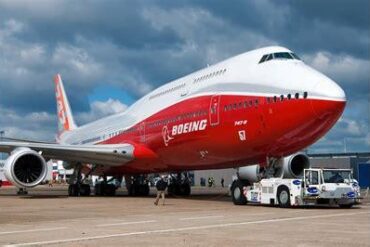
When the Boeing 747 first flew on February 9, 1969, it fundamentally transformed commercial aviation. Nicknamed the Queen of the Skies, the aircraft introduced an entirely new level of passenger capacity while dramatically reducing seat-mile costs for airlines operating busy international routes.
Its unmistakable hump-backed upper deck immediately became one of aviation’s most recognizable designs. Early versions even featured lounges where passengers could socialize during long-haul flights before airlines eventually converted those spaces into additional premium seating.
The original 747-100 could comfortably transport well over 350 passengers, nearly doubling the capacity of many contemporary jetliners. As Boeing continued refining the aircraft, later variants extended range from roughly 5,000 nautical miles to almost 8,000 nautical miles on the advanced 747-8, allowing airlines to connect distant continents nonstop.
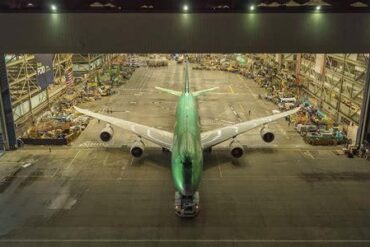
The aircraft became the flagship of airlines including Pan Am, TWA, United Airlines, Northwest Airlines, and numerous international carriers. During more than five decades of production, Boeing built 1,574 Boeing 747s, cementing the aircraft’s place as one of aviation’s greatest engineering achievements before production concluded in 2023.
Delta’s First Boeing 747 Era Was Surprisingly Brief
Delta entered the jumbo jet era relatively early, accepting its first Boeing 747-100 in October 1970. Commercial service began only weeks later, and within a year the airline operated five examples.
These aircraft introduced several innovations to Delta passengers. Travelers experienced one of the industry’s first private upper-deck premium lounges, personal audio entertainment systems, and enclosed overhead storage bins instead of traditional open luggage racks. At the time, these features helped position Delta among the industry’s premium carriers.
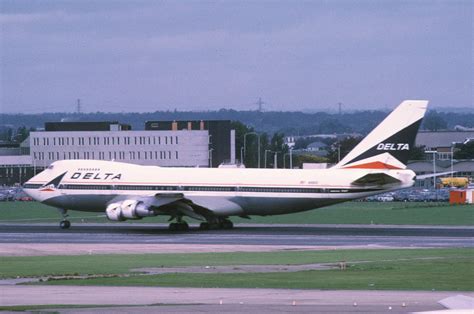
Despite these passenger-friendly innovations, the aircraft never truly matched Delta’s operational needs. During the early 1970s, Delta remained primarily a domestic airline with only modest international ambitions. Most of its long-haul services consisted of routes inherited through cooperative agreements with Pan Am rather than a large independently operated overseas network.
Instead of consistently flying transoceanic routes, Delta frequently deployed its 747s between major domestic cities including Atlanta, Los Angeles, San Francisco, Chicago, Dallas/Fort Worth, Miami, Detroit, and New York. While passenger demand occasionally justified the aircraft, many routes simply did not require nearly 400 seats.
Large four-engine aircraft generate excellent economics only when airlines consistently fill them. Empty seats rapidly increase operating costs per passenger, making oversized aircraft inefficient for markets without sustained demand.
By the mid-1970s, Delta concluded exactly that. Between 1974 and 1977, every Boeing 747-100 left the fleet, replaced by aircraft that better aligned with the airline’s predominantly domestic route structure.
Northwest Airlines Built Its International Identity Around The 747
While Delta walked away from the Boeing 747, Northwest Airlines embraced it more enthusiastically than almost any other U.S. airline.
Northwest eventually became one of the world’s largest Boeing 747 operators, flying multiple variants including the 747-100, 747-200, 747-400, and dedicated freighter versions. At its peak, the airline operated more than 50 jumbo jets, placing it alongside global aviation giants in terms of fleet size.
Unlike Delta, Northwest possessed exactly the type of network that justified operating large four-engine aircraft.
Its major hubs in Detroit, Minneapolis, and particularly Tokyo Narita formed the backbone of an extensive Pacific network connecting North America with Japan, South Korea, China, Southeast Asia, and numerous other destinations. These ultra-long-haul routes consistently attracted sufficient passenger volumes to maximize the 747’s enormous seating capacity.
The airline became especially significant in Boeing history when it served as the launch customer for the 747-400, one of the most capable and technologically advanced variants ever produced.
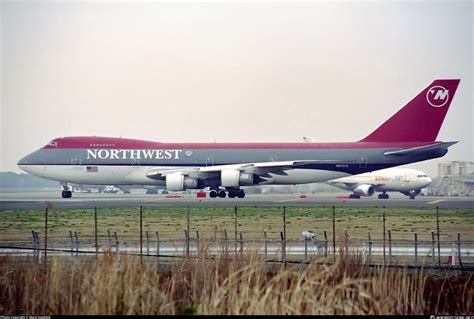
Even as twin-engine aircraft gradually gained popularity during the early 2000s, Northwest continued relying on sixteen Boeing 747-400s as the cornerstone of its international operations. Their range, payload, and passenger capacity remained exceptionally well suited to the airline’s Pacific strategy.
The Merger That Changed Everything For Delta
The defining moment in Delta’s Boeing 747 story occurred in 2008, when Delta Air Lines and Northwest Airlines announced one of the largest mergers in aviation history.
The transaction instantly transformed Delta from a carrier primarily focused on the Atlantic and domestic United States into a truly global airline with one of the world’s most comprehensive Pacific networks.
Along with valuable airport slots, international traffic rights, maintenance expertise, and experienced crews, Delta inherited Northwest’s Boeing 747-400 fleet.
At this point, Delta faced an important strategic decision.
It could retire the aircraft immediately, sacrificing substantial international capacity while disrupting newly acquired routes, or continue operating the fleet until suitable replacements became available.
The second option made considerably more business sense.
Instead of viewing the Boeing 747 as an aging aircraft inherited by circumstance, Delta recognized it as an essential asset supporting the airline’s dramatically expanded international footprint.
Why Retiring The Boeing 747 Immediately Would Have Been A Strategic Mistake
Many observers assume mergers automatically lead to rapid fleet simplification. While eliminating duplicate aircraft types eventually reduces costs, immediate retirements can severely damage an airline’s network.
Delta understood this challenge.
Removing Northwest’s Boeing 747 fleet immediately after the merger would have eliminated thousands of daily seats connecting North America with Asia. Finding replacement aircraft on short notice simply wasn’t realistic.
Widebody aircraft require years to order, manufacture, certify, and deliver. Airlines cannot instantly replace sixteen large long-haul aircraft overnight.
Keeping the Boeing 747 allowed Delta to maintain schedules, preserve customer confidence, retain valuable airport slots, and continue serving high-demand international destinations without interruption.
The decision also protected one of the merger’s primary benefits: Northwest’s established Pacific network.
Without the Boeing 747, much of that network would have required immediate downsizing, undermining the strategic rationale behind the acquisition itself.
Delta Modernized The 747 Rather Than Simply Operating It
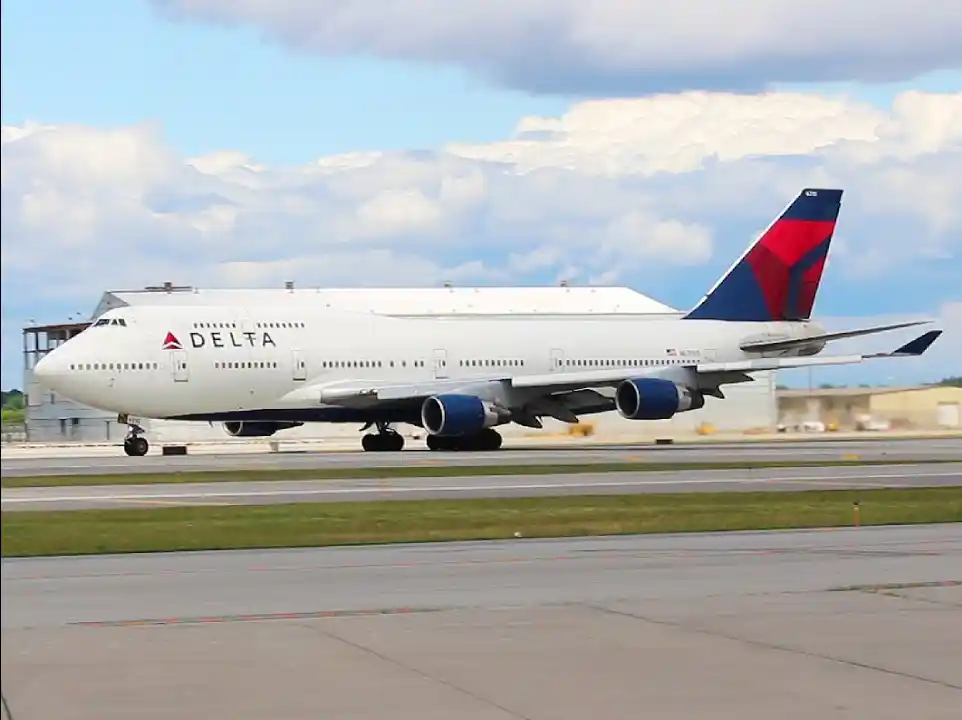
Delta did far more than repaint Northwest’s aircraft.
The airline invested heavily in refurbishing its inherited Boeing 747-400 fleet with updated interiors that reflected Delta’s evolving premium strategy.
Passengers enjoyed fully lie-flat business-class seats, upgraded inflight entertainment systems with personal screens, improved cabin finishes, and enhanced onboard amenities that significantly modernized the customer experience.
The refreshed aircraft primarily operated from Detroit to major Asian destinations including Seoul, Tokyo, and Shanghai, where demand remained sufficiently strong to justify the jumbo jet’s impressive capacity.
These routes often exceeded 6,500 miles, making the aircraft ideal for transporting hundreds of passengers efficiently across the Pacific.
Rather than serving as a nostalgic throwback, Delta’s Boeing 747s became highly productive long-haul workhorses during the first half of the 2010s.
The Boeing 747 Served As A Bridge To A New Generation Of Aircraft
Although the Boeing 747 successfully supported Delta’s international expansion, the airline never intended to operate it indefinitely.
The aviation industry had entered a new technological era.
Aircraft such as the Airbus A350-900 and modern Boeing 777 variants delivered comparable range while consuming significantly less fuel, requiring fewer maintenance hours, and operating with only two engines instead of four.
These improvements fundamentally changed airline economics.
Advances in engine reliability also enabled twin-engine aircraft to receive extended ETOPS certifications, allowing them to fly nearly every route previously reserved for four-engine aircraft.
Delta had already placed orders for the Airbus A350, but deliveries would not begin until 2017. Until then, the Boeing 747 remained indispensable.
In many respects, the jumbo jet acted as a carefully planned bridge connecting Delta’s newly expanded international network with its future fleet strategy.
Why The Boeing 747 Ultimately Left Delta Again
By the middle of the 2010s, the economic equation had shifted decisively.
Fuel prices, environmental pressures, maintenance costs, and fleet efficiency increasingly favored next-generation twin-engine aircraft.
Even though the Boeing 747 continued performing reliably, its four engines inevitably burned more fuel than modern alternatives.
Maintenance expenses also increased as the fleet aged, while replacement parts and specialized expertise gradually became more expensive.
The arrival of the Airbus A350 finally gave Delta a direct replacement capable of matching the 747’s long-haul missions with substantially better operating economics.
As new aircraft entered service, the jumbo jets were gradually withdrawn.
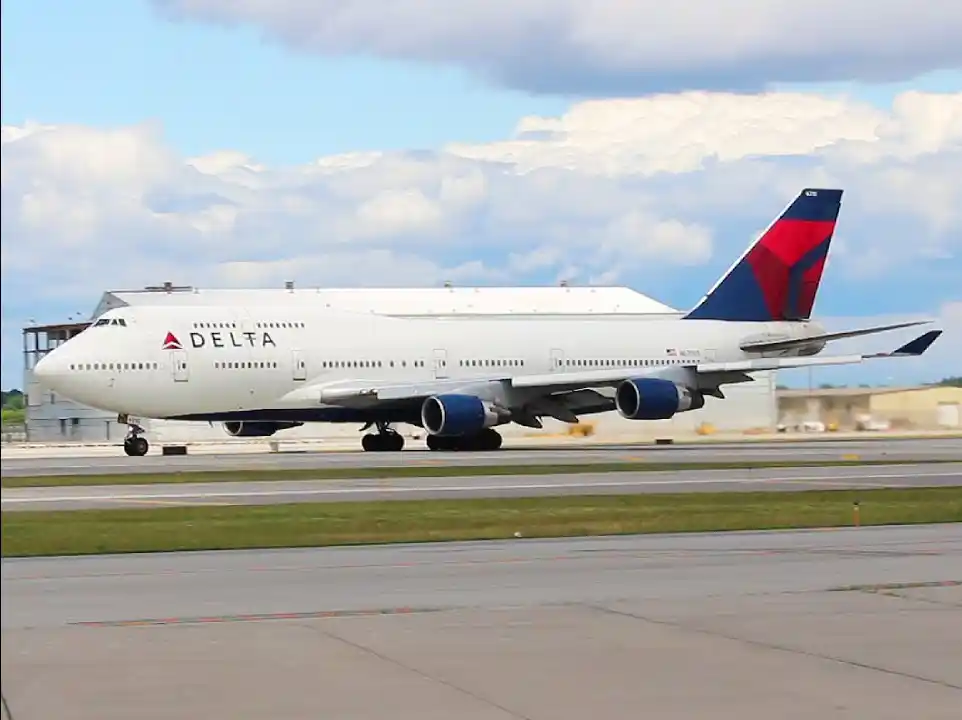
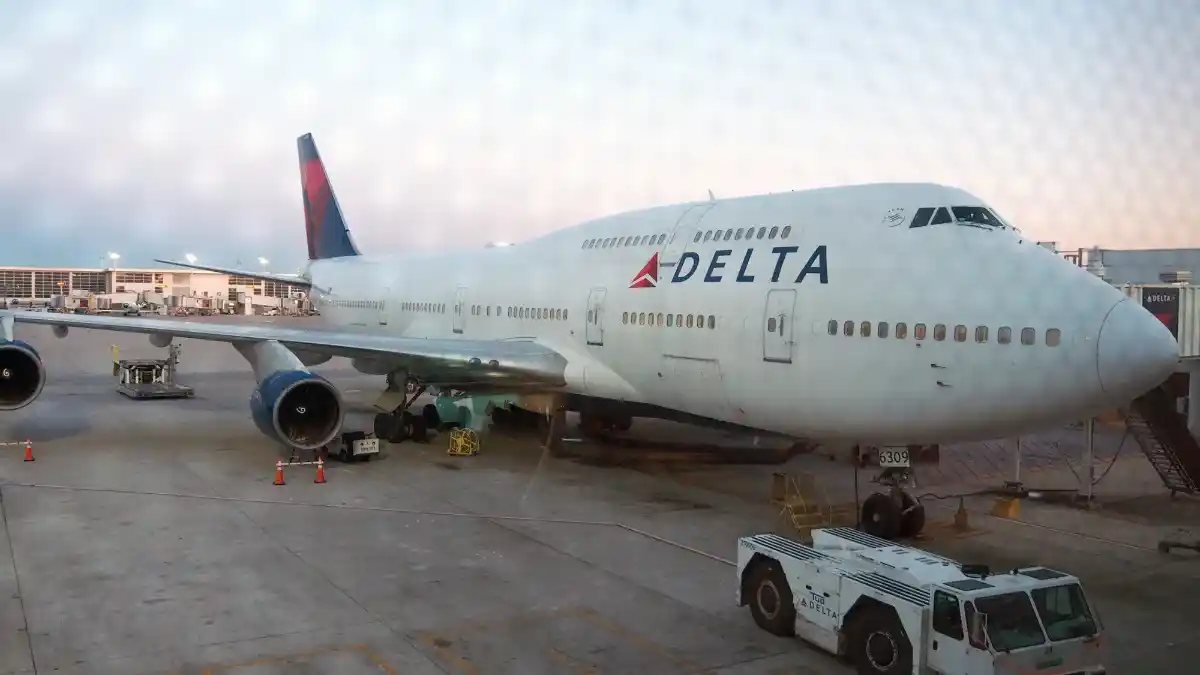
On December 19, 2017, Delta operated its final scheduled Boeing 747 passenger flight between Seoul and Detroit, marking the end of both the airline’s second 747 era and the final scheduled passenger Boeing 747 operation by a U.S. airline.
The Lasting Legacy Of Delta’s Boeing 747 Return
The Boeing 747 occupies a unique place in Delta’s history because it represents two entirely different chapters separated by nearly three decades.
The first chapter demonstrated that even legendary aircraft must fit an airline’s network to succeed. During the 1970s, Delta simply lacked enough international traffic to justify consistently operating the world’s largest passenger jet.
The second chapter proved the opposite. Following the Northwest merger, Delta suddenly possessed one of the world’s largest Pacific networks, making the Boeing 747 not only practical but strategically essential.
Its return was never about preserving an aviation icon or satisfying public nostalgia. It was about protecting international market share, maintaining operational stability during a transformative merger, and buying valuable time until next-generation aircraft entered service.
Today, one of Delta’s former Boeing 747-400 aircraft resides at the Delta Flight Museum in Atlanta, where visitors can explore the aircraft that symbolized one of the airline’s most significant periods of international growth.
The Boeing 747 ultimately returned to Delta because the airline inherited far more than an aircraft during the Northwest merger. It inherited an expansive global network built around the jumbo jet. Operating those aircraft allowed Delta to maximize the value of its acquisition, strengthen its presence across the Pacific, and transition smoothly toward a new generation of fuel-efficient widebody aircraft. In doing so, the Queen of the Skies played one final, indispensable role in shaping the evolution of one of the world’s largest airlines.