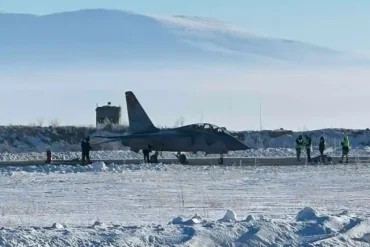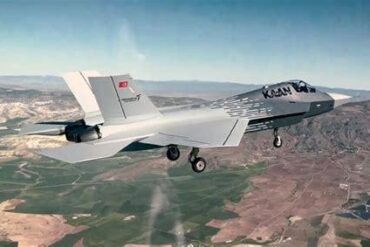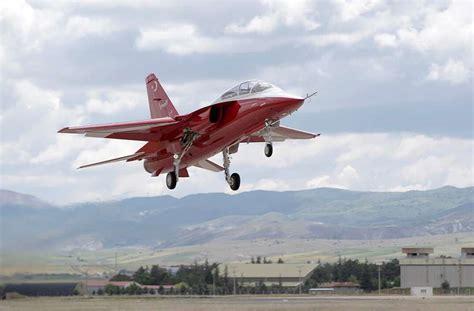
Spain’s recent announcement to adopt the Turkish-built HÜRJET as its next-generation advanced combat trainer has surprised defense analysts and industry observers alike. This bold decision not only reshapes Spain’s air training doctrine but also signals a broader strategic pivot in Europe’s defense procurement policy. The choice of a non-traditional supplier over more familiar Western options like the Boeing T-7 or Leonardo M-346 underscores a deliberate departure from conventional thinking.
A Strategic Departure From Western Norms
Rather than opt for an off-the-shelf solution, Spain is redefining its combat trainer acquisition by fusing Turkish aerospace innovation with deep domestic integration. The Ministry of Defense’s decision, orchestrated under the guidance of Airbus Defense and Space, prioritizes industrial sovereignty and cost-effective modernization.
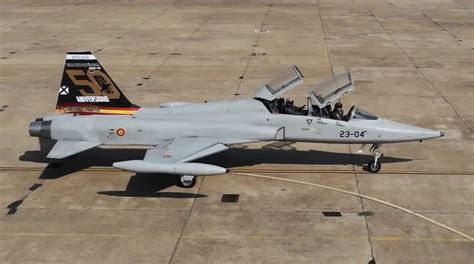
Spain will acquire 30 HÜRJET aircraft, which will undergo comprehensive adaptation at a Conversion Centre established within the country. This facility will not only host aircraft assembly and system testing, but also retrofit the jets with Spanish-developed avionics, training simulators, and support infrastructure. Talavera la Real Air Base, the program’s home, will be upgraded with advanced simulation environments and logistics centers, transforming it into a hub of modern air training.
This choice represents more than a procurement deal; it is a strategic roadmap for boosting national aerospace capability. By anchoring the integration in Spain, Airbus guarantees that the country maintains operational autonomy and technical know-how in the long run, effectively severing complete dependency on foreign vendors.
Geopolitical Signaling Behind the Scenes
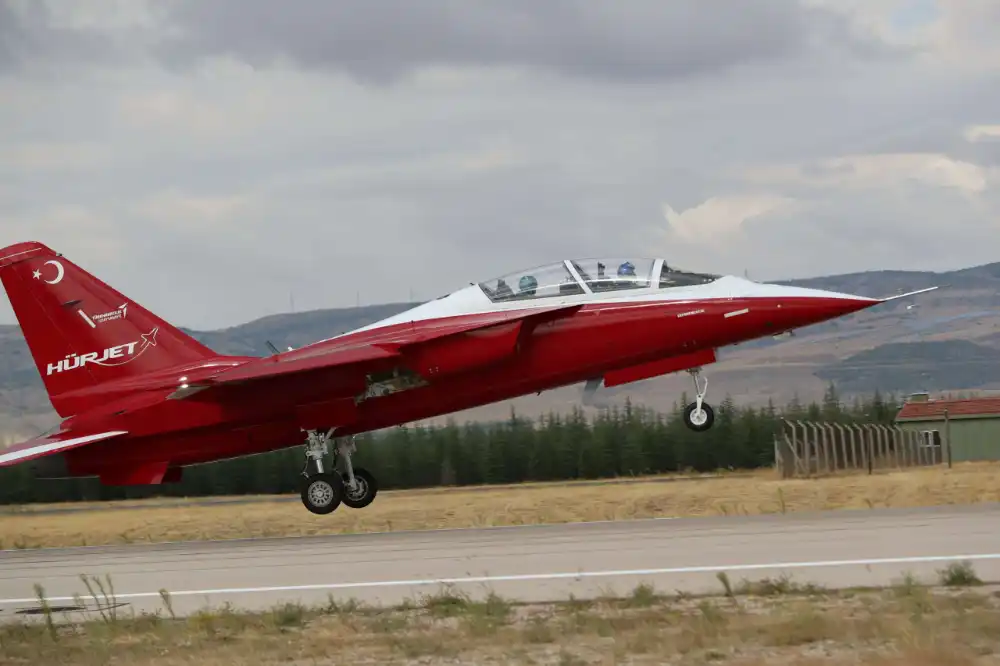
The selection of a Turkish aircraft for a NATO country’s air force is no small matter. Historically, NATO allies have gravitated toward American or Western European defense solutions. Spain’s tilt toward Turkey’s defense industry—particularly under Airbus supervision—serves as a quiet but clear geopolitical message.
This decision indicates growing confidence in Turkey’s aerospace maturity, especially under the strategic eye of Airbus. It also reflects a calculated intent to diversify Europe’s defense ecosystem. With current global tensions exposing the fragility of long-standing supply chains, Spain’s embrace of the HÜRJET is both a hedge against supplier risk and a flex toward strategic autonomy.
The HÜRJET’s capabilities are noteworthy. As a supersonic advanced jet trainer, it’s equipped to support future fighter transitions, potentially even the next-generation European fighters. Its adaptability and compatibility with NATO standards make it an efficient and scalable choice. By integrating Airbus-led enhancements, Spain ensures these aircraft remain interoperable, future-proof, and aligned with broader EU defense aspirations.
Economic Impact and Industrial Sovereignty
The €2.6 billion program investment encompasses aircraft, simulators, base upgrades, and logistical support. But beyond monetary figures lies a deliberate economic strategy. Spain’s approach ensures significant involvement of local SMEs, particularly in avionics, software development, and systems maintenance. This creates high-skilled aerospace jobs, enhances national expertise, and secures intellectual property retention.
Jean-Brice Dumont, Head of Air Power at Airbus Defence and Space, captured the program’s essence succinctly: “This ambitious programme seeks to create a state-of-the-art combat training system in Spain… ensuring Spanish sovereignty throughout the entire process.”
This program is not just about replacing the aging F-5 fleet—it’s about building a self-reliant industrial framework. It supports horizontal collaboration across Spanish industry, establishing long-term capabilities that will span well beyond the initial 30 aircraft. Spain has also built in fleet expansion potential, leaving room for growth as strategic needs evolve.
A Broader European Implication
Spain’s direction aligns closely with a growing European trend: reducing dependency on traditional U.S. defense suppliers while building regional capacity. With Airbus at the helm, the program sets a template for other EU countries considering similar pathways. As the continent braces for complex security challenges, having versatile and domestically anchored training ecosystems becomes an undeniable advantage.
The move complements Spain’s ongoing modernization efforts, including upgrades to its Eurofighter Typhoon squadrons and explorations into future fighter collaborations. By investing early in adaptable infrastructure and modular aircraft platforms, Spain is positioning itself for seamless transitions to next-generation aerial capabilities.
This procurement is not just transactional—it is transformative. It speaks to a visionary strategy that balances innovation, cost-efficiency, sovereignty, and alliance cohesion. In doing so, Spain sets a new precedent for European defense logic: one where political independence, industrial capacity, and cutting-edge capability go hand in hand.
Timeline, Delivery & Beyond 2028
Deliveries of the HÜRJET fleet are scheduled to commence in 2028, aligning with the planned phase-out of legacy F-5 trainers. Full operational capacity is expected shortly thereafter, allowing Spain’s Air and Space Force to transition to a fully digitized and responsive training environment.
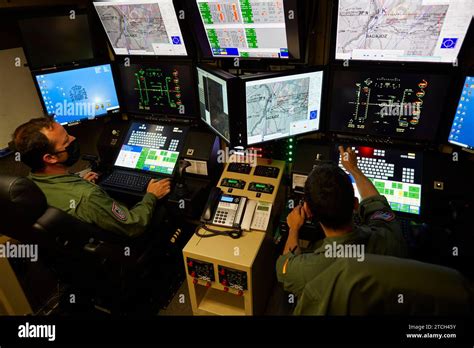
This integration not only signals a technological leap but enables a paradigm shift in pilot education. With immersive simulation systems, mission scenario customization, and enhanced tactical training protocols, Spain’s future aviators will graduate with skillsets optimized for both current and emerging threats.
In sum, Spain’s choice of the HÜRJET—over familiar Western aircraft—reveals a country ready to lead in defense innovation, supplier diversification, and industrial strategy. It’s a defining moment not just for the Spanish military, but for Europe’s broader defense narrative.
Spain’s new combat trainer isn’t what many expected. And that’s precisely the point.