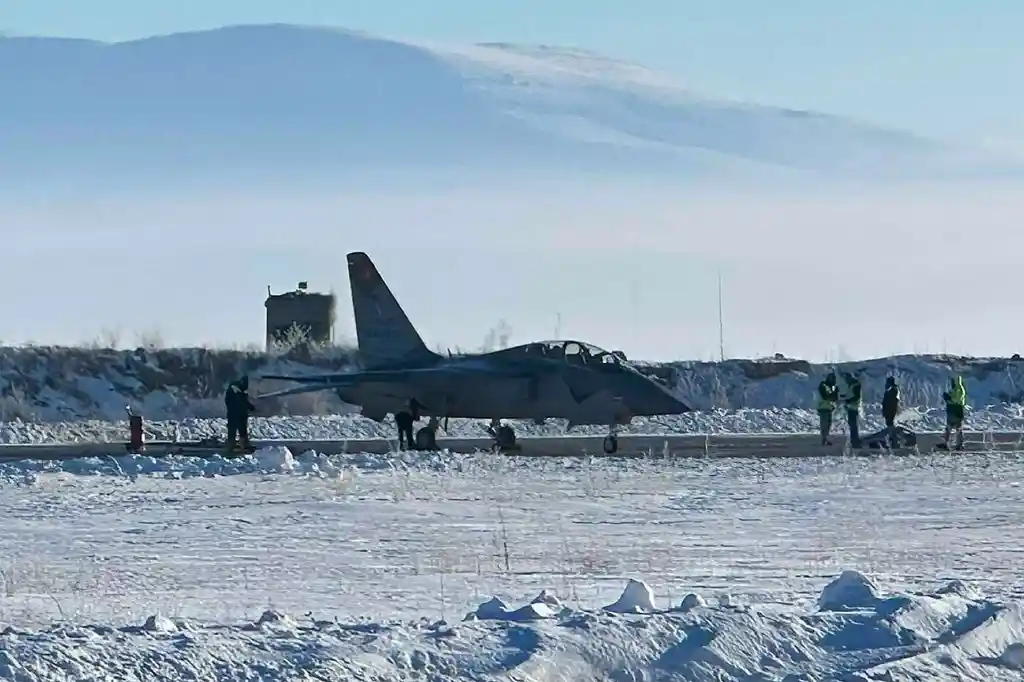
Türkiye’s push to field an indigenous advanced jet trainer crossed a meaningful operational threshold in January 2026, when the Hürjet successfully completed extreme cold-weather trials in eastern Anatolia. Conducted in Erzurum, one of the country’s harshest winter environments, the campaign validated the aircraft’s ability to function reliably in subzero temperatures that reflect real-world basing and training conditions rather than idealized test scenarios. The milestone strengthens confidence that Hürjet is moving beyond developmental promise toward practical, year-round operability.
Cold-weather qualification is a deceptively demanding phase in any modern aircraft program. It is not a ceremonial box to tick, but a stress test of the entire operational ecosystem surrounding an aircraft. Engines, avionics, hydraulics, brakes, sensors, and even routine maintenance practices behave differently when exposed to prolonged cold soak. By taking Hürjet into Erzurum’s winter, Turkish defense authorities deliberately selected an environment that exposes weaknesses early, when fixes are still feasible and affordable.
On January 24, 2026, according to reporting by Anadolu Agency, two Hürjet prototypes were deployed to Erzurum under the coordination of the Presidency of Defence Industries. The trials combined extensive ground checks with follow-on flight activity, examining how the aircraft performed from initial start-up through taxi, takeoff, flight, and recovery in temperatures reported as low as minus 21 degrees Celsius. Defense officials framed the campaign as part of a broader effort to validate the jet against operational realities faced by air forces that cannot pause training schedules when winter arrives.
Erzurum as a Deliberate Test Environment
Erzurum is not simply cold; it is strategically useful for testing. Situated at high altitude and known for long, severe winters, the region allows engineers to combine low-temperature exposure with altitude-related performance factors in a single campaign. Cold air affects engine behavior, while altitude influences takeoff distances, climb rates, and environmental control systems. Testing these variables together offers a more realistic picture of how the aircraft will perform at mountainous bases or northern airfields.
The Erzurum trials assessed more than whether the engine could start on a cold morning. Engineers monitored battery endurance, electronic system stability, hydraulic responsiveness, braking and anti-skid behavior on cold and potentially contaminated surfaces, and sensor performance during high-workload phases of flight. Maintenance predictability was also part of the equation, since frozen seals, thickened fluids, and brittle components can quietly erode sortie generation rates if not addressed early.
Why Cold-Weather Readiness Shapes Operational Credibility
For air forces, winter operability is not a marketing feature but a readiness requirement. Training pipelines are designed around fixed calendars, and aircraft that struggle in cold conditions can bottleneck pilot throughput. Even marginal reductions in dispatch reliability can ripple through squadrons, increasing costs and reducing proficiency. By demonstrating repeatable operations in Erzurum, Hürjet addresses one of the most common adoption risks for new aircraft: the gap between nominal performance on paper and dependable performance in harsh conditions.
Cold-weather testing also carries safety implications. Reduced hydraulic responsiveness, altered braking performance, or unstable avionics behavior can narrow safety margins during takeoff and landing. Validating these systems in advance allows procedures, software logic, and hardware adjustments to be refined before the aircraft enters frontline service.
Hürjet’s Role as an Advanced Trainer and Light Combat Platform
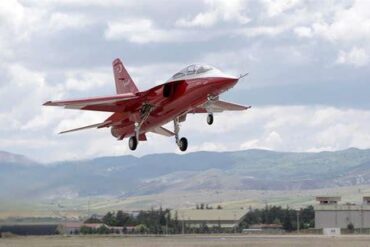
Hürjet is designed primarily as an advanced jet trainer, bridging the gap between basic trainers and modern frontline fighters. Its supersonic capability, digital fly-by-wire flight controls, and glass cockpit philosophy are intended to mirror the workload and systems logic of contemporary combat aircraft. This alignment reduces the cognitive leap for student pilots transitioning to advanced fighters, improving training efficiency and safety.
Beyond training, Hürjet has been promoted with a secondary light-combat role. In this configuration, the aircraft can undertake lower-intensity missions where deploying high-end fighters would be economically inefficient or unnecessarily taxing on airframes. The ability to validate cold-weather performance strengthens both roles, as training and light-attack missions often occur from austere or geographically challenging bases.
Technical Characteristics That Define the Platform
Publicly available information describes Hürjet as a single-engine aircraft approximately 13.6 meters long, with a wingspan of around 9.5 meters and a height of roughly 4.1 meters. The design is commonly associated with the General Electric F404-series engine, a proven powerplant with a broad global support base. Maximum speed is reported at up to Mach 1.4, with an operational ceiling of about 45,000 feet, placing the aircraft firmly within the performance envelope expected of an advanced trainer.
The airframe is designed to sustain high-G maneuvering suitable for fighter lead-in training. In light-attack or tactical support configurations, Hürjet is reported to support a payload of up to approximately 3,000 kilograms across seven external hardpoints. This flexibility allows operators to tailor the aircraft for training realism, weapons integration exercises, or operational missions depending on doctrine and export configuration.
Test Accumulation and Program Momentum
The Erzurum campaign did not occur in isolation. Reporting indicates that the Hürjet program has already accumulated around 400 test sorties as part of its broader flight test and evaluation effort. This level of activity suggests a program moving steadily through envelope expansion rather than one struggling with foundational issues. Each completed test phase reduces uncertainty, both for domestic planners and potential export customers.
Cold-weather qualification is particularly valuable because it is often deferred until late in development, when changes become expensive. Completing these trials before serial production reinforces the perception of program maturity and reduces downstream risk. It also signals confidence by the developer that the aircraft can withstand scrutiny outside controlled environments.
Export Implications and NATO-Aligned Training Needs
Demonstrated winter operability expands Hürjet’s appeal beyond temperate-climate operators. Air forces in northern latitudes, high-altitude regions, or continental interiors require aircraft that can maintain predictable sortie generation through long winters. For these customers, the question is not whether an aircraft can fly once in cold weather, but whether it can sustain training tempo with limited hangar space and infrastructure.
Spain’s decision to select Hürjet as a replacement for aging F-5M trainers underscores this point. NATO-aligned training pipelines demand high availability, interoperability, and resilience across diverse climates. Cold-weather validation directly supports these requirements, strengthening Hürjet’s credibility as a platform suited to alliance standards rather than niche use.
From Symbolic Test to Operational Gateway
The completion of subzero trials in Erzurum adds a tangible readiness credential to the Hürjet program. It demonstrates that the aircraft is being engineered for operational reality, not just favorable conditions. For Türkiye, this milestone supports the broader goal of fielding an indigenous trainer that can meet domestic needs while competing credibly on the international market.
Cold-weather resilience is rarely glamorous, but it is decisive. Aircraft that perform reliably when temperatures plunge earn trust from pilots, maintainers, and planners alike. With Erzurum now added to its test history, Hürjet strengthens its case as a year-round training and light-combat platform, capable of operating where weather and terrain impose real constraints. The milestone marks not an endpoint, but a gateway toward wider operational acceptance and sustained relevance in a competitive global market.