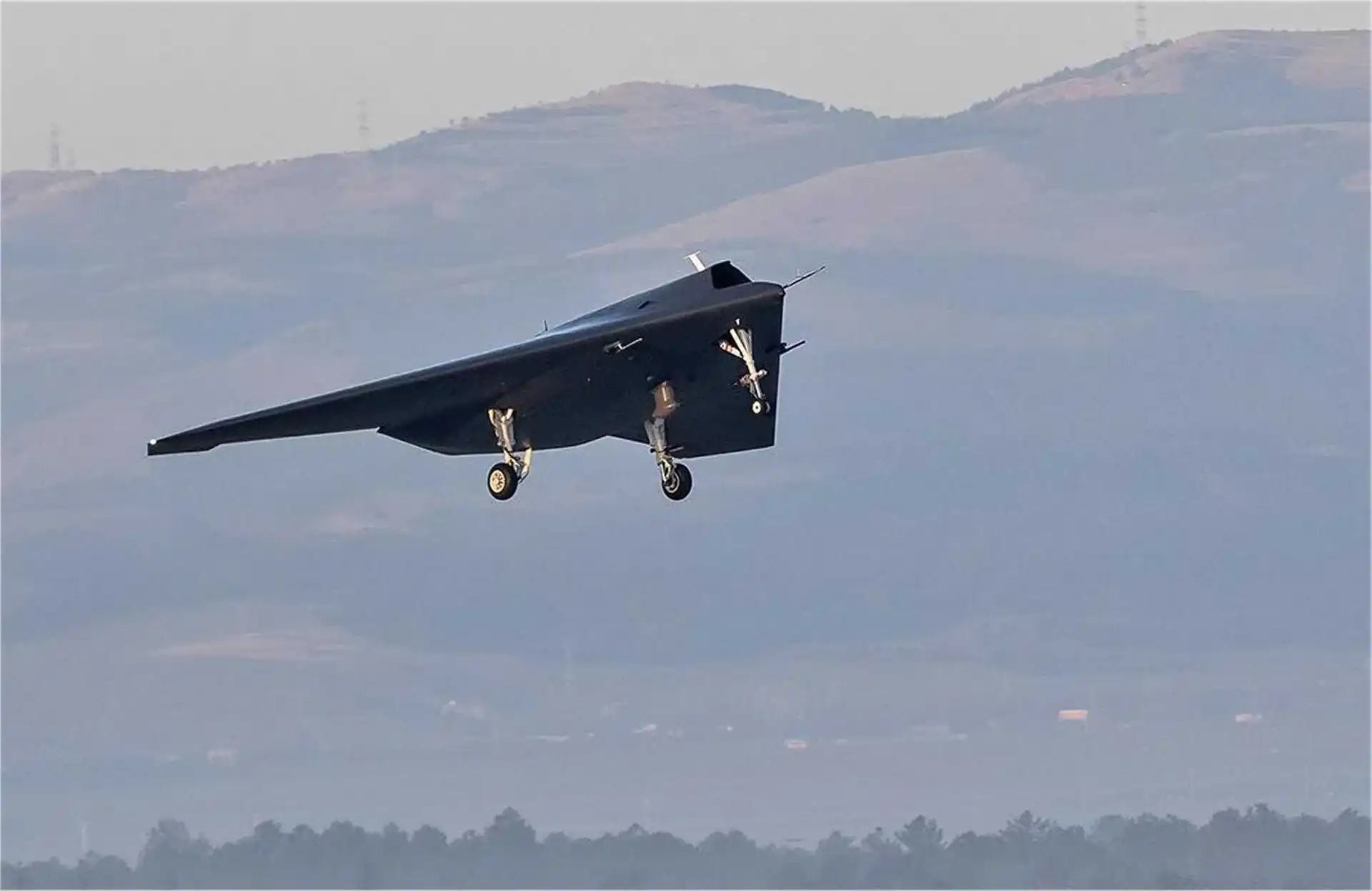
Türkiye’s aerospace sector has crossed a decisive threshold as Turkish Aerospace Industries (TAI) advances the Anka III unmanned combat aerial vehicle into advanced flight testing, signaling the country’s arrival in the elite circle of nations developing low-observable, jet-powered combat drones. This milestone reflects more than a successful test program. It reveals a strategic recalibration in how Ankara intends to project airpower in increasingly contested environments where survivability, speed, and autonomy matter as much as endurance.
The Anka III is not an incremental update to existing Turkish drones. It is a clean-sheet design, built around the realities of modern air defense networks, electronic warfare saturation, and denied-access battlespaces. Its progress into advanced testing confirms that Türkiye is no longer merely refining tactical UAVs but is actively shaping the future of stealth-enabled unmanned strike aviation.
From MALE Roots to Low-Observable Combat Design
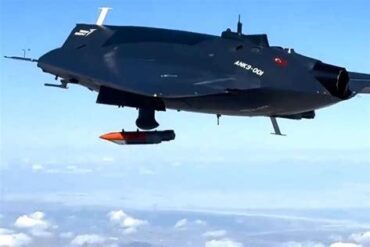
Turkish Aerospace Industries confirmed that Anka III has completed a demanding sequence of developmental sorties and system validation flights, transitioning into a phase focused on envelope expansion, sensor fusion, and mission-system maturity. Engineers emphasize that the aircraft bears little resemblance to earlier Anka variants beyond lineage. Gone is the propeller-driven MALE architecture. In its place stands a jet-powered flying-wing platform optimized for reduced radar cross-section and higher dash speeds.
The decision to abandon conventional layouts reflects a hard operational truth. Medium-altitude drones, once dominant in permissive airspace, are increasingly vulnerable to layered air defenses, modern fighters, and networked sensors. Anka III is designed explicitly to operate where older UAVs cannot survive, integrating stealth shaping, internal payload bays, and a reduced infrared signature to complicate detection and engagement.
A Flying Wing Built for Contested Skies
The Anka III’s blended wing-body design is central to its survivability. By eliminating vertical stabilizers and external stores, the aircraft minimizes radar reflections while preserving internal volume for fuel, sensors, and weapons. Power comes from a single turbofan engine, enabling cruise speeds beyond 0.7 Mach, a critical capability for time-sensitive strike and deep penetration missions.
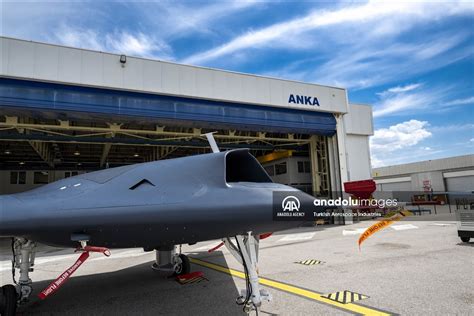
This performance places the Anka III in a different operational class than traditional surveillance drones. Speed and altitude flexibility allow it to ingress and egress defended airspace, execute rapid ISR-strike cycles, and reposition quickly as battlefield conditions evolve. The platform is designed not to loiter indefinitely but to arrive unseen, act decisively, and disappear.
Sensors, Datalinks, and Networked Warfare
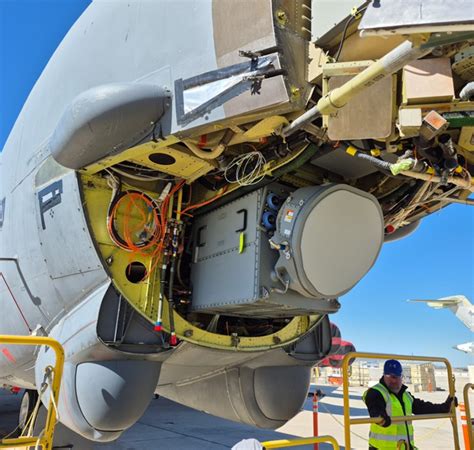
At the heart of the Anka III concept is network-centric combat. The drone is equipped with an AESA radar, advanced electro-optical and infrared systems, and a secure, jam-resistant datalink architecture. These systems allow the aircraft to function as both an independent strike platform and a sensor node within a broader air combat network.
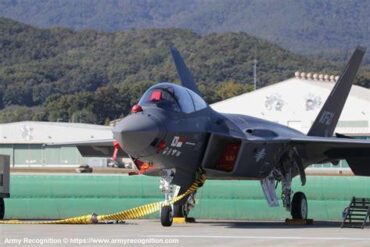
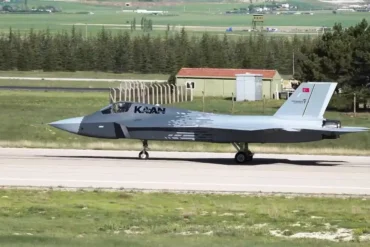
TAI has confirmed compatibility with manned-unmanned teaming concepts, particularly alongside Türkiye’s forthcoming KAAN fifth-generation fighter. In this role, Anka III can extend sensor reach, conduct forward electronic reconnaissance, or act as a decoy and strike asset, reducing risk to piloted aircraft. Its architecture also supports operations in GPS-denied and electronically contested environments, a capability increasingly essential in peer-level conflicts.
Payload, Range, and Strike Flexibility
Despite its stealthy profile, Anka III is not payload-constrained. Reported figures indicate an operational range exceeding 1,000 kilometers and a payload capacity of more than 1,200 kilograms, carried internally to preserve low observability. This capacity enables the carriage of precision-guided munitions, stand-off weapons, and electronic warfare pods.
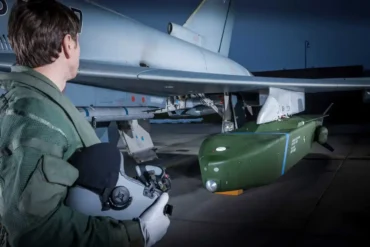
Among the expected armaments is the SOM-J cruise missile, an indigenous weapon optimized for internal bays and networked targeting. Combined with indigenous smart munitions and jamming systems, Anka III is positioned as a multi-role combat drone, capable of deep strike, suppression of enemy air defenses, maritime strike support, and electronic attack.
Combat Experience as a Design Multiplier
The Anka III did not emerge in isolation. Its design is the culmination of more than a decade of combat-driven UAV evolution within Türkiye. The original Anka I established foundational ISR capabilities, while the Anka II, also known as Anka-S, introduced satellite communications, extended endurance, and weaponized strike roles. These systems were not theoretical. They were flown extensively over Syria, Iraq, and along Türkiye’s borders, generating real-world data on survivability, sensor performance, and command resilience.
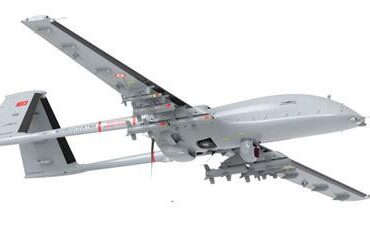
That operational feedback loop intensified with platforms like Bayraktar TB2 and Akinci, whose battlefield performance reshaped drone warfare narratives from Nagorno-Karabakh to Ukraine. Each deployment refined Türkiye’s understanding of air defenses, electronic countermeasures, and kill-chain acceleration. Anka III integrates those lessons, translating tactical experience into a strategic stealth platform.
Accelerated Development Through Industrial Independence
A critical enabler of Anka III’s rapid progression is Türkiye’s vertically integrated defense industry. Over the past decade, Turkish firms have localized key subsystems, including mission computers, electro-optics, datalinks, and increasingly, propulsion components. This independence reduces exposure to export restrictions and allows faster iteration cycles than traditional Western acquisition models.
TAI initiated conceptual studies for Anka III in 2022, supported by extensive digital twin modeling and wind tunnel testing. Ground engine runs followed in early 2023, culminating in a successful maiden flight in December that year. Since then, the prototype has accumulated over 150 flight hours, validating flight controls, stealth shaping effectiveness, and sensor integration across diverse profiles.
How Anka III Compares Globally
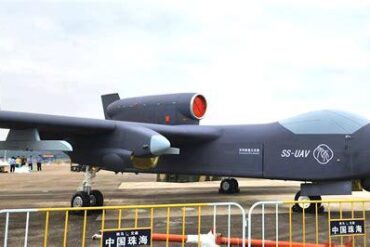
In the global context, Anka III enters a competitive but sparsely populated field. The U.S. XQ-58A Valkyrie emphasizes attritable mass and loyal wingman concepts, while China’s CH-7 remains largely demonstrative with limited transparency on operational readiness. European projects such as nEUROn and LANCA continue as technology demonstrators, constrained by multinational coordination and funding cycles.
Türkiye’s approach differs. Rather than treating stealth UAVs as distant future assets, Ankara is pushing toward near-term operationalization, leveraging combat-tested industrial processes and a unified national roadmap. This urgency is reflected in the transition to advanced testing and clear timelines for production.
Strategic Implications for Türkiye and Beyond
The emergence of Anka III reshapes Türkiye’s strategic posture. As NATO grapples with great-power competition and the proliferation of advanced air defenses, Ankara gains greater autonomy in high-end air operations. The platform enhances deterrence in regions such as the Eastern Mediterranean, while offering a scalable option for expeditionary missions without the political and operational costs of manned deployments.
Export potential further amplifies its impact. With fewer political strings than Western platforms and greater maturity than many non-Western alternatives, Anka III is likely to attract interest from Gulf states, Central Asia, and select allied air forces seeking stealth capabilities without dependency on U.S. or Chinese systems.
Production Timeline and Operational Outlook
TAI officials have indicated that serial production is planned within the next 18 months, with the Turkish Air Force positioned as the launch customer. Naval adaptations are also under evaluation, potentially expanding Anka III’s role into maritime strike and sea-denial missions. Cost projections suggest a price point well below Western stealth analogues, reinforcing its appeal as a scalable, multi-mission platform.
As unmanned warfare evolves beyond permissive ISR roles, Anka III exemplifies a broader shift in airpower thinking. Stealth is no longer an exclusive, billion-dollar luxury reserved for manned fighters and experimental programs. It is becoming a modular, exportable capability integrated into operational doctrine.
Türkiye’s advance with Anka III represents more than technological success. It marks a strategic inflection point, demonstrating how combat experience, industrial independence, and focused ambition can converge to redefine the balance of unmanned airpower in the twenty-first century.