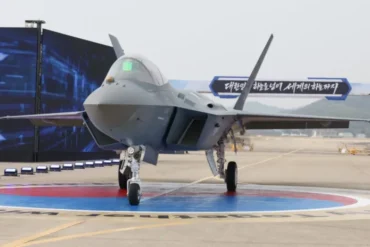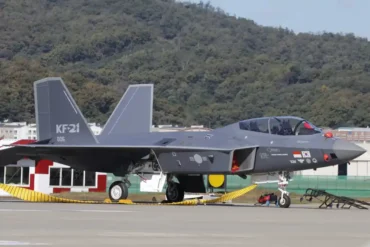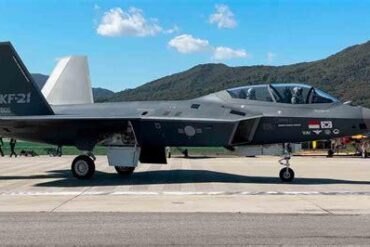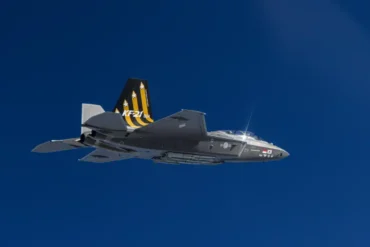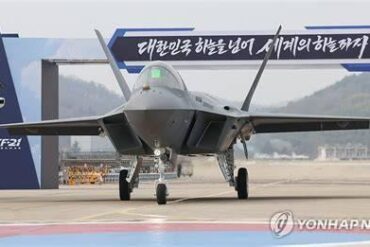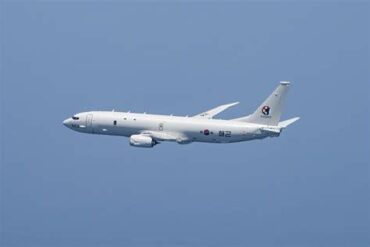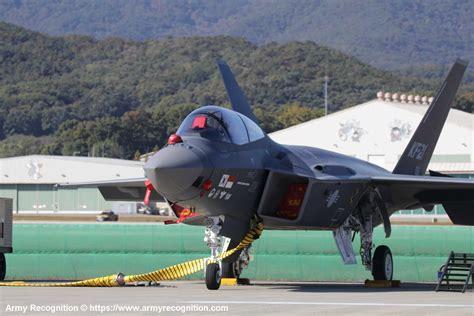
South Korea has crossed a decisive threshold in military aviation with the combat clearance of the KAI KF-21 Boramae. This milestone marks not only the arrival of a new fighter jet, but the culmination of a decade-long effort to redefine the Republic of Korea Air Force’s operational edge. From its modest beginnings in 1949, the ROKAF has evolved into one of Asia’s most technologically sophisticated air forces, and the KF-21 now stands at the center of that transformation.
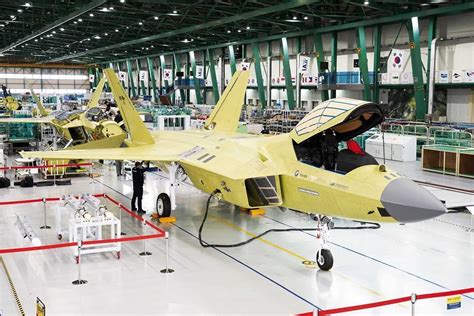
The Boramae’s journey to combat readiness has been methodical and exhaustive. Over ten years of development, the aircraft endured thousands of test scenarios designed to validate performance, survivability, and mission flexibility. The version cleared for service—Block I—represents an early operational configuration, optimized primarily for air-to-air combat while leaving room for incremental upgrades. It is a calculated entry into service: capable, but intentionally unfinished, signaling a broader roadmap rather than a final destination.
KF-21 Boramae Capabilities and Design Evolution
The KF-21 occupies a unique position in modern air combat classification. Officially designated as a 4.5-generation fighter, it bridges the technological gap between legacy fourth-generation aircraft and fully stealth-capable fifth-generation platforms. Its design incorporates reduced radar cross-section features, advanced avionics, and modern sensor fusion, yet stops short of the deep stealth profile required for penetrating heavily defended airspace.
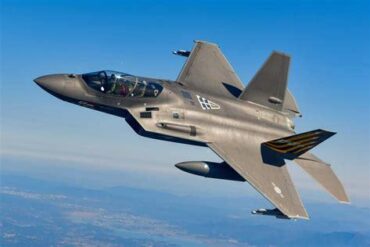
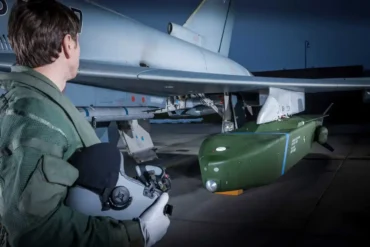
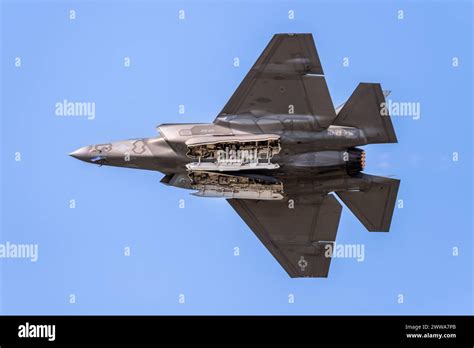
This distinction is most visible in its weapons configuration. Unlike the F-35 Lightning II, which carries its ordnance internally to preserve stealth integrity, the KF-21 relies on external hardpoints for missiles and bombs. While this approach enhances payload flexibility and simplifies engineering, it inevitably increases radar visibility—particularly during high-load combat missions. The trade-off is deliberate: prioritize versatility and cost efficiency in the near term, while reserving stealth optimization for future iterations.
Strategic Production Goals and Economic Pressures
South Korea’s original acquisition plan for the KF-21 was ambitious: a fleet of 120 aircraft by 2032. The rollout strategy was structured in phases, beginning with 40 Block I fighters focused on air superiority, followed by 80 enhanced variants equipped for both air-to-air and air-to-ground missions. This staged deployment reflects a broader doctrine of capability layering, allowing the ROKAF to progressively expand its operational scope.
However, the realities of global economics are beginning to exert pressure on the program. Rising production costs, supply chain disruptions, and inflationary trends are forcing policymakers to reassess timelines and procurement volumes. While the Boramae remains a strategic priority, adjustments to delivery schedules or batch sizes are increasingly likely. This tension between ambition and affordability underscores the complexity of indigenous defense development in a volatile global market.
KF-21 vs F-35: A Calculated Complement, Not a Rival
Comparisons between the KF-21 and the F-35 are inevitable, but they reveal more about strategic intent than technological rivalry. The F-35, with its full-spectrum stealth and advanced electronic warfare capabilities, is engineered for first-day-of-war scenarios—penetrating dense air defenses and executing precision strikes deep within contested territory. The KF-21, by contrast, is designed as a high-performance multirole platform that complements such capabilities rather than replicates them.
This layered approach allows South Korea to diversify its aerial toolkit. By integrating the KF-21 alongside existing F-35 assets, the ROKAF can distribute mission roles more efficiently—reserving stealth-intensive operations for the F-35 while deploying the Boramae for air dominance, patrol, and support missions. The result is a more flexible and resilient force structure, tailored to a wide spectrum of threats.
Future Trajectory: From Manned Fighter to Networked Warfare Hub
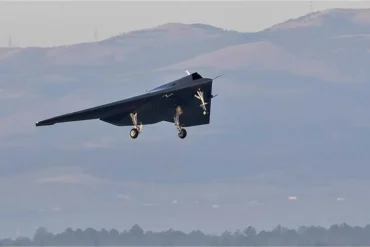
The KF-21’s significance extends beyond its immediate capabilities. It is a foundational element in South Korea’s broader shift toward network-centric warfare, where manned aircraft operate in tandem with unmanned systems and AI-driven decision frameworks. Future upgrades are expected to enhance stealth characteristics, expand strike capabilities, and integrate advanced data-link systems that enable real-time battlefield coordination.
In this context, the Boramae is less a finished product than a platform for evolution. Its modular architecture allows for continuous improvement, ensuring that it remains relevant as technological and strategic landscapes shift. As South Korea deepens its investment in autonomous systems and next-generation combat concepts, the KF-21 will likely serve as a central node—linking sensors, shooters, and decision-makers into a cohesive operational network.
The combat clearance of the KF-21 Boramae is not merely a technical achievement; it is a strategic declaration. South Korea is no longer just a buyer of advanced military technology—it is now a creator, shaping its own aerial future with precision, ambition, and calculated confidence.