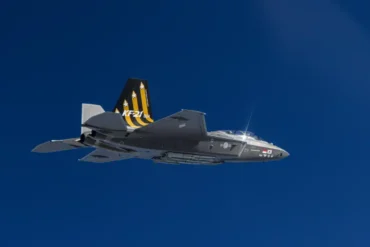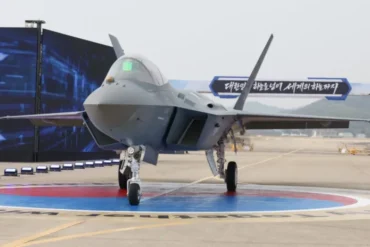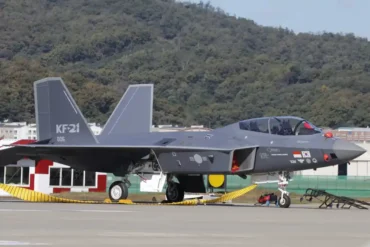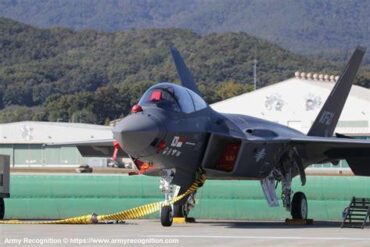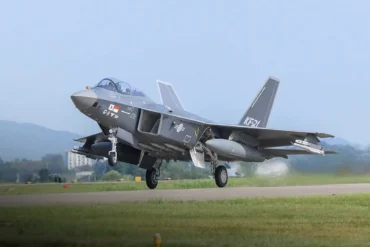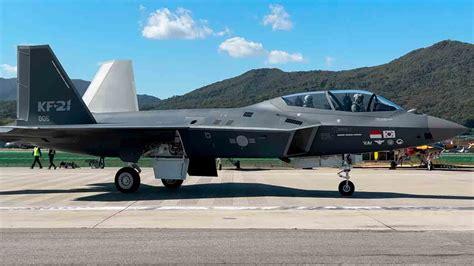
South Korea is on the brink of a military and industrial milestone as it prepares to deliver its first indigenous multirole combat aircraft, the KF-21 Boramae, to the Republic of Korea Air Force (ROKAF) in 2026. This delivery marks the culmination of over a decade of national ambition, technical rigor, and strategic foresight, positioning South Korea not only as a regional power but also as an emerging global player in the competitive fighter jet market.
A Decade in the Making: From KF-X Vision to KF-21 Reality
The KF-21 Boramae is the direct outcome of the KF-X (Korean Fighter eXperimental) program, launched in 2010 with the strategic intent to phase out the country’s aging fleets of F-4 Phantom and F-5 Tiger aircraft. The goal was more than fleet modernization; it was about achieving defense autonomy and developing an aircraft that could compete on the global stage without the limitations of foreign dependencies.
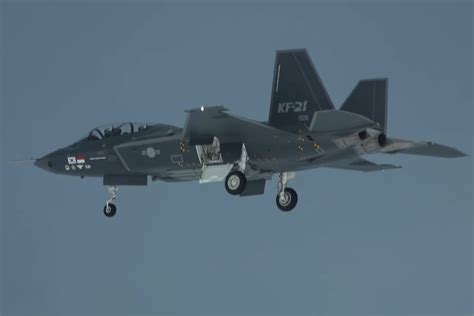
Years of rigorous design studies, wind tunnel experiments, and international collaborations—including an ongoing albeit strained partnership with Indonesia—culminated in the prototype’s public unveiling in April 2021. Just over a year later, in July 2022, the KF-21 took to the skies for its maiden flight, kicking off a comprehensive flight test program involving six prototypes.
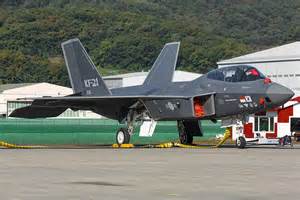
Over 2,000 flight hours have since been logged, allowing engineers to refine the fighter’s fly-by-wire flight controls, validate its active electronically scanned array (AESA) radar, and test avionics integration and weapons systems. These trials confirmed the platform’s operational robustness, clearing the way for production.
Design and Capabilities: Bridging 4.5 and 5th Generation Fighters
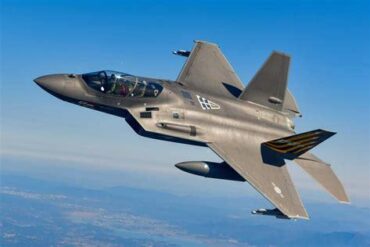
The KF-21 Boramae—meaning “young hawk” in Korean—is a twin-engine, 4.5-generation fighter that blends modern stealth design elements with proven technologies. While it lacks internal weapons bays typical of fifth-generation jets like the F-35, its stealth shaping, composite airframe, and sensor fusion capabilities ensure significant survivability and lethality.
Key features of the KF-21 include:
- AESA radar developed by Hanwha Systems
- Infrared search and track (IRST)
- Advanced data-link and electronic warfare systems
- Compatibility with a wide range of air-to-air and air-to-ground munitions
The fighter’s twin General Electric F414 engines provide a combat radius suitable for regional dominance, especially over the Korean Peninsula and surrounding maritime zones. Later blocks are expected to introduce internal weapons carriage, enhanced stealth coatings, and more indigenized subsystems, further reducing foreign dependence.
Production Timeline and Deployment Strategy
In July 2024, Korea Aerospace Industries (KAI) commenced production of the first 20 Block-I aircraft, which are on schedule for delivery in 2026. These units are intended to achieve limited operational capability (LOC) shortly after induction, with full operational capability (FOC) projected by 2028.
The ROKAF plans to acquire at least 120 KF-21s by the early 2030s, with successive blocks gradually increasing domestic content and capability. Beyond fighter roles, future variants may include electronic attack, reconnaissance, and drone control functionalities, mirroring global trends in multi-domain aircraft evolution.
Strategic Independence and Export Ambitions
More than just an aircraft, the KF-21 represents South Korea’s strategic pivot toward defense self-reliance. The nation, long dependent on U.S.-made platforms, is now asserting itself as a weapons exporter capable of challenging the traditional dominance of Western aerospace powers.
With a targeted price tag significantly lower than the F-35, the KF-21 is positioned as a compelling option for countries that need advanced capabilities but cannot afford or are restricted from acquiring U.S. fifth-gen jets. Unlike the F-35, which involves strict export controls, the KF-21 is being marketed with fewer political strings attached.
Potential customers include:
- Indonesia: A development partner, albeit with delayed financial contributions
- Philippines and Malaysia: Both seeking modernization of legacy fleets
- Middle Eastern nations: Interested in cost-effective but capable fighter platforms
South Korea’s proven track record with platforms like the K9 Thunder howitzer and K2 Black Panther tank bolsters international confidence in its ability to deliver reliable and scalable defense solutions.
Comparative Landscape: KF-21 vs Global Contemporaries
In a world where nations are increasingly skeptical of foreign arms dependencies, several middle powers are pursuing indigenous fighter jet programs. Compared to these, the KF-21 is further along the development curve, with flight testing and initial production already underway.
India’s Tejas Mk1A and Tejas Mk2
India’s Light Combat Aircraft (LCA) program has yielded operational squadrons of Tejas Mk1A. However, the Tejas Mk2 and the future Advanced Medium Combat Aircraft (AMCA) face persistent delays, especially in engine integration and radar development. South Korea’s KF-21, with its proven flight test program and production schedule, is significantly ahead.
Turkey’s TF-X Kaan
Turkey’s TF-X project, developed by Turkish Aerospace Industries, has completed taxi trials and is targeting a first flight in 2026. However, it lags in production maturity and remains heavily reliant on imported subsystems, especially propulsion.
China’s J-20 and FC-31
China’s J-20 is a genuine fifth-gen fighter already in service, and the FC-31 is being positioned for naval and export roles. Yet, China’s opaque development process, foreign engine use, and lack of transparency around radar and avionics performance continue to raise doubts internationally. By contrast, the KF-21 has embraced transparent development and reporting, showcasing steady progress and democratic oversight.
Europe’s Future Combat Programs
The Franco-German-Spanish FCAS and the UK-led Tempest (GCAP) programs aim for sixth-generation fighters, but these projects remain decades away from fruition, with first flights expected around 2035. They are focused on high-end capabilities such as AI pilots, directed energy weapons, and drone integration—but they cannot meet near-term needs.
Even the U.S. Next Generation Air Dominance (NGAD) initiative is shrouded in secrecy and unlikely to produce an operational platform before the 2030s. The KF-21, therefore, occupies a unique space—affordable, modern, and available within this decade.
A Broader Geopolitical Tool
South Korea’s KF-21 is not merely about military capability. It’s a diplomatic lever, an industrial benchmark, and a testament to Seoul’s emergence as a techno-strategic actor. Through this program, the country is asserting its autonomy from traditional defense suppliers and creating bilateral relationships based on industrial collaboration, not arms dependency.
Countries considering the KF-21 are not just purchasing a fighter jet—they are buying into a mutual growth partnership, where training, technology sharing, and possible local assembly are on the table. This model aligns with the global shift toward multi-vector defense relationships and away from rigid, politically bound supplier-client frameworks.
Conclusion: KF-21 as a Symbol of South Korea’s Strategic Leap
As 2026 draws near, the delivery of the first KF-21 Boramae units to the ROKAF will signal more than just a new aircraft entering service. It will confirm South Korea’s arrival as a top-tier aerospace nation, capable of designing, testing, and manufacturing cutting-edge military aviation platforms.
In a world where many next-generation platforms remain stuck in design labs or political negotiations, the KF-21 stands out as a flying reality—a powerful blend of technical excellence, strategic intent, and market foresight. For nations looking to modernize their air forces without waiting for sixth-gen vaporware or incurring the costs of Western giants, the Boramae offers a clear, capable, and credible solution.
The fighter jet that started as a dream in 2010 will take to operational skies in 2026—not just as a machine of war, but as a symbol of national resolve and global ambition.