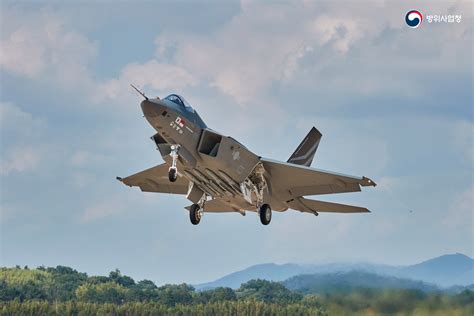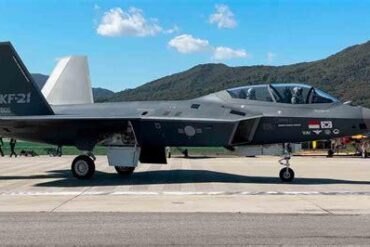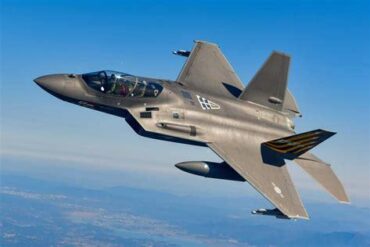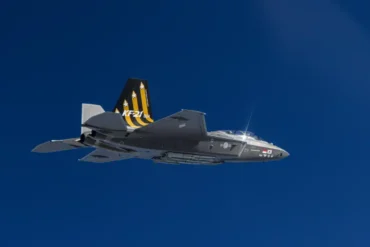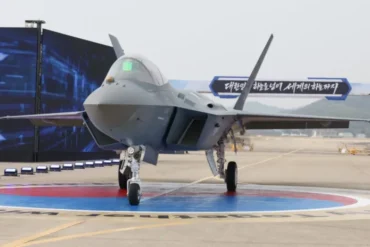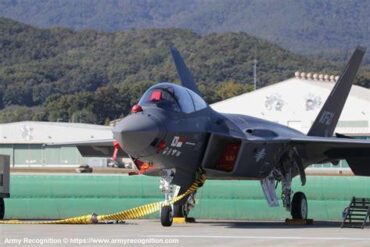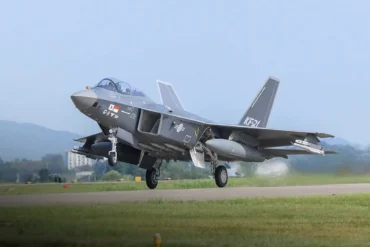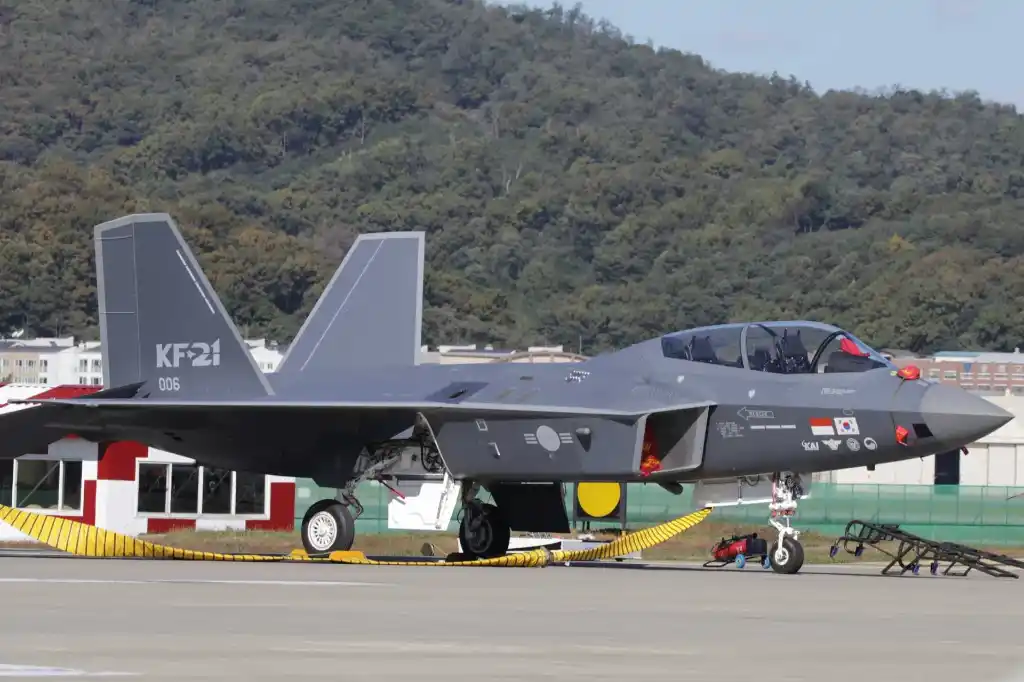
South Korea’s bold leap toward defense self-reliance has taken another major stride with the announcement that the KF-21 Boramae fighter jet will achieve full air-to-ground strike capability by 2027, nearly 18 months ahead of schedule. This aggressive timeline marks a pivotal milestone for South Korea’s aerospace ambitions, further underlining its emergence as a serious contender in the global arms market.
Strategic Leap Forward in Indigenous Airpower
The KF-21 Boramae, South Korea’s first homegrown supersonic fighter, is not merely a technological achievement—it represents a broader strategy to phase out aging American-built platforms like the F-5 and F-4, and to construct an independent defense ecosystem. Developed under the stewardship of the Defense Acquisition Program Administration (DAPA), the aircraft blends affordability with cutting-edge technology, designed to serve as a modern 4.5-generation multirole combat aircraft.
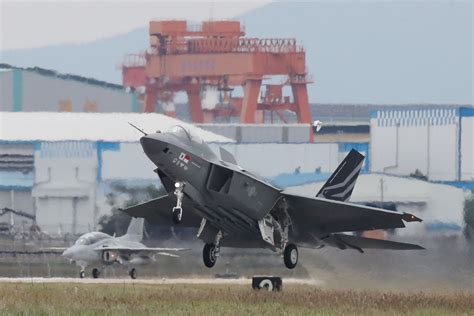
Launched in 2015, the KF-21 program was envisioned as the answer to long-standing gaps in the Republic of Korea Air Force’s ability to project power, especially amid intensifying geopolitical pressure in Northeast Asia. With over 700 billion won (US$472 million) now allocated to an extensive weapons integration campaign through 2028, the upcoming operationalization of air-to-ground capabilities signals not just a tactical gain—but a strategic shift.
Breakthroughs in Testing, Avionics, and Production
The rapid acceleration in the Boramae’s development owes much to breakthroughs across multiple technical domains. Successful flight tests, seamless avionics integration, and robust software validation have de-risked the program significantly. This progress has allowed developers to confidently push ahead with integrating 10 categories of air-to-ground munitions, including:
- Precision-guided bombs for high-accuracy strikes
- Stand-off missiles for deep-strike capabilities without entering contested airspace
- Indigenous smart weapons, many developed by South Korea’s own defense companies
Crucially, this entire arsenal is being tested without altering the original development budget or timeline, showcasing impressive program management and resource allocation.
Design Philosophy: Balancing Capability and Cost
The KF-21’s design does not aim to replicate fifth-generation stealth fighters like the F-35A or F-22. Instead, it reflects a cost-effective middle ground, with features tailored for maximum versatility and upgradability. The aircraft incorporates:
- Reduced radar cross-section (RCS) shaping
- A domestically developed AESA radar
- Infrared search and track (IRST) systems
- A modular open-architecture mission computer, enabling rapid software and systems upgrades
This design focus allows faster integration of advanced weapons and easier customization for export clients.
Competitive Positioning in the Global Market
The KF-21 is well-positioned against its 4.5-generation peers. Compared to:
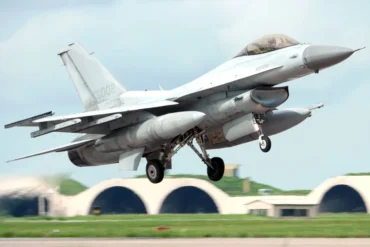
- F-16V: The Boramae offers greater payload, range, and upgrade potential.
- Saab Gripen E: It provides twin-engine safety and better endurance for maritime or rugged terrains.
- Eurofighter Typhoon: It offers a lower-cost, high-performance alternative with fewer export restrictions.
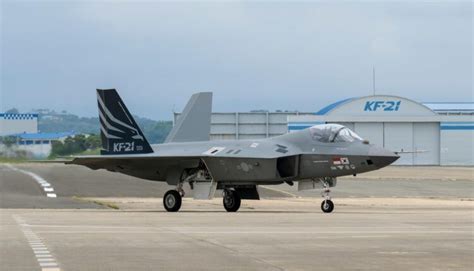
With air-to-ground certification arriving earlier than expected, South Korea aims to boost the KF-21’s profile as a mature, export-ready platform capable of full-spectrum combat roles. Countries seeking modern multi-role fighters without the political baggage or high costs of stealth aircraft are seen as prime targets.
Operational Synergy with Existing ROKAF Assets
The integration of strike capability also strengthens operational synergy across South Korea’s combat fleet. The KF-21 is not meant to replace the F-35A or F-15K, but to complement them. In future conflict scenarios, the Boramae will:
- Conduct interdiction missions and precision strikes in contested airspace
- Deliver persistent support for ground forces
- Work alongside stealth assets to provide a layered and resilient airpower structure
This force mix allows the Republic of Korea Air Force (ROKAF) to deploy mass and flexibility, while retaining survivability and technological superiority.
National and Industrial Implications
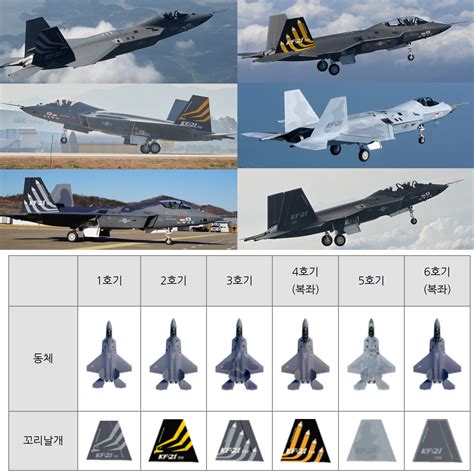
The announcement follows a critical production milestone—the first production-standard KF-21 entered final assembly in May 2025, transitioning the program from prototype phase to serial manufacturing. This marks South Korea’s maturation from license producer to independent developer of complex aerial platforms.
The potential knock-on effects are significant:
- Stimulated domestic R&D ecosystem, with greater demand for homegrown avionics, sensors, and munitions
- Elevated global defense reputation, showcasing Korea’s ability to deliver high-performance systems
- Economic growth and jobs, especially within the aerospace and defense sectors
Export Prospects and Geopolitical Relevance
In a world where many air forces are locked out of stealth technology transfers or constrained by foreign policy limitations, the KF-21 offers a pragmatic alternative. South Korea’s relatively liberal export policies and modular design philosophy make the Boramae attractive to nations in Southeast Asia, the Middle East, and Eastern Europe.
The timing of the 2027 strike capability announcement also aligns with broader geopolitical recalibrations. As tensions rise in the Indo-Pacific, particularly with North Korea’s missile provocations and China’s expanding regional footprint, the KF-21 offers allies and partners a way to bolster their airpower without choosing sides in a global arms race.
Toward 2027: A Defining Chapter Ahead
The coming years will define the KF-21’s trajectory. With weapons integration tests already underway, South Korea is preparing to certify an entire suite of air-to-ground weapons by the end of 2028, with strike roles fully operational by 2027. This accelerated roadmap places South Korea in rare company, capable of designing, producing, and fielding a multirole fighter of global standard.
Success would validate not just a decade-long national ambition, but also serve as proof-of-concept that new entrants can challenge entrenched defense players by combining innovation, speed, and strategic clarity.
The KF-21 Boramae’s journey from blueprint to battlefield is no longer a hypothetical—it is fast becoming a reality that redefines South Korea’s defense identity for the 21st century.