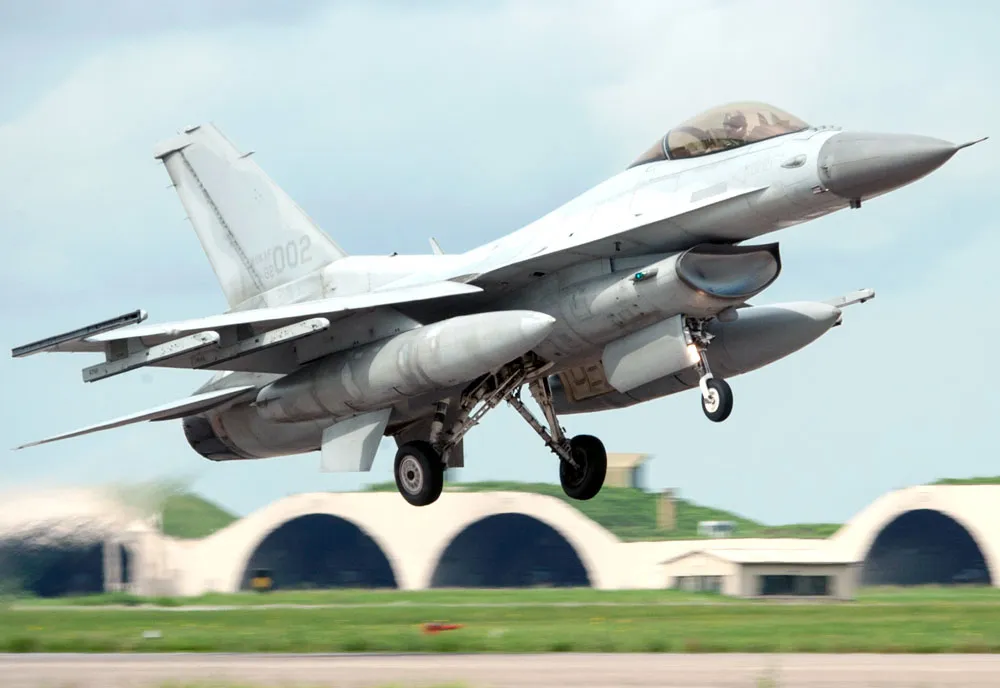
The F-16 Fighting Falcon has been a cornerstone of South Korea’s air defense for decades. Since the introduction of the KF-16, a locally assembled variant of the F-16C/D Block 52, the Republic of Korea Air Force (ROKAF) has relied heavily on this multi-role fighter. Despite its advanced capabilities and continuous upgrades, recent years have seen a series of accidents and operational challenges that raise concerns over the aircraft’s maintenance, training protocols, and geopolitical impact.
Recent F-16 Incidents in South Korea
2023 F-16 Crashes
In May 2023, a U.S. Air Force F-16 stationed in South Korea crashed during a training mission in Pyeongtaek. The aircraft was completely destroyed, though the pilot successfully ejected. This incident followed an earlier controversy in February 2023, when another U.S. F-16 mistakenly fired a missile while intercepting an aerial object.
Later in September 2023, an ROKAF F-16 crashed in Seosan, South Chungcheong Province. While the pilot escaped unharmed, the cause of the accident remained undisclosed for months, raising concerns over maintenance protocols and aircraft reliability.
2022 KF-16 Engine Failure
In November 2022, a KF-16 fighter jet crashed due to an engine malfunction. This incident renewed debates about the sustainability of aging fighter aircraft and the necessity of fleet modernization.
2025 Pochen Civilian Bombing Incident
One of the most controversial accidents in South Korean military history occurred on March 6, 2025, when two KF-16s mistakenly dropped eight MK-82 bombs on a civilian area in Pocheon, Gyeonggi Province. The resulting explosions injured 15 people, including two critically wounded civilians, and caused severe damage to multiple buildings. The accident site was only 30 km from the inter-Korean border, amplifying regional security concerns.
Causes of the Incident
- Coordinate Input Error: The lead pilot manually entered incorrect target coordinates. Compounding the mistake, subsequent verification steps, including data storage checks, visual confirmation, and real-time flight validation, were neglected.
- Failure in Communication: Although the wingman pilot recognized the correct target coordinates, they proceeded with the strike as the exercise required simultaneous bomb deployment.
Despite government assurances of compensation to victims, the incident intensified public scrutiny of military exercises, especially given the proximity to the ROK-U.S. “Freedom Shield” joint drills scheduled for March 10, 2025.
Deployment and Modernization of South Korea’s F-16 Fleet
Fleet Composition and Upgrades
South Korea operates approximately 180 F-16 fighter jets, including KF-16 Block 52 aircraft and earlier imported F-16PB models (Block 30). In 2015, the country launched an extensive modernization program, upgrading 134 aircraft to the F-16V standard. These enhancements include:
- AN/APG-83 AESA Radar: Significantly improves target detection and tracking capabilities.
- Link-16 Data Link: Enhances real-time battlefield communication and situational awareness.
- Upgraded Electronic Warfare Systems: Improves survivability against modern threats.
South Korea aims to complete these F-16V upgrades by 2025, ensuring that its fleet remains competitive with neighboring Chinese and Japanese air forces.
Strategic Airbase Deployment
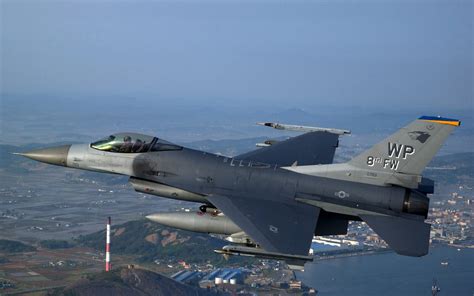
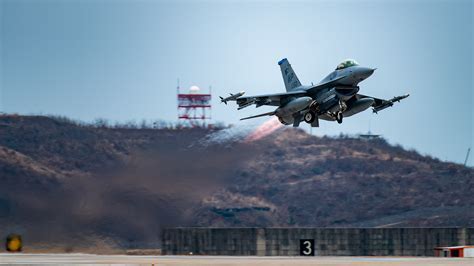
- Gunsan Air Base: Hosts around 50 F-16s, including those assigned to the U.S. 8th Fighter Wing and the ROKAF 38th Fighter Group. The base features fortified hardened aircraft shelters and expanded runways capable of accommodating over 200 combat aircraft.
- Osan Air Base: A joint U.S.-ROK air facility, housing tactical fighter squadrons and serving as a critical command hub.
Combat Capabilities and Weapon Systems
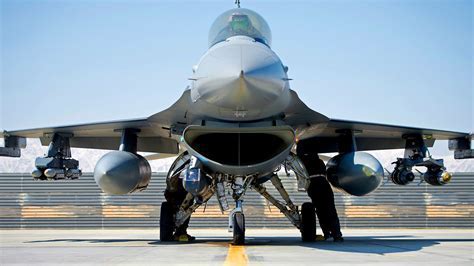
The KF-16 is a versatile multi-role fighter, capable of engaging air and ground targets with precision. Its standard armament includes:
Air-to-Air Weapons
- AIM-9X Sidewinder: Advanced short-range heat-seeking missile.
- AIM-120C/D AMRAAM: Medium-range active radar-guided missile for beyond-visual-range engagements.
Air-to-Ground Weapons
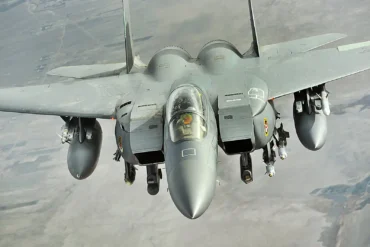
- MK-82 (500 lb) and MK-84 (2000 lb) Bombs: Unguided general-purpose bombs.
- GBU-54 Laser JDAM: Multi-mode guided bomb for precision strikes.
- AGM-158 JASSM: Long-range stealth cruise missile, significantly enhancing South Korea’s strategic deterrence capabilities.
Challenges and Future Prospects
Aging Aircraft and Maintenance Issues
Despite ongoing modernization efforts, many KF-16s have been in service for over 30 years, increasing the risk of mechanical failures. The high frequency of accidents in recent years highlights the limitations of aging airframes, even with upgrades.
Geopolitical and Operational Constraints
South Korea faces regional security threats, particularly from North Korea, China, and Japan. While the ROKAF ranks among the top 10 air forces globally, its operational independence is constrained by U.S. strategic interests.
Conclusion
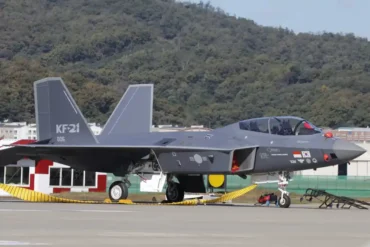
South Korea’s F-16 fleet remains a critical component of its air defense strategy, ensuring regional stability and deterrence. However, recent accidents, aging aircraft, and operational challenges highlight the need for continued modernization and improved training protocols. As South Korea transitions to next-generation platforms such as the KF-21 Boramae, maintaining a combat-ready and technologically advanced air force will be paramount.
Frequently Asked Questions (FAQ)
1. Why has South Korea experienced multiple F-16 crashes?
Most crashes have been attributed to mechanical failures, pilot errors, and inadequate maintenance procedures. The aging KF-16 fleet is undergoing upgrades, but operational risks remain due to extensive use and high-intensity training.
2. What upgrades does the F-16V modernization program include?
The KF-16V upgrade introduces the AN/APG-83 AESA radar, Link-16 communication systems, advanced avionics, and electronic warfare enhancements, significantly boosting air-to-air and air-to-ground combat effectiveness.
3. How does the 2025 Pocheon bombing incident impact South Korean military operations?
The accidental bombing raised serious concerns about training procedures, coordination protocols, and operational safety. Public backlash has led to increased scrutiny of joint military exercises, though South Korea continues to enhance its combat readiness in collaboration with the U.S. military.