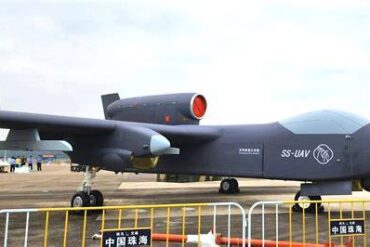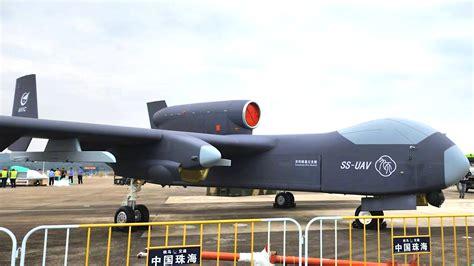
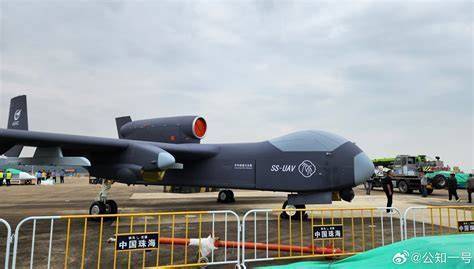
China is poised to unveil a game-changing addition to its military arsenal with the impending first test flight of the Jiu Tian drone mothership, a next-generation unmanned aerial vehicle (UAV) engineered to reshape the dynamics of modern aerial warfare. Developed by the state-owned Aviation Industry Corporation of China (AVIC) and manufactured by Xi’an Chida Aircraft Parts Manufacturing, this powerful aerial platform represents a significant step in China’s evolving military doctrine, particularly in its strategy to employ swarm drone warfare against technologically advanced adversaries.
The Rise of Swarm Warfare: Jiu Tian’s Unique Role
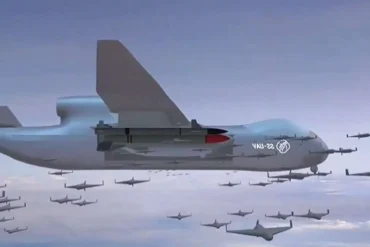
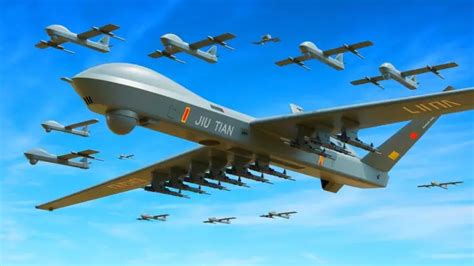
At the heart of Jiu Tian’s design is its ability to deploy up to 100 autonomous drones in a single operation, forming a tightly coordinated swarm capable of overwhelming even the most sophisticated air defense systems. This tactic, long theorized but rarely seen at scale, relies on mass saturation and distributed intelligence among the deployed drones. In combat scenarios, such drone swarms can flood radar coverage, absorb interceptors, and locate weak points in enemy defenses with unparalleled speed and adaptability.
While details remain classified, publicly available state media footage has revealed Jiu Tian’s ability to simultaneously deploy multiple UAVs from compartments along both sides of its fuselage, creating a seamless launch profile that prioritizes speed and operational efficiency. The aircraft’s super-high altitude operating capabilities ensure a tactical advantage, placing it out of reach of many conventional weapons while still capable of delivering its payload with precision.
Technical Specifications and Operational Capacity
The Jiu Tian drone mothership is jet-powered and engineered for long-range missions. Early reports indicate that the UAV features a maximum operational range of 7,000 kilometers, positioning it well for trans-regional missions or operations in contested airspace far from China’s mainland.
Key specifications include:
- Payload Capacity: Up to six tonnes, allowing it to carry a combination of munitions and mini-drones.
- Deployment Capability: Simultaneous multi-drone release system embedded in both flanks of the fuselage.
- Range: Approximately 7,000 km, suitable for regional and intercontinental missions.
- Flight Ceiling: Designed for high-altitude operations that support both combat and reconnaissance objectives.
This expansive range and modular configuration mean Jiu Tian is not merely a tactical asset, but a strategic force multiplier capable of projecting power far beyond Chinese territory.
Strategic Objectives: From Combat to Rescue
Though its primary purpose lies in combat operations and airspace dominance, Jiu Tian’s architecture supports a broad range of secondary missions. AVIC officials have stated that the drone mothership is designed for use in high-security transport, border defense, and even emergency rescue operations. This multifunctional potential enables it to serve across military and civilian applications, which is increasingly a hallmark of modern Chinese military technology.
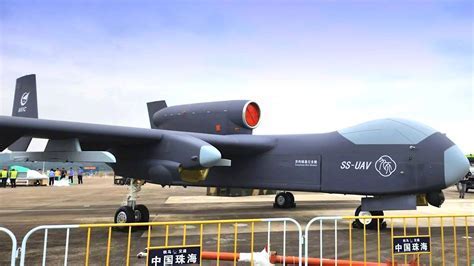
The inclusion of these diverse functionalities reveals China’s commitment to dual-use UAV infrastructure, a hallmark of its defense industry strategy that emphasizes both wartime capability and peacetime utility.
A Direct Challenge to Western Aerial Superiority
China’s unveiling of the Jiu Tian project is already drawing comparisons to elite U.S. drone models such as the RQ-4 Global Hawk and the MQ-9 Reaper, long considered the benchmarks in American UAV technology. However, unlike these fixed-role systems, Jiu Tian stands out due to its modular design and swarm capability.
Western military analysts have observed that while U.S. drones excel in ISR (intelligence, surveillance, reconnaissance) missions and targeted strike operations, China’s Jiu Tian may represent a shift toward volume-based disruption tactics — essentially exchanging firepower per drone for force multiplicity and coordinated chaos through swarming.
This development underlines China’s strategic emphasis on asymmetric warfare, where quantity and advanced automation are deployed to counter qualitative advantages held by adversaries.
Military Significance in the Taiwan Context
Jiu Tian’s emergence comes amid heightened military tensions over Taiwan, where China has escalated military drills and public threats of annexation. The drone mothership’s rapid deployment capability, long range, and ability to saturate enemy defenses make it particularly suited for operations in this theater.
In the event of conflict, Jiu Tian could launch swarms of reconnaissance and loitering munitions deep into Taiwanese territory or surrounding sea lanes. These drone clouds could:
- Distract and neutralize air defense radars.
- Locate and destroy missile sites.
- Provide real-time data on enemy troop and fleet movements.
With Taiwan being closely allied with the U.S. and dependent on American military technology, the deployment of a drone mothership by the PLA marks a significant escalation in China’s regional capabilities and its willingness to challenge Western military presence in East Asia.
Innovation Behind the Scenes: AVIC and Xi’an Chida’s Role
The development and production of Jiu Tian reflect the deepening sophistication of China’s military-industrial complex. AVIC, the project’s lead designer, has long been a central player in the nation’s aerospace ambitions, while Xi’an Chida Aircraft Parts Manufacturing has demonstrated growing capacity in building next-gen airframes and composite systems.
The collaboration showcases China’s shift from technology imitator to innovator, with indigenous development pipelines now producing competitive and strategically disruptive platforms. Chinese defense experts have underscored how these advances reflect broader goals in military self-reliance and technological leadership.
Visualising the Future: What Comes After Jiu Tian?
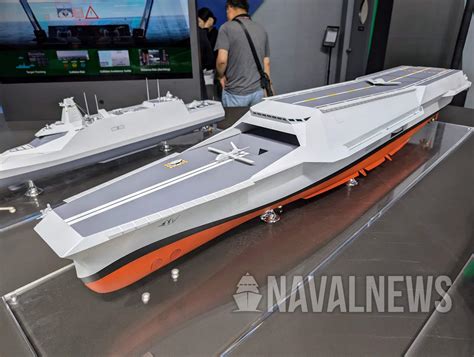
While Jiu Tian is making headlines now, its infrastructure suggests even greater ambitions. Analysts believe the drone mothership could become the template for a family of autonomous launch platforms, ranging from naval drone carriers to space-based deployment systems. Future iterations may include:
- Navalized drone motherships for maritime swarm deployment.
- Autonomous refueling drones extending mission endurance.
- Satellite-linked command systems enabling real-time global coordination.
These capabilities point toward a fully integrated combat cloud, where swarms, sensors, and support platforms operate seamlessly under AI guidance.
Global Implications and Strategic Calculations
The timing of Jiu Tian’s debut is not accidental. It aligns with China’s broader push to assert regional dominance, undermine American influence in the Indo-Pacific, and deter potential coalition responses to a Taiwan contingency. By deploying drone motherships, China is making a statement — that future conflicts will be fought in layers, where autonomy, data, and swarm logic may outmaneuver even the most advanced single-platform systems.
International response to the Jiu Tian development will likely include:
- Accelerated UAV and anti-swarm R&D in the U.S., Japan, and India.
- Increased funding for AI-driven air defense systems.
- Bilateral exercises focusing on swarm threat scenarios.
The pressure is now on global powers to respond not just with superior firepower, but with adaptive, intelligent air defense networks capable of detecting, analyzing, and neutralizing dozens — or hundreds — of UAVs in real-time.
Conclusion: A Milestone in the UAV Arms Race
The Jiu Tian drone mothership’s entry into operational testing marks a pivotal moment in the evolution of modern warfare. With its multi-role architecture, unprecedented swarm capabilities, and long-range deployment features, Jiu Tian is not just another drone — it is a strategic ecosystem, one built to challenge legacy platforms and establish new doctrines of air superiority.
Whether as a tool of regional deterrence or the harbinger of broader global shifts, Jiu Tian redefines the battlefield geometry, and its arrival sends a clear message: China is preparing not just for today’s wars, but for the autonomous conflicts of tomorrow.