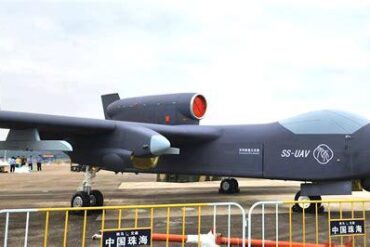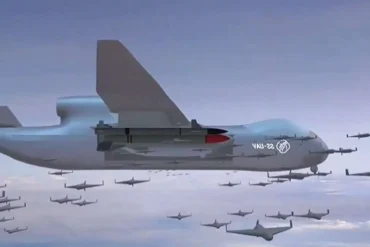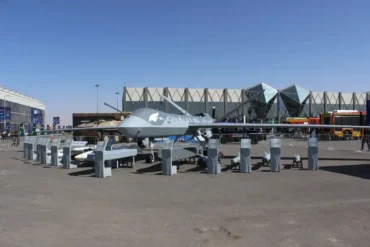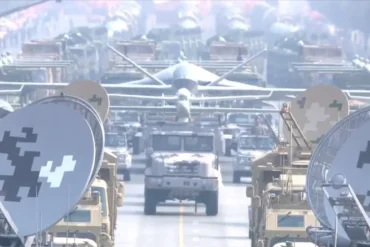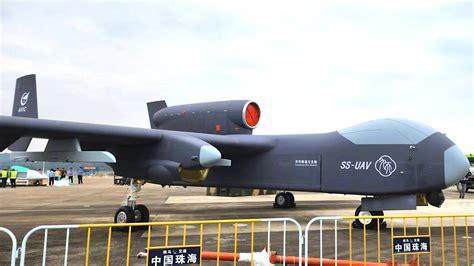
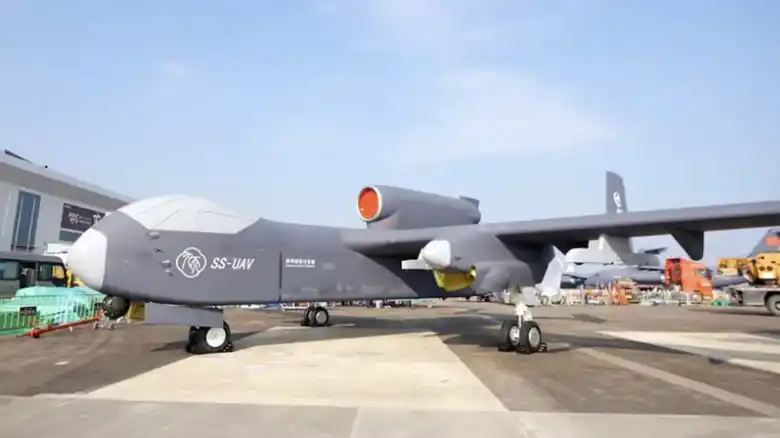
In a world where drone warfare is rapidly becoming the dominant force in military strategy, China’s unveiling of the Jiu Tian SS-UAV drone mothership marks a critical evolution in unmanned combat capabilities. Debuted during the Zhuhai Air Show in November 2024, the Jiu Tian—meaning “High Sky”—is not merely another drone; it is an unmanned aerial mothership capable of deploying entire swarms of first-person view (FPV) kamikaze drones far beyond their standard operational range. This bold advancement could significantly reshape the power dynamics in drone-centric combat theaters and potentially alter the tactical landscape in Asia and beyond.
The Strategic Leap: Extending the Reach of Kamikaze Drones
The fundamental limitation of many FPV drones is their restricted range, typically spanning only a few kilometers. These nimble, low-cost weapons are devastating at close quarters, as seen in the Russo-Ukrainian conflict, where Ukrainian ingenuity has transformed off-the-shelf drones into tank-killing machines. But their range bottleneck has hindered broader strategic utility. Enter the Jiu Tian SS-UAV, China’s answer to that constraint.
Instead of flying into contested zones, the Jiu Tian operates as a standoff platform, transporting up to 100 individual UAVs to the edge of a battlespace before deploying them in a massive coordinated strike. These drones—potentially armed with explosive payloads or equipped for surveillance—can penetrate enemy lines with minimal cost and high impact. With a range of 4,350 miles, maximum ceiling of 50,000 feet, and an impressive 36-hour endurance, the Jiu Tian could launch deep-penetration drone strikes across vast regions without placing itself in direct jeopardy.
Design and Capabilities: A Flying Fortress
Despite its unmanned nature, the Jiu Tian is enormous by drone standards. Its 82-foot wingspan and 16-ton maximum takeoff weight position it closer in size to manned military aircraft than to traditional drones. According to limited Chinese sources, the drone can also carry 2,200 pounds of missiles, although this function is likely secondary to its primary role as a drone mothership. China already possesses multiple missile-capable UAVs, making the swarm-launching function of the Jiu Tian a more distinctive capability.
Structurally, the Jiu Tian resembles a blend of high-altitude surveillance aircraft and loitering munition carriers. This hybrid design provides both the stealth of unmanned systems and the endurance required for extended missions. Though it appears bulky and potentially vulnerable to advanced air defense systems, it is not intended to engage in direct combat zones without air superiority. Its design echoes that of force multiplier platforms, enhancing rather than replacing traditional combat assets.
Western Skepticism and Strategic Implications
Reaction from the West has been mixed. Retired U.S. Air Force pilot and online commentator MCCCANM dismissed the drone as a “gigantic missile magnet” and little more than “propaganda.” While such skepticism may reflect confidence in Western anti-air capabilities, it arguably underestimates the asymmetric advantages the Jiu Tian offers. In conflicts against less technologically equipped adversaries, its ability to deliver dozens or even hundreds of low-cost FPV drones in a single sortie could overwhelm ground defenses and cause extensive material and psychological damage.
This asymmetry is already evident in Ukraine, where drones costing only a few thousand dollars have destroyed multi-million-dollar assets. If China can deploy the Jiu Tian in tandem with its one-million-unit order of kamikaze drones, it could unleash drone swarms on a previously unthinkable scale.
Potential Scenarios and Tactical Use
The strategic use of the Jiu Tian will likely be governed by target environment and enemy capability. Against a peer rival like the United States or Japan, its use would be restricted to theater-level conflicts with established Chinese air superiority. However, in disputes over the South China Sea, Taiwan, or potential flashpoints in Southeast Asia, the Jiu Tian offers unique advantages:
- Rapid drone saturation of contested airspace and islands.
- Extended-range ISR (intelligence, surveillance, reconnaissance) support for PLA Navy operations.
- Pre-emptive loitering attacks using kamikaze drones.
In these scenarios, a fleet of Jiu Tians could release thousands of FPV drones simultaneously, each capable of homing in on tanks, air defense radar, surface vessels, or command posts. The cost-to-kill ratio here favors China, especially if defending forces are forced to expend high-value missiles to neutralize cheap drones.
The ISR Component: Data as a Weapon
Beyond offensive capacity, the Jiu Tian could be used extensively for real-time battlefield awareness. Each mission could double as a data-gathering operation, feeding live intelligence from drone optics, ELINT (electronic intelligence) systems, or even infrared and thermal payloads. When coordinated with satellite imagery and land-based radar networks, the Jiu Tian’s ISR functions could offer commanders multi-domain situational awareness across thousands of kilometers.
This aligns with China’s broader strategy of building a network-centric warfare model, similar to the United States’ Joint All-Domain Command and Control (JADC2) initiative. In this regard, the Jiu Tian doesn’t merely unleash drones—it weaves them into an autonomous, data-rich warfighting ecosystem.
The Threat of Drone Swarm Saturation
China’s heavy investment in swarming capabilities reflects an understanding of the psychological and tactical burden that drone saturation imposes. Even modern militaries struggle to counter swarms due to the sheer volume of projectiles, the randomness of swarm paths, and the difficulties in target acquisition. In 2024 alone, several Russian military outposts were disabled by Ukrainian drone swarms—a tactic China appears ready to refine and scale.
If just 10 Jiu Tians are deployed with full drone complements, the result is 1,000 drones in a single coordinated attack. Defense systems like Patriot or Iron Dome, designed to handle missile attacks, may not adapt quickly enough to stop an agile swarm of FPV kamikazes. In such an environment, even the illusion of imminent attack could force enemy units to disperse or shut down temporarily, providing China with tactical breathing room.
Risks and Limitations
However, the Jiu Tian is not without vulnerabilities. It remains a slow, unmanned vehicle with a large radar cross-section, making it an ideal target if caught outside the protection of electronic warfare (EW) or air superiority umbrellas. Even so, China may mitigate these risks by:
- Operating at extremely high altitudes.
- Using decoy drones to confuse radar systems.
- Employing saturation tactics to ensure at least some payloads reach their targets.
Furthermore, while effective against smaller states or in grey-zone conflicts, its utility in full-scale peer warfare remains questionable. The U.S., Japan, and NATO allies are rapidly developing anti-drone systems, directed energy weapons, and autonomous interception drones, all of which could pose serious threats to slow-moving drone carriers like the Jiu Tian.
Conclusion: A New Chapter in Drone Warfare
The Jiu Tian SS-UAV drone mothership is more than just another unmanned aircraft—it is a conceptual breakthrough. If proven operationally effective, it could usher in a new era of distributed, drone-based warfare, where manned aircraft play supporting roles and the skies are filled with intelligent, self-directed UAVs executing missions previously reserved for high-cost platforms.
While the West debates its survivability and effectiveness, China continues to shift the doctrine of modern combat. The Jiu Tian may not be perfect, but it represents a formidable innovation that signals China’s deepening commitment to drone supremacy. As drone swarms evolve from tactical gimmicks into strategic assets, the Jiu Tian could well be remembered as the world’s first flying drone carrier—and the beginning of a new age in aerial warfare.