The landscape of modern warfare has been reshaped by the ubiquity of unmanned aerial systems (UAS), loitering munitions, and low-altitude threats. In response to this rapidly evolving battlefield, Türkiye has unveiled a game-changing solution—the Tolga short-range air defense system, an indigenous innovation that solidifies its defense ecosystem under the national “Steel Dome” doctrine.
Tolga’s Combat Debut: A Decisive Technological Leap
On November 16, 2025, Türkiye marked a significant milestone by validating the operational readiness of the Tolga system through live-fire trials. Hosted by the Turkish Ministry of National Defense and reported by Anadolu Ajansı, these tests proved Tolga’s efficacy against a diverse array of aerial threats. The trials demonstrated successful engagements against unmanned aerial targets, reflecting real-world scenarios where drones and smart munitions now play central roles in both state and asymmetric conflicts.
These trials were not merely technological demonstrations—they served as tangible proof of a robust, field-ready system. Each test engagement underscored the Tolga system’s multi-layered defense capacity, transitioning it from a developmental initiative into an operational asset ready for deployment across varied theaters.
Layered Defense Philosophy: The Heart of the Steel Dome
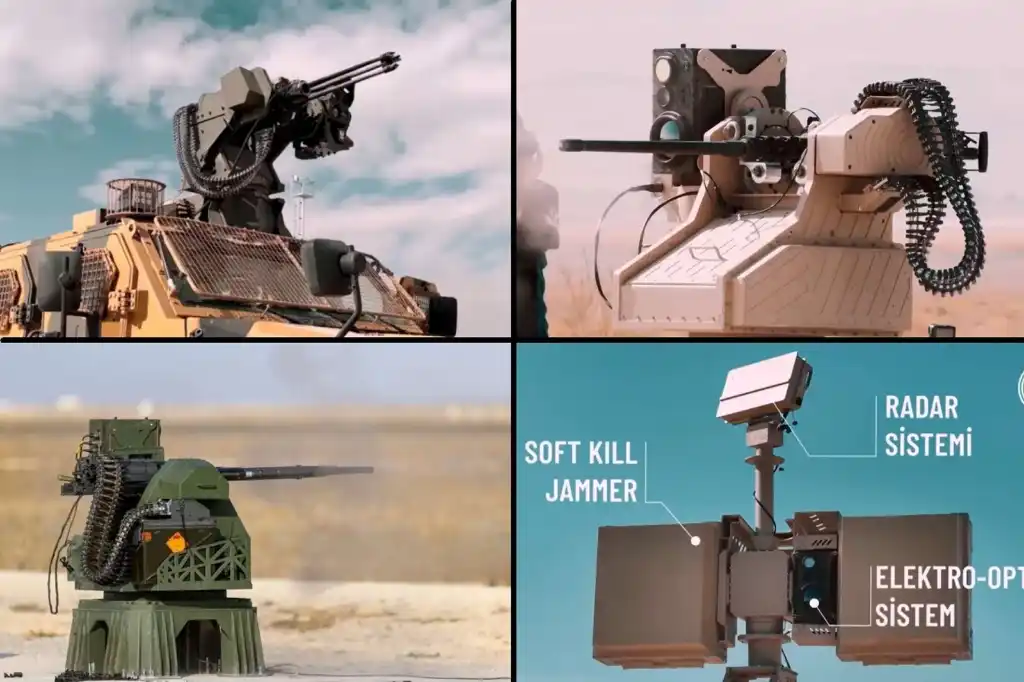
Tolga’s architecture is the epitome of integrated short-range air defense, emphasizing flexibility, scalability, and resilience. Its design converges a modular ecosystem of:
- Command-and-control unit for real-time decision-making
- Advanced search and tracking radar
- Electro-optical sensors for precision detection
- Electronic warfare jammers to neutralize threats passively
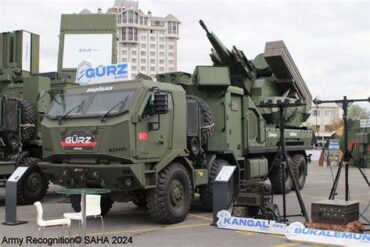
- Kinetic effectors: 35 mm, 20 mm, and dual 12.7 mm guns with anti-drone ammunition
Together, these components deliver a 360-degree engagement capability across a threat envelope extending up to 10 kilometers.
Engagement Process: From Detection to Elimination
Tolga’s efficiency is built on automation and adaptability. Upon detecting a target through its radar and EO suite, the system classifies and tracks the threat, then determines the optimal engagement mode:
- Soft-kill techniques, including electronic jamming and spoofing, target UAS at standoff distances, disrupting communications and navigation.
- Hard-kill methods, relying on kinetic firepower, are deployed when soft-kill fails or when confronting autonomous systems immune to electronic disruption.
The flagship 35 mm gun, paired with programmable airburst ammunition, can eliminate fast, maneuvering drones up to 3 kilometers away. At closer ranges, 20 mm and dual 12.7 mm guns create a web of dense firepower, ensuring overlapping defense layers.
Modularity for Multi-Theater Deployment
What distinguishes Tolga is its platform versatility. It is engineered for fixed, mobile, and maritime environments, allowing seamless integration into:
- Base and infrastructure protection
- Vehicle-mounted convoy defense
- Naval operations, including port and ship defense
This level of cross-domain modularity ensures that the Turkish Armed Forces—and potential allies—can employ Tolga as a common counter-UAS platform, reducing training time and logistics burden.
Engineering Triumph: From Concept to Execution
Tolga’s accelerated path from concept to reality is a testament to Türkiye’s maturing defense industry. Spearheaded by Makine ve Kimya Endüstrisi (MKE), the system was entirely developed with domestic technologies. Its first public appearance at IDEF 2025 showcased not just a prototype, but a near-complete system backed by rigorous testing protocols.
Live trials at the Karapınar Firing Test and Evaluation Group Command in Konya involved both soft- and hard-kill scenarios against mini and tactical UAVs, loitering munitions, and simulated cruise missiles. The results were compelling:
- 100% success rate in eight varied engagement scenarios
- Minimal ammunition usage, with several kills achieved in a single burst
- Effective neutralization of fast, evasive targets across different altitudes and speeds
This performance reflects not only engineering precision but also an understanding of asymmetric aerial threats drawn from real combat zones, including those in Syria, Libya, and Ukraine.
Differentiation in the Global Counter-UAS Market
Tolga stands out in a crowded marketplace of short-range air defense systems due to its integrated and hybrid approach. Unlike many competitors that focus exclusively on either jamming or kinetic action, Tolga combines:
- Soft-kill countermeasures for remotely piloted drones
- Hard-kill options for autonomous or pre-programmed threats
Its caliber-specific ammunition family further enhances tactical flexibility:
- 35 mm programmable rounds for drones up to 3 km
- 20 mm for intermediate-range targets
- 12.7 mm for close-in protection under 300 meters
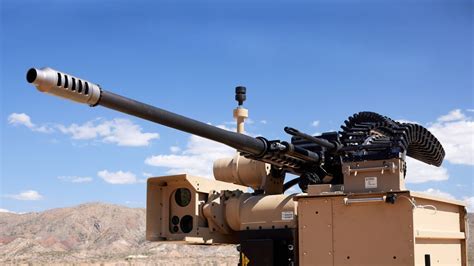
Such breadth enables mission-tailored engagements, reducing overkill, conserving munitions, and increasing the number of threats neutralized per mission. Moreover, Tolga’s autonomous operation modes, ranging from manual to semi- and fully-autonomous, give operators the flexibility to adapt to ROE (Rules of Engagement) and mission-specific requirements.
Strategic Role Within Türkiye’s Steel Dome Framework
Tolga fills a critical gap in Türkiye’s multi-tiered Steel Dome strategy—a national defense architecture that includes long-range SAMs, mid-tier interceptors, and now, point-defense systems for short-range and low-altitude threats.
In this layered approach:
- Higher-tier SAMs cover long-range ballistic and cruise missile threats
- Medium-tier interceptors protect against aircraft and UAV swarms
- Tolga delivers the final shield against ultra-low-altitude, small-footprint drones and loitering munitions
This integration enhances the survivability of:
- Forward operating bases and supply hubs
- Airfields and command centers
- Naval vessels and coastal infrastructure
Expanding Influence Through Defense Diplomacy
Beyond the battlefield, Tolga is a strategic export tool. Türkiye aims to position Tolga as a competitive alternative for nations facing rising drone threats—particularly across:
- Middle East and North Africa (MENA)
- The Caucasus and Central Asia
- Southeast Asia and the Balkans
By launching international demonstration campaigns, Türkiye is not only showcasing Tolga’s capabilities but also signaling its defense industrial independence. This is particularly significant as nations seek non-Western sources for critical military technologies amidst shifting geopolitical alignments.
For emerging regional powers, Tolga represents an affordable, customizable, and reliable system—a powerful combination in an era where aerial asymmetry is the norm, not the exception.
Production Readiness and Industrial Autonomy
One of Tolga’s most compelling advantages is its production readiness. MKE has confirmed that serial production infrastructure is already established for:
- Weapon platforms
- Specialized ammunition suites
- Command and sensor packages
This industrial maturity ensures rapid fielding to domestic forces and readiness for export orders without delays often associated with new defense products.
Importantly, Tolga’s full indigenization reduces exposure to supply chain bottlenecks, sanctions, or foreign dependencies—an essential consideration in today’s fragmented geopolitical economy.
Conclusion: Tolga as a Vanguard of Modern Air Defense
In the post-Ukraine-war security paradigm, the ability to neutralize low-cost, high-impact drone threats is no longer optional. Tolga is Türkiye’s answer to this imperative. By merging radar, electro-optics, jamming, and kinetic interceptors into a unified and modular solution, Tolga delivers a next-generation close air defense system tailored to both today’s conflicts and tomorrow’s uncertainties.
Its arrival marks a new phase in drone warfare, not just for Türkiye but for all nations grappling with the democratization of aerial threats. In Tolga, Türkiye has built more than a weapon—it has forged a symbol of its strategic foresight, industrial capability, and defense autonomy.