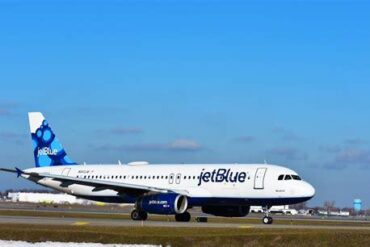
JetBlue Airways was expected to be in the middle of an aggressive fleet expansion by now, adding new Airbus narrowbodies throughout the second half of the 2020s. Instead, the airline has made a striking change in direction. While Airbus A220 deliveries continue, JetBlue has pushed back deliveries of 44 A321neo-family aircraft until after 2029, reflecting a much more defensive strategy as it attempts to stabilize its finances, reshape its network, and find a more sustainable position in the increasingly difficult US airline market.
The decision is significant because the Airbus A321neo is one of the most capable and commercially successful narrowbody aircraft ever developed. It combines strong fuel efficiency with enough capacity and range for everything from domestic trunk routes to long-haul international services. JetBlue has used the aircraft family particularly effectively on premium transcontinental and transatlantic routes, where its Mint business-class product gives the airline a distinctive advantage.
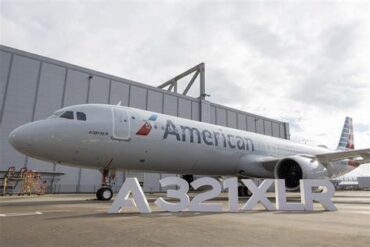
Yet an excellent aircraft is not necessarily the right aircraft for an airline at every stage of its development. JetBlue’s current problem is not a lack of attractive aircraft. It is a lack of profitable opportunities where those aircraft can generate sufficient returns. The airline therefore deferred 31 standard A321neos, two A321LRs, and 11 A321XLRs, creating a substantial gap in its original delivery schedule.

The first consequence is easy to see in JetBlue’s fleet. Its youngest A321neo entered service in 2025, and the airline is not expected to receive additional A321neos during 2027, 2028, or 2029 under the revised schedule. This is an unusual situation for an airline that once appeared poised to use the A321neo as a central part of its growth strategy. Even more revealing, JetBlue has already sold the delivery positions for two A321XLRs before those aircraft were assembled, demonstrating just how aggressively the carrier is trying to avoid unnecessary fleet commitments.
JetBlue’s Financial Problems Are Driving the Fleet Strategy
The biggest reason behind the deferrals is financial. JetBlue reported a $602 million net loss in 2025, and its financial performance has remained under pressure during 2026. When an airline is consistently losing money, adding dozens of expensive new aircraft can make the problem worse rather than better. New aircraft may consume less fuel and require less maintenance than older examples, but they also come with substantial financing, ownership, and depreciation costs.
This distinction is crucial to understanding JetBlue’s strategy. An older aircraft that is already largely paid for can be economically useful even when it is less fuel-efficient. If demand is weak on a particular day, the airline can reduce utilization, park the aircraft temporarily, or adjust the schedule without carrying the same financial burden associated with a newly delivered aircraft. A brand-new A321neo, by contrast, represents a major capital commitment whether it flies intensively or sits on the ground.
JetBlue is therefore attempting to conserve cash by slowing the growth of its most expensive aircraft category. The approach does not mean the A321neo is inefficient. Quite the opposite: its operating economics are excellent. The issue is that excellent operating economics cannot compensate for insufficient demand or poor network economics. If an aircraft is being used on flights that do not produce acceptable returns, its fuel efficiency alone cannot rescue the route.
The A220 is more attractive under these circumstances because it is smaller, has lower capital costs, and can be deployed more flexibly. JetBlue has also been using the Airbus A220-300 to replace its Embraer E190 fleet, meaning those deliveries serve a direct fleet-renewal purpose rather than relying entirely on future growth.

That distinction explains why JetBlue has not simply stopped taking Airbus aircraft altogether. The airline still needs new-generation aircraft, but it needs the right size and the right economics. The A220 allows JetBlue to replace older regional-capacity aircraft while adding flexibility to its network. The A321neo, meanwhile, was primarily intended to support expansion, especially on major domestic, transcontinental, and international routes.
Why JetBlue Is Prioritizing Domestic and Caribbean Flying
JetBlue’s network strategy has also changed dramatically. The airline’s Mint-equipped A321s, A321neos, and A321LRs remain highly valuable because they allow JetBlue to compete for premium passengers on transcontinental and transatlantic services. Mint has developed a strong reputation, and passengers frequently select JetBlue specifically because the airline offers a premium experience on routes where competitors may have less attractive business-class products.
However, these flights represent a relatively narrow part of JetBlue’s overall business. Much of the airline’s traffic comes from domestic and Caribbean markets, particularly those connected to its traditional strengths in the Northeast, Florida, and leisure destinations. These markets are also where JetBlue faces some of its greatest challenges.
The problem is that JetBlue often competes directly against much larger legacy airlines without having the same breadth of network, corporate contracts, loyalty-program scale, or premium cabins. Its economy product generally offers more legroom than many competitors, but passengers do not necessarily pay a large premium simply for that benefit. Meanwhile, outside its strongest markets, JetBlue has a comparatively limited network and has historically lacked a premium product on many routes.
That makes the A321neo a difficult aircraft to justify as a growth tool right now. A large narrowbody works best when an airline has enough high-demand routes to keep it productive. If JetBlue adds more A321neos before it has rebuilt its domestic network, the aircraft could simply increase capacity faster than the airline can generate profitable demand.
Instead, JetBlue is attempting to improve the economics of its existing network. The carrier is restructuring routes, eliminating underperforming services, strengthening important markets, and developing Fort Lauderdale as a secondary hub. This is a much more conservative approach than simply adding aircraft and hoping that additional capacity creates new revenue.
The A321neo Is Excellent, But Its Size Matters
JetBlue’s decision should not be interpreted as a rejection of the A321neo. The aircraft remains one of the strongest products in the Airbus portfolio. Its combination of range, capacity, fuel efficiency, and cabin flexibility makes it particularly attractive for airlines that need to bridge the gap between conventional narrowbodies and larger widebody aircraft.
For JetBlue, however, the aircraft’s strengths can become disadvantages when demand is weak. A smaller A220 can be deployed profitably on thinner routes that would not support an A321neo. It can also be easier to park or reduce in utilization when demand changes. That flexibility matters enormously for an airline attempting to rebuild its financial position.
The difference becomes even more important when aircraft are affected by engine availability problems. JetBlue operates aircraft powered by Pratt & Whitney’s PW1000G geared turbofan family, including the PW1100G on its A321neo fleet and the PW1500G on its A220 fleet. These engines have experienced significant durability and maintenance challenges, creating shortages of serviceable engines and forcing some aircraft to remain grounded.

Although JetBlue’s A220s are also affected by PW1500G issues, the smaller aircraft is still less financially burdensome to own and store. If several A220s are temporarily grounded, the financial exposure is lower than parking the same number of larger A321neos. That makes the A220 a better fit for an airline that is currently prioritizing flexibility and capital preservation.
The engine problem therefore reinforces, rather than creates, JetBlue’s fleet decision. The A321neo remains an efficient aircraft, but the combination of capital costs, capacity requirements, and engine availability makes rapid expansion less attractive during a period of financial pressure.
JetBlue Sold Two A321XLR Delivery Positions
The most revealing part of the strategy may be what happened to the A321XLRs. JetBlue originally ordered 13 A321XLRs, with two aircraft scheduled to arrive shortly after the type entered commercial service. Instead, the airline ultimately sold the delivery positions for those two aircraft in 2025.
This appears to have been particularly important because contractual conditions may have limited JetBlue’s ability to defer those specific aircraft. Selling the positions allowed the airline to avoid taking delivery of aircraft that it did not currently need.
The A321XLR is closely related to the A321neo and A321LR, but it includes changes necessary to provide substantially greater range. That capability is extremely valuable for airlines building long-distance narrowbody networks, but it also comes with little benefit if an airline is primarily concentrating on domestic and Caribbean flying.
Had JetBlue retained the two early A321XLRs, it could have ended up operating only those two aircraft for several years before the remaining examples arrived. Such a small subfleet would create additional complexity in maintenance, crew training, scheduling, and fleet planning. Selling the positions was therefore a logical way to avoid creating an isolated mini-fleet before the airline actually needed the aircraft.

JetForward Is Designed to Stabilize JetBlue First
The broader explanation for the aircraft deferrals can be found in JetForward, the strategy JetBlue introduced in 2024. The plan is aimed at returning the airline to profitability over several years rather than pursuing growth at any cost.
Operational reliability is a major part of the strategy. JetBlue has also been pursuing partnerships, including its Blue Sky agreement with United Airlines, while changing its network and increasing its focus on premium customers.
One of the most important changes is BlueFirst, JetBlue’s domestic first-class product. The airline plans to begin rolling out BlueFirst later in 2026 and intends to install the product throughout its non-Mint fleet. The objective is straightforward: capture more of the growing demand for premium seats without depending exclusively on Mint-equipped aircraft.
This could be more important to JetBlue’s future than adding another batch of A321neos. Domestic first class can generate substantially higher yields than standard economy, particularly on routes where customers are willing to pay for additional space, service, and flexibility. By improving the economics of the aircraft already in its fleet, JetBlue can potentially increase revenue without taking on the enormous capital commitment associated with rapid fleet expansion.
The strategy also changes how the airline views growth. Instead of measuring success primarily through the number of new aircraft or routes added, JetBlue increasingly needs to determine whether each aircraft and route contributes to sustainable profitability.
What the A321neo Deferrals Mean for JetBlue’s Future
JetBlue’s decision to defer 44 A321neo-family aircraft until after 2029 is ultimately a reflection of an airline trying to survive a difficult period rather than a judgment against Airbus’s narrowbody technology. The A321neo remains exceptionally capable, but JetBlue currently has more urgent problems to solve.
The carrier needs to improve its domestic network, strengthen its core markets, increase premium revenue, control costs, improve operational reliability, and preserve cash. Those objectives favor smaller and more flexible aircraft rather than rapid expansion with large narrowbodies designed partly for routes JetBlue is no longer prioritizing.
The future could look very different if JetForward succeeds. A healthier JetBlue with stronger domestic yields and a more profitable premium operation could eventually have a much greater need for A321neos, A321LRs, and A321XLRs. That is precisely why deferral is preferable to outright cancellation: the airline is preserving the possibility of future growth without committing today’s limited financial resources to tomorrow’s aircraft.
For now, however, JetBlue is effectively putting its A321neo expansion on ice while betting on the A220, existing aircraft, domestic network restructuring, and premium cabin growth. The unusual fleet plan tells a larger story about the US airline industry: when demand, costs, competition, and capital availability all become more challenging, even a highly successful aircraft such as the A321neo can become the wrong tool for immediate growth.
JetBlue does not need more capacity simply for the sake of having more capacity. It needs profitable capacity. Until the airline can demonstrate that its network can consistently generate the returns required to support a larger fleet, postponing 44 new A321neos may be one of its most important financial decisions of the decade.