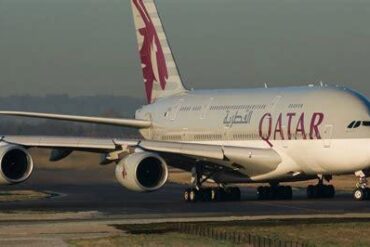
The Airbus A380 has spent nearly two decades defying predictions of an early exit, and in 2026 the world’s largest passenger jet remains an unmistakable presence across the United States. Despite the aircraft’s production ending and multiple retirements worldwide, the A380 continues to anchor high-density, long-haul routes where slot constraints, premium demand, and sheer passenger volume still justify its size. For travelers, its return each day is less about nostalgia and more about capacity, comfort, and global connectivity on an unmatched scale.
According to aviation analytics from Cirium, 22 Airbus A380 routes are scheduled to operate to the US in 2026, generating more than 8,000 one-way flights across the year. These flights originate from eight international airports and touch down at ten major US gateways, underlining how selectively—but decisively—the superjumbo is being deployed. Rather than widespread coverage, the A380’s modern role is sharply focused: mega-hubs linked to mega-markets, flown by airlines that understand how to fill every deck.
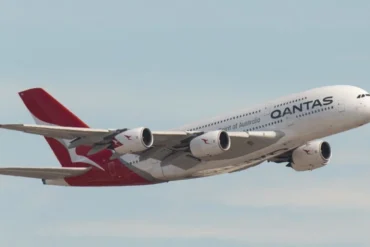
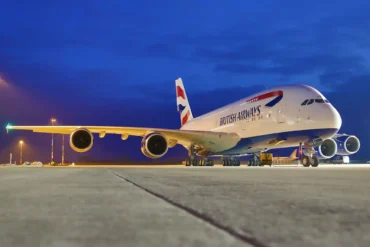
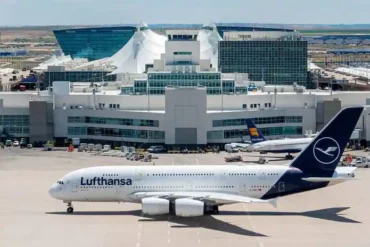
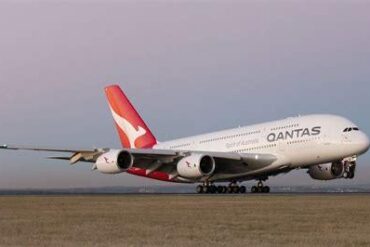
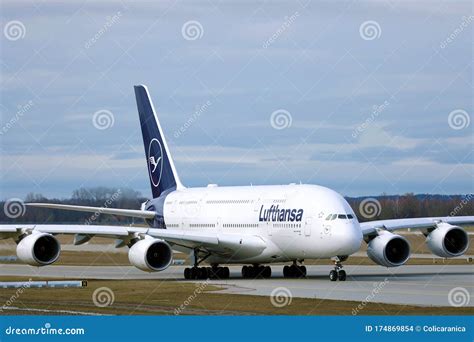
Seven international carriers will operate the A380 to the US in 2026: ANA, Asiana Airlines, British Airways, Emirates, Korean Air, Lufthansa, and Qantas. Each airline uses the aircraft differently, yet all converge on the same strategic logic. When demand peaks and runway slots are scarce, a single aircraft carrying well over 500 passengers remains economically powerful.
The Ten US Airports Anchoring A380 Operations
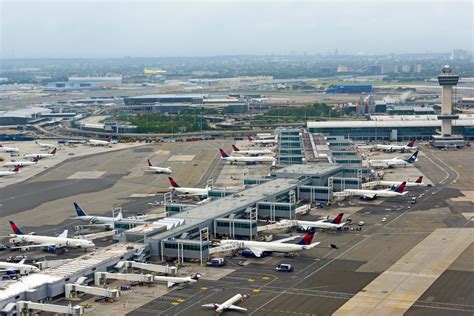
In 2026, ten US airports will see Airbus A380 service, forming a tight constellation of long-haul hubs. These include Boston, Dallas/Fort Worth, Denver, Honolulu, Houston Intercontinental, Los Angeles, Miami, New York JFK, San Francisco, and Washington Dulles. Each plays a distinct role in the transcontinental and transpacific network, but none more so than Los Angeles International Airport.
Los Angeles (LAX) stands alone as the most important A380 gateway in the country. With six different A380 routes and six operating airlines, LAX matches London Heathrow for operator diversity, a remarkable distinction. Flights connect Los Angeles to Seoul Incheon, London Heathrow, Dubai, Munich, Sydney, and Melbourne, illustrating how the city functions as both a Pacific and Atlantic crossroads.
New York JFK and San Francisco follow with three A380 routes each, but their operational profiles differ. JFK concentrates frequency, particularly with Emirates’ Dubai services, while San Francisco balances Europe and the Middle East alongside transatlantic demand driven by business travel and technology links.
Airline Strategies Behind US-Bound A380 Routes
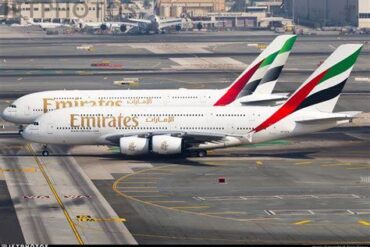
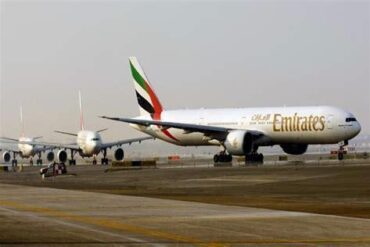
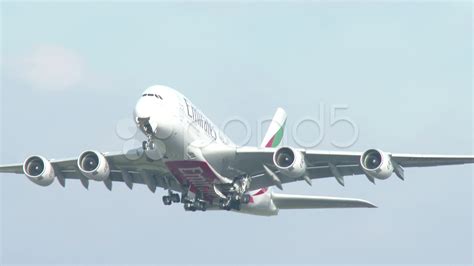
Among all operators, Emirates leads the US market with six A380 routes, reinforcing its long-standing commitment to the aircraft. From Dubai, Emirates connects to Houston, Los Angeles, New York JFK, San Francisco, and Washington Dulles, with JFK standing out as the single busiest A380 route in the country. The airline operates up to three daily A380 flights on the Dubai–JFK corridor, a level of capacity few other city pairs can sustain.
Close behind are British Airways and Lufthansa, each operating five A380 routes to the US. British Airways concentrates heavily on London Heathrow, deploying the aircraft to Boston, Dallas/Fort Worth, Los Angeles, Miami, and San Francisco. Lufthansa’s strategy is more geographically balanced, linking Munich to Boston, Denver, Los Angeles, San Francisco, and Washington Dulles. Denver’s inclusion is especially notable, as it represents one of the smallest A380 markets in the US by frequency, yet remains strategically valuable during peak travel seasons.
The Los Angeles–Seoul Incheon route is unique in 2026, as it is the only US A380 pairing served by more than one airline. Both Asiana Airlines and Korean Air operate the route, although Asiana has announced a reduction from double-daily to single-daily service as part of broader fleet and network adjustments tied to its merger into Korean Air.
Frequency Tells the Real Story of Demand
When measured by total flights rather than routes alone, the hierarchy becomes even clearer. Los Angeles will handle more than 2,100 A380 roundtrips in 2026, around 20% more than New York JFK, which records approximately 1,757 flights. San Francisco ranks a distant third with 862 flights, while Denver sits at the bottom with a limited but symbolically important Lufthansa operation.
One of the more surprising data points comes from Honolulu, where ANA operates two daily A380 flights from Tokyo Narita. Despite being a leisure-focused market, Honolulu consistently fills the superjumbo thanks to strong Japanese demand and the A380’s tailored high-density configuration, proving that premium-heavy routes are not the only ones capable of sustaining such a large aircraft.
Routes Lost, Capacity Refined
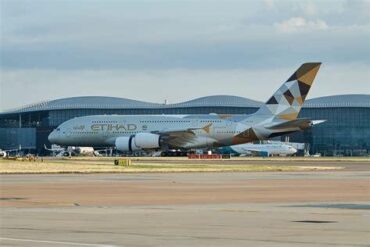
Compared to 2025, A380 operations to the US have declined by roughly 4% year-on-year, with three routes removed from the schedule. Services lost include Washington Dulles–London Heathrow and New York JFK–Munich, while Etihad Airways has fully withdrawn the A380 from its Abu Dhabi–New York route. These changes reflect a broader industry reality: the A380 is no longer a growth aircraft but a precision instrument.
Over the past two decades, seven airlines have exited US-bound A380 service, including Air France, China Southern, Singapore Airlines, and most recently Etihad. Even so, the aircraft’s story is far from over. Several operators plan to keep their fleets active well into the 2030s, and industry forecasts suggest the A380 could remain in limited service until at least 2040, particularly on routes where no other aircraft can replicate its economics at scale.
The A380’s Enduring Role in the US Market
In 2026, the Airbus A380 is neither ubiquitous nor obsolete. It occupies a narrow but powerful niche, connecting the world’s largest cities with unmatched efficiency. Every US route it serves has been carefully chosen, refined by years of operational data and commercial experience. The result is a network that may be smaller than in its peak years, but one that is more focused, more resilient, and arguably more impressive.
For passengers watching a double-decker silhouette descend toward an American runway, the message is clear. The superjumbo era is no longer about dominance—it is about precision, and in that role, the Airbus A380 continues to perform exactly as designed.