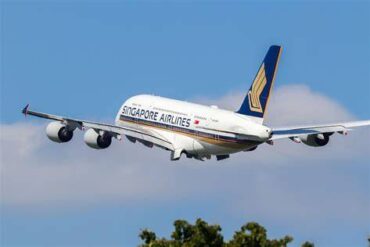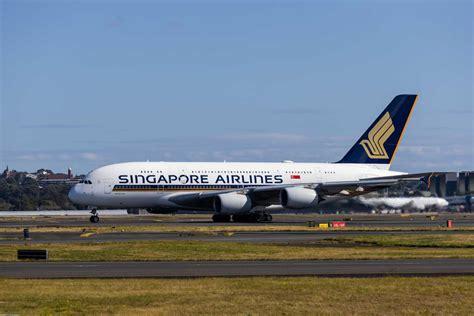
Singapore Airlines continues to demonstrate why the Airbus A380 remains a valuable flagship despite the industry’s shift toward smaller twin-engine widebodies. With a fleet of 12 active Airbus A380s, the airline has carefully matched the world’s largest passenger aircraft to routes where premium demand, heavy passenger volumes, and strong connecting traffic consistently justify its deployment.
Rather than maximizing the number of destinations served by the superjumbo, Singapore Airlines focuses on placing the aircraft where it delivers the greatest commercial advantage. For 2026, the airline is scheduled to operate the Airbus A380 across nine international destinations, primarily connecting Singapore with major financial centers and high-demand leisure markets in Europe, Australia, and Asia.
The strategy reflects years of network refinement. Instead of using the A380 as a prestige aircraft alone, Singapore Airlines has transformed it into a premium-focused flagship capable of generating strong yields while offering one of the industry’s finest onboard experiences.
By concentrating capacity on carefully selected trunk routes, the airline continues extracting remarkable value from an aircraft many competitors have already retired.
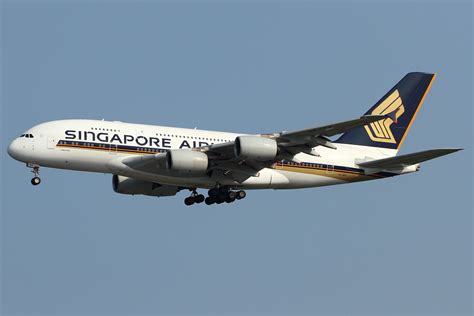
Why Singapore Airlines Still Relies on the Airbus A380
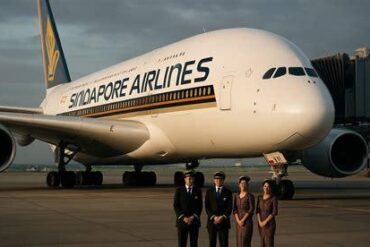
Singapore Airlines was the launch customer of the Airbus A380 and played a significant role in introducing the aircraft into commercial service. At its peak, the airline operated 24 superjumbos, but fleet restructuring and the pandemic reduced that number by half.
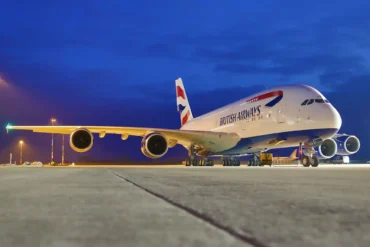
Even so, Singapore Airlines remains among the world’s largest A380 operators, alongside British Airways, while Emirates continues to dominate global A380 operations.
The reduced fleet does not represent declining confidence in the aircraft. Instead, it reflects a more focused deployment strategy. Every remaining A380 has undergone extensive cabin refurbishment, transforming the aircraft into an exceptionally premium-heavy product featuring spacious Suites, one of the industry’s most acclaimed Business Class cabins, and upgraded Premium Economy seating.
With only twelve aircraft available, every rotation must maximize profitability, making route selection more important than ever.
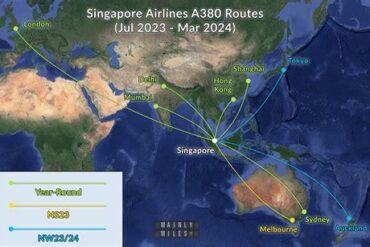
All 9 Singapore Airlines Airbus A380 Routes for 2026
Singapore Airlines will deploy the Airbus A380 on the following international routes during 2026:
- Singapore – London Heathrow
- Singapore – Sydney
- Singapore – Melbourne
- Singapore – Frankfurt
- Singapore – Paris
- Singapore – Tokyo Narita
- Singapore – Hong Kong
- Singapore – Shanghai Pudong
- Singapore – Auckland
Among these destinations, only London Heathrow and Sydney receive double-daily Airbus A380 services, highlighting the consistently strong passenger demand on both routes.
The remaining destinations receive daily or scheduled A380 operations depending on seasonal demand, fleet availability, and network planning.
London and Sydney Remain the Airline’s Busiest A380 Markets
Few routes in the Singapore Airlines network rival the importance of London Heathrow and Sydney.
London has long served as one of Singapore Airlines’ flagship European destinations, attracting a diverse mix of premium corporate travelers, tourists, government officials, and long-haul connecting passengers. Operating two daily A380 flights allows the airline to provide enormous capacity while maintaining schedule flexibility for travelers crossing between Europe, Southeast Asia, Australia, and New Zealand.
Sydney enjoys similar importance.
Australia represents one of Singapore Airlines’ strongest overseas markets, with Sydney consistently generating high demand throughout the year. Business travel, tourism, education, and onward connections all contribute to impressive passenger numbers, making the route ideal for the 470-seat superjumbo.
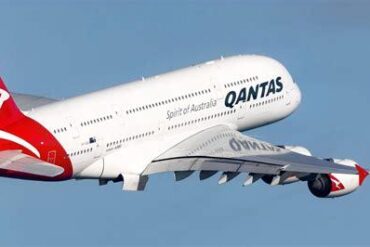
Double-daily A380 operations also strengthen Singapore Airlines’ competitive position against Qantas and other carriers operating between Australia and Asia.
Europe Continues to Receive Significant A380 Capacity
Europe remains one of Singapore Airlines’ most strategically important long-haul markets.
Frankfurt continues to receive daily Airbus A380 operations, while London remains the network’s largest European destination. Paris also benefits from A380 service, allowing the airline to efficiently transport large passenger volumes into one of Europe’s busiest aviation markets.
The airline has significantly expanded its European network in recent years, particularly as changing global travel patterns created opportunities for alternative one-stop connections between Europe, Asia, and Oceania.
This expansion has translated into record numbers of European departures from Singapore, with the Airbus A380 playing a central role in supporting those frequencies while maintaining the airline’s renowned premium service.
Australia and New Zealand Benefit from Record Capacity
Australia has become one of Singapore Airlines’ fastest-growing international markets.
The carrier now operates record frequencies across multiple Australian cities, with Melbourne once again enjoying daily A380 services alongside Sydney’s double-daily operations.
The network expansion extends beyond Australia itself.
Auckland has also joined the airline’s A380 network, providing New Zealand travelers with increased capacity and improved premium travel options. The route supports strong tourism demand, business travel, and connecting passengers continuing through Singapore toward Europe, India, and Southeast Asia.
Deploying the A380 on these services allows Singapore Airlines to increase seat capacity without requiring additional airport slots, a major advantage at heavily constrained airports.
Asian Routes Also Support High-Density A380 Operations
Although the Airbus A380 is most commonly associated with ultra-long-haul flights, several shorter Asian sectors also justify the aircraft’s enormous capacity.
Tokyo Narita, Hong Kong, and Shanghai Pudong all generate substantial passenger volumes thanks to business travel, tourism, and regional connections.
These flights also help optimize aircraft utilization by allowing Singapore Airlines to schedule shorter rotations between long-haul sectors, maximizing fleet productivity while offering passengers the airline’s flagship cabin products on regional journeys.
For many travelers, these relatively short flights provide one of the most accessible opportunities to experience the airline’s famous Suites and Business Class products.
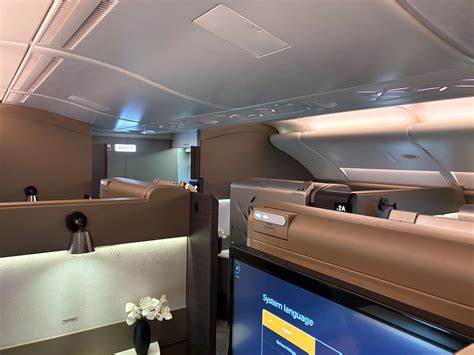
Inside Singapore Airlines’ Premium-Focused Airbus A380 Cabin
Unlike many airlines that maximize seating capacity, Singapore Airlines prioritizes passenger comfort.
Each Airbus A380 accommodates 470 passengers across four cabin classes in a spacious configuration:
- 6 Singapore Suites
- 78 Business Class seats
- 44 Premium Economy seats
- 342 Economy Class seats
The aircraft’s upper deck is almost entirely dedicated to premium passengers, creating one of the quietest and most exclusive travel environments available on any commercial airliner.
The six Suites remain among aviation’s most luxurious first-class products, featuring enclosed private rooms, fully flat beds, premium dining, and exceptional privacy rarely matched elsewhere in commercial aviation.
Business Class occupies much of the upper deck with direct aisle access for every passenger, while Premium Economy provides significantly more personal space than standard economy seating. Even Economy Class benefits from the A380’s quieter cabin, higher ceilings, and wider interior compared with many modern twin-engine aircraft.
Why the Airbus A380 Still Fits Singapore Airlines’ Strategy
Although many airlines have retired their Airbus A380 fleets, Singapore Airlines continues proving that the aircraft remains commercially viable when deployed selectively.
The airline’s network revolves around Singapore Changi Airport, one of the world’s leading international connecting hubs. By concentrating hundreds of passengers onto a single departure, Singapore Airlines efficiently feeds connecting banks while maximizing premium revenue opportunities.
The aircraft is particularly effective on airports where slots remain limited, allowing the airline to transport more passengers without increasing flight frequencies.
Equally important is the branding value. The Airbus A380 continues serving as Singapore Airlines’ flagship aircraft, showcasing its finest cabin products while reinforcing its reputation as one of the world’s leading premium carriers.
Rather than treating the superjumbo as a relic of aviation’s past, Singapore Airlines has positioned it as a specialized asset reserved for routes where exceptional demand, premium traffic, and operational efficiency align. With nine carefully selected destinations across Europe, Australia, New Zealand, and Asia, the Airbus A380 remains a cornerstone of the airline’s long-haul network throughout 2026, demonstrating that the world’s largest passenger aircraft still has a meaningful role in modern commercial aviation.