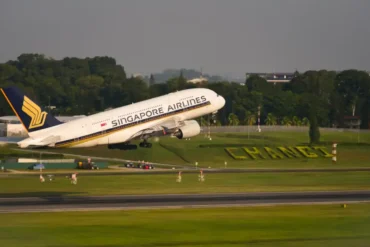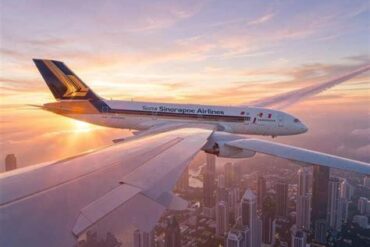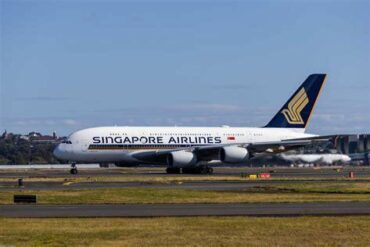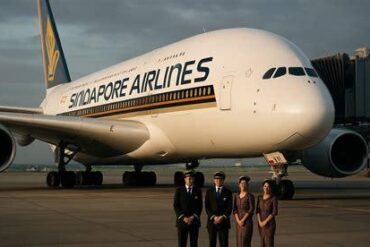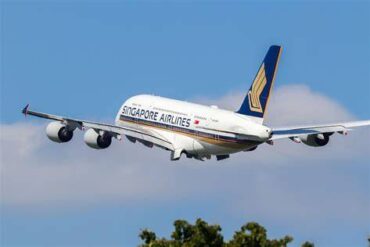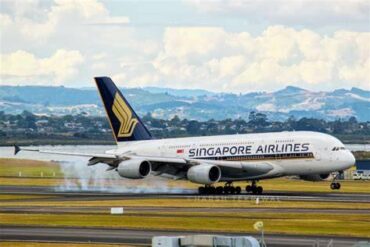
The Airbus A380 was never just another aircraft in Singapore Airlines’ fleet. It became a flying signature, a symbol of scale, ambition, and carefully engineered luxury that helped define what the superjumbo era was supposed to look like. For years, the airline used the aircraft as a statement of intent, placing it on some of the world’s most competitive long-haul corridors where premium demand justified its immense capacity and where its double-deck layout could be fully exploited. In many ways, the A380 and Singapore Airlines grew into each other’s identity, reinforcing a reputation built on service consistency and cabin innovation.
That identity, however, is now being reshaped quietly and deliberately. Without major announcements or dramatic retirements, Singapore Airlines has removed the Airbus A380 from 11 key international routes, including some of its most recognizable services to cities such as New York, Los Angeles, Paris, Zurich, and Tokyo. These are not minor adjustments in seasonal scheduling; they represent a structural shift in how the airline allocates its flagship aircraft, signaling a move away from broad deployment toward highly concentrated, revenue-optimized flying.
What makes this change particularly striking is not just the scale of the withdrawal, but the absence of replacement. In many of these markets, the A380 has not returned at all, even as global travel demand recovered strongly after the pandemic. Instead, the airline has quietly replaced the superjumbo with a mix of Airbus A350s, Boeing 777s, and other more flexible aircraft types, reshaping what passengers experience when booking flights that once guaranteed access to the airline’s most iconic aircraft.
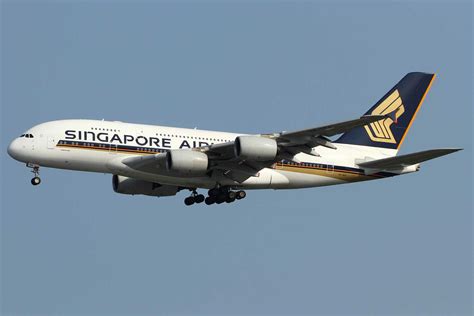
For nearly two decades, the Airbus A380 represented the highest expression of Singapore Airlines’ long-haul strategy. It was the aircraft chosen for prestige routes, ultra-high demand sectors, and markets where the airline wanted to project dominance through capacity and comfort. Its presence at major airports was unmistakable, and its absence is now equally telling. The shift away from widespread A380 deployment marks not only a fleet adjustment but a deeper recalibration of how the airline defines its premium identity in an era increasingly shaped by efficiency rather than scale.
The Quiet Network Reshaping Behind Singapore Airlines’ A380 Withdrawal
The decision to remove the A380 from 11 major routes reflects a carefully managed network evolution rather than a sudden strategic break. Singapore Airlines has long been known for its disciplined capacity planning, and the current reshuffle demonstrates how aggressively it has adapted to post-pandemic travel behavior. Routes that once justified the superjumbo’s enormous seating capacity are now being served by aircraft better suited to variable demand patterns, particularly in long-haul markets where premium cabins matter more than sheer passenger volume.
The affected destinations include some of the most recognizable airports in global aviation. New York JFK, Los Angeles, San Francisco, Paris Charles de Gaulle, Zurich, Tokyo Narita, Beijing Capital, Kuala Lumpur, Bangkok, Osaka Kansai, and Nagoya Chubu all once saw regular A380 operations. In several of these cities, the aircraft was not just a visitor but a defining feature of the airline’s presence, often scheduled on high-profile daily services that showcased its flagship Suites and expansive business class cabin.
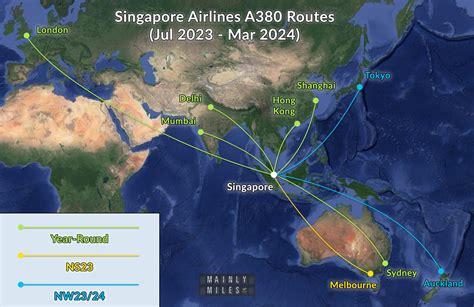
What stands out is that none of these routes have regained the A380, even years after travel restrictions eased. Instead, the airline appears to have permanently redistributed capacity, focusing its superjumbo fleet on a narrower set of high-performance corridors. This includes heavily trafficked long-haul services such as London Heathrow and select Australian routes, where demand remains consistently strong and premium yield justifies the aircraft’s operating profile.
The strategic logic is rooted in flexibility. The Airbus A380, while iconic, is inherently rigid in its economics. Its profitability depends on sustained high load factors across all cabins, something that is increasingly difficult to guarantee across a diversified global network. By contrast, twin-engine widebodies such as the A350 and Boeing 777 allow the airline to adjust capacity more precisely, aligning aircraft size with demand fluctuations rather than committing to a fixed high-capacity configuration.
How the Pandemic Accelerated the End of Broad A380 Deployment
The COVID-19 pandemic acted as a decisive turning point for Singapore Airlines’ Airbus A380 strategy. Before global travel collapsed, the airline operated 19 A380 aircraft and deployed them across a wide spectrum of routes, from ultra-long-haul flights to shorter regional sectors designed to maximize utilization. When international travel restrictions grounded fleets worldwide, the A380 became one of the most challenging aircraft to reintegrate due to its size, cost structure, and dependence on high passenger volumes.
During the crisis, Singapore Airlines permanently retired seven A380s, reducing its fleet by more than one-third. This was not an isolated decision but part of a broader industry-wide shift away from large four-engine aircraft. Across global aviation, airlines accelerated retirements of similar types, prioritizing efficiency, fuel savings, and operational flexibility. For Singapore Airlines, the choice was particularly consequential because the A380 had been deeply embedded in its brand identity.
Yet even after recovery began, the airline chose not to restore its pre-pandemic A380 network. Instead, it reintroduced the aircraft selectively, focusing only on routes where demand and yield conditions aligned with its high-capacity model. This selective return has fundamentally altered how the aircraft is perceived within the airline’s system. It is no longer a default flagship assigned to premium routes, but a specialized tool deployed with precision.
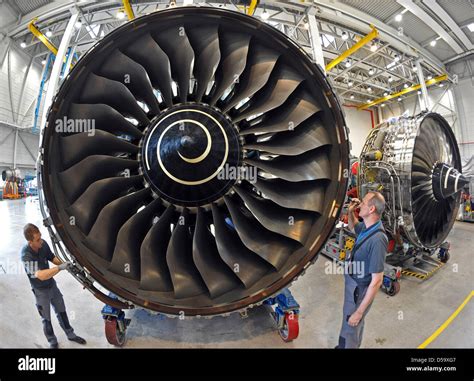
The return of all 12 remaining A380s to service demonstrates that the aircraft still plays a meaningful role in the fleet. However, its operational footprint is now significantly smaller and more concentrated. Rather than symbolizing network breadth, the aircraft has become an instrument of targeted capacity deployment, reserved for routes where its scale can be fully monetized.
The Disappearance of the Suites Experience From Key Global Routes
Perhaps the most noticeable consequence of the A380 reduction is not operational but experiential. Singapore Airlines’ Suites cabin, one of the most exclusive commercial aviation products in the world, is intrinsically tied to the Airbus A380. When the aircraft disappears from a route, the Suites product disappears with it, instantly altering the premium experience available to high-value travelers.
The Suites cabin represents a distinctive interpretation of first class. Instead of conventional seating, passengers are provided with enclosed private spaces featuring separate reclining chairs and fully flat beds. On select configurations, adjoining suites can be combined into a double cabin, creating one of the few truly private shared spaces in commercial aviation. This design helped establish Singapore Airlines as a leader in ultra-premium travel innovation, especially on long-haul routes where competition for high-yield passengers is intense.
As the A380 has been withdrawn from major cities like New York, Paris, Zurich, Los Angeles, and San Francisco, the Suites experience has effectively vanished from some of the airline’s most prestigious corridors. While first class and business class remain strong across other aircraft types, the psychological and experiential gap left by the Suites cabin is significant. For many frequent travelers, it represented not just comfort, but exclusivity tied to a specific aircraft type.
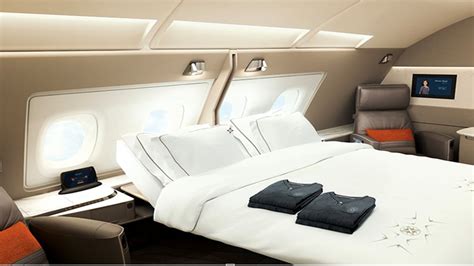
The absence of the A380 also changes how premium passengers perceive long-haul travel options. Competing aircraft such as the Airbus A350 and Boeing 777 offer excellent service standards, but they cannot replicate the spatial architecture that made the A380 Suites distinctive. The result is a subtle but meaningful shift in the airline’s premium hierarchy, where experience is now more standardized across the fleet.
The Rise of the Airbus A350-900ULR as the New Flagship Long-Haul Platform
As the A380 network contracts, the Airbus A350-900ULR has emerged as Singapore Airlines’ most strategically important long-haul aircraft. Designed for ultra-long-range missions, it enables nonstop flights of extraordinary distance, including services that exceed 18 hours in duration. These capabilities have allowed the airline to maintain direct connectivity between Singapore and key North American cities without relying on large, high-capacity aircraft.
The A350-900ULR represents a fundamentally different philosophy compared to the A380. Instead of maximizing passenger volume, it focuses on endurance, efficiency, and optimized cabin density. Its lower fuel consumption and reduced operating costs make it particularly well-suited for thin but high-value long-haul routes where premium demand drives profitability more than economy seating volume.
Singapore Airlines has increasingly relied on this aircraft to anchor its long-haul strategy, effectively replacing the A380 in markets where frequency and flexibility matter more than maximum capacity. This shift reflects broader industry trends in which twin-engine widebodies have become the backbone of global long-haul aviation, displacing older four-engine giants.
A Transitional Gap in Premium Strategy That Extends Beyond 2027
Despite the strategic clarity behind fleet restructuring, Singapore Airlines now faces an unusual transitional challenge. The airline has committed to a major cabin retrofit program worth hundreds of millions of dollars to upgrade its Airbus A350 fleet, including the introduction of a dedicated first-class cabin on the A350-900ULR. This move is intended to restore a flagship-level premium experience on routes currently served by the ultra-long-range aircraft.
However, the rollout of this upgraded cabin has been delayed, with entry into service now expected around 2027. This creates a multi-year gap in which the airline operates without its most distinctive premium product on several of its longest and most prestigious routes. During this period, passengers traveling between Singapore and major global cities will experience a more standardized premium offering compared to the highly differentiated Suites product that once defined these journeys.
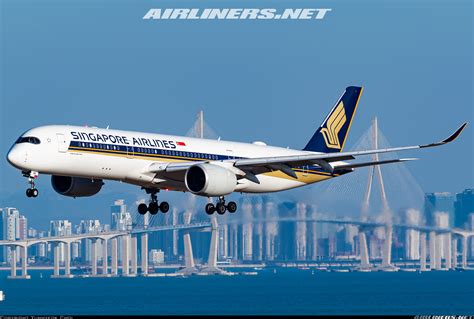
This transitional phase highlights a broader tension in modern aviation. Airlines are increasingly balancing cost efficiency with the need to maintain brand-defining premium experiences. For Singapore Airlines, the challenge is particularly visible because its identity has been closely tied to innovation in first-class travel. The gradual disappearance of the A380 from key markets therefore represents not only a fleet evolution but also a symbolic shift in how premium air travel is delivered.
The Long-Term Future of Singapore Airlines’ Superjumbo Strategy
Looking forward, Singapore Airlines’ relationship with the Airbus A380 is likely to become even more selective. Rather than serving as a network-wide flagship, the aircraft will function as a high-density premium specialist deployed on routes where demand is both stable and exceptionally strong. London, Sydney, Melbourne, and Frankfurt are likely to remain core anchors of the remaining A380 network, while other markets continue to rely on more adaptable aircraft types.
The broader implication is that the era of widespread superjumbo deployment is effectively over for the airline. What remains is a curated version of the A380 strategy, one that emphasizes profitability and precision over symbolic reach. While the aircraft will continue to attract attention wherever it flies, its role within the airline’s ecosystem has fundamentally changed.
Singapore Airlines has not abandoned the Airbus A380. Instead, it has redefined it. The aircraft that once represented network ambition has become a carefully managed asset, deployed only where it can deliver maximum return. In doing so, the airline has quietly rewritten one of the most recognizable partnerships in modern aviation, marking the end of an era where the superjumbo was not just an aircraft, but the face of an airline’s global identity.