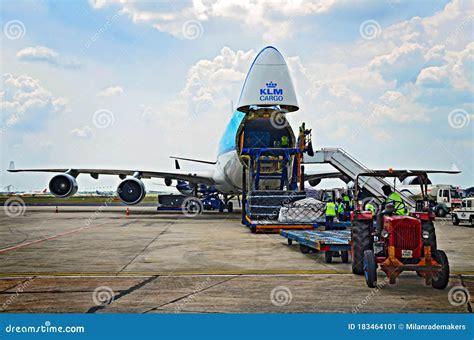
Modern aviation has largely embraced twin-engine aircraft, leaving iconic four-engine giants such as the Boeing 747 and Airbus A380 seemingly confined to history. Airlines retired many quadjets because powerful and fuel-efficient twin-engine aircraft proved capable of flying virtually any route while dramatically lowering operating costs. Yet aviation has a habit of reinventing itself. Changes in airport congestion, cargo demand, long-haul travel, and emerging technologies suggest that four-engine aircraft may not be completely finished.
Rather than returning as mainstream airliners, future quadjets could occupy specialized roles where their unique capabilities outweigh their higher fuel consumption. In an industry driven by economics and practicality, there are circumstances where four engines still make perfect sense.
For decades, aircraft design has followed the principle that fewer engines mean lower costs. However, aviation history demonstrates that market conditions evolve. What appeared obsolete yesterday can become valuable again under entirely different circumstances.
Why Four-Engine Aircraft Disappeared From Commercial Aviation
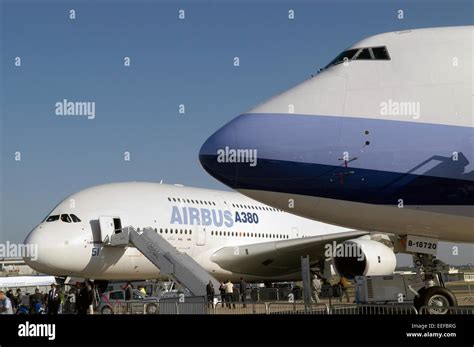
The decline of four-engine airliners was not caused by a lack of capability. In fact, aircraft like the Boeing 747, Airbus A380, and Airbus A340 represented engineering masterpieces. Their downfall came primarily from economics.
As engine technology improved during the 1990s and 2000s, large twinjets such as the Boeing 777 and Airbus A350 became capable of carrying hundreds of passengers over intercontinental distances. Enhanced ETOPS regulations allowed twin-engine aircraft to fly routes once reserved for quadjets.
Fuel costs became another decisive factor. Four engines meant greater maintenance expenses, higher fuel burn, and additional complexity. Airlines discovered that flying smaller aircraft more frequently offered better flexibility than filling giant airliners with 500 passengers.
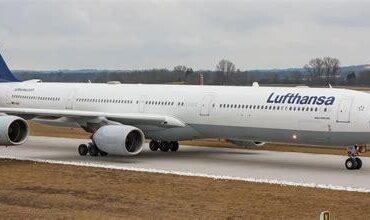
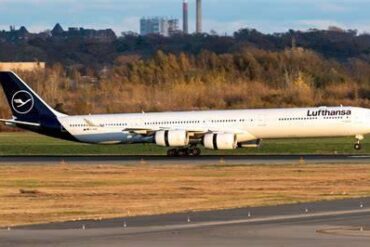
The Airbus A340 suffered especially when fuel prices surged. Despite introducing the longer-range A340-500 and larger A340-600, airlines increasingly chose twin-engine alternatives.
The Airbus A380 faced a different challenge. Airbus envisioned a world dominated by hub airports where demand would force airlines to use enormous aircraft. Instead, travelers increasingly preferred direct flights between secondary cities, a model perfectly suited for efficient twinjets.
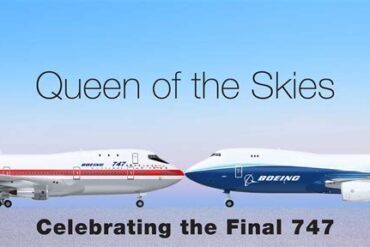
Meanwhile, Boeing officially ended production of the legendary 747 family in 2023, bringing an era to a close.
Despite these developments, the underlying strengths of quadjets never disappeared.
Airport Congestion Could Revive Demand For Larger Aircraft
The world’s busiest airports are running out of space. Airports such as London Heathrow, New York JFK, Tokyo Narita, Singapore Changi, and Dubai International face severe slot constraints.
When airlines cannot add more flights, increasing aircraft size becomes the most practical solution.
This reality was exactly what inspired the Airbus A380. The superjumbo allowed airlines to transport over 500 passengers with a single takeoff slot. Although the original market predictions proved overly optimistic, congestion continues to worsen.
As global air travel expands over the next several decades, trunk routes connecting major hubs may once again favor very large aircraft. Carrying more passengers per flight could become economically attractive if slot availability remains restricted.
Aircraft with four engines offer an advantage because they can distribute enormous thrust requirements across multiple powerplants without demanding excessively large engines.
In a future where airport capacity becomes increasingly scarce, airlines may once again value the sheer passenger-carrying capability that quadjets provide.
Cargo Markets Continue To Favor Four Engines
While passenger aviation moved toward twins, cargo operators have never abandoned the advantages of four engines.
Oversized freight has become increasingly important thanks to globalization, renewable energy projects, aerospace manufacturing, and humanitarian operations. Wind turbine blades, industrial machinery, satellites, and aircraft components often exceed the capabilities of standard freighters.
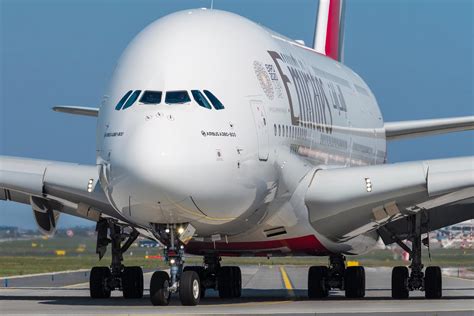
The Boeing 747 remains unmatched in this role.
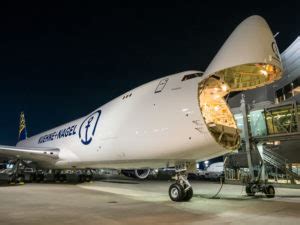
Its distinctive nose-loading door allows massive cargo to be loaded directly into the main deck without dismantling equipment. This unique capability makes the aircraft invaluable for logistics companies and governments.
Atlas Air, one of the world’s largest cargo airlines, continues operating a fleet dominated by Boeing 747 freighters. These aircraft serve hundreds of airports across more than 170 countries.
Four engines offer additional power during operations from hot-and-high airports or shorter runways, where maximum thrust is essential. Distributing lift requirements among four engines allows operators to carry payloads that would challenge twin-engine freighters.
As global commerce expands and heavy-lift demand rises, future dedicated cargo aircraft may revisit multi-engine designs.
Ultra-Long Routes Still Benefit From Quadjets
Modern ETOPS regulations allow twin-engine aircraft to fly virtually anywhere on Earth. However, certain routes across oceans and polar regions remain extremely remote.
Four-engine aircraft possess an inherent advantage because they are not dependent on ETOPS restrictions. They provide additional routing flexibility and increased redundancy over isolated regions where alternate airports may be thousands of miles away.
Although twinjets have proven remarkably reliable, some operators value the peace of mind offered by four independent engines.
The loss of one engine on a quadjet still leaves approximately 75 percent of total thrust available. Electrical generation, hydraulic systems, and bleed-air capabilities also retain substantial redundancy.
For airlines operating special missions, VIP transport, or routes over ultra-remote regions, this resilience remains highly attractive.
As demand for nonstop ultra-long-haul flights grows, renewed interest in four-engine aircraft could emerge within select markets.
The Hidden Advantages Of Four Engines
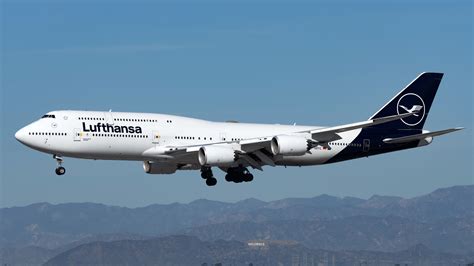
The benefits of quadjets extend beyond simple redundancy.
Distributing thrust among four engines allows engineers to avoid designing extraordinarily large powerplants operating near thermal limits. Smaller engines can reduce certain stresses while providing remarkable performance.
Four engines also create structural benefits. Engines mounted under the wings provide bending relief, reducing wing stress and enabling larger airframes.
Aircraft such as the Boeing 747 demonstrated unique operational flexibility. Airlines could ferry a 747 with one engine removed, operating with three engines for repositioning purposes. Another fascinating capability involved carrying a spare engine beneath the wing in a so-called fifth-pod arrangement.
Quadjets also excel at producing massive amounts of electrical power and pneumatic airflow. These characteristics make them ideal for specialized missions requiring extensive onboard systems.
Government aircraft, flying command centers, and airborne laboratories often depend upon the abundant power generation capabilities offered by multiple engines.
Why The Boeing 747 Still Occupies A Unique Position
Even after production ended, the Boeing 747 remains irreplaceable in several sectors.
Military operators, cargo airlines, and governments continue relying on the aircraft because few alternatives exist. The combination of payload, range, speed, and flexibility has proven difficult to duplicate.
The aircraft’s nose-loading capability provides an advantage unavailable on most other freighters. Special cargo that cannot fit through conventional side doors often finds a home aboard the 747.
Four engines also allow exceptional takeoff performance. Heavy payloads can be launched from shorter runways while maintaining operational margins.
These qualities explain why the final 747s built by Boeing were freighters destined for Atlas Air.
As long as industries require transportation of oversized equipment and governments need airborne command platforms, the 747’s design philosophy will continue to have relevance.
Could An Airbus A380neo Become Reality?
Among airlines, Emirates remains the greatest supporter of the Airbus A380.
The Dubai-based carrier operates more than 100 superjumbos and has repeatedly expressed interest in an improved A380neo. Proposed enhancements included lighter structures, aerodynamic refinements, and next-generation engines such as Rolls-Royce Advance or GE9X derivatives.
Such improvements could significantly reduce fuel consumption while preserving the aircraft’s enormous capacity.
Emirates’ network structure, centered around Dubai’s global hub, is ideally suited to high-capacity aircraft. Routes connecting Europe, Asia, Africa, and Oceania regularly support massive passenger volumes.
An A380neo would enable Emirates to maintain its seat-capacity advantage while meeting stricter environmental standards.
Nevertheless, Airbus believes demand beyond Emirates remains insufficient to justify the immense investment required to restart production.
Yet history has shown that market conditions can change. Persistent congestion at major airports could eventually make ultra-large aircraft attractive once again.
Sustainable Technology Could Narrow The Efficiency Gap
One reason twinjets dominate aviation is their superior efficiency. However, future technologies may reduce that advantage.
Advanced composite materials offer lighter structures and improved aerodynamics. Sustainable aviation fuels could reduce environmental concerns associated with larger aircraft.
Engine efficiency continues to evolve as manufacturers develop higher bypass ratios and improved thermodynamic performance.
Artificial intelligence, active airflow systems, and advanced flight controls may further optimize fuel consumption.
If future breakthroughs significantly reduce operating costs, the penalty associated with carrying four engines could become less severe.
Instead of competing directly with twinjets, next-generation quadjets might excel in specialized niches where capacity, redundancy, and payload outweigh fuel burn concerns.
Supersonic Aviation Could Bring Back Four Engines
An unexpected path toward the revival of four-engine aircraft may come through supersonic travel.
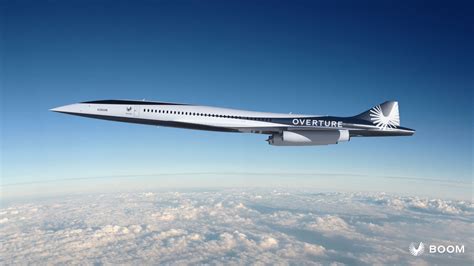
Boom Supersonic’s Overture project aims to reintroduce commercial supersonic transportation using four medium-bypass turbofan engines. Unlike Concorde, the aircraft avoids afterburners while targeting greater efficiency and lower noise levels.
The aircraft is expected to cruise at Mach 1.7, carry between 60 and 80 passengers, and reach altitudes approaching 60,000 feet.
Modern carbon-fiber composites offer superior heat resistance and weight savings compared with the aluminum structures used during Concorde’s era.
The four-engine configuration provides the thrust necessary for sustained supersonic cruise while maintaining acceptable fuel efficiency.
Although Overture serves a completely different market than giant airliners, it illustrates that four engines still possess relevance in certain applications.
Four-Engine Aircraft Are Unlikely To Disappear Completely
The age of four-engine airliners dominating global aviation is over, but the concept itself remains far from obsolete. Airport congestion, oversized cargo requirements, ultra-long-range missions, and emerging technologies could create new opportunities for quadjets in the decades ahead.
Rather than replacing efficient twin-engine aircraft, future four-engine designs will likely serve highly specialized markets where their unique strengths become indispensable.
History repeatedly demonstrates that aviation evolves in cycles. Aircraft once considered outdated often return in new forms when circumstances change. The next generation of four-engine aircraft may look very different from the Boeing 747 and Airbus A380, but the underlying advantages of redundancy, power, and capacity ensure that the quadjet story is not yet finished.