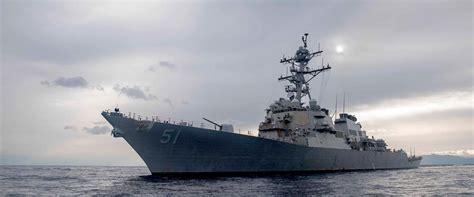
The United States Navy is considering a historic shift in how it builds the next generation of warships. Faced with shrinking domestic shipbuilding capacity, workforce shortages, and mounting competition from China, the Navy is exploring the possibility of allowing allied foreign shipyards to participate in the construction of vessels that could become part of America’s future naval force.
The proposal represents one of the most significant changes to American naval procurement in modern history. For centuries, major US warships have been built domestically, a practice deeply tied to national security, industrial independence, and military tradition. Yet growing pressure on the country’s shipbuilding infrastructure is forcing policymakers to reconsider long-standing assumptions.
According to the US Navy’s Shipbuilding Plan released in May 2026, the service is seeking legislative changes that would permit the construction of up to two auxiliary vessels abroad and allow portions of combatant ship modules to be fabricated overseas. While limited in scope, the proposal signals that Navy leaders are increasingly willing to consider unconventional solutions to address mounting fleet challenges.
The debate comes at a crucial moment. The Navy’s fleet has fallen to its lowest ship count since the period before World War I, raising concerns about America’s ability to maintain global maritime dominance in an increasingly contested security environment.
The Growing Crisis Facing US Naval Shipbuilding
The Navy’s interest in foreign shipyards is not driven by convenience. It is a response to structural weaknesses that have been developing for decades within the American shipbuilding sector.
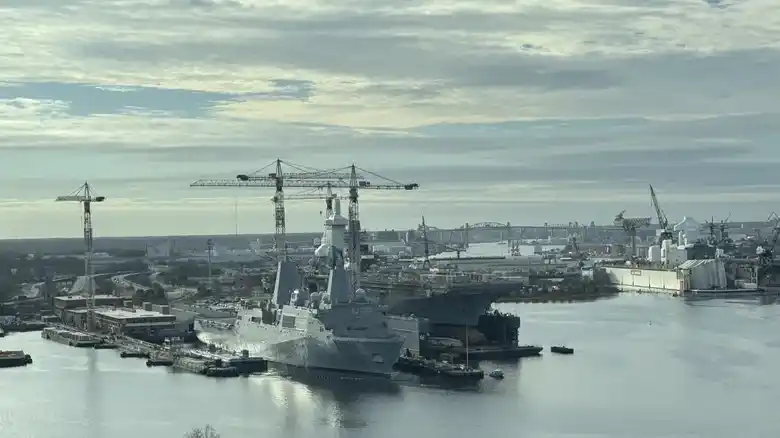
The United States once possessed a robust industrial base capable of producing both commercial and military vessels at scale. Over time, however, much of that capacity disappeared. Since the 1970s, only one new shipyard has opened in the country, while fourteen naval shipyards have permanently closed. This gradual erosion has left the industry with limited capacity to meet modern naval requirements.
Today, many American shipyards face production bottlenecks, aging infrastructure, and labor shortages. Even when funding is available, the physical ability to build ships quickly enough remains a major challenge. Delays have become increasingly common across multiple naval programs, contributing to rising costs and slowing fleet modernization efforts.
The workforce issue has become particularly severe. Former Navy Secretary John Phelan publicly acknowledged in late 2025 that the industry was struggling to attract enough skilled workers. Welders, electricians, pipefitters, engineers, and specialized technicians remain in short supply. Competition from private-sector employers often makes recruitment difficult, especially when similar wages can be earned in less demanding occupations.
As a result, shipyards frequently lack the manpower necessary to increase production rates, creating a cycle in which capacity constraints delay deliveries and weaken long-term planning.
Why South Korea and Japan Are Emerging as Leading Candidates
Among the nations reportedly under consideration, South Korea and Japan stand out as the most logical partners.
Both countries possess highly advanced shipbuilding industries and maintain close security relationships with the United States. Their shipyards are capable of constructing sophisticated naval vessels using modern manufacturing techniques and highly efficient production systems.
South Korea, in particular, operates some of the largest and most technologically advanced shipyards in the world. Companies such as HD Hyundai Heavy Industries have extensive experience producing destroyers, frigates, submarines, and commercial vessels at remarkable scale. South Korean facilities are known for their efficiency, automation, and ability to deliver large projects on schedule.
Japan offers similar advantages. Firms such as Mitsubishi Heavy Industries have long supplied advanced vessels to the Japan Maritime Self-Defense Force. Japanese shipbuilders possess deep expertise in naval engineering, precision manufacturing, and maritime technology, making them valuable potential partners for future US naval programs.
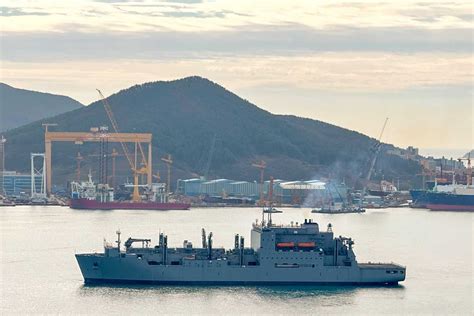
The strategic value of these partnerships extends beyond production capacity. Both countries share common security concerns regarding regional stability and maritime competition in the Indo-Pacific. Cooperation on shipbuilding could strengthen defense ties while accelerating fleet expansion efforts.
China’s Shipbuilding Dominance Is Reshaping Naval Strategy
A major factor behind the Navy’s proposal is the extraordinary growth of China’s shipbuilding industry.
Although the United States Navy remains the world’s most powerful naval force when measured by total tonnage, China’s industrial capacity has become increasingly difficult to ignore. Estimates suggest Chinese shipyards possess roughly 230 times the shipbuilding capacity of their American counterparts.
This disparity creates long-term strategic concerns. Naval power ultimately depends not only on the number of ships currently in service but also on a nation’s ability to build, maintain, repair, and replace vessels during periods of heightened competition or conflict.
China’s industrial advantage is particularly striking when viewed through production statistics. Analysts note that a single Chinese shipbuilding conglomerate, the China State Shipbuilding Corporation, has produced more tonnage in one year than the entire American shipbuilding industry has generated since the end of World War II. While this figure includes commercial vessels as well as military ships, it illustrates the vast scale difference between the two industries.
When combined, China, South Korea, and Japan account for approximately 90% of global shipbuilding output. That concentration of manufacturing capability helps explain why Washington is increasingly looking toward allied industrial partners.
The Role of the Navy’s Golden Fleet Vision
The proposed foreign shipbuilding partnerships are closely linked to the Navy’s broader modernization strategy, often referred to as the Golden Fleet initiative.
The concept aims to create a larger, more technologically advanced naval force capable of operating across multiple theaters while maintaining superiority against emerging threats. Achieving that goal requires more than simply designing new ships. It demands a production system capable of delivering vessels at the speed and scale necessary to support long-term strategic objectives.
Future plans reportedly include ambitious programs such as the proposed Trump-class battleship, a concept that has generated significant debate among naval analysts and defense experts. While opinions differ regarding specific platforms, there is broad agreement that industrial capacity remains the foundation upon which all fleet expansion efforts depend.
Without sufficient shipbuilding infrastructure, even the most advanced naval designs risk remaining on paper rather than entering operational service.
Foreign Shipyards May Be a Short-Term Solution, Not a Permanent Fix
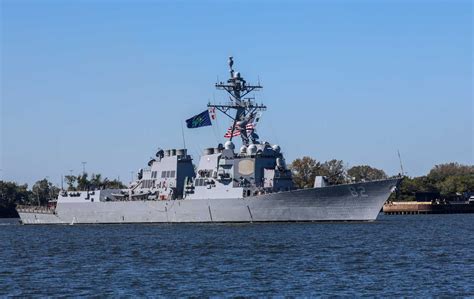
Despite the potential benefits of overseas construction, most experts agree that foreign shipyards alone cannot solve America’s shipbuilding challenges.
Building a handful of auxiliary vessels abroad may help ease immediate production pressures, but it does not address the deeper issues affecting domestic industrial capacity. Long-term competitiveness will likely require substantial investment in American shipyards, workforce development programs, technical training initiatives, and infrastructure modernization.
The Navy’s proposal should therefore be viewed less as a replacement for domestic shipbuilding and more as a strategic bridge. By leveraging the capabilities of trusted allies, the United States may gain valuable time while rebuilding critical industrial strengths at home.
The decision ultimately reflects a changing reality in global maritime competition. Maintaining naval superiority in the twenty-first century increasingly depends not only on advanced warships but also on the industrial networks capable of producing them. As the United States seeks to build its fleet of the future, foreign shipyards may become an important part of that equation, marking a historic evolution in how American sea power is sustained.