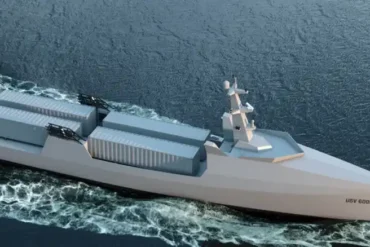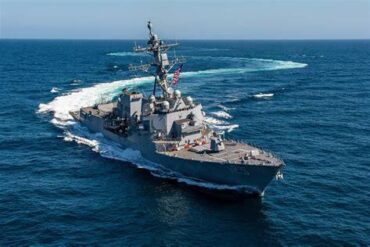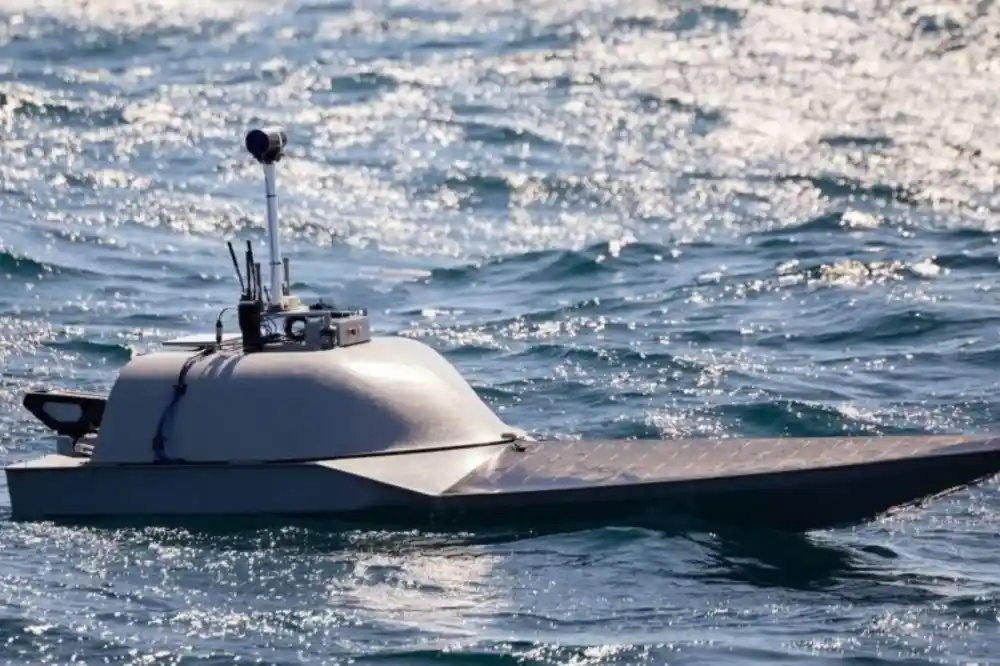
Hanwha Defense USA, in collaboration with HavocAI, has launched a groundbreaking initiative to revolutionize U.S. naval capabilities with the development of 200-foot large autonomous surface vessels (ASVs). This strategic partnership marks a pivotal moment in maritime defense innovation, as the U.S. military shifts toward distributed, resilient, and autonomous operations at sea.
The joint announcement on January 8, 2026, underscores a significant alignment of international industrial capacity and advanced AI-driven autonomy to meet the Pentagon’s growing demand for scalable unmanned naval assets.
Forging a Next-Generation Naval Force Through Allied Innovation
The Hanwha-HavocAI partnership merges two distinct but complementary domains of expertise. Hanwha Defense USA and Hanwha Systems, with deep experience in shipbuilding and defense systems integration, bring decades of proven capability in constructing naval platforms. HavocAI, a U.S.-based leader in autonomy software and mission systems, provides the critical artificial intelligence and collaborative autonomy stack designed to allow vessels to operate with minimal human oversight.
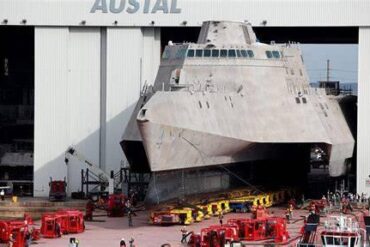
This union leverages Hanwha’s active Philadelphia shipyard, the only major foreign-owned shipbuilding site on U.S. soil currently aligned with autonomous vessel development. This facility is now a contender for hosting the production line of these future-ready ASVs, reinforcing U.S. industrial sovereignty while incorporating global innovation.
Strategic Scale: Why 200 Feet Matters in Naval Autonomy
Unlike smaller experimental unmanned vessels previously tested by the Navy, the 200-foot ASV represents a quantum leap in scale and endurance. Designed for persistent maritime presence, these vessels will fill critical roles in:
- Distributed Maritime Operations (DMO)
- Long-range logistical support
- Forward-deployed intelligence and surveillance
- Electronic warfare resilience in GPS-denied environments
The vessel’s modular design supports rapid mission reconfiguration, enabling swift transitions between optionally crewed and fully autonomous modes. It also allows plug-and-play integration of specialized payloads, including sensors, weapons systems, or logistics containers, depending on evolving battlefield requirements.
Building Resilience Against Future Threat Environments
Recent conflict zones, particularly in Eastern Europe and increasing tensions across the Indo-Pacific, have demonstrated the critical importance of autonomous resilience under electronic warfare conditions. HavocAI has showcased its technology in GPS-denied scenarios, a capability validated during demonstrations with Ukrainian defense officials.
This expertise directly informs the new vessel’s core architecture, ensuring the platform can operate deep within hostile electromagnetic environments, surviving jamming, spoofing, and surveillance in denied theaters. These lessons, drawn from real-world conflicts, have become key design pillars.
An Industrial Leap from Prototypes to Fleet-Ready Production
The transition from experimental ASVs to scalable maritime platforms has long been a bottleneck for defense autonomy startups. HavocAI’s partnership with Hanwha breaks that constraint. With a reported $85 million in fresh capital, HavocAI is now uniquely positioned to bring mature autonomy solutions into serial production.
Michael Coulter, CEO of Hanwha Defense USA, emphasized the unprecedented nature of this alliance: “By combining our shipbuilding capacity with HavocAI’s software-first autonomy, we are delivering systems that meet the Pentagon’s mandates for cost-effective scale, resilience, and speed.”
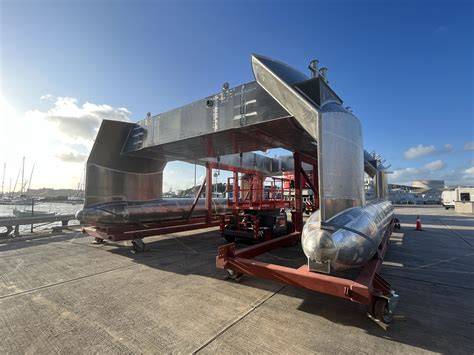
A Pentagon-Aligned Response to Congressional Urgency
Paul Lwin, CEO and co-founder of HavocAI, confirmed the venture responds directly to explicit directives from Congress and the Department of War—a term increasingly applied to the cross-service U.S. defense acquisition ecosystem. “They’ve told us exactly what they need: more ships, faster, cheaper, and smarter,” said Lwin.
Under the Memorandum of Understanding, Hanwha and HavocAI will jointly handle:
- Autonomy software integration
- Mass production planning and scaling
- Shipboard installation concepts
- Proposal development for federal procurement
- Detailed design and engineering validation
This follows a key demonstration held at Hanwha Ocean’s Geoje shipyard in South Korea, where HavocAI’s full autonomy stack was validated aboard a full-scale maritime platform, showcasing real-world mission readiness.
Operational Scenarios: ASVs as Force Multipliers
Strategically, large autonomous vessels enable naval force projection without proportional manpower increases. The 200-foot ASV is envisioned to serve multiple mission profiles, including:
- Acting as a logistics shuttle for resupply across contested zones
- Functioning as deception platforms or electronic decoys
- Hosting distributed sensor arrays for surveillance and early warning
- Serving as launch and recovery platforms for containerized loitering munitions or UUVs
These capabilities align with the U.S. Navy’s vision of a “distributed fleet architecture,” where swarming autonomous platforms complicate adversary targeting and enhance operational unpredictability.
Geostrategic Implications: A Korean-American Industrial Alliance
The Hanwha-HavocAI venture is more than a technical collaboration—it is a geostrategic signal. It illustrates the growing role of trusted allied defense firms within the U.S. maritime industrial base, particularly as Washington seeks to diversify defense supply chains in an era of rising great-power competition.
Korea’s emergence as a shipbuilding and defense technology powerhouse, backed by American autonomy leadership, creates a resilient trans-Pacific supply chain. If full production proceeds at the Philadelphia shipyard, it could catalyze additional public-private investment, workforce expansion, and regional economic revitalization centered on next-gen naval manufacturing.
Looking Ahead: Toward Procurement and Fleet Integration
With the Navy’s Large Unmanned Surface Vessel (LUSV) program still navigating early phases, Hanwha and HavocAI’s offering could represent a fast-track alternative. The Pentagon’s desire for attritable, affordable, and scalable maritime assets has never been clearer, and the duo’s combined capacity positions them well for near-term contracting opportunities.
The next stages will involve:
- Prototype trials and acceptance testing in U.S. waters
- Live mission simulation under Navy oversight
- DoD budgeting and acquisition integration
If successful, this program could be a defining milestone in the journey toward fully autonomous maritime warfare.
Conclusion: A Defining Moment for Unmanned Naval Warfare
As global naval threats evolve and the boundaries of conflict shift increasingly into the digital and unmanned domain, the partnership between Hanwha and HavocAI stands out as a bold and forward-leaning model. Their efforts encapsulate the next phase of maritime power projection—autonomous, modular, scalable, and resilient.
By joining forces, they are not only building a new class of warship—they are reshaping the future contours of naval deterrence and maritime dominance.