South Korea’s Hanwha Aerospace has made international headlines after completing the record-breaking delivery of 126 Homar-K multiple rocket launcher systems to Poland, outpacing global defense manufacturers and reshaping expectations in the artillery sector. This delivery, achieved just two years and seven months after the initial agreement, demonstrates what defense insiders are calling “super speed delivery,” especially in contrast to comparable Western systems such as the U.S.-made HIMARS which typically require four to seven years from order to deployment.
A Historic Contract Executed with Unprecedented Speed
The rapid transfer of these advanced weapons began in July 2022 when Poland signed a deal with Hanwha Aerospace for 218 Homar-K systems, followed by a second contract in April 2023 for an additional 72 units, bringing the total to 290 systems. The most recent shipment, delivered on June 24, 2025, added nine more launcher modules, pushing the number delivered to 126. What sets this apart is not only the sheer volume but the fact that the company originally planned the first deliveries by 2027, yet will fulfill the entire order by the end of 2025.
This acceleration is a strategic maneuver in response to Eastern European defense modernization efforts, especially in light of rising geopolitical threats. According to defense officials, over 80 Homar-K systems are already deployed and operational within the Polish military, reinforcing NATO’s eastern flank faster than any other comparable procurement cycle.
Why the Homar-K Is Making Waves in the Global Market
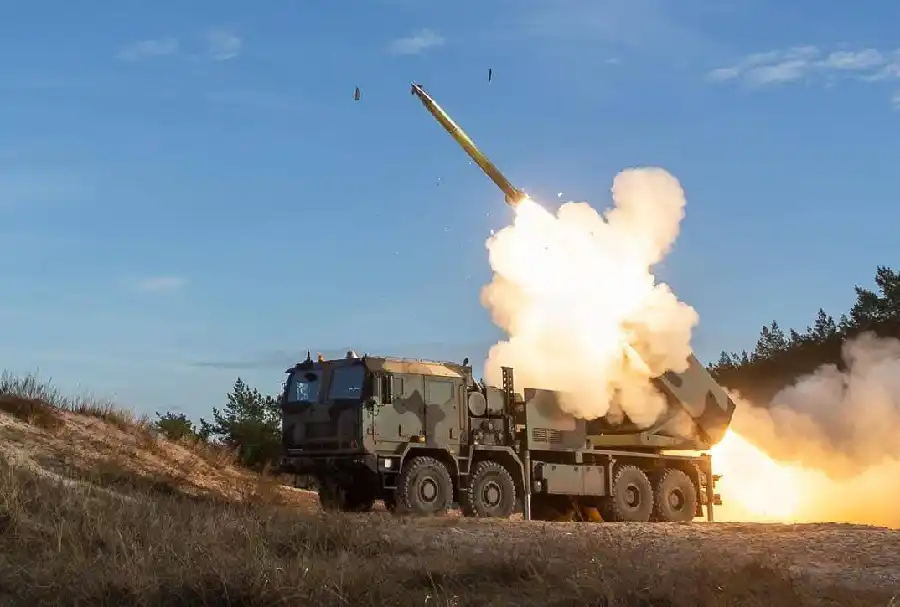
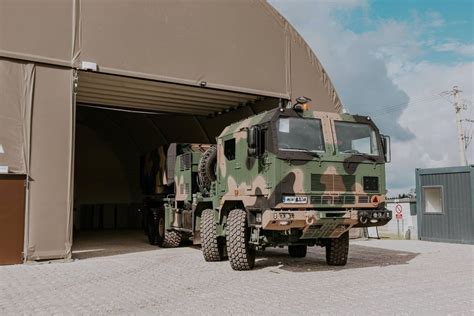
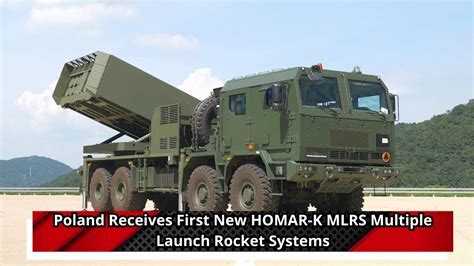
The Homar-K system—a variant of South Korea’s K239 Chunmoo—is a highly flexible multiple launch rocket system (MLRS) capable of firing both guided and unguided rockets. Each Homar-K unit is mounted on a Polish Jelcz 8×8 military truck, fitted with locally produced Polish fire control systems and communication modules. This integration of domestic components not only bolsters local defense industry capabilities but also ensures faster logistics and lower maintenance times.
One of the standout features of the Homar-K is its ability to carry 12 rockets, double the payload capacity of Lockheed Martin’s HIMARS. This allows for increased firepower without sacrificing mobility. It can launch its first rocket within seven minutes of reaching its firing position and boasts a maximum road speed of 80 km/h, ensuring rapid relocation and survivability on dynamic battlefields.
A Game Changer in Defense Logistics and Procurement
Hanwha’s ability to deliver at such pace marks a seismic shift in the expectations of defense procurement. In stark contrast, Poland’s HIMARS order—made in 2019—resulted in a four-year wait for just 20 systems, finally delivered in 2023. Similarly, Romania’s order for 54 HIMARS, placed in 2018, has taken nearly five years to fulfill. In the high-stakes world of national security, such delays are increasingly unacceptable.
This glaring disparity is prompting nations with urgent artillery requirements to reconsider their supplier portfolios. Hanwha Aerospace’s logistical agility not only satisfies immediate demand but also strengthens bilateral defense relationships and offers a compelling alternative to Western systems facing bottlenecks.
Global Demand Surges for the Chunmoo System
As global confidence in Western delivery timelines wanes, interest in the Chunmoo-based Homar-K system is rising sharply. Romania, still awaiting full HIMARS deployment, is now evaluating the South Korean system. Saudi Arabia, long reliant on U.S. defense exports, is exploring Chunmoo as a rapid-deployment option. Other countries, including Australia, Estonia, and Indonesia, are reportedly conducting feasibility assessments and price negotiations with Hanwha.
Poland’s endorsement, particularly through its accelerated deployment, acts as both a strategic signal and operational validation. The performance of the Homar-K in Polish hands—now battle-ready in under three years—is serving as a de facto live demonstration for global observers.
Strategic Localization: A Model for Future Defense Partnerships
One of the key aspects of Hanwha Aerospace’s partnership with Poland is its commitment to local industrial participation. By incorporating Polish-built Jelcz vehicles, along with native command and control systems, the Homar-K project aligns with Warsaw’s broader goal of boosting defense autonomy and local job creation. This approach reduces reliance on foreign maintenance chains and aligns with the European Union’s strategic goal of defense industrial resilience.
Such a localized model may very well become the template for future Hanwha partnerships across Europe and Asia. It enhances political viability, satisfies offset requirements, and speeds up deployment—a trio of benefits that few Western contractors have managed to bundle together with such success.
Technical Superiority Meets Tactical Flexibility
The Homar-K system’s design allows it to launch a diverse array of munitions, including 239mm rockets and 600mm ballistic missiles, each tailored for different target profiles. Whether for saturation fire missions, counter-battery operations, or precision strikes, the system adapts seamlessly to mission requirements.
Poland’s Homar-K arsenal is also designed for network-centric warfare, integrating seamlessly with NATO-standard command structures. This ensures that Poland’s forces remain interoperable within NATO while leveraging cutting-edge South Korean missile technologies.
Key technical specifications include:
- Payload capacity: 12 rockets per launcher
- Time to fire: 7 minutes from deployment
- Top speed: 80 km/h
- Mobility: High-mobility Polish Jelcz 8×8 chassis
- Fire control: Polish digital C4I system
Rewriting the Rules of Global Artillery Procurement
The ramifications of this delivery go beyond speed. Hanwha Aerospace has demonstrated that high-end weapon systems can be delivered with both urgency and quality, shattering the myth that defense exports must inherently be sluggish and bureaucratic. As a result, the South Korean defense industry is earning global credibility not just for the effectiveness of its hardware, but also for its unmatched efficiency in fulfilling large-scale contracts.
This performance has ripple effects in international defense circles. Countries with urgent security needs and constrained timelines can now look toward non-traditional suppliers like South Korea—not as second-tier alternatives, but as first-choice partners capable of transforming operational readiness in months, not years.
Conclusion: A New Era in Global Defense Logistics
With 126 Homar-K rocket systems now delivered in less than three years, Hanwha Aerospace has reset global expectations for the pace and quality of military hardware delivery. The South Korean model—combining industrial agility, localized production, and system adaptability—is redefining what is possible in defense procurement.
As geopolitical tensions continue to mount and demand for rapid military modernization intensifies, Hanwha’s example may serve as the new gold standard for artillery system deployment. Countries seeking alternatives to overburdened Western supply chains are watching Poland’s Homar-K rollout closely, and for many, the verdict is already clear: speed, sovereignty, and firepower matter more than ever.