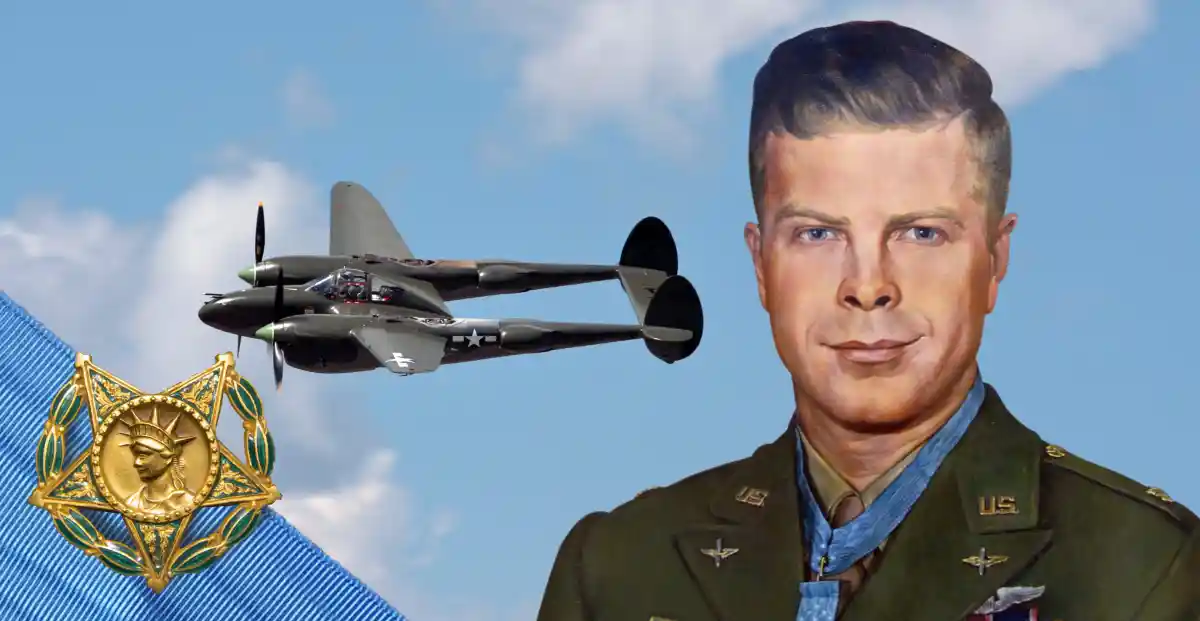
Richard Ira Bong’s name remains permanently connected with the Lockheed P-38 Lightning and the history of American air combat. Known as the “Ace of Aces,” Bong achieved more confirmed aerial victories than any other American pilot during World War II, recording 40 confirmed kills against Japanese aircraft in the Pacific Theater. His remarkable combat record, fearless flying style, and mastery of the twin-engine Lightning transformed him into one of the most celebrated fighter pilots in United States military history.
Bong’s story was not one of instant perfection. Before becoming America’s highest-scoring fighter ace, he was a young pilot known for his confidence, aggressive flying, and occasional disregard for regulations. His career nearly took a different path after a reckless training flight over California, but the incident ultimately placed him on the road toward becoming one of the most effective combat aviators of the Second World War.
Richard Bong’s Early Aviation Career and the Famous P-38 Lightning Flight
Richard Bong joined the United States Army Air Corps at the age of 21, beginning his flight training at Hamilton Field near San Francisco, California. During his training, he quickly demonstrated exceptional natural ability behind the controls of an aircraft. However, he also developed a reputation for taking unnecessary risks and pushing aircraft beyond normal expectations.
One of the most famous examples occurred shortly after he completed his flight training on the P-38 Lightning. Rather than simply celebrating privately, Bong decided to demonstrate his flying skills across the San Francisco Bay Area. He performed a series of unauthorized maneuvers, including flying his powerful twin-engine fighter through the columns of the Golden Gate Bridge before climbing away and continuing his low-level flight.
His daring display did not end there. Bong directed his aircraft toward downtown San Francisco and flew the P-38 at rooftop level along Market Street, creating a spectacle that shocked civilians and military officials alike. Later, he flew toward San Anselmo to visit a fellow pilot, bringing the aircraft so low that the powerful propeller wash from the Lightning’s Allison engines blew laundry from a nearby clothesline.
The incident resulted in Bong being summoned before General George Kenney, commander of Allied air forces in the Southwest Pacific. Many commanders might have punished the young pilot severely, but Kenney recognized that Bong’s aggressive confidence represented a valuable quality when properly controlled.
Kenney reportedly told Bong that his courage and flying ability were exactly what the Air Corps needed, but warned him that such reckless demonstrations could not continue. Instead of removing him from flight duties, Kenney redirected his energy toward combat service.
Because Bong’s original training group had already departed for Europe, he was assigned to the Southwest Pacific Theater, where he would eventually become the greatest American fighter ace of the war.
The Lockheed P-38 Lightning and Bong’s Path to Combat Success
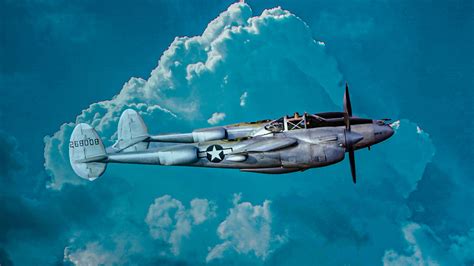
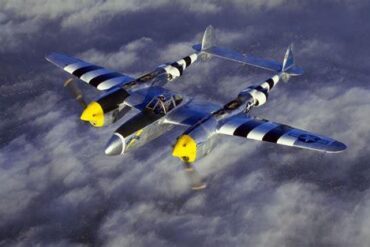
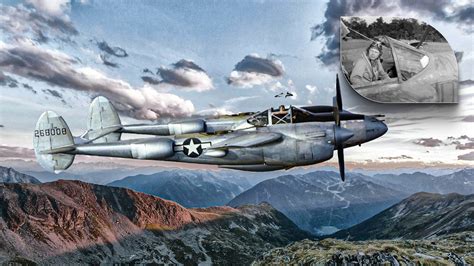
The aircraft that defined Richard Bong’s career was the Lockheed P-38 Lightning, one of the most distinctive fighters of World War II. Unlike traditional single-engine fighters, the P-38 featured a twin-boom design, two Allison engines, a central cockpit, and concentrated forward-firing weapons.
The Lightning was especially effective in the vast distances of the Pacific Theater. Its long range allowed American pilots to conduct missions over enormous areas, while its speed and heavy armament made it dangerous against Japanese aircraft.
Bong quickly learned how to exploit the P-38’s advantages. Rather than engaging enemy fighters in prolonged turning battles, he perfected “boom and zoom” tactics. This method relied on using superior speed and altitude to attack quickly, fire accurately, and escape before opponents could respond.
The strategy matched Bong’s natural flying style. He was aggressive but disciplined in combat, using the Lightning’s energy and firepower rather than attempting unnecessary close-range maneuvers.
When Bong arrived in the Southwest Pacific in September 1942, the Allied air campaign was facing serious challenges. He joined the 39th Fighter Squadron and later became associated with the 9th Fighter Squadron “Flying Knights.” Conditions were extremely difficult, with tropical diseases, primitive bases, enemy bombing raids, and constant operational pressure affecting Allied forces.
Despite these challenges, Bong quickly began proving himself in combat.
Richard Bong’s Rise as America’s Leading Fighter Ace
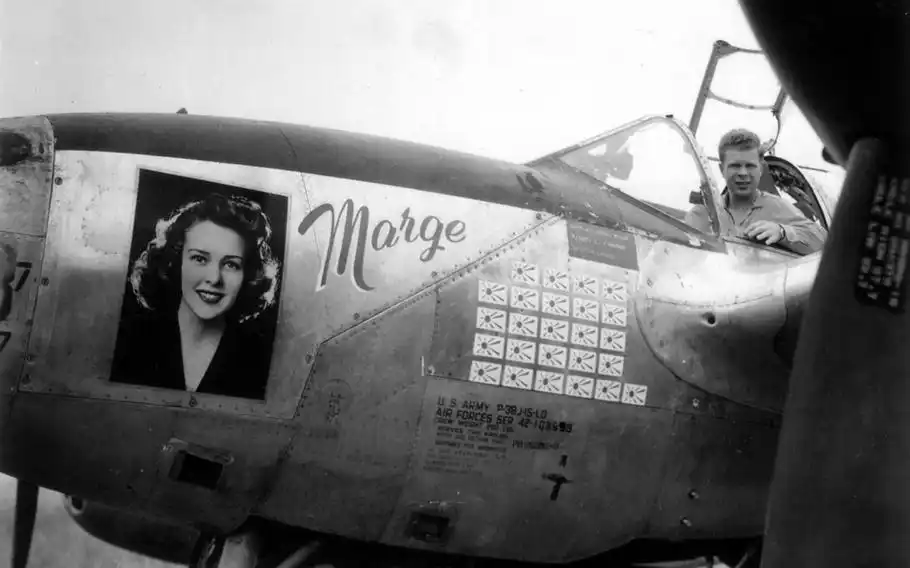
Bong achieved his first aerial victory in December 1942 while flying his P-38 Lightning, which he named “Marge” after his girlfriend Marjorie Vattendahl. The image of Marge painted on the aircraft’s nose became one of the most recognizable markings associated with an American fighter plane during World War II.
His second victory followed shortly afterward, and by January 1943, Bong had already become an ace, a pilot credited with destroying at least five enemy aircraft.
Over the following months, his success continued. Bong refined his combat techniques and developed a reputation for accuracy, aggression, and exceptional situational awareness. His ability to judge distance, speed, and timing allowed him to exploit every advantage offered by the P-38.
A major milestone came on July 26, 1943, when Bong destroyed four Japanese aircraft in a single engagement. The achievement elevated him to triple ace status and placed him among the most successful fighter pilots in the Pacific.
By the end of 1943, Bong had accumulated 21 confirmed aerial victories, making him one of the leading figures in what newspapers called the “Great Pacific Ace Race.” His growing fame attracted national attention, and he was briefly sent home to receive recognition before returning to combat.
Breaking Eddie Rickenbacker’s Record in the Pacific War
Before Bong’s rise, the most famous American fighter pilot was Eddie Rickenbacker, the leading American ace of World War I with 26 confirmed victories. During a visit to the Pacific, Rickenbacker met young pilots and shared his experiences from the previous global conflict.
General George Kenney used the meeting to motivate the new generation of American aviators. He offered a challenge: the first pilot to surpass Rickenbacker’s record would earn a special reward. The contest became a source of inspiration among fighter pilots fighting thousands of miles from home.
Bong eventually surpassed the legendary record in April 1944. During a single day of combat, he destroyed three Japanese aircraft, bringing his total above Rickenbacker’s 26 victories.
After achieving this milestone, Bong received national recognition. However, his growing success also created a problem for military leadership. Losing America’s most valuable fighter ace was a risk commanders could not ignore.
General Kenney decided that Bong’s abilities could be better used by training future pilots rather than continuing unlimited frontline missions. Bong was assigned as an advanced gunnery instructor, although he continued requesting opportunities to return to combat.
Bong’s Final Combat Victories and the Medal of Honor
Despite restrictions, Bong remained determined to support Allied operations. During the liberation of the Philippines in 1944, he continued flying missions and engaging Japanese aircraft.
His 29th victory came in October 1944, and he continued building his record during the intense fighting that followed. On his final combat mission in December 1944, Bong achieved his 40th confirmed aerial victory, becoming the highest-scoring American fighter pilot of World War II.
For his extraordinary achievements, Bong received the Congressional Medal of Honor, the highest military award in the United States. General Douglas MacArthur personally presented the award, recognizing Bong’s exceptional bravery and skill in aerial combat.
By this point, Bong had become an American national hero. Yet military leaders were determined to protect him. After completing his combat service, he was removed from frontline operations and returned to the United States.
The Tragic Death of America’s Greatest World War II Ace
After returning home, Richard Bong married Marjorie Vattendahl, whose image had appeared on his famous P-38 Lightning. His next assignment placed him at the Lockheed aircraft facility in Burbank, California, where he worked as an acceptance test pilot.
Ironically, the mission intended to advance aviation development would lead to his death.
Bong was selected to test the experimental Lockheed P-80 Shooting Star, one of America’s first operational jet fighters. By August 1945, he had completed several flights in the aircraft and gained valuable experience with the emerging technology.
On August 6, 1945, the same day the atomic bomb was dropped on Hiroshima, Bong took off on what would become his final flight. Shortly after takeoff, witnesses observed black smoke coming from the aircraft. Investigators later believed a fuel pump malfunction caused the engine to fail.
Although Bong attempted to escape the aircraft, the jet was too low for his parachute to deploy successfully. The aircraft crashed in Burbank, California, killing him instantly at only 24 years old.
Some witnesses believed Bong deliberately guided the failing aircraft away from populated areas, potentially saving lives on the ground. Whether intentional or instinctive, the action reflected the same courage and responsibility that defined his combat career.
Richard Bong’s Lasting Legacy in Aviation History
Richard Bong’s legacy extends far beyond his record of 40 aerial victories. He represented a generation of American pilots who transformed military aviation during World War II and demonstrated the effectiveness of advanced aircraft such as the Lockheed P-38 Lightning.
His success came from a combination of natural talent, aggressive determination, tactical intelligence, and complete confidence in his aircraft. The P-38 was not the easiest fighter to operate, but Bong understood its strengths and used them to defeat highly skilled Japanese opponents.
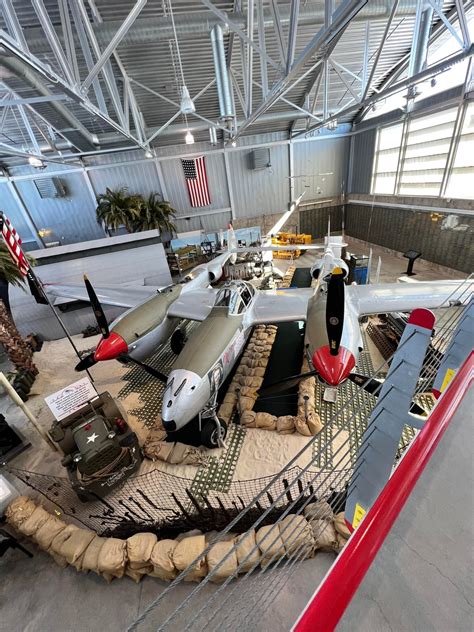
Today, his famous aircraft “Marge” is remembered through preserved P-38 replicas and aviation museums, particularly in his home state of Wisconsin. His name remains among the most respected in American military aviation history.
The story of Richard Bong is ultimately the story of a young pilot who turned extraordinary flying ability into unmatched combat achievement. From a reckless training flight over San Francisco to becoming the greatest American ace of World War II, Bong’s career remains one of the most remarkable chapters in the history of aerial warfare.