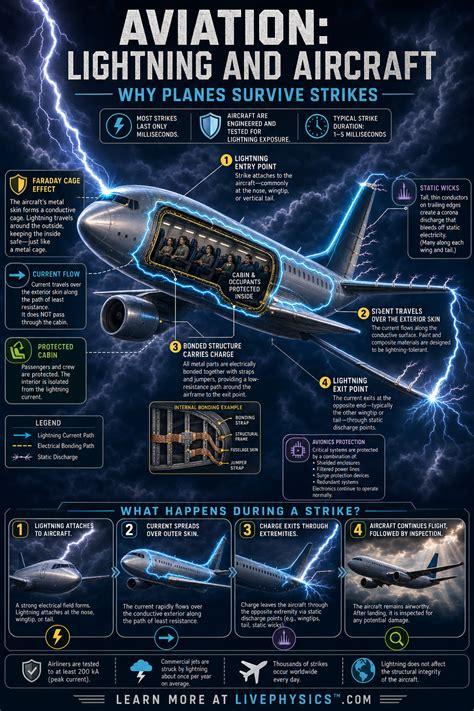
Commercial aircraft are designed to operate in some of the most electrically violent environments on Earth. Every flight through a thunderstorm carries the possibility of a lightning strike, yet passengers rarely notice when it happens. A flash may illuminate the windows, a loud crack may echo through the cabin, and then the aircraft continues climbing, cruising, or landing as if nothing unusual occurred.
The reason is not that modern aircraft avoid lightning. They are specifically engineered to accept lightning strikes and safely control the enormous electrical energy involved.
A typical commercial jet may experience a lightning strike once or twice during its operational life. Despite the terrifying appearance of a bolt connecting with an aircraft, modern aviation has reached a point where a direct strike is considered a predictable engineering challenge rather than a catastrophic emergency. The aircraft structure, engine nacelles, fuel systems, and electronic controls are all designed around one central principle: give lightning a safe path to travel while protecting everything that must continue working.
The numbers involved are extraordinary. A powerful lightning discharge can carry currents approaching 200,000 amps, while the plasma channel created by the strike can reach temperatures near 54,000°F (30,000°C). That is hotter than the surface of the Sun. However, the danger is not simply the temperature or electrical power of the bolt. The real challenge is controlling where that energy goes.
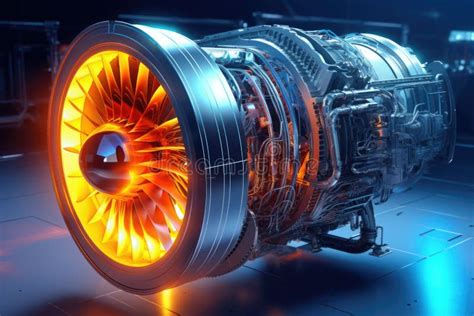
A modern jet engine is not just a mechanical device producing thrust. It is a highly integrated system containing rotating components, fuel systems, electronic controls, sensors, and thousands of electrical connections. A lightning strike must be prevented from damaging those systems while allowing the engine to continue producing power.
The Physics Of A Lightning Strike Hitting A Jet Engine
Lightning does not randomly hit any part of an aircraft. The aircraft becomes part of the electrical environment between charged regions of the atmosphere. When a jet enters a thunderstorm, electrical charges around the aircraft begin interacting with the surrounding cloud environment.
The most likely attachment points are areas that extend furthest into the airflow, including the nose, wing tips, tail surfaces, and engine nacelles. These areas are classified into lightning strike zones, which determine how much electrical energy a component must be designed to withstand.
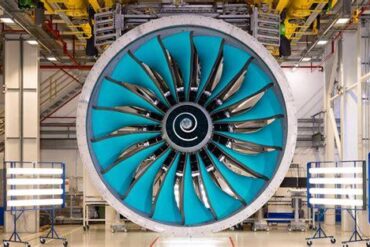
For a modern turbofan engine, the front section is one of the most exposed areas. The spinner, fan blades, and forward nacelle structure can become direct attachment points for a lightning channel. Engineers classify these locations as high-risk zones because they may experience the initial impact of the strike.

When lightning attaches to an engine nacelle, the goal is not to stop the electricity. That would be impossible. Instead, engineers create a controlled conductive route that allows the current to flow around the aircraft exterior and safely exit.
The engine nacelle, pylon, and aircraft structure work together as part of a giant electrical protection system. The current travels through specially designed conductive paths instead of passing through sensitive areas such as fuel lines, electronic equipment, or control wiring.
This concept is similar to a Faraday cage, where electrical energy travels around the outside surface while the protected interior remains relatively unaffected.
Modern aircraft manufacturers must prove this capability before certification. Lightning protection is not based on assumptions or computer simulations alone. Full-scale aircraft structures and components are tested using artificial lightning generators that recreate the electrical characteristics of real strikes.
How Engine Nacelles Redirect Hundreds Of Thousands Of Amps
A jet engine survives lightning because thousands of individual components work together as one electrical system. The protection does not come from one magical material or a single safety device.
Every panel, door, fastener, and structural connection must maintain electrical continuity. If a gap exists between two metal surfaces, lightning may attempt to jump across that gap, creating dangerous arcs and localized heating.
This is why aircraft engineers use bonding straps and electrical jumpers throughout the engine structure.
These braided metal connectors link different sections of the nacelle, engine case, thrust reverser components, and pylon structure. They ensure that the lightning current sees a smooth, low-resistance pathway.
At normal electrical levels, a small amount of resistance may appear insignificant. During a lightning strike, however, even tiny resistance values can generate enormous heat because the current is so powerful.
For example, a connection that appears perfectly acceptable during routine maintenance could become a dangerous hotspot when exposed to tens of thousands of amps. Engineers therefore carefully measure electrical bonding throughout the aircraft lifecycle.
Static discharge wicks also play an important supporting role. These small devices mounted on aircraft surfaces continuously release static electricity created by friction between the aircraft and surrounding air. They prevent excessive charge buildup and help maintain predictable electrical behavior.
Although static wicks do not absorb lightning strikes, they contribute to the aircraft’s overall electromagnetic stability.
Why A Lightning Strike Usually Does Not Shut Down A Turbofan Engine
One of the biggest misconceptions about lightning strikes is that a direct hit should automatically cause an engine failure. In reality, modern turbofan engines are built to continue operating during and after electrical events.
The core of a jet engine depends on stable combustion inside the combustor section. Lightning energy normally travels around the outside of the engine rather than through the combustion chamber. As a result, the flames inside the engine usually continue burning without interruption.
However, extremely rare events can disturb combustion. Electrical effects, sensor disturbances, or temporary disruptions in airflow conditions can cause a phenomenon known as a flameout.
Modern aircraft are designed around this possibility.
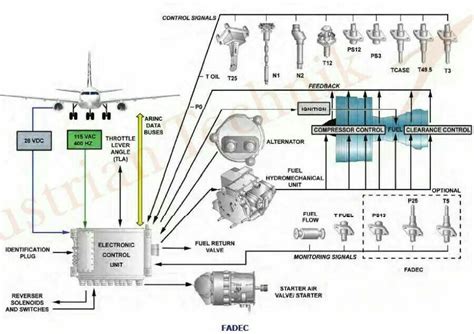
Most modern commercial engines use a Full Authority Digital Engine Control (FADEC) system. FADEC constantly monitors engine operation, including fuel flow, temperature, pressure, and combustion stability.
If the system detects that combustion has stopped, it can automatically begin an inflight relight sequence. The engine control system restores fuel flow, activates ignition, and attempts to restart the engine without requiring immediate pilot intervention.
Twin-engine aircraft are especially prepared for this scenario. Aviation regulations require commercial jets to demonstrate reliable engine restart capability under specific altitude and airspeed conditions.
Even if one engine temporarily loses power, the aircraft is still designed to remain controllable. Pilots receive extensive training for engine restart procedures, and modern aircraft can safely continue flight or divert to another airport if necessary.
The Legacy Of Past Lightning Accidents And Modern Fuel Protection
The aviation industry’s approach to lightning protection was shaped by painful lessons from earlier decades.
One of the most important events was the crash of Pan Am Flight 214 in 1963. The aircraft encountered severe weather, and a lightning strike ignited fuel vapors inside a wing fuel tank, resulting in the loss of the aircraft.
That accident transformed aircraft design standards.
Engine protection alone was not enough. Engineers realized that the entire aircraft, especially fuel systems, needed stronger lightning resistance.
Today, fuel tanks near engines and wings include multiple layers of protection. Fuel tank access panels use specially designed seals and bonding systems to prevent electrical sparks. Structural components maintain electrical continuity, and modern aircraft often use fuel tank inerting systems that reduce oxygen levels inside fuel tanks.
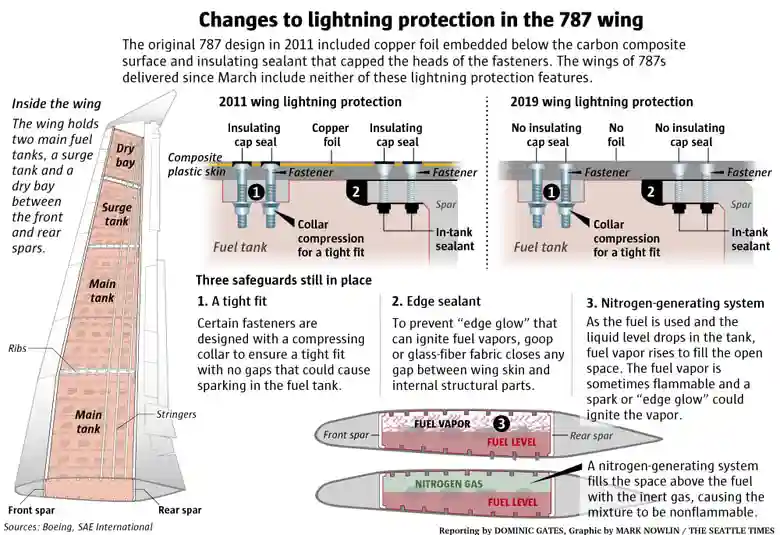
A fuel tank fire requires three elements: fuel vapor, oxygen, and an ignition source. Modern systems are designed to remove the conditions necessary for combustion.
The result is that the specific type of lightning-related fuel explosion that caused historic accidents has become extraordinarily unlikely in modern commercial aviation.
Composite Aircraft Changed Lightning Protection Technology
For decades, aluminum dominated aircraft construction because it combines strength, low weight, and excellent electrical conductivity. Aluminum aircraft naturally helped distribute lightning current across the airframe.
The arrival of composite aircraft structures created a new engineering challenge.
Aircraft such as the Boeing 787 Dreamliner and Airbus A350 use large amounts of carbon fiber reinforced composite materials. These materials provide major weight savings but do not conduct electricity as effectively as aluminum.
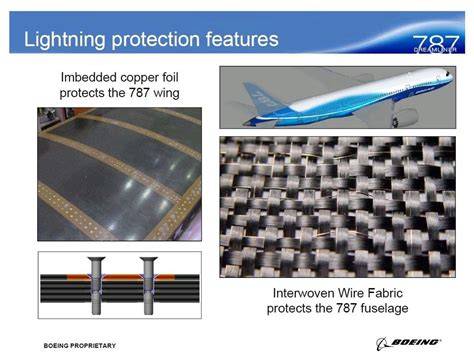
To solve this problem, manufacturers embed conductive materials into composite structures. Thin copper mesh, expanded copper foil, and conductive layers are integrated into the aircraft skin.
These materials recreate the electrical behavior of a traditional metal fuselage. When lightning strikes a composite aircraft, the current still follows a controlled external path rather than penetrating sensitive internal systems.
The engineering philosophy remains unchanged: lightning must be guided, not resisted.
What Happens After An Aircraft Is Struck By Lightning
Although lightning strikes are usually harmless to modern aircraft, every suspected strike requires inspection before the aircraft returns to service.
Maintenance crews examine areas most likely to experience damage, including engine inlet lips, nacelle surfaces, wing structures, static discharge devices, and composite panels.
A lightning strike may leave visible marks such as small burn spots, surface pitting, or damaged protective layers. Composite materials receive particular attention because internal damage may not always be visible from the outside.
Engineers use inspection procedures developed through decades of operational experience. These procedures ensure that even extremely rare damage is detected before it affects future flights.
The aircraft may have completed the flight normally, but the inspection process confirms that all protective systems performed as expected.
Why A Modern Jet Engine Can Survive Nature’s Most Powerful Electrical Event
A direct lightning strike on a jet engine sounds like a disaster scenario, but modern aviation treats it as a design requirement.
The engine nacelle provides a controlled electrical pathway. Bonding straps prevent dangerous arcing. Fuel systems prevent ignition. Composite structures use conductive materials to recreate metal-like protection. Digital engine controls prepare for rare combustion interruptions.
Every part of the aircraft contributes to survival.
The most important lesson is that modern jets are not protected because lightning is weak. They are protected because engineers understand exactly how powerful lightning is and have spent decades designing systems capable of managing it.
A lightning strike may produce a spectacular flash outside the aircraft, but inside the cockpit and cabin, it is usually just another event that modern aviation technology was built to handle.