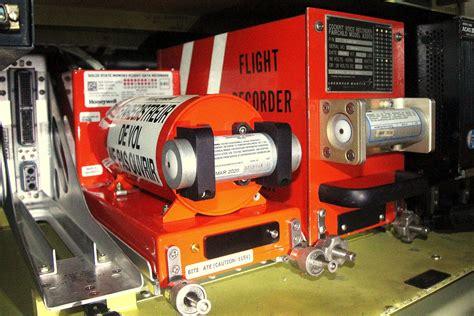
When an airplane crashes, one of the first tools investigators rely on is the black box — a misnomer for the bright orange flight recorders that hold vital clues to the tragedy. These boxes, often found battered and burned yet still functioning, are remarkable feats of engineering, designed to withstand forces and conditions that obliterate the rest of the aircraft. But how do they manage to survive violent crashes, fires, deep-sea pressure, and crushing impact forces? The answer lies in a blend of extreme material science, rigorous testing, and a relentless pursuit of durability.
The Two Black Boxes: More Than Just Recorders
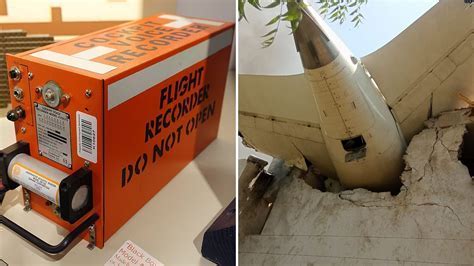
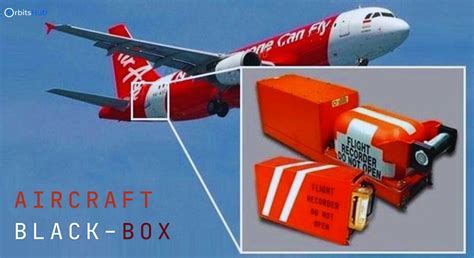
Despite the name, the term “black box” actually refers to two separate devices — the Cockpit Voice Recorder (CVR) and the Flight Data Recorder (FDR). These are typically installed in the tail section of the aircraft, where the structure is most likely to remain intact during a crash. The CVR captures the last two hours of cockpit audio, including conversations, radio transmissions, and ambient sounds like alarms or engine noise. Meanwhile, the FDR stores up to 25 hours of crucial operational data, such as airspeed, altitude, heading, vertical acceleration, throttle position, and control inputs.
These recordings become invaluable post-crash tools. In the case of American Airlines Flight 587, which broke apart just minutes after takeoff in 2001, the black box revealed that pilot input rather than a terror attack was the cause — a fact that helped calm a nation already on edge after 9/11. It’s not just about explaining past accidents; black box data influences future aircraft design, pilot training, and safety protocols.
Core Engineering: Built to Endure Catastrophe
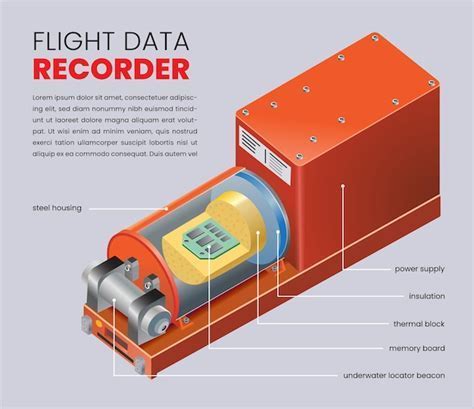
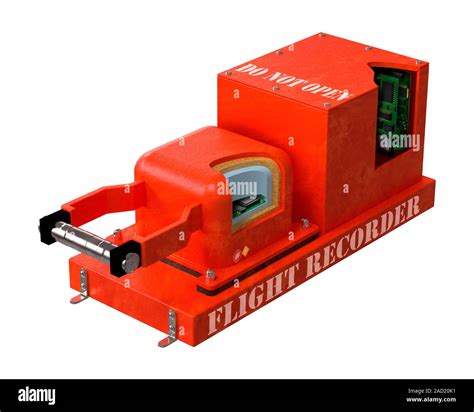
At the heart of every black box is the Crash-Survivable Memory Unit (CSMU), a rugged core component that houses stacked memory boards containing the flight data. To protect this unit, manufacturers use a three-layer defense system:
- An aluminum inner housing wraps directly around the memory boards.
- This is encased in a 1-inch layer of high-temperature silica-based insulation.
- The outermost layer is constructed of titanium or stainless steel, both known for their exceptional resistance to pressure and heat.
This fortified capsule enables black boxes to meet or exceed the stringent criteria set by EUROCAE ED-112A, the international standard for crash-protected flight recorders. These standards require each unit to:
- Survive impacts of up to 3,400 g-forces
- Withstand temperatures of 2,000°F (1,093°C) for one hour
- Endure crush forces of 5,000 psi from six directions
- Remain functional after 30 days submerged in saltwater
To verify these capabilities, manufacturers simulate a variety of catastrophic conditions. Units are shot from air cannons, dropped from heights, immersed in seawater, and baked in propane fireballs to ensure the data remains retrievable.
Case Study: Air France Flight 447
One of the most striking demonstrations of black box resilience was during the investigation of Air France Flight 447, which crashed into the Atlantic Ocean in 2009. The wreckage was located at a depth of over 13,000 feet, and it took nearly two years to recover the flight recorders. Despite the crushing pressure and exposure to seawater, the CSMU was still intact. Once retrieved, investigators successfully accessed the data, enabling a detailed reconstruction of the flight’s final moments — and identifying automation mismanagement and pilot error as primary causes.
This case underlines not just the durability of black boxes, but also their pivotal role in aviation safety and learning. Had the memory unit failed, critical safety insights would have been lost forever.
The Achilles’ Heel: Locating the Box
While black boxes are engineered to withstand near-apocalyptic forces, their recovery is not always guaranteed. In an ideal scenario, each black box emits a ping every second for up to 30 days after a crash. This signal, emitted by an Underwater Locator Beacon (ULB), can travel over 14,000 feet through water, guiding recovery teams to the wreckage.
However, the system is far from flawless. High-impact crashes can dislodge or destroy the beacon. In other cases, vast and difficult terrains make location nearly impossible. The most glaring example is Malaysia Airlines Flight MH370, which disappeared in 2014. Despite years of searching the Indian Ocean, the black box was never found — and with it, the final chapter of that flight remains a mystery.
Modern Challenges: The Limits of Local Storage
The failure to recover the MH370 black box sparked a global reassessment of flight recorder strategy. Critics pointed out the inherent flaw of storing critical flight data exclusively onboard. If the aircraft is never found, the data dies with it. This realization prompted calls for real-time data streaming, which would continuously transmit flight information to ground-based systems or satellites.
In response, the International Civil Aviation Organization (ICAO) recommended in 2016 that aircraft transmit location data every 15 minutes and more frequently under abnormal conditions. Some aviation tech companies like FLYHT Aerospace and Aireon have since begun deploying infrastructure for global flight tracking.
Yet, widespread adoption remains elusive. Airlines face significant hurdles including implementation cost, privacy concerns, and the complexity of retrofitting older aircraft. Despite technological feasibility, full transition to streaming systems could take years or even decades.
The Case for Deployable Black Boxes
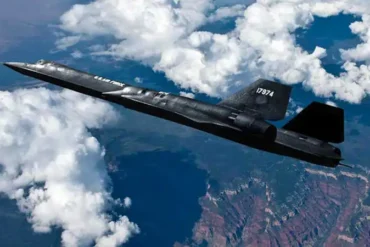
Another proposed solution is the deployable flight recorder, designed to eject from the aircraft upon impact. These systems function similarly to the black boxes found on military jets and some helicopters. The idea is that by separating from the fuselage, the recorder is more likely to be recovered quickly and intact.
Support for these units gained traction in the early 2000s. U.S. lawmakers introduced bills advocating for mandatory deployable black boxes, especially on overwater flights. However, these proposals have not yet been codified into law. Critics argue the systems are costly and introduce mechanical complexity, while proponents counter that lives and lessons are too valuable to leave inside an unrecoverable wreck.
Future-Proofing Flight Recorders
As the aviation industry grapples with the tension between innovation and regulation, several trends are emerging. Manufacturers are exploring solid-state memory improvements, better beacon technologies, and redundant systems that transmit key metrics in real time while still storing full data locally. Hybrid systems may offer the best of both worlds — robust on-site recorders plus partial cloud-based backups.
Some visionaries are also pushing for integration with artificial intelligence, where data patterns could be analyzed mid-flight to predict anomalies before disaster strikes. These advancements represent a philosophical shift: from merely documenting the past to actively preventing accidents in the present.
Conclusion: Tough Boxes, Tougher Questions
The airplane black box is one of modern aviation’s most critical inventions. Its durability is the result of meticulous engineering — layers of titanium, insulation, and rigorous stress testing — all aimed at preserving data through fire, impact, and ocean depth. Yet, as technology evolves, so must our approach.
Survivability is no longer the sole challenge; recoverability and data accessibility are now equally vital. Whether through satellite streaming, deployable recorders, or hybrid memory systems, the black box of tomorrow must be more than just crash-proof. It must be findable, readable, and ready to tell its story — no matter how or where the crash occurs.