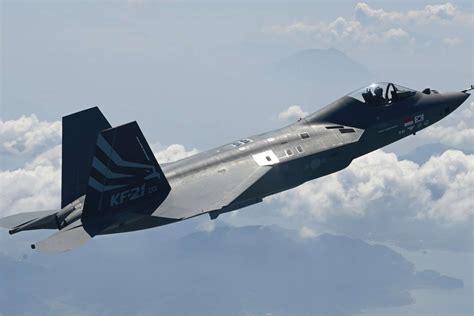
South Korea’s ambition to establish indigenous aerospace dominance received a major boost with Hanwha Aerospace’s latest $459 million contract to supply engines for the country’s next-generation KF-21 Boramae fighter jet. Signed with the Defense Acquisition Program Administration (DAPA), the agreement marks a significant milestone in the evolution of South Korea’s defense aviation industry and solidifies Hanwha’s role as a strategic partner in national defense innovation.
This newly inked deal—valued at ₩623.2 billion ($459.3 million)—is not the first of its kind. It follows a previous 2023 contract worth ₩556.2 billion ($410 million) for initial engine supply, bringing the cumulative value of KF-21 engine procurement contracts awarded to Hanwha to approximately ₩1.18 trillion ($869 million). Under the current agreement, Hanwha Aerospace will deliver 80 General Electric F414 engines by December 2028, supporting the first mass production batch of the stealth-capable KF-21 fighter jets.
Hanwha Aerospace’s Expanding Role in South Korea’s Jet Engine Ecosystem
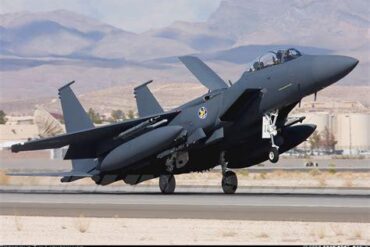
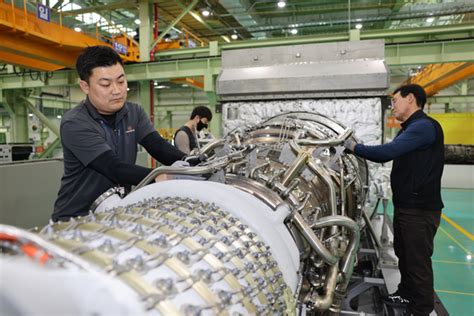
Hanwha Aerospace, established in 1977 and active in military aviation since 1979, has emerged as a powerhouse in the region’s engine manufacturing sector. The company has produced over 10,000 engines across decades of service, including those for frontline platforms such as the KF-5, KF-16, and the F-15K Slam Eagle. Its capabilities were crucial during earlier modernization waves of the Republic of Korea Air Force (ROKAF), but the KF-21 marks the most strategically significant project to date.
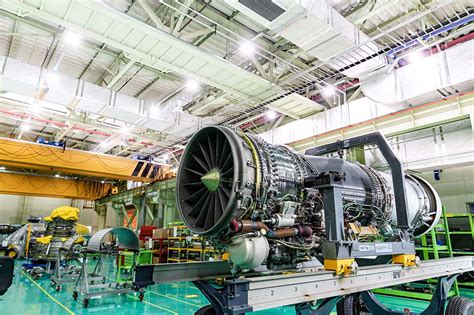
To meet the complexity and scale of KF-21 production timelines, Hanwha has invested ₩40 billion ($30 million) in a dedicated smart factory for jet engine manufacturing. This facility leverages automated inspection systems, digital twin simulation, and intelligent logistics platforms to ensure precision in assembly and expedite turnaround times. Such integration of Industry 4.0 technologies ensures the company maintains world-class standards in engine reliability and lifecycle management.
The F414 Turbofan: Powering the KF-21’s Supersonic Performance
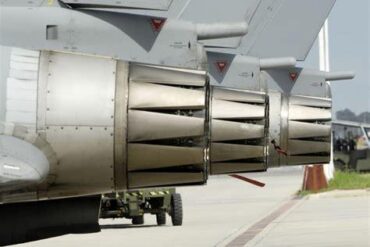
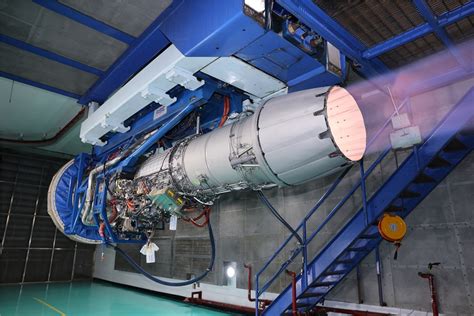
At the heart of the KF-21 lies the General Electric F414-GE-400K turbofan engine, jointly assembled under license by Hanwha Aerospace. The F414 is a modern derivative of the F404 engine, powering platforms such as the Boeing F/A-18E/F Super Hornet and Saab’s JAS 39E/F Gripen.
Each F414 engine generates 22,000 pounds of thrust, enabling the KF-21 to reach speeds of Mach 1.8 and an operational ceiling of 50,000 feet. The engine’s modular design also ensures ease of maintenance and reduces long-term operational costs. For South Korea, the local production of this powerplant is not only a logistical win—it’s a geopolitical statement of technological maturity.
KF-21 Development Timeline: From Ambition to Assembly Line
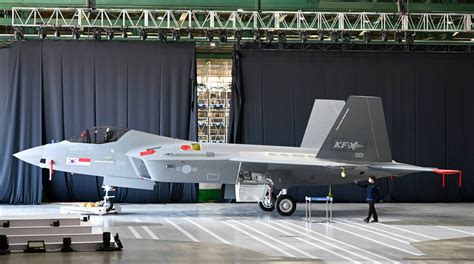
South Korea’s indigenous fighter program was born out of strategic necessity. With aging F-4 Phantom and F-5E Tiger II jets nearing the end of their service life, the Republic of Korea required a modern multirole fighter with advanced avionics, stealth features, and superior air-to-air and air-to-ground combat capabilities.
Development of the KF-21 began in 2015 under the joint leadership of Korea Aerospace Industries (KAI) and DAPA. Despite initial skepticism regarding its cost and feasibility, the program achieved a major milestone in July 2022 when the KF-21 successfully completed its first flight. Since then, multiple prototypes have undergone rigorous testing—including high-speed taxi, climb performance, radar evaluation, and weapons integration trials.
By the end of 2028, the ROKAF is expected to induct the first operational batch of KF-21 aircraft, eventually totaling over 120 units. The mass production schedule aligns precisely with Hanwha’s engine delivery timeline, making the current contract pivotal to the program’s continuity.
Strategic Independence and Export Opportunities
The KF-21 program is not merely a domestic security initiative; it is also a diplomatic and industrial tool. Unlike previous platforms wholly dependent on foreign OEMs, the KF-21 involves extensive domestic sourcing—over 65% of components are locally produced. While the engines are based on GE’s design, their local assembly and logistics support grant South Korea partial independence in lifecycle sustainment.
Additionally, the aircraft is being positioned for export to Southeast Asian and Middle Eastern markets. Nations such as Indonesia—an original partner in the development program—as well as the Philippines, Thailand, and Colombia have expressed interest in the platform. A reliable, scalable engine supply chain enhances South Korea’s competitiveness in these defense markets.
Logistics, Lifecycle Support, and On-Site Assistance
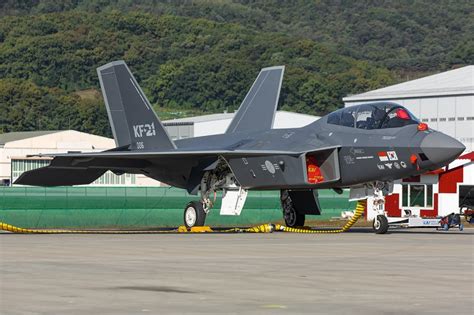
One of the distinguishing aspects of the recent contract is its emphasis on logistics support. Beyond mere engine delivery, Hanwha Aerospace will provide:
- Maintenance, Repair, and Overhaul (MRO) parts
- Technical documentation for ground crews and operators
- On-site engineering assistance for ROKAF units during initial deployment
Such a full-spectrum support strategy is crucial, especially during the transitional phase from legacy aircraft to next-generation platforms. The learning curve for maintenance and flight personnel is significantly reduced when supported by detailed technical integration and real-time troubleshooting assistance.
The Smart Factory Advantage: Automation Meets Aerospace
Hanwha’s new smart factory represents a leap forward in South Korea’s defense manufacturing infrastructure. Equipped with intelligent process management, the facility is capable of conducting automated inspections using AI-powered sensors and robotic precision assembly. These advancements reduce production errors, ensure compliance with aerospace standards, and accelerate cycle times.
The factory’s integration into Hanwha’s broader digital ecosystem also facilitates predictive maintenance modeling and supply chain forecasting, providing DAPA and ROKAF with higher transparency on production status and delivery timelines. In an industry where delays can derail national defense readiness, these innovations are more than efficiency tools—they’re strategic enablers.
National Pride, Global Attention
The KF-21 and its associated supply chain have become symbols of South Korea’s rise as a global defense exporter and innovator. While previous efforts relied heavily on U.S. or European technology integration, this program showcases the country’s ability to develop, manufacture, and deploy near-5th-generation platforms under its own banner.
Hanwha Aerospace’s engine contract also marks a significant economic impact, contributing to the domestic job market and bolstering the country’s defense export reputation. As global tensions elevate regional demand for cost-effective but high-performance fighter jets, South Korea is uniquely positioned to bridge capability gaps for allied nations.
The Road Ahead: Beyond the KF-21
Although the current contract secures engines for the first mass production batch, it is widely expected that further orders will follow. Given the long-term vision for the KF-21 program—including possible navalized variants and unmanned loyal wingman integration—Hanwha Aerospace is likely to remain a critical player in South Korea’s future airpower strategies.
In parallel, the company is exploring next-generation propulsion systems, including variable cycle engines and high-thrust alternatives for future platforms. Its collaboration with academic institutions and international OEMs positions it as a forward-looking force in military propulsion technology.
By securing this contract and aligning it with advanced manufacturing capabilities, Hanwha Aerospace is not just fulfilling a defense order—it is laying the foundation for the next era of Korean air superiority.
Conclusion: A Strategic Leap for Hanwha and the Korean Defense Industry
The $459 million contract to supply engines for South Korea’s KF-21 fighter jet program represents more than a transaction—it’s a strategic affirmation of trust in Hanwha Aerospace’s capabilities, and a reflection of South Korea’s determined push toward aerospace independence and export growth. As the Boramae prepares to soar in full production form, Hanwha’s engines will not only power a fighter jet—they will propel a nation’s defense ambition into the stratosphere.