Israel’s decision to modernize its frontline air combat capabilities marks a pivotal moment in Middle Eastern military aviation. With an $8.6 billion contract awarded to Boeing, the Israeli Air Force is set to receive a new generation of air superiority assets designed to preserve technological dominance in an increasingly complex security environment. This investment is not merely about replacing aging platforms; it is about reshaping operational doctrine, deterrence posture, and long-term strategic flexibility.
The agreement, announced on December 29, 2025, authorizes Boeing to design, test, and produce 25 F-15IA fighter jets, a customized Israeli variant of the latest F-15EX Eagle. Structured as a cost-plus-fixed-fee contract with a ceiling of $8.5777 billion, the deal initially obligates $840 million in Foreign Military Sales funding. The production timeline stretches to December 31, 2035, underscoring the long-term nature of Israel’s modernization roadmap and its reliance on sustained U.S. defense cooperation.
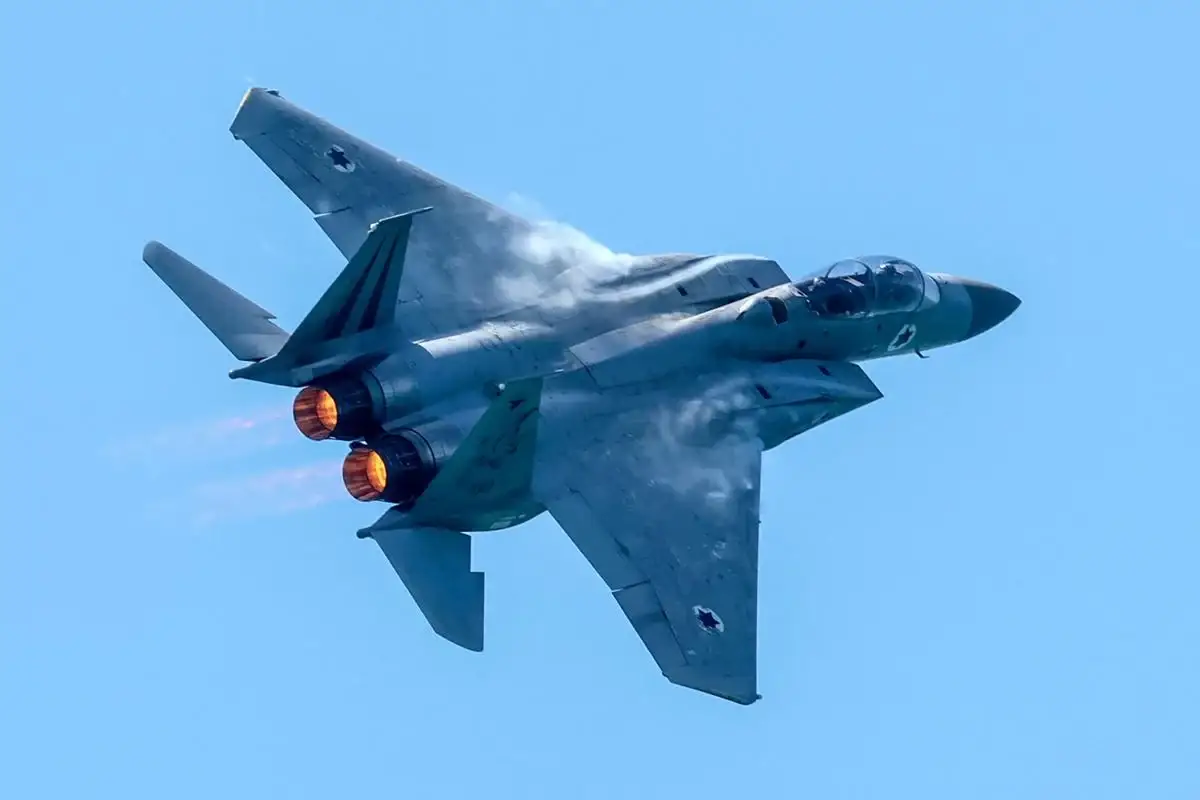
Beyond the headline numbers, the program reflects a calculated balance between proven airframe reliability and next-generation performance enhancements. The F-15IA builds upon decades of combat-tested design while integrating advanced avionics, digital mission systems, and expanded payload capacity. This blend ensures continuity for Israeli pilots while delivering a substantial leap in lethality, survivability, and mission versatility across contested airspace.
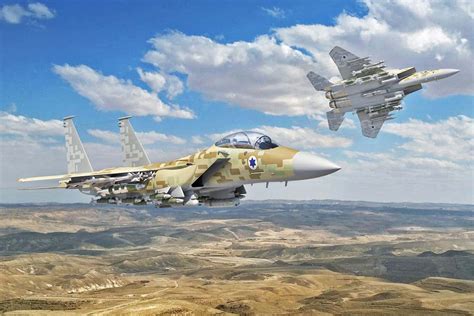
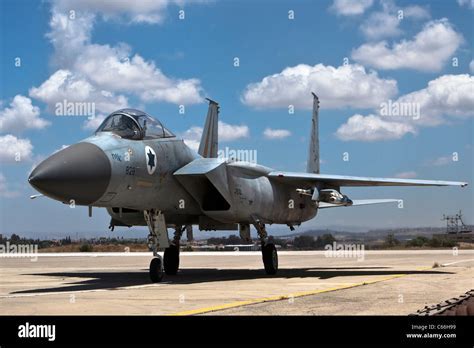
At the heart of the upgrade lies a significant performance transformation. The F-15IA boasts a maximum takeoff weight of 81,000 pounds, a 42.8-foot wingspan, and a top speed approaching Mach 2.5. Compared to earlier F-15D variants, the aircraft adds roughly 13,000 pounds of allowable weight and nearly 270 miles per hour in speed. These gains are powered by a pair of high-output General Electric jet engines, enabling heavier weapons loads, extended range, and sustained high-speed operations.
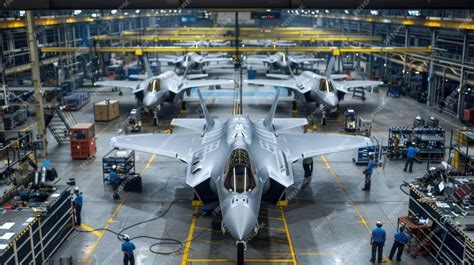
The manufacturing footprint of the program carries its own historical weight. Production will take place in St. Louis, Missouri, the same facility where the original F-15 Eagle first emerged in 1972. Following Boeing’s acquisition of McDonnell Douglas in 1997, the site has remained a cornerstone of U.S. fighter aircraft production. For Israel, this ensures access to a mature industrial base with decades of experience refining the F-15 lineage.
Strategically, the timing of the contract is equally significant. The announcement followed high-level talks between Israeli Prime Minister Benjamin Netanyahu and U.S. President Donald Trump in Florida, formalizing an earlier $5.2 billion agreement reached in November 2024. Funding flows through Foreign Military Financing, part of the broader $38 billion U.S. military assistance framework established for Israel between 2019 and 2028. This mechanism not only supports the F-15IA acquisition but also preserves Israel’s ability to pursue complementary platforms, including additional F-35 stealth fighters.
While the addition of 25 aircraft, with an option for 25 more, will not make Israel the world’s largest F-15 operator, it significantly enhances qualitative superiority. The F-15IA is engineered for air dominance, deep strike missions, and rapid response across multiple theaters. In a region defined by evolving threats and shifting alliances, this upgrade reinforces Israel’s capacity to project power decisively while maintaining a technological edge that few can match.
Taken together, the $8.6 billion Boeing upgrade represents more than a procurement milestone. It is a long-term strategic investment that aligns industrial heritage, cutting-edge performance, and geopolitical partnerships into a single, formidable force multiplier for Israel’s fighter jet fleet.