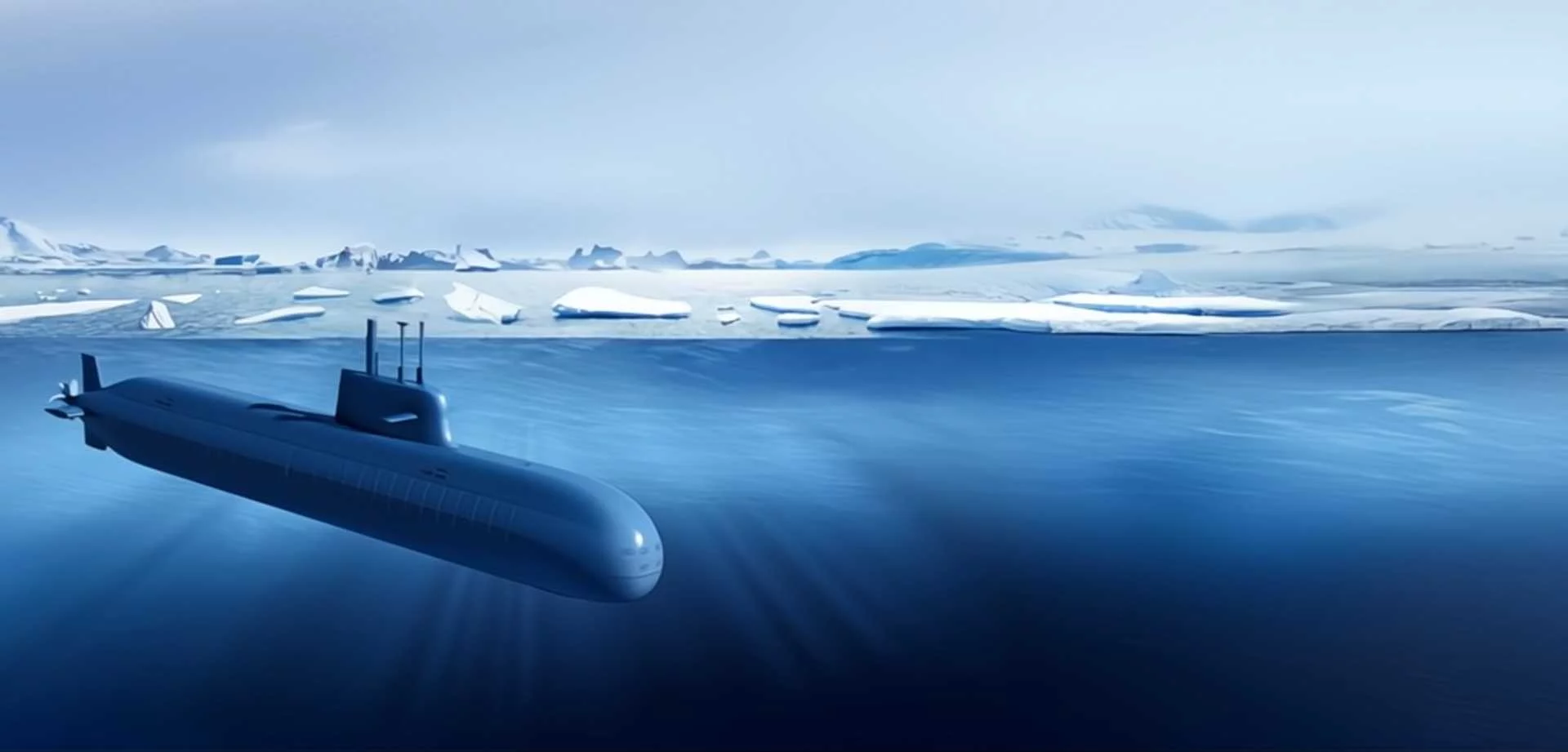
Canada’s Patrol Submarine Project (CPSP) has entered a decisive phase as South Korea’s Hanwha significantly broadens its industrial proposal, transforming a naval acquisition into a wide-ranging, multi-sector partnership. By formally binding submarine procurement to Canadian steelmaking, space systems, artificial intelligence, defense electronics, and long-term sustainment, Hanwha is positioning its bid not merely as a platform sale, but as a generational industrial program aligned with Ottawa’s economic and sovereignty priorities.
The expansion reflects a strategic reading of Canada’s defense procurement doctrine. Major acquisitions are no longer evaluated solely on military performance or delivery schedules; they are judged on measurable, long-term domestic economic impact, regional job creation, and technology transfer. Hanwha’s approach reframes the CPSP as a catalyst for national industrial integration rather than a discrete Royal Canadian Navy requirement.
This shift matters. With projected life-cycle costs ranging from $60 billion to nearly $100 billion, the CPSP is among the largest defense investments in Canadian history. The winning bidder will shape not only naval capability but also industrial capacity for decades. Hanwha’s latest moves signal an intention to embed itself deeply into Canada’s economic and technological fabric.
A Multi-Sector Industrial Strategy Anchored in Canada
On January 27, 2026, Hanwha formalized cooperation agreements with five Canadian companies, spanning heavy industry, space, artificial intelligence, and electro-optical systems. The framework connects submarine construction and sustainment to upstream and downstream industrial activity across multiple provinces, aligning with Canada’s insistence that defense spending reinforce domestic manufacturing and sovereign capabilities.
The initiative brings together Hanwha Ocean and Hanwha Systems, uniting shipbuilding expertise with advanced electronics and digital systems. Rather than proposing isolated offsets, the Korean group is presenting an integrated ecosystem designed to persist for the full service life of the submarine fleet. This model mirrors Canada’s emphasis on sustained industrial participation, ensuring that economic benefits do not evaporate once initial hulls are delivered.
Crucially, the proposal is framed within a broader Canada–South Korea strategic relationship, extending beyond defense into technology, manufacturing resilience, and security cooperation. The submarines become the anchor point for a bilateral industrial partnership rather than the sole objective.
Steelmaking as a Foundation for Naval Sovereignty
A cornerstone of Hanwha’s bid is the localization of steel production and sustainment infrastructure in Canada. Hanwha Ocean and Algoma Steel have entered a binding arrangement with an aggregate potential value of up to $250 million (approximately CAD $345 million). The agreement links submarine construction directly to Canadian steel output, both for initial manufacturing and for decades of maintenance, repair, and overhaul.
The cooperation supports Algoma’s development of a new structural steel beam mill, while also anticipating long-term steel purchases tied to submarine sustainment facilities on both the Atlantic and Pacific coasts. Nova Scotia and British Columbia are identified as focal points for through-life support, embedding naval sustainment within regional industrial ecosystems.
Algoma’s transition to electric arc furnace steelmaking and a modernized plate mill adds a strategic dimension. With a stated emissions reduction target of roughly 70 percent, the partnership aligns defense procurement with Canada’s climate and industrial modernization goals. The beam mill is also positioned to serve civilian infrastructure projects, including housing and transportation, ensuring demand that extends beyond the submarine program itself.
Space and Secure Communications for Modern Submarine Operations
Submarines increasingly depend on resilient, secure communications, and Hanwha Systems has centered its Canadian partnerships on space-based connectivity. An agreement with Telesat focuses on Low Earth Orbit (LEO) satellite communications compatible with the Telesat Lightspeed network, emphasizing high-capacity, low-latency, and secure links tailored to maritime and submarine missions.
The cooperation explores interoperability with Korea’s K-LEO satellite constellation, including shared terminal architectures and secure user equipment. This approach positions Canada as a participant in a broader allied satellite ecosystem while anchoring terminal development and integration work domestically.
In parallel, a separate arrangement with MDA Space targets advanced satellite technologies and software-defined satellite solutions, paired with defense electronics and systems integration. These efforts are framed as enabling robust command, control, and data resilience for undersea operations, while also reinforcing Canada’s space industrial base.
Artificial Intelligence and Sensor Technologies as Force Multipliers
Artificial intelligence forms another layer of Hanwha’s industrial proposition. Hanwha Ocean, Hanwha Systems, and Cohere have agreed to cooperate on AI models, including large language and multimodal systems, with applications spanning submarine operations and shipyard processes. Potential uses include design optimization, predictive maintenance, logistics planning, and decision support during operations.
This collaboration blends shipbuilding experience, defense systems integration, and enterprise AI capability, converting industrial data into operational advantage. The emphasis on Canadian AI participation reflects Ottawa’s desire to translate defense spending into high-value digital skills and intellectual property.
Sensor technologies are addressed through a separate agreement between Hanwha Systems and PV Labs, focusing on electro-optical and infrared tactical systems. The arrangement covers local development, system integration, production in Canada, and technology transfer, with an explicit export dimension. Skilled employment and regional economic activity, particularly in Ontario, are positioned as tangible outcomes.
The KSS-III: Operational Capability With Production Credibility
At the heart of Hanwha’s naval offer is the KSS-III diesel-electric submarine, a design already in operational service and active production. Incorporating air-independent propulsion (AIP), the KSS-III is positioned to meet Canada’s demanding operational profile across the Atlantic, Pacific, and limited under-ice Arctic missions.
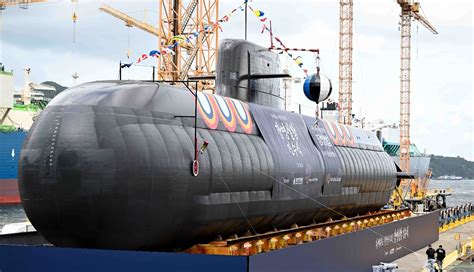
The platform offers an operational range exceeding 7,000 nautical miles and submerged endurance beyond three weeks, aligning with Canadian requirements for long-range, covert patrols. Hanwha states that, if a contract is signed in 2026, four submarines could be delivered by 2035, enabling the retirement of the aging Victoria-class fleet before the end of its viable service life.
Earlier retirement is linked to estimated savings of around $1 billion in maintenance and support costs. Under the proposed schedule, eight additional submarines would follow at a rate of one per year, completing a fleet of up to 12 boats by 2043. This production cadence is presented as both achievable and industrially sustainable.
Canada’s Patrol Submarine Project in Strategic Context
The CPSP is a multi-decade acquisition intended to replace the Royal Canadian Navy’s four Victoria-class submarines, whose service lives are expected to end in the mid-to-late 2030s. Beyond the boats themselves, the program encompasses training systems, shore infrastructure, and long-term sustainment, making it a national industrial undertaking as much as a naval one.
Operational requirements emphasize long-range covert patrols, sustained endurance across Canada’s three ocean approaches, and interoperability with U.S. systems. The submarines must operate undetected over distances of at least 7,000 nautical miles, remain continuously submerged for a minimum of 21 days, and sustain missions lasting no less than 60 days without external support.
The ability to launch and recover unmanned underwater vehicles (UUVs) is also mandated, reflecting the growing role of autonomous systems in undersea warfare. While conventional submarines can conduct limited under-ice operations, Canada has ruled out nuclear propulsion, shaping the design trade-offs that bidders must address.
Competition With Germany’s TKMS and the Industrial Deciding Factor
From an initial field of six contenders, the CPSP competition was narrowed in August 2025 to two bidders: Hanwha Ocean and Germany’s ThyssenKrupp Marine Systems (TKMS). The German proposal centers on the Type 212CD, developed jointly with Norway and featuring diesel engines, lithium-ion batteries, and fuel-cell-based AIP.
TKMS has paired its submarine offer with a multi-billion-dollar industrial package involving German and Norwegian partners, extending into sectors such as critical minerals, artificial intelligence, and automotive battery production. As with Hanwha’s bid, industrial participation is treated as a decisive criterion rather than an adjunct.
The outcome, expected in 2026, will hinge not only on submarine performance and delivery schedules, but on the breadth, credibility, and durability of the industrial ecosystems each bidder proposes to embed in Canada. In this context, Hanwha’s expanded, multi-sector framework is a calculated attempt to meet Canada on its own terms.
A Bid Designed for Decades, Not Hulls
Hanwha’s expanded industrial bid reframes the CPSP as a nation-building exercise, linking undersea capability to steelmaking, space infrastructure, digital technologies, and skilled employment. By anchoring production and sustainment in Canada and tying submarine procurement to civilian industrial growth, the company is addressing the political, economic, and strategic dimensions of the program simultaneously.
The approach carries risks. Coordinating multiple sectors and partners over decades demands governance discipline and sustained political support. Yet the ambition aligns closely with Canada’s stated objectives: sovereign capability, resilient supply chains, and long-term economic return on defense investment.
As the decision point approaches, the CPSP has become a test case for how modern defense procurement can shape national industry. Hanwha’s bid suggests that, in this competition, the decisive factor may not be the submarine alone, but the industrial future built around it.