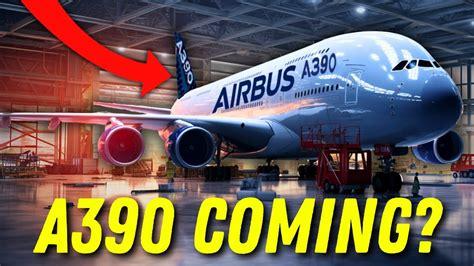
In the world of commercial aviation, rumors and speculation often precede innovation. One such concept stirring interest among aviation analysts, airline executives, and aerospace enthusiasts is the hypothetical Airbus A390. Though Airbus has not officially acknowledged such a project, the idea of a next-generation widebody aircraft designed to extend or complement the A350 or replace the now-defunct A380 continues to capture attention. Whether born of industry logic or pure fantasy, the A390 concept represents a potential turning point in long-haul air travel — but will it ever leave the drawing board?
The aviation sector’s trajectory toward sustainability, operational efficiency, and fleet modernization may ultimately determine if the A390 becomes Airbus’s next major launch or remains an idea suspended in theory.
Why the A390 Makes Sense in Airbus’ Naming Logic
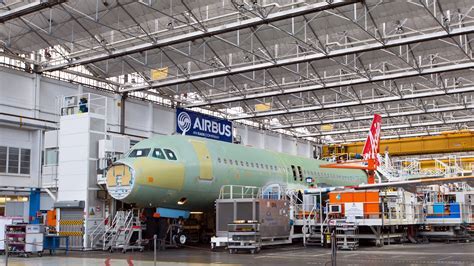
Airbus’s numerical naming system for its aircraft leaves a tempting gap. With the A350 already in service and the A380 recently retired, jumping to A390 seems plausible. However, the manufacturer has historically skipped numbers — there is no A360 or A370 — prioritizing performance evolution over numerical continuity. Even so, the A390 fits within the brand narrative of high-capacity, long-range aircraft designed to meet 21st-century aviation demands.
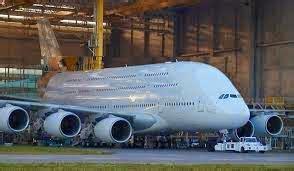
The retirement of the A380 in 2021 left a void in ultra-high-capacity airframes. While the A350 has gained widespread acceptance among international carriers, its configuration stops short of the A380’s seating potential. An A390 could represent a hybrid evolution — combining the massive passenger capacity of the A380 with the twinjet economy and fuel efficiency of the A350.
Airbus Has Not Confirmed the A390 — Yet
There are no public filings, prototype sightings, or official communications from Airbus about an A390 project. Airbus CEO Guillaume Faury has consistently emphasized sustainable development and gradual evolution of current aircraft families rather than clean-sheet widebody concepts. Yet speculation persists, largely driven by market needs and strategic gaps Boeing may exploit.
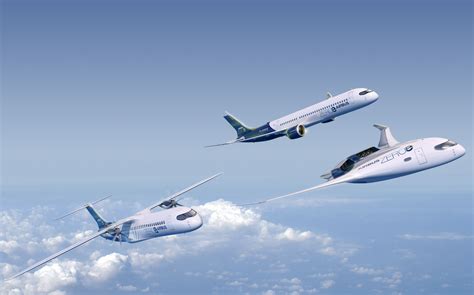
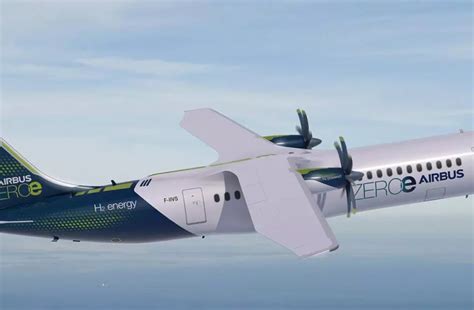
Airbus is currently channeling its R&D energy into projects like the ZEROe initiative, aimed at developing zero-emissions aircraft by 2035, and next-gen narrowbodies to succeed the A320neo. These projects demand substantial investment, possibly sidelining any new widebody development — including a speculative A390 — until later in the 2030s.
What Would Drive Airbus to Build the A390?
Building a widebody aircraft is not a decision taken lightly. Airbus would only greenlight an A390 if certain macroeconomic and technical conditions aligned:
- Market Demand: Airlines would need to signal strong interest in a large-capacity widebody. Past failures like the A380 showed that even brilliant engineering can flounder without consistent demand.
- Rising Passenger Volume: Congestion at major hubs like LHR, DXB, and HND could necessitate aircraft that maximize capacity without increasing takeoff and landing slots.
- Aging Fleets: Aircraft like the Boeing 777-200, A340, and early A330s are nearing retirement. The A390 could step in as a fuel-efficient, next-generation replacement.
- Sustainability Targets: Any new program must conform to tightened CO2 emissions standards. The A390 would need to integrate SAF compatibility, hydrogen propulsion, or even hybrid-electric systems.
Could the A390 Replace the A380’s Legacy?
The Airbus A380 was an engineering marvel but a commercial misstep. It required specialized infrastructure and struggled with profitability for most airlines. The A390 could inherit its long-range mission but rectify its economic flaws by utilizing:
- Twin-engine configuration instead of four
- Advanced composite materials to reduce weight
- Digital flight systems and automation to cut pilot workload
Instead of being a direct successor, the A390 would likely represent an optimized reinterpretation — capable of fitting into standard gates, runways, and maintenance routines, something the A380 often couldn’t manage.
Technological Feasibility of a Next-Gen Widebody
Airbus’s ongoing research into hydrogen and hybrid-electric propulsion, coupled with advancements in aerodynamic modeling and lightweight materials, makes the technical feasibility of a highly efficient widebody more realistic. However, integrating zero-emissions technology into a widebody is vastly more complex than into a regional or narrowbody airframe.
The most likely approach for a future A390 would involve a dual-propulsion strategy, capable of operating with Sustainable Aviation Fuel (SAF) while also being engineered to accommodate hydrogen or electric power later.
How the A390 Might Compare to Today’s Aircraft
Let’s project a possible specification set for the A390:
| Aircraft | Configuration | Range | Typical Seating |
|---|---|---|---|
| Airbus A350-1000 | Twinjet Widebody | ~8,700 mi | 350–410 |
| Boeing 777X | Twinjet Widebody | ~8,900 mi | 384–426 |
| Airbus A380 | Quadjet Jumbo | ~8,000 mi | Up to 850 |
| Airbus A390 (est.) | Twinjet Widebody | ~9,000–10,000 mi | 400–450 |
If developed, the A390 would likely aim to outperform the Boeing 777X, not just match it. It could offer marginally greater range, reduced fuel burn, and higher cargo capacity — all while maintaining compatibility with existing airport infrastructure.
Airlines That Could Shape the A390’s Future
Key carriers known for influencing aircraft development include Emirates, Qatar Airways, Singapore Airlines, and Lufthansa. These airlines have a vested interest in long-haul capacity, onboard innovation, and fuel efficiency. Their input would be essential to shaping:
- Cabin layouts optimized for ultra-long-haul comfort
- Cargo vs passenger capacity balance
- Digital cockpit technology for fuel and route optimization
These airlines could also push for modular interior zones, high humidity cabins, and noise-dampening architecture — features increasingly demanded by next-generation travelers.
Why Airbus Might Still Wait
Despite the strategic logic, Airbus may choose to defer the A390 for several reasons:
- Capital Allocation: A new widebody could cost $15–18 billion to develop. Shareholders may prefer Airbus focus on evolutionary products with shorter ROI timelines.
- Technology Maturity: Hydrogen propulsion systems and SAF integration are still developing. Airbus may benefit from waiting until these are fully scalable.
- Changing Travel Patterns: Global travel is becoming more point-to-point. Demand for ultra-large aircraft is less predictable than it was two decades ago.
What Airbus Is Prioritizing Now
Currently, Airbus is investing in:
- A350 performance upgrades
- A320neo successor (targeting EIS late 2030s)
- ZEROe demonstrators across multiple aircraft sizes
None of these directly address the ultra-high-capacity market. But as older aircraft retire and demand rebounds in high-density markets, the tide may shift.
Industry Signals and Insider Rumors
While Airbus has avoided mentioning the A390 specifically, industry insiders suggest that something is brewing. Rumors indicate Airbus may unveil a new widebody project by late 2025 or 2026, especially if Boeing’s 777X program faces setbacks or if Chinese manufacturers advance in the widebody segment.
Reports also hint that Airbus could test hydrogen-capable widebody platforms by the early 2030s, aligning with its broader climate goals. These whispers, while unconfirmed, keep the A390 conversation alive.
Conclusion: The A390—Dream, Plan, or Inevitable?
At present, the Airbus A390 remains a concept without confirmation. Yet the forces driving modern aviation — sustainability, capacity pressure, and technological transformation — make such an aircraft increasingly plausible.
While Airbus is likely to prioritize the A320neo successor and hydrogen demonstration programs first, there is a strategic opening in the long-haul market that may eventually demand a new kind of widebody. Whether it’s called the A390 or takes another name entirely, the blueprint for Airbus’s future in long-haul aviation may already be forming.
The aviation world awaits — and so does the sky.