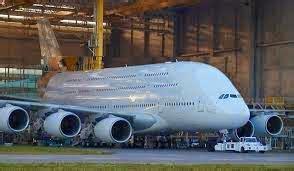
The aviation world is on the cusp of a major transformation as Boeing and Airbus set their sights on radically new aircraft that promise to reshape market dynamics in commercial aviation. With the anticipated debut of the Boeing 797 and the conceptual Airbus A390, industry analysts and airline executives alike are closely evaluating how each jetliner will serve evolving passenger markets. These aircraft are not just technological showcases—they are strategic instruments designed to dominate specific high-demand market segments. Their introduction could mark a seismic shift in medium and long-haul air travel.
Boeing 797: Filling the Middle of the Market Gap
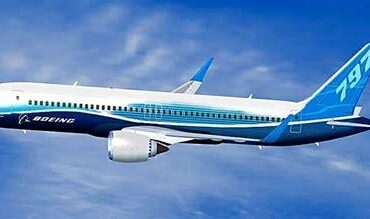
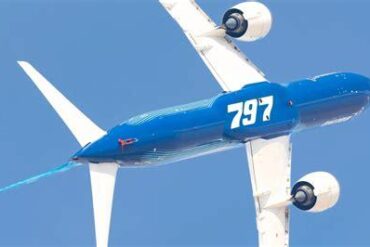
When Boeing ended production of the 757, it inadvertently created a void in the market—a segment that sat between narrowbodies like the 737 and widebodies like the 767. Recognizing this gap, Boeing began developing what it internally referred to as the New Midsize Airplane (NMA). Though unofficial, the name Boeing 797 stuck and gained global recognition as the aircraft intended to fill the “middle of the market” (MoM) category.
The 797 is conceptualized as a twin-engine, widebody aircraft with a seven-abreast cabin configuration and an elliptical fuselage cross-section. Two proposed variants have emerged: one seating 225 passengers with a range of 5,000 nautical miles, and another accommodating 275 passengers with a range of 4,500 nautical miles. These specs were carefully curated to suit the operational realities of mid-market international and transcontinental routes.
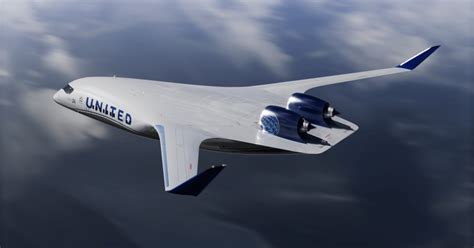
What sets the 797 apart isn’t just its size but its promised economics. Boeing projected that the aircraft would deliver 30% more revenue than existing narrowbodies, and up to 40% lower trip costs compared to aging widebodies like the 767. It was also expected to be priced attractively between $65 and $75 million, making it a cost-effective solution for airlines with thinner route margins or those seeking to open new secondary international routes.
Its powerplant, reportedly under consideration from GE Aviation or Pratt & Whitney, would feature an ultra-high bypass turbofan engine delivering 50,000 pounds of thrust with bypass ratios exceeding 10:1 and pressure ratios over 50:1. These figures signify a sharp improvement in fuel efficiency, putting it in line with next-generation sustainability standards.
However, in January 2020, Boeing paused development to refocus resources on the troubled 737 MAX program. While there were brief suggestions in 2021 about a shortened 797 variant launching in the late 2020s, Boeing put all plans on indefinite hold by mid-2022, pending further propulsion technology developments.
Airbus A390: A Sustainable, Long-Term Vision
While Boeing focuses on a market segment neglected since the 757’s demise, Airbus is envisioning a next-generation aircraft designed for sustainability and long-term global fleet integration. Enter the Airbus A390, a speculative yet highly anticipated program that may not adhere to any existing airframe template. Some industry voices have floated alternative naming possibilities like the A360, yet the A390 designation seems more likely.
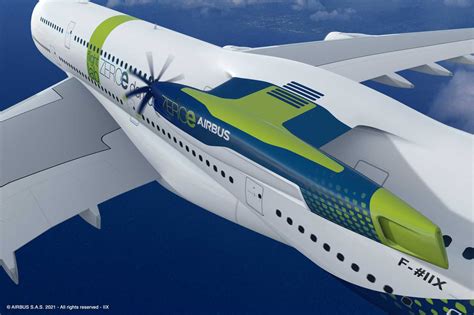
Unlike Boeing’s MoM approach, Airbus is planning to build the A390 from a clean sheet, centered around two strategic pillars: decarbonization and high-capacity efficiency. The aircraft is expected to eventually replace the A320 family, particularly on high-density domestic and transcontinental routes.
Crucially, the A390 will be powered by an open-fan propulsion system developed by CFM International, capable of reducing fuel burn by up to 20% compared to current models. This engine will also allow the aircraft to operate on 100% Sustainable Aviation Fuel (SAF), a key requirement as European and global regulations continue to tighten emissions caps on commercial aviation.
The A390 will also showcase Airbus’ experimental Wing of Tomorrow, a long, ultra-thin wing with folding wingtips that improve aerodynamic performance without compromising gate compatibility. These features collectively contribute to significant emissions reductions, putting the A390 at the frontier of eco-conscious air travel.
Passenger Markets: Targeted Routes and Airline Strategies
The Boeing 797 and Airbus A390 are engineered for distinct markets, and each will serve fundamentally different roles in global airline strategies.
Boeing 797’s Target Market
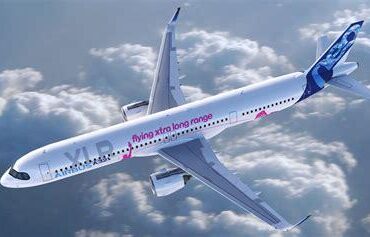
The 797 will likely appeal to carriers looking to serve thin long-haul routes—routes that do not have enough demand for widebodies like the 787 but are too long for narrowbodies like the A321XLR. This includes:
- Secondary transatlantic city pairs (e.g., Boston–Manchester, Seattle–Copenhagen)
- Transcontinental flights in markets with fluctuating demand
- Premium leisure destinations where frequency and economics matter more than sheer seat count
Airlines like United, Delta, and Lufthansa have expressed interest in such capabilities in the past. These markets are underserved but ripe for expansion with the right airframe, especially one that offers flexibility and range without sacrificing efficiency.
Airbus A390’s Focus Areas
The A390 will likely dominate on dense short- and medium-haul routes where legacy aircraft like the A320 and Boeing 737 are currently employed. However, the aircraft’s sustainability angle positions it to succeed in:
- High-frequency domestic routes in Europe, Asia, and North America
- Medium-haul international connections (e.g., Paris–Cairo, Tokyo–Bangkok)
- SAF-prioritized markets in Europe where emission regulations are tightening
Its environmental compatibility also makes it a prime candidate for low-cost carriers with green commitments, like easyJet, JetBlue, and Wizz Air, and for major flag carriers aiming to modernize their fleets within the next two decades.

Contrasting Development Philosophies
The most striking difference between these two programs lies in their development philosophies. Boeing is taking a pragmatic, gap-filling approach—delivering an aircraft that solves a specific operational problem airlines face today. Airbus, on the other hand, is betting on a clean-sheet, futureproof solution that aligns with long-term environmental policies and evolving customer expectations.
While the Boeing 797 would enter a ready market with defined needs, it may face technological stagnation if Boeing cannot leapfrog with next-generation propulsion systems. Airbus, in contrast, is chasing a larger technological breakthrough, albeit at the risk of higher R&D costs and potential delays due to technical complexity.
The A390 could also benefit from emerging EU-led policies that incentivize airlines to operate SAF-compatible fleets, giving it an edge in environmental compliance over older competitors and even the 797, if Boeing fails to future-proof its engine offering.
Strategic Outlook: Which Jet Will Prevail?
Determining a winner between these two aircraft is speculative, but several key dynamics may shape market outcomes:
- Market Timing: If Boeing can fast-track development and offer the 797 within the next decade, it may capture market share before Airbus finalizes the A390.
- Operational Versatility: The 797’s mid-market range and capacity flexibility may win it favor in post-COVID network realignments, especially with airlines retiring aging 757s and 767s.
- Regulatory Landscape: Airbus’ SAF compatibility gives it a head start in complying with emissions legislation in Europe and eventually North America.
- Cost and ROI: Airlines may prefer the 797’s lower acquisition cost and faster ROI, while others will invest long-term in the A390’s advanced sustainability profile.
In truth, both aircraft are designed to serve different passenger markets rather than compete directly. The 797 will be the aircraft of choice for medium-haul expansion, while the A390 is likely to dominate the next-gen short-to-medium-haul fleet replacements.
Conclusion: A Future Defined by Specialization
The 2020s and 2030s will not be defined by one aircraft that rules them all, but by a diversification of purpose-built airframes. The Boeing 797 and Airbus A390 epitomize this philosophy—each addressing a different pain point within global aviation networks. As travel demand rebounds and environmental scrutiny intensifies, aircraft that can deliver tailored performance, efficiency, and compliance will emerge as the new standard.
Whichever jet launches first will influence market dynamics, but both signify a move toward precision market targeting—where aircraft aren’t just tools for transportation, but optimized solutions for unique commercial scenarios.