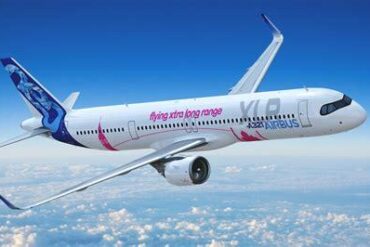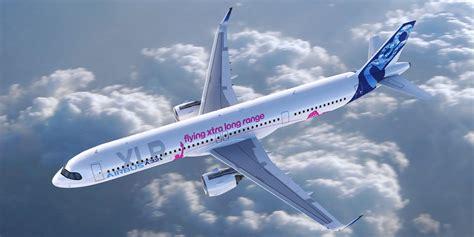
The Airbus A321XLR is not just another incremental upgrade in commercial aviation—it is a structural shift in how airlines think about distance, demand, and passenger experience. For decades, long-haul travel has been dominated by widebody aircraft designed to move large volumes of passengers between major hubs. The XLR disrupts that logic with precision, offering long-range capability paired with narrowbody economics, allowing airlines to rethink everything from route planning to cabin design.
At the heart of this transformation lies a fascinating paradox: one aircraft, engineered with a single technical blueprint, yet deployed in dramatically different ways depending on geography, market demand, and competitive positioning. Across South America, North America, and Europe, airlines are reshaping the A321XLR into three entirely distinct products, each tailored to its region’s priorities and passenger expectations.
This divergence is not cosmetic—it reflects deeper strategic philosophies. Where one airline sees the XLR as a luxury flagship, another treats it as a high-efficiency workhorse, while a third leverages it as a network expansion tool to dominate underserved long-haul routes. Understanding these differences offers a rare window into the evolving economics of global aviation.
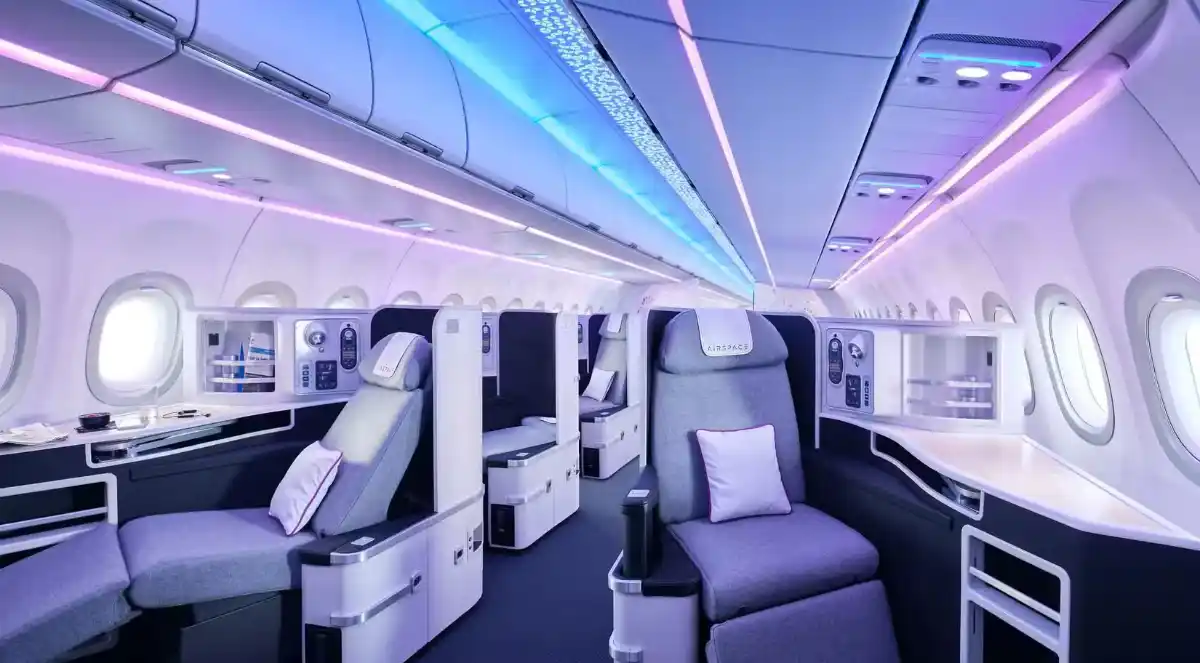
South America’s Premium Gamble: LATAM’s Widebody Experience on a Narrowbody Frame
In South America, LATAM Airlines Group is taking a bold, almost contrarian approach. Rather than using the A321XLR as a cost-cutting substitute for larger aircraft, LATAM is positioning it as a premium-heavy flagship designed to replicate the feel of a widebody on routes that traditionally could not support one.
This strategy centers on the Thompson Aero VantageSOLO seat, a product that has quickly become synonymous with innovation in narrowbody premium cabins. Configured in a 1-1 layout, each of the 12 business class suites offers direct aisle access, full lie-flat capability, and sliding privacy doors—features once reserved exclusively for widebody jets like the Boeing 787 or Airbus A350.
What makes this configuration particularly clever is how it navigates the inherent limitations of a single-aisle fuselage. By angling seats inward toward the aisle, LATAM maximizes personal space while maintaining structural efficiency. The result is a cabin that feels surprisingly open despite the aircraft’s narrow dimensions.
The airline has gone further by collaborating with PriestmanGoode, a renowned London-based design firm, to craft an interior aesthetic inspired by South American landscapes. Warm tones, textured materials, and subtle lighting cues work together to reduce the psychological constraints of a narrow cabin, creating an environment that feels curated rather than compressed.
Beyond the premium cabin, LATAM’s economy class reflects a commitment to consistency. Equipped with Recaro R3 seats, every passenger benefits from seatback entertainment, high-speed Wi-Fi, and Bluetooth connectivity—features that elevate the baseline experience and align with the airline’s premium positioning.
This configuration supports a broader strategic ambition: opening long, thin routes from cities like Lima and Fortaleza directly to North America and Europe. By bypassing congested hubs such as São Paulo, LATAM can offer nonstop convenience paired with a high-end product, capturing a segment of travelers who value both time and comfort.
However, this approach comes with trade-offs. Every additional premium seat adds weight and reduces total capacity, forcing LATAM to carefully balance range, payload, and revenue potential. It’s a calculated gamble—one that hinges on whether passengers are willing to pay for a boutique long-haul experience on a narrowbody aircraft.
North America’s Efficiency Play: Density, Flexibility, and Fleet Integration
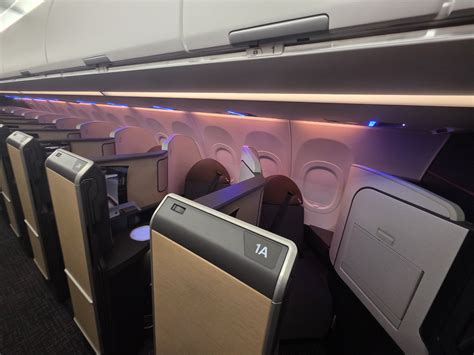
In contrast, North American carriers like American Airlines and Air Canada are approaching the A321XLR with a distinctly pragmatic mindset. Their focus is not on redefining luxury, but on achieving maximum operational efficiency while maintaining a competitive premium offering.
Central to this strategy is the adoption of the Collins Aerospace Aurora seating platform. Like LATAM’s VantageSOLO, it provides lie-flat beds and direct aisle access, but its design philosophy is fundamentally different. The Aurora seat is engineered to be lighter, more modular, and easier to integrate across fleets, making it ideal for airlines that prioritize scalability and consistency.
This allows carriers to install a higher number of premium seats without significantly compromising overall capacity. The result is a cabin that supports both transcontinental domestic routes and transatlantic missions, seamlessly transitioning between the two without requiring major reconfiguration.
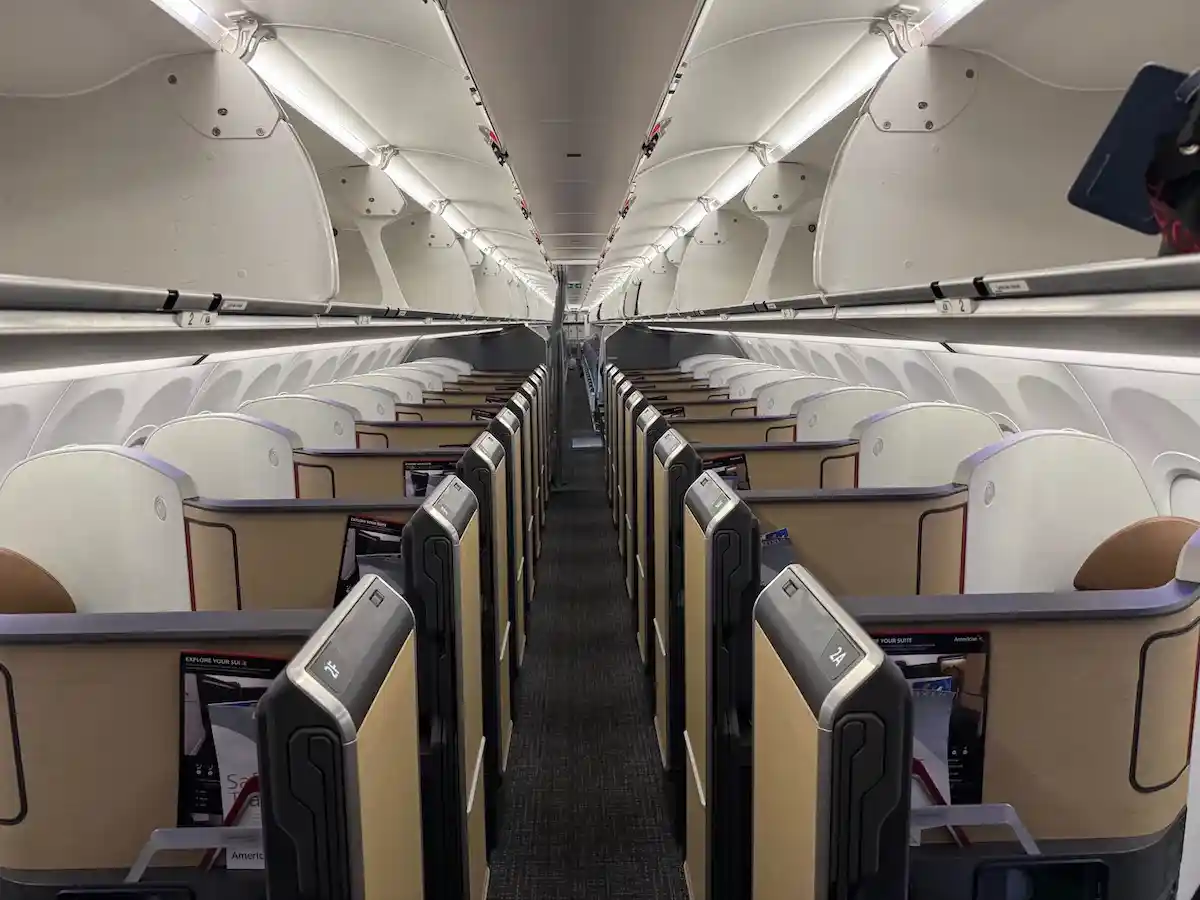
The North American model thrives on flexibility. An A321XLR departing New York might operate a six-hour domestic flight one day and an eight-hour journey to Europe the next. This dual-purpose capability is critical for airlines managing complex networks with fluctuating demand patterns.
Moreover, the XLR enables these carriers to right-size their capacity on routes that are too thin for widebodies but too important to ignore. Cities like Nice, Venice, and Prague suddenly become viable year-round destinations, connected directly to secondary U.S. hubs without relying on traditional gateway airports.
From a passenger perspective, the experience is slightly less indulgent than LATAM’s approach, but still highly competitive. The emphasis is on reliability, frequency, and convenience rather than exclusivity. For many travelers, skipping a connection outweighs the absence of a more spacious cabin.
This strategy reflects a broader truth about the North American market: efficiency often wins. Airlines are betting that consistent quality and direct routes will resonate more strongly than ultra-premium differentiation.
Europe’s Strategic Precision: Iberia and the North Atlantic Advantage
Europe introduces a third, highly nuanced approach. As the launch customer for the A321XLR, Iberia is using the aircraft as a surgical tool to strengthen its position across the North Atlantic corridor—one of the most competitive aviation markets in the world.
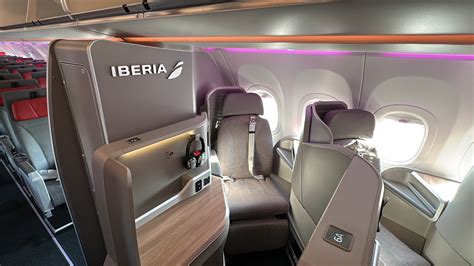
Like LATAM, Iberia has chosen the VantageSOLO seat, signaling a commitment to a premium-forward experience. However, the underlying strategy is less about luxury for its own sake and more about network optimization.
Operating out of Madrid, Iberia can leverage the XLR’s range to connect mid-sized European cities with major U.S. destinations such as Boston, Washington D.C., and New York. These routes, typically spanning 7 to 8 hours, fall squarely within the aircraft’s sweet spot.
What distinguishes the European model is its integration into a broader ecosystem. The A321XLR acts as a bridge between short-haul feeder flights and long-haul widebody services, ensuring a seamless passenger journey from smaller المدن to global hubs.
Iberia’s cabin design reflects this role. The goal is to create a “boutique hotel in the sky”—intimate, refined, and consistent with the airline’s long-haul brand identity. Passengers connecting through Madrid experience a unified product, regardless of aircraft size.
This approach also allows Iberia to test new markets with lower risk. Instead of committing a 300-seat widebody, the airline can deploy a 170-seat XLR, gauge demand, and scale accordingly. It’s a methodical expansion strategy that prioritizes sustainability over spectacle.
Engineering Meets Economics: The Constraints That Shape Strategy
Behind these divergent strategies lies a shared set of engineering realities. The A321XLR achieves its remarkable range through a Rear Center Tank (RCT) capable of holding up to 3,400 gallons of fuel. This modification, combined with structural reinforcements, significantly increases the aircraft’s maximum takeoff weight.
These enhancements come at a cost. Every kilogram added to the cabin—whether through premium seats, galleys, or entertainment systems—directly impacts the aircraft’s range and efficiency. Airlines must constantly navigate this delicate balance, deciding how to allocate weight between passenger comfort and operational performance.
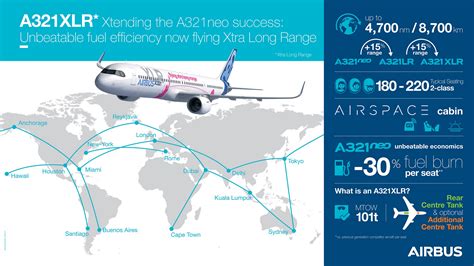
This tension explains why configurations vary so dramatically. LATAM sacrifices density for luxury, North American carriers optimize for flexibility, and Iberia strikes a balance between the two. Each approach represents a different answer to the same question: how do you extract maximum value from a finite set of physical constraints?
Even environmental systems have been upgraded to support long-haul operations. Improved air filtration, noise insulation, and cabin pressure management help mitigate the fatigue associated with extended flights on a narrowbody aircraft. These subtle enhancements play a crucial role in passenger perception, often determining whether the experience feels acceptable or exhausting.
Route Innovation: Connecting Cities That Once Felt Out of Reach
Perhaps the most transformative impact of the A321XLR lies in its ability to unlock previously unviable routes. By combining range with lower operating costs, the aircraft enables airlines to connect secondary cities across continents, bypassing traditional hubs entirely.
In South America, cities like Fortaleza become strategic gateways to both North America and Europe. In North America, destinations such as Raleigh-Durham and Nashville gain direct access to transatlantic markets. In Europe, regional centers can establish nonstop links to major U.S. cities, enhancing connectivity and economic integration.
This decentralization represents a shift away from the hub-and-spoke model toward a more distributed network architecture. For passengers, the benefits are immediate: shorter travel times, fewer connections, and more personalized itineraries. For airlines, the challenge lies in maintaining operational consistency across a broader network footprint.
The Economy Cabin Question: The Real Test of Passenger Acceptance
While much attention is given to business class innovations, the true test of the A321XLR’s success may lie in the economy cabin. With over 150 passengers seated in a 3-3 configuration, the experience of an eight-hour flight in a narrowbody environment can be demanding.
Airlines are addressing this through enhanced in-flight entertainment, improved connectivity, and upgraded seating ergonomics, but the fundamental limitation remains: space is finite. The question is whether passengers will accept this trade-off in exchange for the convenience of direct flights.
Interestingly, early indicators suggest that many travelers are willing to do so—especially when the alternative involves lengthy layovers or indirect routes. Convenience, it seems, often outweighs comfort, at least within certain thresholds.
A New Category Emerges: The Rise of the “Mini-Widebody”
The A321XLR is quietly giving rise to a new category of aircraft: the “mini-widebody.” While it lacks the physical dimensions of traditional widebodies, its capabilities blur the boundaries between short-haul and long-haul travel.
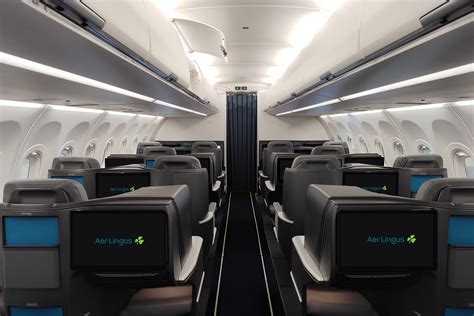
This hybrid identity is reshaping expectations. Passengers now anticipate lie-flat seats, high-speed Wi-Fi, and premium service even on narrowbody aircraft, pushing airlines to rethink their product offerings across all segments.
Looking ahead, the lessons learned from the XLR will likely influence future aircraft design. Advances in engine efficiency, materials science, and cabin architecture could lead to even more versatile platforms—aircraft that combine the economics of narrowbodies with the comfort of widebodies.
Conclusion: One Aircraft, Infinite Possibilities
The Airbus A321XLR is more than a technological achievement; it is a strategic canvas upon which airlines paint their competitive visions. In South America, it becomes a symbol of premium ambition. In North America, it embodies operational efficiency. In Europe, it serves as a tool for precise market expansion.
These three strategies are not mutually exclusive—they are complementary expressions of how a single aircraft can adapt to vastly different market conditions. Together, they illustrate a broader truth about aviation: success is not determined solely by technology, but by how intelligently that technology is applied.
As the A321XLR enters widespread service, its impact will extend far beyond the routes it flies. It will redefine how airlines think about distance, demand, and differentiation, shaping the future of air travel in ways that are only beginning to unfold.