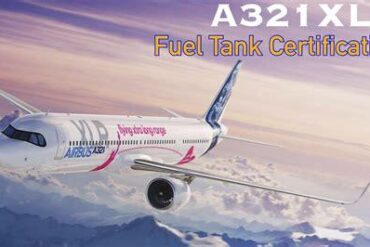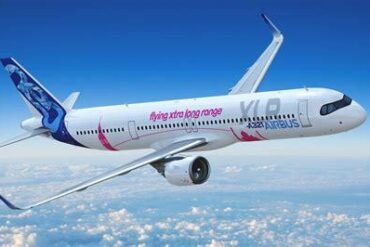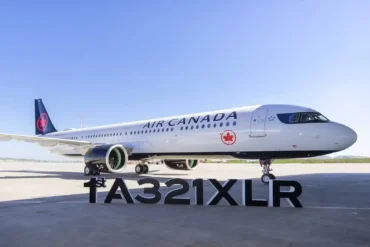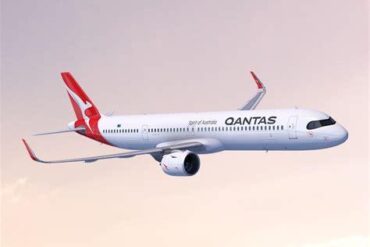
Commercial aircraft fuel systems are usually simple to describe but highly sophisticated in execution. Most passengers assume that jet fuel is stored exclusively inside the wings, and while that statement is largely accurate, it does not tell the full story. Modern long-range narrowbody aircraft often require additional fuel storage solutions to push their operational limits. The Airbus A321XLR, the longest-range member of the A320neo family, represents one of the most fascinating examples of how clever engineering can dramatically expand an aircraft’s capabilities without designing a completely new airframe.
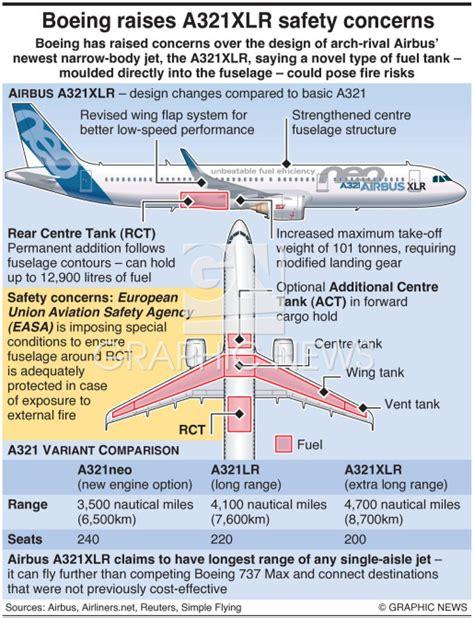
The defining innovation behind the A321XLR’s extraordinary reach is its Rear Centre Tank (RCT). Unlike removable auxiliary tanks used in earlier models, this tank is permanently integrated into the fuselage structure. By embedding additional fuel storage within the aircraft’s body, Airbus has transformed the familiar A321 into a machine capable of flying up to 4,700 nautical miles, enabling routes previously reserved for widebody aircraft.
This development did not emerge overnight. It is the result of a strategic design philosophy aimed at exploiting a growing gap in the airline market: long-distance routes with moderate passenger demand. These “thin long-haul” routes often carry too few travelers to justify widebody aircraft but require far more range than traditional narrowbody jets can provide.

By equipping the A321 with a revolutionary fuel system, Airbus has effectively created a narrowbody range leader, opening entirely new route possibilities across the globe. Understanding how this fuel tank system works reveals why the A321XLR has become one of the most strategically important aircraft of the modern aviation era.
The Foundation: How Commercial Aircraft Store Fuel
Before examining the A321XLR specifically, it is helpful to understand how fuel storage normally works in commercial aircraft. Most modern jets store the majority of their fuel inside integral wing tanks, which are essentially sealed cavities built directly into the wing structure. This design provides several advantages.
Fuel stored in the wings helps balance aerodynamic loads, reducing stress on the wing during flight. The weight of the fuel counteracts lift forces, stabilizing the structure and allowing engineers to design lighter yet stronger wings. In addition, placing fuel far from the passenger cabin improves safety and simplifies maintenance access.
Beyond the wing tanks, many aircraft also include a center wing tank (CWT). This tank is located inside the fuselage where the wings attach to the aircraft body. The CWT acts as an additional reservoir that feeds the engines when long-range operations demand more fuel.
For most narrowbody aircraft, these tanks provide sufficient capacity. However, when airlines seek longer routes without transitioning to larger aircraft, manufacturers must find creative ways to expand fuel capacity without dramatically increasing weight or altering aerodynamics.
The Airbus A321XLR represents the most ambitious solution to this challenge.
The Rear Centre Tank: The Heart of the A321XLR
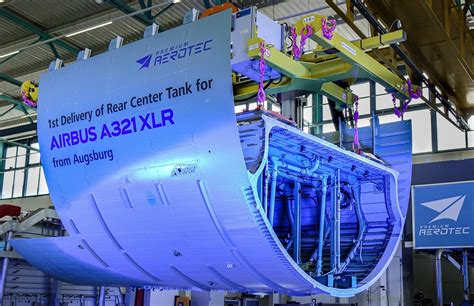
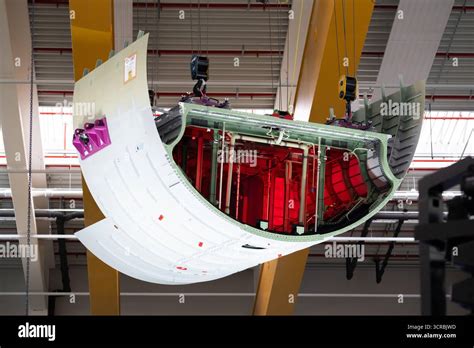
The defining feature of the Airbus A321XLR’s fuel architecture is the Rear Centre Tank (RCT), a completely new structural component designed specifically for this aircraft variant.
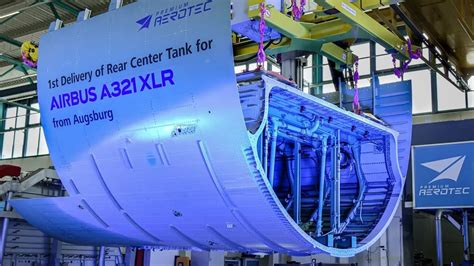
Located in fuselage sections 15 and 17 behind the main landing gear, the RCT sits beneath the cabin floor but ahead of the aircraft’s tail section. This placement allows engineers to maximize fuel capacity without sacrificing too much cargo space.
The tank holds approximately 12,900 liters (3,400 gallons) of fuel, making it significantly larger than the removable auxiliary tanks used on earlier A321 models. Rather than installing several smaller tanks in the cargo hold, Airbus chose to integrate a single large tank directly into the aircraft’s structure.
This approach provides several engineering advantages:
- The tank becomes part of the fuselage structure, reducing additional weight compared with separate removable tanks.
- The aircraft retains more cargo capacity because the tank does not occupy large portions of the cargo hold.
- Fuel distribution improves center-of-gravity management, helping maintain stable flight characteristics even on long missions.
However, integrating the tank permanently also introduces new complexities, including structural reinforcement, inspection challenges, and additional safety certification requirements.
From A321neo to XLR: How the Fuel Systems Evolved
The Airbus A321 family has evolved significantly over the past decade. Each variant builds upon the same airframe but introduces different fuel configurations to achieve greater range.
A321neo: The Baseline Configuration
The A321neo uses a relatively traditional fuel system. It includes:
- Two wing tanks
- One center wing tank
Together, these tanks provide approximately 24,050 liters of usable fuel, equal to roughly 41,800 pounds. Under favorable conditions, this capacity allows the aircraft to fly about 3,500 nautical miles.
For many regional and medium-haul routes, this range is more than adequate. However, airlines increasingly demanded aircraft capable of crossing oceans while maintaining narrowbody economics.
A321LR: Flexible Auxiliary Tanks
The A321LR (Long Range) extended the aircraft’s capabilities by introducing Additional Centre Tanks (ACTs). These tanks are removable units installed inside the cargo hold.
Airlines can install up to three ACTs, increasing fuel capacity to approximately 32,943 liters, or about 57,010 pounds. This configuration enables a range of roughly 4,000 nautical miles.
The removable nature of ACTs gives airlines flexibility. If long-range missions are not required, the tanks can be removed to free up cargo space and reduce weight.
However, the system also introduces operational compromises. Installing several ACTs reduces cargo capacity and increases complexity in fuel plumbing and weight management.
A321XLR: Permanent Long-Range Design
The A321XLR represents a fundamentally different philosophy. Instead of relying on removable tanks, Airbus designed a permanent structural fuel tank to maximize efficiency.
With the addition of the Rear Centre Tank, total fuel capacity rises to approximately 36,000 to 39,000 liters, depending on whether an optional forward ACT is installed.
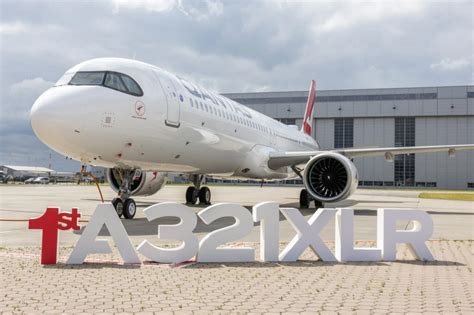
This configuration allows the aircraft to reach its headline range of 4,700 nautical miles, making it the longest-range narrowbody aircraft currently available.
Engineering Challenges of the Rear Centre Tank
Integrating a fuel tank directly into the fuselage introduces engineering challenges that go far beyond simply increasing capacity.
One of the most important considerations involves structural reinforcement. Because the tank forms part of the aircraft’s body, engineers had to ensure the fuselage could safely handle the additional weight of fuel during takeoff, turbulence, and landing.
This requirement led to an increase in the aircraft’s maximum takeoff weight (MTOW). The A321XLR’s MTOW rises to approximately 101 tonnes, compared with 97 tonnes for the A321neo.
The additional weight allows the aircraft to carry more fuel, but it also introduces a trade-off. Extra structural mass increases fuel consumption during shorter flights, meaning the XLR is most efficient only when flying long-range missions.
Maintenance also becomes more complicated. Because the tank is integrated into the fuselage, inspections and repairs require specialized procedures that differ from traditional removable tank systems.
Safety Considerations and Regulatory Challenges
The location of the A321XLR’s Rear Centre Tank triggered significant regulatory attention during certification. Traditionally, wing tanks are positioned higher above the ground, reducing their exposure to potential post-crash fires.
The fuselage-mounted RCT sits lower in the aircraft structure, closer to the ground than wing tanks. This placement raised concerns among regulators, particularly the Federal Aviation Administration (FAA).
Because no previous narrowbody aircraft used a similar configuration, existing regulations did not fully address this type of fuel tank design. As a result, the FAA introduced special certification requirements tailored specifically to the A321XLR.
These regulations focused on areas such as:
- Enhanced fire protection systems
- Improved crashworthiness standards
- Additional fuel tank insulation and shielding
Airbus responded by reinforcing the tank’s structure and implementing additional protective systems to ensure the aircraft meets stringent safety standards.
The certification process ultimately confirmed that the design satisfies modern aviation safety requirements.
Trade-Offs of the XLR Fuel System
While the A321XLR’s fuel system unlocks remarkable capabilities, it also introduces operational compromises.
One of the most obvious drawbacks is reduced flexibility. Because the Rear Centre Tank is permanently installed, airlines cannot remove it to reduce weight when flying shorter routes.
This means the aircraft always carries the structural weight associated with the tank, even when its full fuel capacity is unnecessary. For shorter flights, the standard A321neo may actually be more fuel-efficient.
The RCT also increases maintenance complexity. Integrated tanks require more detailed inspection procedures and specialized access panels within the fuselage.
Additionally, the aircraft itself costs more than the standard A321neo. Airlines must carefully evaluate whether the increased range justifies the higher acquisition and operating costs.
These trade-offs explain why the majority of A321neo family orders still favor the baseline model.
Routes That Benefit from the A321XLR
The Airbus A321XLR is designed for a specific type of route: long-distance flights with moderate passenger demand.
Instead of flying between major hubs with hundreds of daily travelers, the XLR thrives on routes connecting secondary cities across long distances.
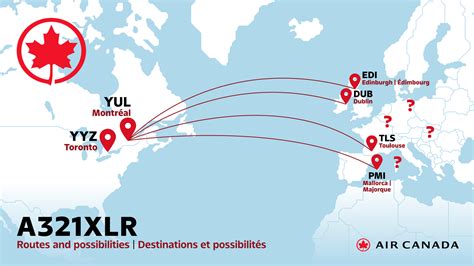
Examples include transatlantic routes such as:
- New York to Prague
- Philadelphia to Naples
- Madrid to Dakar
These routes often attract around 150 to 220 passengers per day, making them ideal for a narrowbody aircraft.
The aircraft can also connect regions that previously lacked direct service. Routes such as London to Mumbai or Singapore to Tokyo become feasible with narrowbody economics.
In the Southern Hemisphere, the XLR opens opportunities such as Perth to Singapore or Brazil’s northeastern cities to Florida.
By serving these routes efficiently, the aircraft allows airlines to expand their networks without deploying large widebody jets.
Why Airlines Are Ordering the A321XLR
Despite its specialized role, the Airbus A321XLR has attracted strong demand from airlines worldwide.

The aircraft has secured over 500 firm orders, making it one of the most significant narrowbody launches of the past decade. These orders come from airlines across Europe, North America, Asia, and the Middle East.
Several factors drive this demand. First, the aircraft fills the market gap left by the Boeing 757, which previously dominated long-range narrowbody routes. With the 757 no longer in production, airlines needed a modern replacement.
Second, the XLR allows carriers to launch new long-haul routes with lower risk. Instead of committing a 250-seat widebody aircraft, airlines can test markets using a 180-seat narrowbody jet.
Finally, the aircraft benefits from the proven A320neo family ecosystem, including pilot commonality, established maintenance procedures, and global support networks.
A Narrowbody Aircraft That Redefines Range
The Airbus A321XLR’s fuel tank system represents one of the most innovative structural adaptations in modern aviation. By integrating the Rear Centre Tank directly into the fuselage, Airbus has transformed a familiar narrowbody airframe into a long-range platform capable of competing with much larger aircraft.
This engineering solution demonstrates how incremental design improvements can unlock entirely new market opportunities. Rather than building an entirely new aircraft, Airbus extended the capabilities of an existing platform through advanced fuel system integration and structural redesign.
The result is a narrowbody aircraft that can fly up to ten hours, connect distant cities, and enable airlines to explore routes that were previously uneconomical.
As global aviation continues evolving, the A321XLR’s fuel tank architecture may influence future aircraft designs. Its success proves that thoughtful engineering inside the fuselage can be just as important as aerodynamic innovation outside it.
Frequently Asked Questions
How much fuel can the Airbus A321XLR carry?
The Airbus A321XLR can carry approximately 36,000 to 39,000 liters of fuel, depending on whether an optional additional center tank is installed. This capacity enables a maximum range of about 4,700 nautical miles.
What is the Rear Centre Tank on the A321XLR?
The Rear Centre Tank (RCT) is a permanently installed fuel tank located in the rear fuselage behind the main landing gear. It holds about 12,900 liters of fuel and is integrated directly into the aircraft structure.
Why doesn’t the A321XLR use removable auxiliary tanks like the A321LR?
Airbus designed the XLR with a permanent fuel tank to improve structural efficiency and preserve cargo space. While removable tanks offer flexibility, the integrated RCT provides greater capacity with lower structural weight.
Is the Airbus A321XLR replacing the Boeing 757?
In many ways, yes. The A321XLR offers greater range than the Boeing 757-200 while delivering significantly better fuel efficiency. As a result, many airlines view it as the modern successor to the aging 757 fleet.