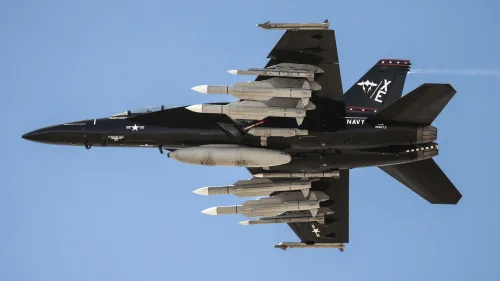
The F/A-18 Hornet and its advanced variant, the F/A-18E/F Super Hornet, are among the most versatile fighter aircraft in modern aviation. One of their most significant advantages lies in their hardpoint configurations, allowing them to carry a wide array of air-to-air and air-to-ground munitions. This adaptability ensures the Hornet family remains a formidable force in both offensive and defensive missions.
Hardpoint Overview: F/A-18 Variants
Classic F/A-18 (A-D Models) Hardpoints
The original F/A-18 Hornet features a total of nine hardpoints, configured as follows:
- 4 wing pylons (two per wing)
- 2 wingtip rails (one per wing)
- 2 fuselage stations (under the aircraft)
- 1 centerline station (beneath the fuselage for fuel tanks or additional weapons)
This configuration enables the aircraft to carry a balanced mix of air-to-air and air-to-ground munitions.
Air-to-Air Loadouts
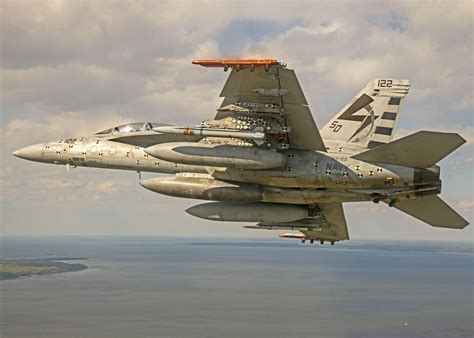
The F/A-18 Hornet can engage enemy aircraft using a variety of missile configurations:
- Up to 10× AIM-120 AMRAAM (on wing pylons and fuselage stations)
- 2× AIM-9X Sidewinders (mounted on wingtip rails)
During the Gulf War, the F/A-18C often deployed with a mixed payload consisting of:
- 4× Mk84 bombs
- 2× AIM-7 Sparrow missiles
- 2× AIM-9L Sidewinders
- 1 centerline fuel tank for extended range
Air-to-Ground Capabilities
For strike missions, the classic Hornet supports a range of guided and unguided munitions:
- AGM-65 Maverick missiles for precision strikes
- Laser-guided bombs (Paveway series)
- JDAM (Joint Direct Attack Munition)
- ATFLIR (Advanced Targeting Forward-Looking Infrared) pod for infrared and optical targeting
F/A-18E/F Super Hornet: Expanded Hardpoints and Firepower
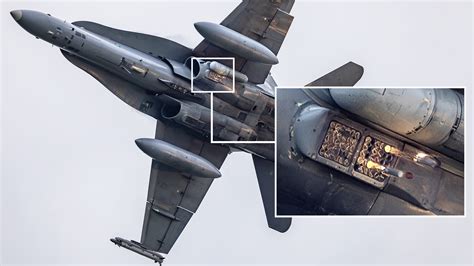
The F/A-18E/F Super Hornet, introduced as an enhanced successor, boasts 11 hardpoints, improving upon its predecessor’s loadout flexibility:
- 6 wing pylons (three per wing)
- 2 wingtip rails
- 3 fuselage stations (one additional compared to the legacy Hornet)
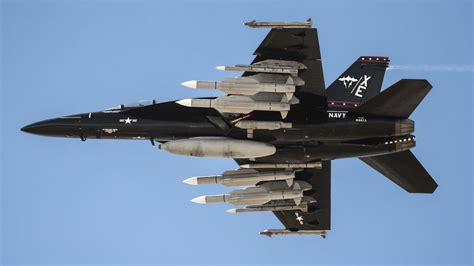
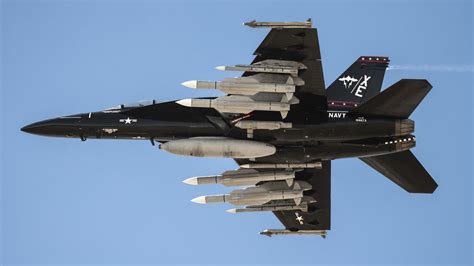
“Murder Hornet” Mode (Air Superiority Loadout)
This air dominance configuration maximizes missile payload:
- 4× AIM-120 AMRAAM (inner wing pylons)
- 2× AIM-9X Sidewinder (outer wing pylons)
- 2× AIM-9X Sidewinder (wingtip rails)
- 1× AIM-120 AMRAAM (right fuselage station)
- Left fuselage station equipped with an ATFLIR targeting pod
This setup enhances the aircraft’s beyond-visual-range (BVR) engagement capabilities while preserving agility.
Heavy Interceptor Configuration
For high-threat environments, the Super Hornet can be loaded with:
- 4× AIM-174 Standard-6 (air-launched variant)
- 3× AIM-120 AMRAAM
- 2× AIM-9X Sidewinder
However, this heavy configuration significantly reduces maneuverability and mission endurance. For long-range patrol missions, pilots often adjust their loadouts by reducing AIM-174 numbers and integrating external fuel tanks.
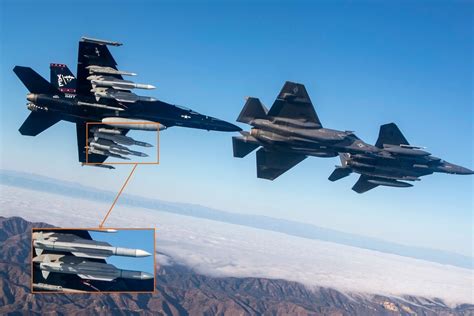
Comparison with the F-35’s “Beast Mode”
The F-35 Lightning II features an alternate high-capacity loadout mode known as “Beast Mode”, capable of carrying 14× AIM-120 AMRAAM missiles internally and externally. While this setup emphasizes overwhelming firepower, the F/A-18E/F Super Hornet remains superior in payload flexibility and survivability due to its:
- Greater mission endurance with external fuel tanks
- Ability to carry mixed payloads (air-to-air and air-to-ground simultaneously)
- Carrier-based operational efficiency
Design Philosophy: Adapting to Modern Warfare
The F/A-18 series has continuously evolved to meet modern combat requirements:
- Legacy Strength: Originally optimized for Cold War-era fleet defense, the Hornet’s missile capacity ensured it could intercept Soviet bombers and cruise missiles.
- Modern Adaptations: In recent conflicts, such as operations against Houthi rebels, mixed payloads became critical. Super Hornets often deploy with AIM-120s for BVR engagements and AIM-9Xs for drone defense.
Frequently Asked Questions
1. How many hardpoints does the F/A-18 have?
The F/A-18 Hornet (A-D models) features 9 hardpoints, while the F/A-18E/F Super Hornet expands this to 11 hardpoints, allowing for greater payload capacity and mission flexibility.
2. What is the heaviest payload an F/A-18 can carry?
The Super Hornet can carry over 17,750 lbs (8,050 kg) of ordnance, including a mix of air-to-air missiles, laser-guided bombs, anti-ship missiles, and external fuel tanks.
3. How does the Super Hornet compare to the F-35 in terms of weaponry?
While the F-35 can carry more AIM-120s in “Beast Mode”, the F/A-18E/F offers greater loadout flexibility, allowing for a combination of missiles, bombs, and fuel tanks, making it a more adaptable platform for multi-role missions.