The Boeing 787 Dreamliner family is a cornerstone of modern long-haul aviation, known for its fuel efficiency, composite airframe, and ability to connect far-flung global destinations. Among its three primary variants—the 787-8, 787-9, and 787-10—the 787-9 stands out not only as the bestseller but also as the one with the longest operational range. Despite being smaller than the 787-10, the 787-9 can travel approximately 1,200 nautical miles further, raising a critical engineering question: why does the smaller aircraft fly so much farther than its larger sibling?
To understand this difference, we must dive into the technical details of design decisions, structural limitations, engine performance, and operational roles that set these two aircraft apart.
The Genesis of the Dreamliner Family
Launched in the early 2000s, the Boeing 787 program was designed with a bold vision: create a fuel-efficient, twin-engine widebody jet optimized for point-to-point long-haul travel. The original 787-8 aimed to replace the Boeing 767, while the stretched 787-9 and 787-10 would expand on that foundation. All variants share the same core innovations—composite fuselage and wings, advanced aerodynamics, noise-reducing nacelle chevrons, and next-gen flight control systems.
However, the differences begin to appear when looking at the fuselage length, fuel capacity, and mission profile for each variant.
Stretching the Airframe: Why More Isn’t Always Better
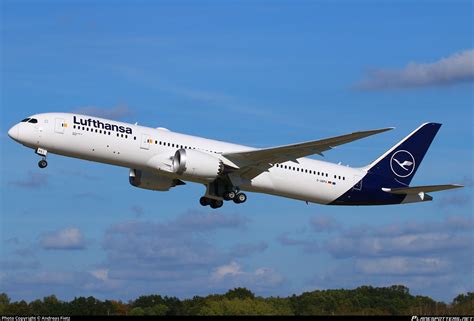
The 787-9 is essentially a stretched version of the 787-8, with a 20-foot longer fuselage and higher maximum takeoff weight (MTOW). This increase allowed for larger fuel tanks without compromising the aircraft’s structural integrity or aerodynamic performance. As a result, the 787-9 achieved a range of 7,565 nautical miles, making it ideal for ultra-long-haul operations such as Qantas’ nonstop flights from Perth to London.
In contrast, the 787-10 was extended even further—an additional 18 feet beyond the 787-9. This growth was achieved by adding ten feet forward and eight feet aft of the wing. While this extra length allows for more passengers—up to 330 in a two-class configuration—it significantly reduces internal fuel volume. Due to limitations in the center wingbox design and landing gear strength, Boeing was unable to add larger fuel tanks without extensive reengineering.
Payload vs. Range: The Core Trade-Off
One of the fundamental laws of aircraft design is the payload-range trade-off. Simply put, you can carry more fuel (and fly farther), or you can carry more passengers and cargo—but rarely both. The 787-10’s design skews towards maximum passenger capacity, making it a powerful medium-haul jet, but sacrifices range in the process.
Whereas the 787-9 can balance a full passenger load with transoceanic fuel requirements, the 787-10’s MTOW of approximately 560,000 pounds is not enough to support both a full cabin and extra fuel for ultra-long distances. This limits its range to just 6,330 nautical miles.
Structural and Engineering Limitations
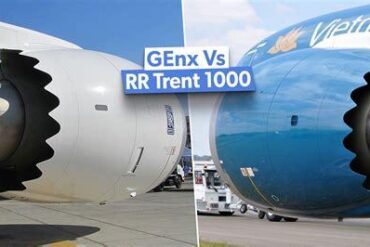
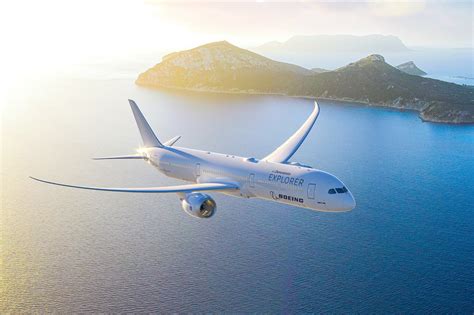
While both aircraft share 95% parts commonality—including the same wingspan of 197 feet, same wing structure, and same engines (either GE GEnx-1B or Rolls-Royce Trent 1000)—the 787-10 faces a unique structural challenge. The additional fuselage length increases overall weight and drag but does not allow for additional wing or landing gear modifications due to manufacturing constraints.
Because of this, the 787-10 also uses a semi-levered landing gear to prevent tail strikes, which adds complexity but not necessarily performance. The extended fuselage pushes the aircraft closer to center-of-gravity limits, making any fuel-related extensions particularly tricky from a weight distribution standpoint.
Market Strategy and Mission Profile Differences
The market dictates design. The 787-9 was built to serve long and thin routes—high mileage with lower passenger loads, exactly the kind of flights that airlines like Air New Zealand, ANA, and Qantas need. These carriers operate some of the longest nonstop commercial routes in the world, including Auckland to Chicago and London to Perth.
The 787-10, on the other hand, was designed in response to demand for high-capacity, medium-haul aircraft, especially in Asia-Pacific and Middle East markets. Singapore Airlines was the launch customer, and other key operators like Etihad and British Airways use the 787-10 for high-density routes between major hubs—where frequency, not distance, is the driver.
Orders and Operator Preferences: A Stark Contrast
The range limitation of the 787-10 has clearly affected its market performance. As of June 2025, the order numbers speak for themselves:
- 787-8: 431 orders
- 787-9: 1,342 orders
- 787-10: 364 orders
Despite its larger size and potential per-seat economics, airlines have consistently favored the 787-9. Its versatility makes it suitable for both transatlantic and transpacific routes, while still delivering a strong balance of capacity and fuel burn.
Environmental and Regulatory Factors
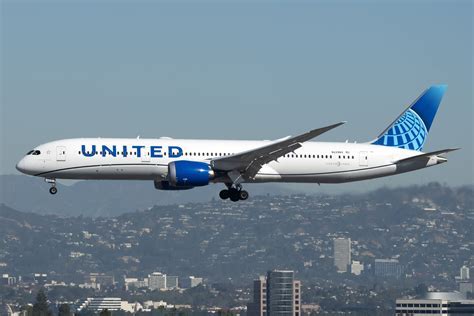
Modern aircraft are not only designed for range and revenue but also environmental compliance. The longer the flight, the more stringent the requirements for Extended-range Twin-engine Operational Performance Standards (ETOPS). The 787-9, thanks to its better fuel reserves and engine margin, qualifies for more ETOPS-330 missions, enabling it to fly over remote oceanic regions.
The 787-10, however, with limited fuel reserves and lower mission flexibility, is not always eligible for the same high-risk oceanic routes, restricting it operationally. These regulatory factors compound the aircraft’s range shortcomings.
Potential Upgrades and Future Outlook
Boeing has explored the possibility of increasing the MTOW for the 787-10, which could improve its range. However, such changes would require modifications to wing structures, landing gear, and internal systems, potentially reducing commonality and increasing cost.
With newer models like the Airbus A350-900 offering both capacity and long range, Boeing faces competitive pressure. Some carriers, including Emirates, have already switched their 787-10 orders to 787-9s, citing range concerns, particularly for hot-weather takeoff performance and long-stage missions.
Final Verdict: Why Range Reigns Supreme
In the final analysis, the Boeing 787-9 is more than just a slightly smaller version of the 787-10. It represents an ideal compromise between size, efficiency, and reach. The aircraft’s ability to operate on nearly any long-haul route while still maintaining cost-effectiveness makes it the backbone of many international fleets.
Meanwhile, the 787-10, while excellent for high-capacity, regional-to-mid-range services, lacks the range to compete on ultra-long-haul routes—where demand for nonstops continues to grow post-pandemic. As airlines continue to value flexibility and performance under all conditions, the 787-9’s design philosophy has proven to be more aligned with market needs.
Unless Boeing re-engineers the 787-10 to significantly extend its range, it is likely to remain a niche aircraft, outshone by its middle sibling—the versatile and far-reaching 787-9.