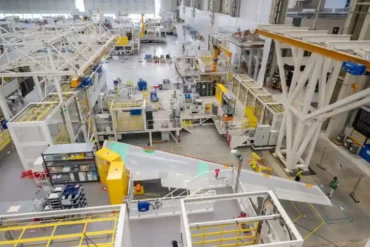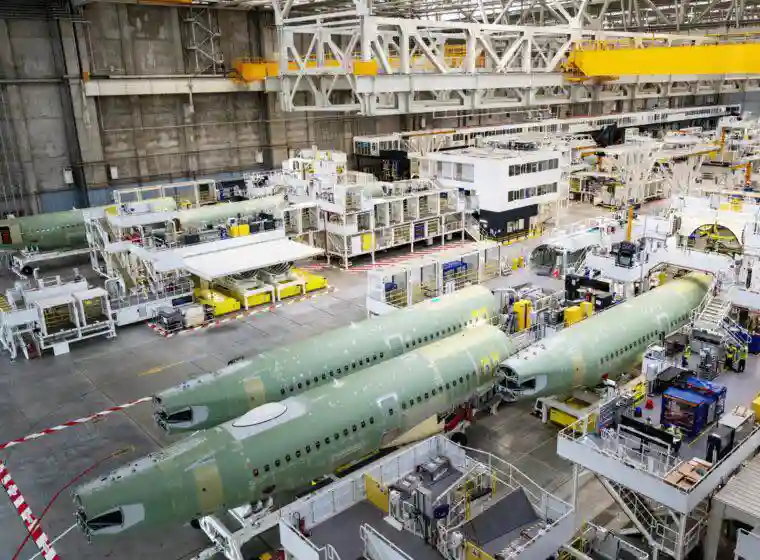
Airbus has officially opened its 10th A320 Family Final Assembly Line (FAL), marking a major industrial milestone and underscoring the dramatic transformation of the global commercial aviation market. Located within the historic Jean-Luc Lagardère complex in Toulouse, France, the new production line occupies a facility once purpose-built for the iconic Airbus A380, the world’s largest passenger aircraft.
The launch represents far more than an expansion of manufacturing capacity. It symbolizes Airbus’s strategic adaptation to changing airline priorities, where fuel efficiency, operational flexibility, and point-to-point connectivity have increasingly displaced the hub-and-spoke model that once justified ultra-large aircraft such as the A380.
As airlines continue to favor efficient narrowbody jets capable of serving a wider range of routes, Airbus is positioning the A320 Family at the center of its future growth strategy. The new assembly line is expected to play a critical role in helping the manufacturer achieve its ambitious objective of producing between 70 and 75 A320 Family aircraft per month by the end of 2027.
Airbus Reinvents the Former Home of the A380
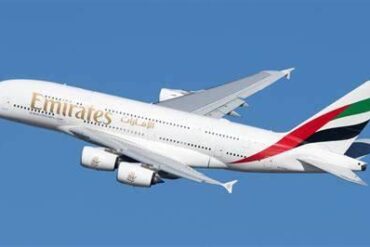
The Jean-Luc Lagardère complex occupies a unique place in Airbus history. Constructed between 2002 and 2004 specifically to support the A380 program, the facility was designed around the unprecedented dimensions of the double-deck superjumbo. At the time, Airbus envisioned a future in which growing passenger traffic would increasingly flow through major global hubs, creating demand for aircraft capable of carrying more than 500 passengers on a single flight.
The scale of the facility reflected those ambitions. Covering approximately 124 acres (50 hectares), the complex includes a massive central hangar stretching nearly 1,608 feet (490 meters) in length, 820 feet (250 meters) in width, and rising 151 feet (46 meters) high. Airbus has previously noted that the structure’s internal floor area is comparable to roughly 500 tennis courts, illustrating the immense industrial footprint required to manufacture the A380.
For years, the building stood as a symbol of Airbus’s most ambitious commercial aircraft project. However, after production of the A380 came to an end, questions emerged regarding the future of such a specialized manufacturing site.
Rather than allowing the facility to become a relic of a previous aviation era, Airbus chose to reinvent it.
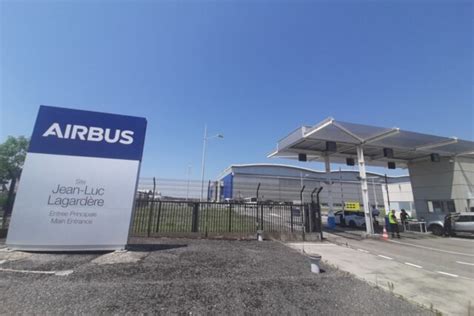
Transforming an assembly plant designed for the world’s largest passenger aircraft into a high-volume narrowbody production center required far more than cosmetic modifications. The change demanded a complete reconfiguration of production systems, logistics infrastructure, assembly workflows, and manufacturing technologies.
Unlike widebody aircraft, which are produced in relatively small quantities, narrowbody jets require significantly higher production rates. Components move through assembly stations at a much faster pace, demanding highly optimized manufacturing processes capable of maintaining efficiency while preserving strict quality standards.
The redesigned facility now emphasizes production flexibility, streamlined logistics, and advanced industrial methods that allow Airbus to respond more effectively to rising market demand.
Why the A320 Family Has Become Airbus’s Most Important Aircraft Program
The conversion of the former A380 facility highlights a broader shift that has reshaped airline fleet planning over the last decade.
When Airbus launched the A380, many industry forecasts assumed that passenger growth would increasingly concentrate at major international hubs such as London Heathrow, Dubai International, Singapore Changi, and Frankfurt Airport. Under that model, larger aircraft offered airlines an efficient solution for transporting huge numbers of passengers between crowded airports.
However, airline strategies evolved in a different direction.
Advancements in engine technology, aerodynamics, and aircraft efficiency enabled smaller aircraft to operate longer routes at lower costs. As a result, airlines increasingly embraced direct point-to-point services rather than routing passengers through major connecting hubs.
The Airbus A320 Family emerged as one of the biggest beneficiaries of this industry transformation.
Today, carriers value the aircraft for its combination of operating efficiency, flexibility, and profitability. The family has accumulated more than 12,000 deliveries, making it one of the most successful commercial aircraft programs ever developed.
Among its variants, the A321neo has become particularly important. Offering greater passenger capacity while maintaining the economics of a narrowbody aircraft, it has become a preferred solution for airlines seeking growth without the expense of larger widebody fleets.
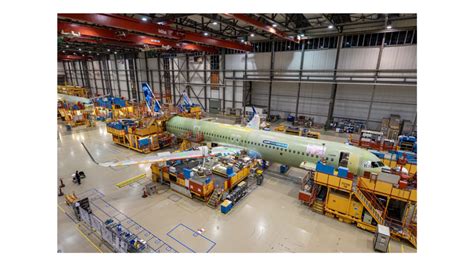
The introduction of the A321XLR has further expanded the aircraft’s appeal. With its extended range capability, airlines can now launch long-haul routes that would previously have required larger aircraft or intermediate stopovers. This flexibility is allowing carriers to connect secondary cities directly, opening new market opportunities while reducing operating costs.
Airbus Strengthens Its Global Manufacturing Network
The new Toulouse assembly line also completes a wider production strategy that Airbus has pursued for years.
With the opening of the latest facility, Airbus now operates ten A320 Family final assembly lines across four major production centers worldwide. The network includes four assembly lines in Hamburg, Germany; two in Toulouse, France; two in Mobile, Alabama; and two in Tianjin, China.
This globally distributed manufacturing structure provides Airbus with significant operational advantages. By producing aircraft closer to key customer markets, the company can improve delivery efficiency while reducing dependence on any single manufacturing location.
The expansion of production capabilities outside Europe has become increasingly important as Airbus seeks to maintain competitiveness in a rapidly growing aviation market. The Mobile facility plays a critical role in supporting North American customers, while Tianjin remains strategically important for serving China’s enormous commercial aviation sector.
The diversified manufacturing network also improves resilience, allowing Airbus to better manage disruptions that may affect individual facilities or regions.
Employment and Industrial Growth Drive the Expansion
Although aerospace manufacturing continues to embrace automation and digital production technologies, aircraft assembly remains heavily dependent on highly skilled workers.
The modernization of the Toulouse facility is expected to create substantial employment opportunities. Airbus has indicated that the first upgraded A320 production line employed approximately 700 workers, while the addition of the second line is expected to increase the site’s workforce to nearly 1,500 employees.
These positions span a broad range of specialties, including aircraft assembly, systems integration, quality assurance, logistics management, engineering, and advanced manufacturing operations.
The expansion demonstrates that despite growing automation, human expertise remains one of the most critical components of modern aerospace production.
Supply Chain Challenges Continue Despite Strong Demand
While Airbus continues expanding production capacity, significant challenges remain across the aerospace industry.
Supply chain disruptions continue affecting manufacturers worldwide, with engine availability representing one of the most persistent bottlenecks. Airbus has previously acknowledged that shortages involving engine deliveries have occasionally resulted in completed aircraft waiting for powerplants before they can enter service.
These constraints have complicated production planning and delayed deliveries for airlines eager to receive new aircraft.
Despite those challenges, market demand remains exceptionally strong. Airlines continue placing orders for fuel-efficient narrowbody aircraft as they modernize fleets and expand route networks. The long-term outlook for the A320 Family remains robust, supported by rising passenger demand, fleet replacement cycles, and growing interest in aircraft capable of delivering lower operating costs.
The opening of Airbus’s newest assembly line demonstrates how dramatically commercial aviation has evolved since the launch of the A380. What was once a factory dedicated to the world’s largest passenger aircraft has now become a centerpiece of Airbus’s narrowbody production strategy. In many ways, the transformation of the Jean-Luc Lagardère complex mirrors the transformation of the airline industry itself—one increasingly defined by efficiency, flexibility, and the enduring dominance of next-generation narrowbody aircraft.