A New Generation of Stealth Bomber Design Philosophy
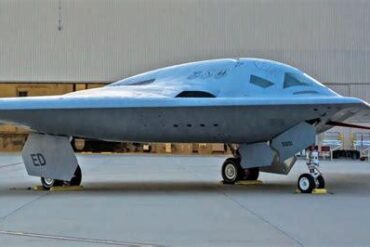
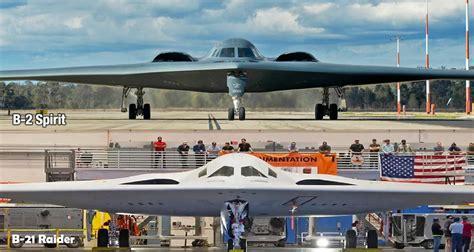
The Northrop Grumman B-21 Raider represents a decisive evolution in stealth bomber engineering, refining the iconic flying wing concept first popularized by the B-2 Spirit. At a glance, the two aircraft appear similar—both lack vertical stabilizers and prioritize low observability—but the Raider is deliberately smaller. This is not a compromise. It is a calculated shift toward efficiency, survivability, and adaptability in modern warfare environments where detection technologies have grown far more sophisticated than those of the Cold War era.
Unlike the B-2, which emerged in the 1980s under vastly different strategic assumptions, the B-21 was conceived in a world dominated by integrated air defense systems, advanced radar networks, and cyber warfare. In this context, physical scale becomes a liability rather than an advantage. By reducing its size, the Raider minimizes its radar cross section, making it significantly harder to detect, track, and intercept.
Size Differences Between the B-21 Raider and B-2 Spirit
Although exact specifications remain classified, credible estimates place the B-21 Raider’s wingspan at around 140 feet and its length near 55 feet, compared to the B-2 Spirit’s 172-foot wingspan and 69-foot length. This reduction is substantial, reshaping not just the aircraft’s appearance but its entire operational profile.
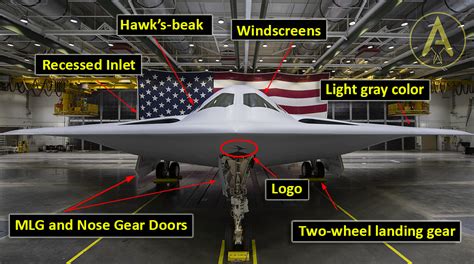
The smaller airframe is complemented by more compact internal systems, enabled by decades of advancements in avionics, propulsion, and materials science. Where the B-2 required larger structural volumes to house its components, the B-21 leverages miniaturization and digital integration to achieve equal or greater capability within a tighter footprint.
Enhanced Stealth Through Reduced Radar Cross Section
Stealth is fundamentally a game of geometry and materials, and the B-21’s smaller size directly enhances its survivability. A reduced surface area means less opportunity for radar waves to reflect back to enemy sensors. This is further amplified by refined shaping and improved radar-absorbing materials that were not available when the B-2 was designed.
The Raider also incorporates deeply embedded engine inlets, a subtle but crucial design choice. By positioning these inlets further inside the fuselage, the aircraft minimizes exposure of heat signatures and radar-reflective surfaces. This contributes to a cleaner external profile and reduces vulnerabilities across multiple detection spectrums, including infrared and radar.
Cost Efficiency and Scalable Production Strategy
One of the most compelling reasons behind the B-21’s smaller size lies in economics. The B-2 Spirit’s staggering unit cost of over $2.2 billion severely limited its production, resulting in a fleet of just 20 aircraft. In contrast, the B-21 Raider is estimated at approximately $692 million per unit, a figure that, while still significant, allows for far greater scalability.
This cost reduction is not merely about budget constraints—it directly influences strategic capability. The U.S. Air Force plans to acquire at least 100 B-21 Raiders, enabling broader deployment, increased mission flexibility, and greater resilience through fleet redundancy. A smaller aircraft requires fewer materials, less complex manufacturing processes, and streamlined maintenance, all of which contribute to lower lifecycle costs.
Operational Flexibility in Modern Combat Environments
Beyond stealth and cost, the B-21’s reduced size enhances its versatility. A more compact bomber can operate from a wider range of airfields, including those with shorter runways or limited infrastructure. This increases deployment options and complicates enemy targeting strategies.
Additionally, the Raider is designed with modularity and future upgrades in mind, allowing it to integrate emerging technologies such as advanced sensors, electronic warfare systems, and potentially unmanned capabilities. The smaller platform does not limit its role; instead, it reflects a shift toward multi-mission adaptability in a rapidly evolving threat landscape.
Why Smaller Is Strategically Superior
The decision to make the B-21 Raider smaller than the B-2 Spirit is rooted in a clear understanding of modern warfare dynamics. Bigger aircraft once symbolized power and reach, but today, precision, survivability, and cost-efficiency define strategic superiority. The Raider embodies this transformation, proving that a leaner design can deliver greater operational impact.
By combining reduced physical dimensions with cutting-edge technology, the B-21 achieves a balance the B-2 could not: stealth, affordability, and scalability in one platform. In doing so, it sets a new benchmark for the future of long-range strike capabilities, where size is no longer a measure of strength, but a tool for strategic advantage.