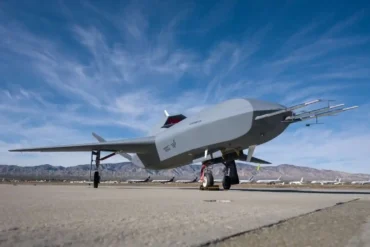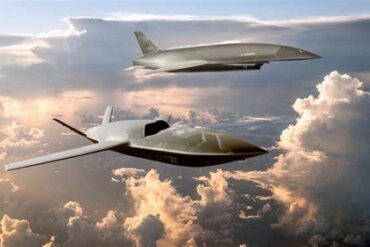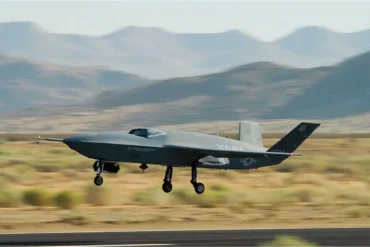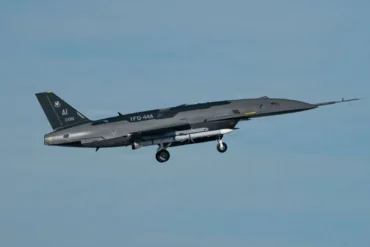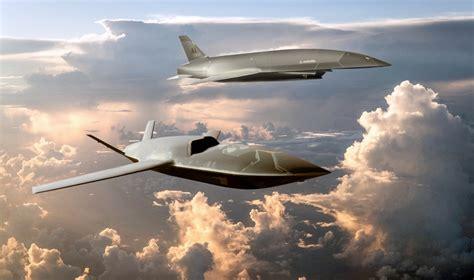
The YFQ-48A, Northrop Grumman’s cutting-edge unmanned combat aircraft, has officially entered the U.S. Air Force’s arsenal under the highly anticipated Collaborative Combat Aircraft (CCA) program. This unveiling represents a watershed moment in the transformation of American airpower, marking the dawn of scalable, semi-autonomous combat capabilities designed to operate in concert with manned platforms across increasingly contested global airspaces.
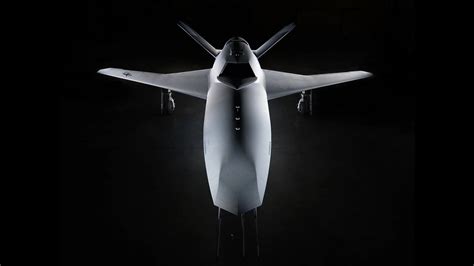
YFQ-48A and Project Talon: A Strategic Leap into Autonomous Air Combat
First publicly acknowledged in late December 2025, the YFQ-48A is the latest iteration of Project Talon, a Northrop Grumman initiative quietly shepherded into existence under the auspices of the CCA program. Its formal designation by the U.S. Air Force not only signals technical maturity but also reflects the aircraft’s vital role in redefining future operational doctrines.
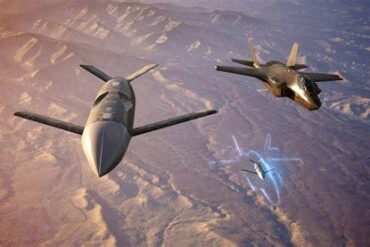
At its core, the YFQ-48A is engineered to operate alongside frontline fighters like the F-35 Lightning II and the upcoming Next Generation Air Dominance (NGAD) platforms. By teaming with manned aircraft, it delivers force multiplication, resilience, and decision-making support through AI-driven autonomy, modular payloads, and secure data fusion capabilities. The vehicle’s open architecture and adaptable design mean it can be swiftly tailored for electronic warfare, strike missions, or surveillance—without waiting for extensive retrofit cycles.
U.S. Air Force’s Vision for Collaborative Combat Aircraft (CCA)
The CCA initiative marks one of the most radical realignments in American airpower strategy since the Cold War. Rather than relying solely on a small fleet of ultra-sophisticated manned aircraft, the Air Force now aims to deploy a hybridized combat ecosystem comprising fewer crewed jets supported by swarms of highly capable unmanned systems.
Each manned aircraft in future air wings is expected to operate with two to five CCA partners, enabling flexible tasking across mission profiles. The YFQ-48A embodies this intent by offering:
- AI-powered autonomous operations capable of executing preplanned missions with minimal human input.
- High attritability, allowing for operational risk acceptance in missions too dangerous for manned aircraft.
- Rapid reconfiguration, with modular payloads supporting sensors, weapons, EW suites, or communications relays.
The program’s acquisition model—rooted in digital engineering, commercial manufacturing, and open competition—further ensures speed-to-fielding and cost-effectiveness. These unmanned partners are designed to be smart, capable, and disposable if needed, allowing for strategic flexibility without sacrificing combat punch.
Northrop Grumman’s Legacy and the Path to YFQ-48A
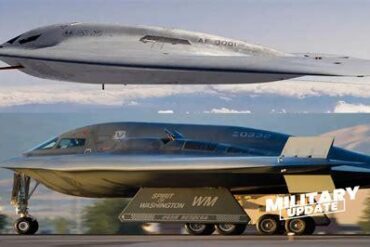
Northrop Grumman’s selection for CCA Increment 1 is a direct consequence of its pioneering history in unmanned systems, including the X-47B and the elusive RQ-180. The YFQ-48A represents an evolutionary leap that marries stealth shaping, endurance, and autonomy into a cohesive combat-ready package.
While official specifications remain classified, industry analysts suggest the aircraft employs advanced AI-driven flight control, low observable design, and secure, high-bandwidth communications for synchronized operation with human pilots. Its inclusion in the CCA roster points to Northrop’s growing strategic influence as the Air Force rushes toward operational deployment before decade’s end.
Why Manned-Unmanned Teaming is Now a Strategic Imperative
As adversaries deploy increasingly dense Anti-Access/Area Denial (A2/AD) systems and rapidly develop their own autonomous air assets, manned-unmanned teaming is no longer optional—it’s critical.
The YFQ-48A provides a flexible toolset that can:
- Extend sensor range beyond the radar horizon of manned aircraft.
- Absorb enemy fire in contested airspace, protecting higher-value platforms.
- Execute precision strikes or jamming operations deep behind enemy lines.
This paradigm shift also mitigates the ongoing challenges of pilot shortages, rising maintenance costs, and force readiness shortfalls. Unmanned systems are immune to fatigue, can be manufactured at scale, and are capable of executing coordinated attacks that overwhelm adversary air defenses.
Global Race Toward Unmanned Combat Integration
The United States is not alone in pursuing this vision. Leading military powers have launched parallel efforts to develop and deploy loyal wingman or remote carrier technologies.
Europe’s Future Combat Air System (FCAS)
The trilateral program by France, Germany, and Spain incorporates remote carriers to complement its sixth-generation fighter. These modular UAVs will provide EW, decoy, and strike support, launched from manned aircraft or ground stations to form a meshed combat network.
United Kingdom’s Tempest Program
Initially centered on the “Mosquito” UAV, the UK has expanded its scope under the broader Team Tempest initiative, focusing on AI-powered swarming, sensor fusion, and autonomous teaming algorithms to complement its NGAD strategy.
Türkiye’s Kızılelma UCAV
Turkish manufacturer Baykar has unveiled the Bayraktar Kızılelma, a stealth UCAV built for carrier operations and autonomous teaming. Its integration with the TCG Anadolu amphibious ship reflects Ankara’s ambition to project unmanned airpower in regional theaters.
Russia’s Okhotnik-B Wingman
Russia’s Sukhoi S-70 Okhotnik-B, a stealthy flying-wing UCAV, is intended to work alongside the Su-57. Having completed weapons trials and autonomous tests, it mirrors the CCA’s vision with added emphasis on survivability and strategic strike.
China’s Stealthy Collaborative Drones
The People’s Liberation Army Air Force (PLAAF) has fielded the GJ-11 Sharp Sword and is rumored to be testing additional unmanned teaming platforms under its classified “manned-unmanned integration” initiative. With the Indo-Pacific as its strategic focal point, China is accelerating deployment of AI-powered UCAVs.
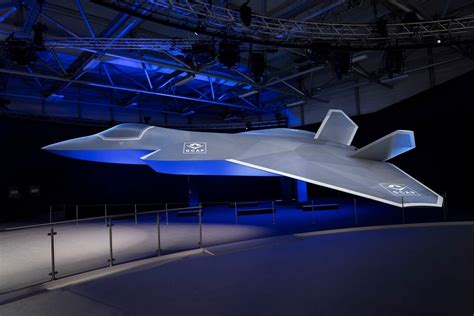
The Future of Air Dominance: Networks, Not Just Platforms
The YFQ-48A’s emergence is emblematic of a deeper doctrinal evolution: the shift from platform-centric warfare to networked combat systems. Rather than deploying singularly dominant fighters, the Air Force is embracing distributed lethality, data-centric operations, and machine-speed decision-making.
This approach empowers pilots to act as mission commanders, directing semi-autonomous assets that feed sensor data, conduct reconnaissance, or suppress enemy air defenses. It enables battlespace saturation without sacrificing pilots or strategic assets. In effect, the YFQ-48A and its CCA kin serve as force amplifiers, not replacements.
Operational Implications: Reducing Risk, Amplifying Capability
By introducing aircraft like the YFQ-48A into active duty, the Air Force stands to benefit from:
- Lower operational costs, with reduced reliance on high-maintenance manned jets.
- Enhanced mission endurance, with unmanned vehicles capable of loitering for hours.
- Greater deployment agility, thanks to rapid manufacturing and modular upgrades.
Crucially, CCAs offer redundancy and adaptability in a world where electronic warfare, cyberattacks, and anti-satellite strikes increasingly threaten centralized command structures. With autonomous aircraft operating in pre-assigned mission sets, the system can maintain effectiveness even under degraded communications or command conditions.
Conclusion: YFQ-48A as a Harbinger of 21st Century Airpower
The YFQ-48A is more than a stealthy drone—it is the vanguard of a revolution in how wars are fought from the sky. Its design, function, and fielding underscore a growing realization: air superiority in the 21st century will not be decided by pilots alone, but by swarms of intelligent systems operating in concert.
As the global security landscape hardens, and the U.S. prepares for potential high-end conflict, unmanned platforms like the YFQ-48A will shape the future of American deterrence and warfighting. With its formal induction, the age of collaborative air combat has arrived—and it flies autonomously, adaptively, and invisibly into the future.