From World War II Logic to Cold War Reality
Strategic bombing did not begin as a subtle art. In its early decades, it was blunt, industrial, and brutally mathematical: put enough bombers in the sky, accept losses, and overwhelm defenses through mass and altitude. The B-52 Stratofortress represented the final, fully mature expression of this philosophy. Though powered by jets and wrapped in Cold War urgency, its conceptual DNA traced directly back to the B-17, B-29, and B-36. It was designed to fly high, fly far, and carry a staggering payload, trusting that altitude and formation discipline would be enough to punch through enemy defenses.
That assumption collapsed faster than anyone expected. The emergence of integrated radar networks, high-speed interceptors, and especially the Soviet SA-2 Guideline surface-to-air missile transformed the sky from a navigable space into a lethal three-dimensional trap. The downing of a Lockheed U-2 in 1960 was more than an intelligence embarrassment; it was a doctrinal earthquake. If even a specialized high-altitude reconnaissance aircraft could be killed, then the era of invulnerable bombers was decisively over.
The U.S. Air Force found itself facing an uncomfortable truth. The bomber was still essential to nuclear deterrence, but its traditional methods of survival no longer worked. Altitude alone was no longer protection. Mass no longer guaranteed penetration. The bomber had to evolve or quietly die.
The Seduction of Speed: B-58 Hustler and XB-70 Valkyrie
The first escape route from this dilemma was speed. If bombers could not hide, perhaps they could outrun danger. This logic produced the Convair B-58 Hustler, a needle-nosed Mach 2 aircraft built to sprint at extreme altitude, deliver a nuclear payload, and escape before defenses could react. On paper, it was brilliant. In practice, it was fragile, expensive, unforgiving to fly, and increasingly vulnerable as missile technology advanced.
The next step pushed this logic to its extreme. The XB-70 Valkyrie was envisioned as a Mach 3 colossus cruising at 70,000 feet, so fast and so high that interception would be physically impossible. It remains one of the most audacious aircraft designs ever attempted, a titanium and steel monument to Cold War optimism.
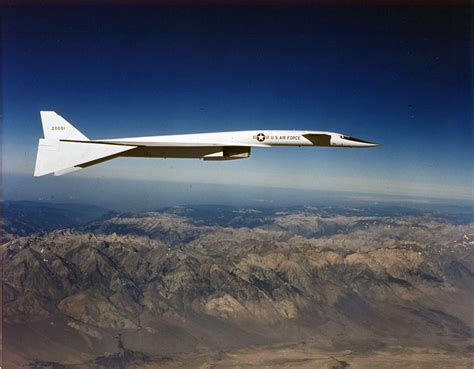
Reality, however, was merciless. Surface-to-air missiles do not need to loiter or turn tightly; they accelerate brutally and climb aggressively. By the time the XB-70 flew, Soviet air defenses had already leapt ahead of its assumptions. What looked like invincibility in the 1950s was obsolescence by the mid-1960s. Speed at altitude had become another predictable vector, neatly optimized against by radar, missiles, and interceptors.
The bomber’s role in nuclear deterrence was also quietly eroding. Intercontinental ballistic missiles and submarine-launched ballistic missiles could deliver nuclear warheads faster and with fewer vulnerabilities. The bomber survived not because it was the fastest way to deliver nuclear weapons, but because it remained the most flexible and recallable.
A Radical Turn Downward: The Birth of the B-1A
With altitude and speed both compromised, the Air Force pivoted to an entirely different idea: hide in plain sight by flying low. Radar systems of the era struggled with ground clutter, and terrain-following flight promised to mask aircraft until the last possible moment. This concept demanded an aircraft that could sustain high speed at low altitude, endure extreme structural stress, and carry a strategic payload.
The answer was the Rockwell B-1A Lancer.
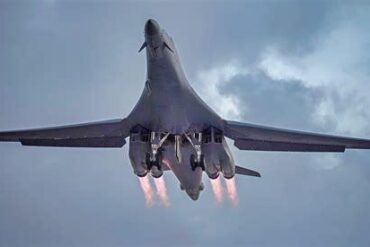
Unlike the XB-70, the B-1A was not designed to cruise serenely above the world. It was built to knife through it. Variable-sweep wings allowed it to balance efficiency and speed, while powerful engines enabled sustained low-level penetration at near-supersonic velocities. In theory, it solved the problem that had killed every bomber before it.
In practice, the world moved again. Soviet defenses adapted rapidly. Low-altitude SAMs proliferated, reaction times shortened, and the assumption that a bomber could slip in and out unnoticed collapsed under the weight of new sensors. At the same time, the B-1A proved extremely expensive, arriving just as air-launched cruise missiles promised a way for bombers to strike without entering defended airspace at all.
Only four B-1A aircraft were built. None entered operational service. Like the Valkyrie before it, the Lancer seemed destined to become a footnote.
Cancellation, and the Quiet Survival of an Idea
The Carter administration formally canceled the B-1A program, judging that a combination of ICBMs, SLBMs, and cruise missiles provided sufficient deterrence. On paper, this decision made sense. The bomber no longer appeared central to nuclear strategy, and the B-1A looked like a costly relic of outdated thinking.
Yet aircraft programs rarely die completely. They linger as ideas, as airframes, as partially solved problems waiting for the right context. By the late 1970s, that context began to re-emerge.
Air defenses had become terrifyingly effective against predictable threats, but they were still optimized for certain assumptions. High-altitude bombers remained the primary design driver. At the same time, low-observability technologies were moving from theory into practice. Engineers were learning how to shape aircraft to scatter radar energy rather than reflect it, buying precious seconds or minutes of survivability.
The bomber, once again, had a possible future.
The Resurrection: B-1B as a Fundamentally New Aircraft
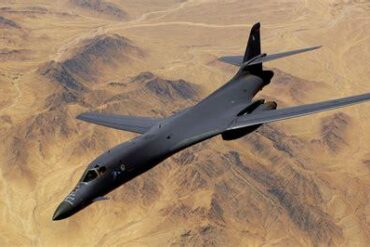
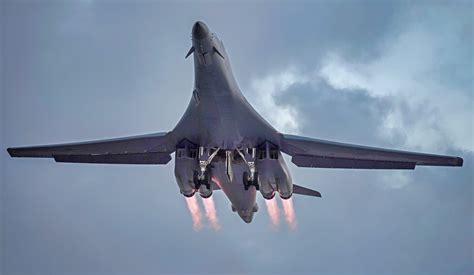
When the B-1 returned in the 1980s, it did not return as the aircraft that had been canceled. The B-1B Lancer was not an upgraded B-1A; it was a philosophical rewrite.
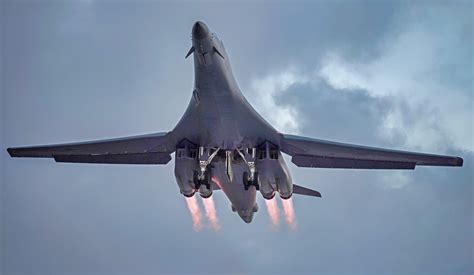
Speed was deliberately sacrificed. Maximum velocity dropped from Mach 2 to around Mach 1.25. This was not a failure but a choice. Sustained supersonic dash mattered less than survivability over long missions. The airframe was structurally reinforced for constant low-altitude flight, and its radar cross-section was dramatically reduced through shaping and materials.
The B-1B was built to be harder to see, not harder to catch. It followed the contours of the Earth, using terrain-following radar to remain below the horizon of enemy sensors. It assumed that being detected late was better than being detected early, even if escape speed was modest.
This redesign reflected a deeper doctrinal shift. Survivability was no longer about outrunning defenses. It was about confusing them, delaying them, and overwhelming their decision cycles.
A Bridge Between Eras of Bomber Warfare
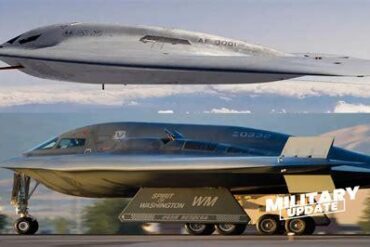
The U.S. Air Force ultimately procured 100 B-1B Lancers, intending them as a bridge between the aging B-52 fleet and a future stealth bomber that would become the B-2 Spirit. At the time, the plan was elegant. The B-1B would provide mass and flexibility, while the B-2 would offer true penetration capability.
History, as always, interfered. The end of the Cold War slashed B-2 procurement from 132 aircraft to just 21. The B-1B suddenly found itself carrying far more responsibility than originally intended.
What made the B-1B invaluable was not stealth in the modern sense, but versatility. It could carry an enormous internal payload, the largest conventional load of any U.S. Air Force bomber. It could loiter, retask, and deliver precision strikes with devastating efficiency. In conflicts where air superiority was assured, it became a relentless provider of firepower.
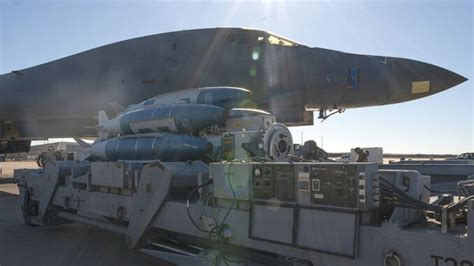
In Iraq, Afghanistan, and other theaters, the B-1B demonstrated a different kind of relevance. It was no longer a nuclear penetrator but a conventional workhorse, able to deliver sustained effects over long durations. The aircraft that was once designed to fight World War III instead became one of the most heavily used platforms in limited wars.
The Cost of Low-Level Survival
The very design choices that kept the B-1B relevant also sowed the seeds of its decline. Constant low-altitude flight places extraordinary stress on airframes. Turbulence, terrain masking, and high structural loads slowly consume fatigue life. Keeping the fleet operational became increasingly difficult and expensive as the aircraft aged.
Meanwhile, air defense technology did not stand still. Modern systems now combine multi-static radar, passive radio-frequency detection, infrared search and track, and space-based cueing. The low-altitude sanctuary the B-1B relied upon has steadily shrunk. What once bought survivability now buys only marginal delay.
In contested airspace, the B-1B is no longer a penetrator. It has reverted to a familiar but still valuable role: a missile truck, launching stand-off weapons from outside the reach of advanced defenses.
Why the Resurrection Still Matters
The resurrection of the B-1 was not a mistake. It was a necessary adaptation to a rapidly shifting technological landscape. The B-1B proved that bombers could remain relevant without being invisible or invincible. It demonstrated that flexibility, payload, and integration with electronic warfare could compensate for the loss of traditional penetration capability.
More importantly, it bought time. Without the B-1B, the gap between the B-52 and the B-2 would have been strategically dangerous. The Lancer absorbed operational demand, preserved bomber expertise, and maintained a credible long-range strike force during decades of uncertainty.
The Long Goodbye and the Arrival of the B-21
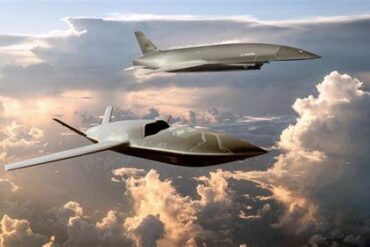
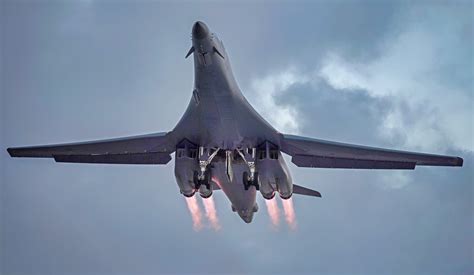
Today, roughly 45 B-1B Lancers remain in service, with retirement expected between the late 2020s and early 2030s. Their replacement, the B-21 Raider, does not represent another radical doctrinal shift. Instead, it refines the stealth-centric philosophy pioneered by the B-2, optimized for a world of pervasive sensors and contested domains.
This continuity is revealing. For the first time since the 1950s, a new U.S. bomber is not reacting to a doctrinal failure. It is building deliberately on a proven concept.
The B-1B, by contrast, was born from doctrinal collapse and resurrected through adaptation. It stands as a reminder that military aviation does not progress in straight lines. It zigzags, stumbles, retreats, and occasionally resurrects the dead when the world changes just enough to make old ideas useful again.
A Bomber That Refused to Stay Buried
The story of the B-1 Lancer is not one of technical perfection. It is a story of survival through reinvention. Canceled, redesigned, resurrected, and repurposed, it bridged eras that no single aircraft was ever meant to span. It outlived assumptions, outlasted doctrines, and carried a burden far heavier than its designers initially intended.
In the strange ecology of military aviation, relevance is the ultimate measure of success. By that standard, the B-1 did not merely return from the dead. It earned its second life, one mission at a time, flying low and fast through the shifting shadows of history.