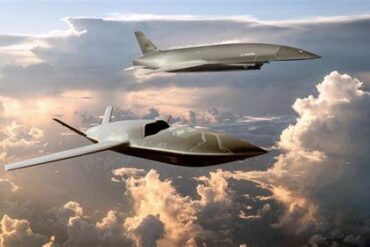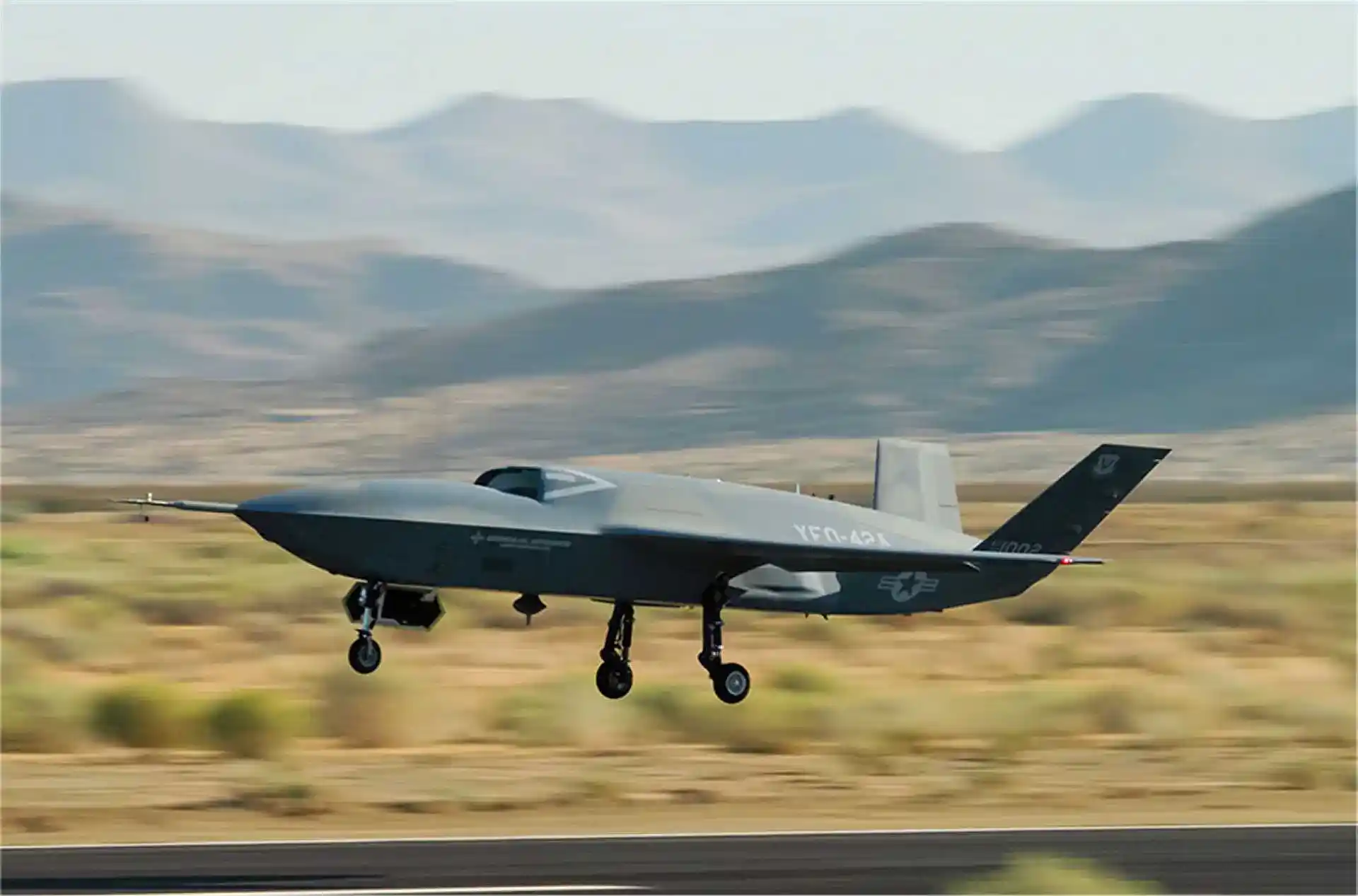
The U.S. Marine Corps has taken a significant leap in modernizing its aviation capabilities by selecting General Atomics Aeronautical Systems’ YFQ-42A drone as the foundation for its MUX TACAIR Collaborative Combat Aircraft program. This decision underscores the Marine Corps’ commitment to integrating advanced uncrewed tactical aircraft into expeditionary operations, particularly within contested Indo-Pacific theaters, where distributed and agile forces are paramount. The move represents a key milestone in the evolution of uncrewed combat aviation, transitioning from traditional ISR-focused platforms to fully networked, semi-autonomous systems designed to operate alongside fifth-generation fighters in complex, contested environments.
The Strategic Rationale Behind the YFQ-42A Selection
The MUX TACAIR program, formally known as the Marine Air-Ground Task Force Uncrewed Expeditionary Tactical Aircraft Collaborative Combat Aircraft initiative, has evolved far beyond its original concept as a vertical takeoff and landing ISR platform. Initially intended for operations from amphibious assault ships, the program now envisions a highly versatile uncrewed tactical aircraft capable of performing strike missions, electronic warfare, air-to-air support, and persistent ISR—all fully integrated within the MAGTF command structure. By selecting the YFQ-42A, the Marine Corps signals a shift toward attritable, modular, and autonomous air assets that can operate seamlessly alongside crewed aircraft, enhancing both lethality and survivability in high-threat scenarios.
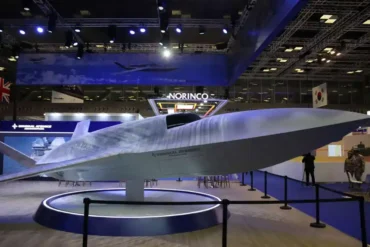
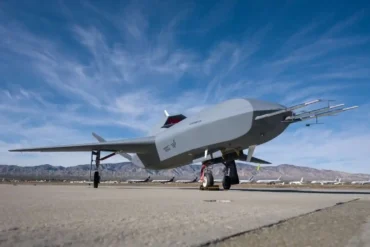
GA-ASI’s YFQ-42A has been designed from the ground up as a modular, mission-flexible platform. Unlike legacy remotely piloted aircraft, which prioritize endurance for ISR missions, the YFQ-42A incorporates a streamlined fuselage with internal volume optimized for sensors, fuel, and precision munitions. Its open-architecture avionics and modular bays allow rapid integration of new payloads, ranging from electronic warfare systems to precision strike ordnance, enabling the Marine Corps to evaluate multiple operational concepts without committing to a single hardware configuration. The aircraft’s design emphasizes cost-effective attritability, allowing it to operate in high-risk environments while minimizing risk to human pilots and high-value crewed aircraft.
Integration of Government-Provided Mission Kit
A central component of this program is the integration of a government-supplied mission package into the YFQ-42A. This software-defined, sensor-rich suite is capable of delivering both kinetic and non-kinetic effects, encompassing precision strike, close air support, electronic attack, communications relay, and advanced targeting functions. By using the YFQ-42A as a surrogate, the Marine Corps can rapidly assess how effectively the platform executes these roles within the MAGTF construct, where aviation, ground maneuver, logistics, and command elements operate as a self-contained, scalable force.
The integration effort emphasizes rapid development of autonomous capabilities tailored to the mission kit. GA-ASI’s open autonomy architecture allows supervised autonomous flight, enabling the drone to conduct preplanned strike profiles, electronic warfare missions, or sensor sweeps under human oversight. This aligns perfectly with Force Design 2030, which envisions smaller, distributed Marine units projecting combat power across dispersed maritime terrain. A low-cost, flexible uncrewed aircraft allows for expansion of combat mass without exposing human pilots to the highest-threat scenarios, a strategic advantage in modern expeditionary warfare.
YFQ-42A Design Philosophy and Capabilities
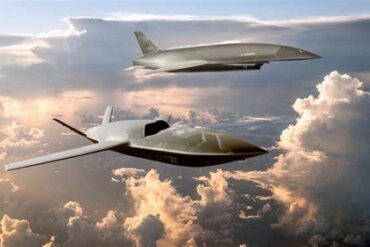
The YFQ-42A embodies GA-ASI’s approach to agile, modular combat aircraft. Its design leverages digital engineering and model-based systems engineering tools, enabling accelerated prototyping and rapid software-defined upgrades. This approach allows mission systems to be integrated primarily through software updates, reducing hardware modifications and expediting adaptation to new operational requirements. The aircraft supports varying degrees of autonomy, from traditional remote piloting to advanced collaborative behaviors in which multiple uncrewed aircraft coordinate with crewed fighters to execute complex combat maneuvers.
The airframe’s modular interior accommodates a wide variety of payloads, including electronic warfare suites, ISR packages, and precision-guided munitions. This flexibility allows the Marine Corps to employ the YFQ-42A as a forward sensor node, an electronic warfare escort, or an additional weapons carrier in strike packages. Its streamlined design balances range, survivability, and operational cost, emphasizing tactical utility over raw endurance. By leveraging distribution, networking, and human-machine teaming, the YFQ-42A enhances force projection while mitigating exposure to sophisticated adversary air defenses.
Operational Integration with Manned Assets
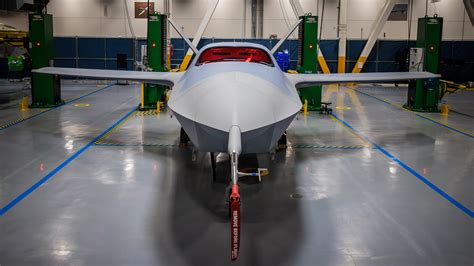
One of the most critical aspects of the MUX TACAIR program is manned-unmanned teaming. The YFQ-42A is being evaluated for its ability to operate alongside fifth-generation fighters such as the F-35B and F-35C, extending their reach and enhancing mission effectiveness. This integration allows uncrewed aircraft to serve as sensor nodes, electronic warfare platforms, and supplementary strike assets, multiplying the combat power of manned formations without requiring additional pilots.
The Marine Corps’ evaluation phase will focus on autonomy reliability, mission system integration, secure communications resilience, and interoperability with MAGTF command-and-control networks. Special emphasis will be placed on the platform’s ability to maintain effectiveness in degraded or contested electromagnetic environments, a scenario increasingly relevant in modern peer-adversary conflicts. These tests will shape future requirements for production-level uncrewed tactical aircraft, ensuring the Marine Corps maintains a decisive advantage in expeditionary and distributed operations.
GA-ASI’s Legacy and Technological Expertise
General Atomics brings decades of experience to the program, drawing from its extensive Predator family, including MQ-9A Reaper, MQ-1C Gray Eagle, MQ-20 Avenger, and MQ-9B SkyGuardian/SeaGuardian platforms, which collectively have logged over nine million flight hours worldwide. The YFQ-42A represents a deliberate evolution from endurance-oriented ISR drones to tactically integrated combat assets capable of operating within peer-threat air-defense envelopes.
The platform’s “genus/species” development model is central to its efficiency. A common core aircraft (the genus) can be adapted for multiple mission-specific variants (species) across different services. This approach reduces non-recurring engineering costs and accelerates deployment across branches, a crucial advantage in an era where rapid technological adaptation is essential for maintaining operational superiority. The YFQ-42A completed its maiden flight in August 2025, validating the viability of GA-ASI’s development philosophy and setting the stage for extensive MUX TACAIR evaluations.
Implications for Marine Corps Expeditionary Aviation
The selection of the YFQ-42A as a surrogate platform for the MUX TACAIR program marks a decisive step toward integrating autonomous, networked combat aircraft into the Marine Corps’ expeditionary aviation strategy. By enabling uncrewed platforms to execute strike, ISR, and electronic warfare missions in coordination with crewed fighters, the Marine Corps is redefining its operational doctrine for distributed maritime operations.
This approach not only enhances the lethality and survivability of manned formations but also allows for scalable force projection. In contested Indo-Pacific theaters, where adversaries possess sophisticated anti-access/area-denial capabilities, the ability to disperse, network, and coordinate multiple autonomous assets provides a strategic edge. The YFQ-42A’s low-cost, modular design further enables the Marine Corps to expand its combat mass while minimizing risk to high-value personnel and aircraft.
Future Prospects and Program Trajectory
The ongoing evaluation under the MUX TACAIR framework will shape the future of Marine Corps aviation, particularly the balance between crewed and uncrewed systems in frontline combat operations. Lessons learned from autonomy performance, mission kit integration, and interoperability will inform production decisions and operational concepts, influencing how expeditionary and distributed operations are executed for decades to come.
GA-ASI’s YFQ-42A is positioned as a cornerstone of this future, embodying a new class of tactical uncrewed aircraft capable of executing complex missions alongside human pilots. Its integration into the MUX TACAIR program reflects a broader Pentagon emphasis on semi-autonomous, networked combat aviation, aligning Marine Corps modernization with joint force objectives. By leveraging advanced autonomy, modular mission payloads, and software-defined upgrades, the YFQ-42A provides a flexible, cost-effective solution for emerging threats in high-end warfare environments.
Conclusion
The Marine Corps’ selection of the GA-ASI YFQ-42A for the MUX TACAIR Collaborative Combat Aircraft program represents a pivotal advancement in expeditionary and networked aviation. By combining autonomy, modularity, and manned-unmanned teaming capabilities, the YFQ-42A establishes a foundation for future combat operations that are distributed, resilient, and highly adaptable. As the platform undergoes evaluation within the MAGTF construct, it is poised to redefine how uncrewed systems augment traditional fighter assets, enhance force projection, and maintain strategic superiority in contested environments. The MUX TACAIR program thus not only advances the Marine Corps’ modernization agenda but also signals a broader shift toward the operational integration of advanced uncrewed combat aircraft across the U.S. military.
This selection reinforces the Marine Corps’ commitment to technological innovation, expeditionary readiness, and operational flexibility, setting the stage for a new era of uncrewed tactical aviation capable of supporting distributed operations and enhancing lethality while minimizing risk to personnel and critical assets.