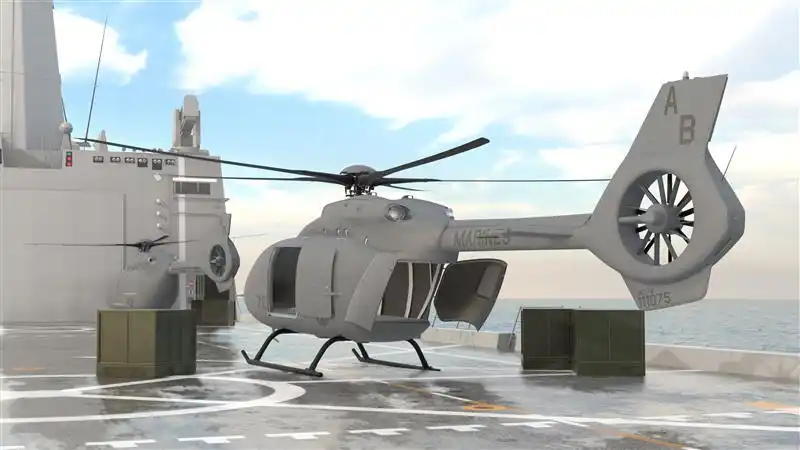
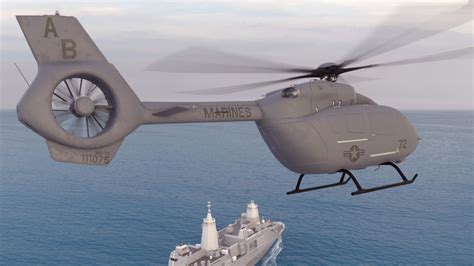
Airbus U.S. Space & Defense has taken a decisive leap forward in military logistics with its strategic partnership with Parry Labs to develop the MQ-72C Aerial Logistics Connector (ALC). This unmanned aerial system (UAS), evolved from the dependable UH-72 Lakota platform, represents a shift in tactical logistics autonomy within the U.S. Department of Defense (DoD). Designed to thrive in contested, austere, and distributed operational theaters, the MQ-72C fuses rotary-wing reliability with cutting-edge mission system innovation.
The partnership capitalizes on Parry Labs’ battlefield-hardened edge computing ecosystem, reinforcing Airbus’ vision for next-gen, scalable logistics support aircraft. As peer adversaries invest in distributed warfare capabilities, the MQ-72C program aims to provide a decisive edge in speed, resilience, and operational reach.
Revolutionizing Autonomous Logistics for the U.S. Marine Corps
The MQ-72C Aerial Logistics Connector is not just a technology demonstrator—it is a deliberate evolution in unmanned tactical lift. Built from the UH-72 Lakota’s proven airframe, this rotary-wing unmanned aircraft is optimized to deliver supplies, perform reconnaissance, and support distributed forces in environments where traditional manned systems face risk or limitation.
The second year of development is unfolding under the Middle Tier of Acquisition – Rapid Prototyping pathway. This program ensures fast-track capability demonstration for future deployment in real-world scenarios. The core mission: prove the MQ-72C’s effectiveness in getting logistics done fast, safely, and autonomously.
Parry Labs’ Digital Backbone: Stratia and Edge Architecture
At the heart of this partnership is Parry Labs’ Stratia edge software platform, a robust COTS solution designed to bridge commercial aviation standards with military-grade autonomy and mission adaptability. Stratia’s architecture is built to unify:
- Autonomy Algorithms
- Command & Control Interfaces
- Sensor Fusion and Situational Awareness Frameworks
- Mission System Modularization
Additionally, Parry Labs is supplying the edge computing hardware and an adaptable ground control station (GCS) interface that can operate on platforms like the Marine Air Ground Tablet (MAGTAB). This ensures seamless human-machine interaction, even in bandwidth-constrained or contested environments.
Joint Force Readiness in Distributed Combat Environments
The strategic relevance of the ALC program lies in its alignment with modern warfighting doctrine, particularly that of the U.S. Marine Corps and broader Joint Force. Current logistics platforms struggle to keep pace with distributed maritime operations (DMO) and Expeditionary Advanced Base Operations (EABO). The MQ-72C offers a lightweight, unmanned response to this gap.
By leveraging autonomous aircraft for resupply and mobility tasks, the U.S. military can reduce risk to personnel, increase delivery cadence, and maintain distributed force sustainability even in anti-access/area denial (A2/AD) environments.
Airbus U.S. and Parry Labs: A Convergence of Defense Innovation
The collaboration underscores a deliberate convergence between legacy aerospace engineering and modern digital warfare needs. Airbus brings decades of certified rotary-wing aviation pedigree, while Parry Labs injects agility with a digital-first, system-agnostic approach.
Robert Geckle, Chairman and CEO of Airbus U.S. Space & Defense, emphasized the synergy: “Parry’s proven digital system integration expertise—specifically UAS command and control interfaces—will help ensure the MQ-72C will be able to conduct unmanned operations in austere environments and redefine how the Marine Corps counters the threats of tomorrow.”
Parry Labs CEO JD Parkes reinforced this vision by stating, “We are able to bring modern mission system capabilities in a simple, unified data and systems environment to programs like ALC.”
This mutual commitment fosters a scalable digital infrastructure tailored for high-speed defense deployment, which stands in contrast to traditionally siloed, monolithic system architectures.
Agility Through Digital Integration
Where past programs struggled with integration bottlenecks and platform rigidity, the MQ-72C program prioritizes open-architecture, modular interfaces. Stratia’s unified platform allows for:
- Real-time mission system reconfiguration
- Cross-platform software updates without downtime
- Plug-and-play autonomy enhancements
- Enhanced interoperability across service branches
This degree of digital agility ensures that the MQ-72C can be updated in stride with evolving mission requirements, threat profiles, and doctrinal shifts.
Operational Use Cases and Future Deployment Scenarios
The U.S. Marine Corps envisions the MQ-72C not merely as a cargo hauler, but as a multi-role logistics and ISR enabler in the following scenarios:
- Forward Rearming and Resupply: Rapid delivery of fuel, ammunition, or medical kits to disaggregated units
- Silent Watch ISR: Flying autonomously with passive sensor payloads to gather battlefield intelligence
- Combat Evacuation and CASEVAC: Deployment into denied zones to extract personnel or equipment
- Communication Relay Node: Acting as a temporary airborne comms link for ground forces
Such versatility would offer force commanders unprecedented flexibility, while reducing human exposure and logistical risk in high-threat zones.
Strategic Context: Competing in the Great Power Era
With the re-emergence of peer conflict scenarios—especially in the Indo-Pacific and Eastern European theaters—resilient logistics networks have become a core priority for U.S. defense planners. The ALC fits directly into this vision, offering a force-multiplier that can survive and thrive where traditional logistics falter.
The MQ-72C, with its VTOL capabilities, long loiter endurance, and payload modularity, complements other autonomous initiatives across the DoD’s portfolio, including:
- Army’s Future Vertical Lift (FVL) unmanned solutions
- Navy and Marine Corps Expeditionary UAS experimentation
- Air Force Agile Combat Employment (ACE) logistics
In contested environments where fixed infrastructure is likely to be degraded or destroyed early in conflict, systems like the ALC will be essential for maintaining forward operating capability.
Looking Ahead: Beyond Prototypes to Doctrine
While still in the prototyping phase, the MQ-72C is poised to become a doctrine-altering platform. If successful in operational assessments, its deployment could see:
- Standardization across Marine Littoral Regiments
- Integration into future Joint All-Domain Command and Control (JADC2) frameworks
- Broader NATO adoption under interoperability programs
Airbus and Parry Labs are actively working with warfighter feedback loops, enabling fast, iterative improvements based on actual field testing. This tight cycle of development and deployment aims to eliminate the slow, bureaucratic barriers of legacy defense acquisition.
Conclusion: From Tactical Lift to Strategic Edge
The Airbus-Parry Labs MQ-72C Aerial Logistics Connector initiative embodies a clear-eyed vision for the future of autonomous battlefield logistics. Combining proven aviation heritage with agile digital engineering, this program exemplifies how defense innovation must evolve in the 21st century: faster, more modular, and deeply integrated with operational need.
As the program continues under the Rapid Prototyping pathway, all eyes will be on whether the MQ-72C can deliver on its promise—redefining logistics from a vulnerable chain to an autonomous, resilient advantage.
For the U.S. Marine Corps and the broader Joint Force, the ALC may well become a cornerstone in the next era of distributed warfare.