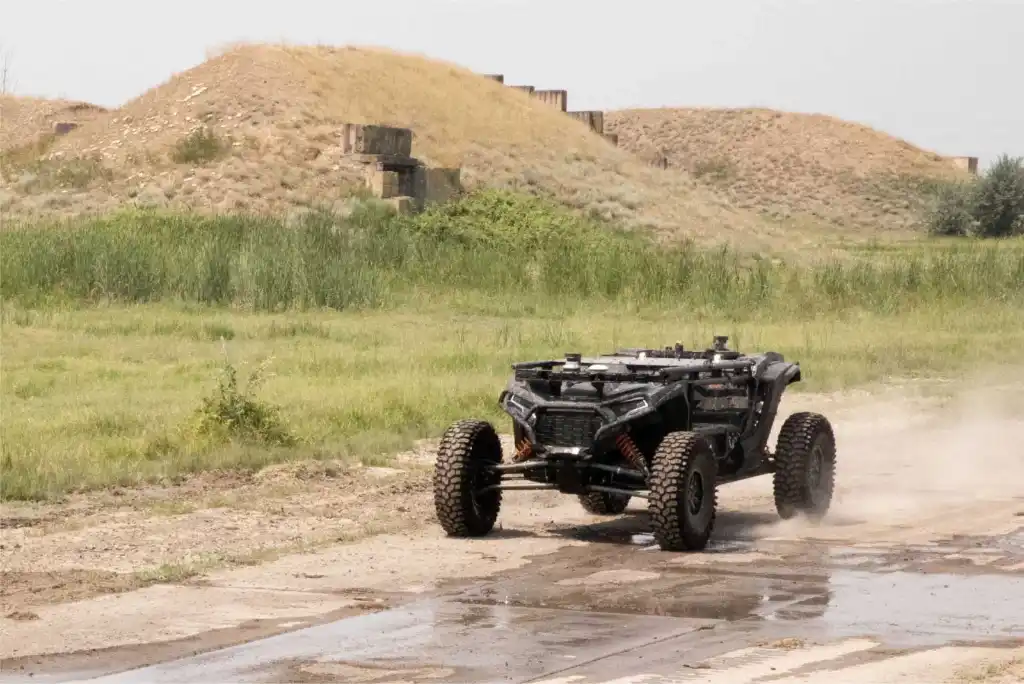
In a decisive step toward revolutionizing battlefield logistics, the U.S. Army has successfully tested the ULTRA autonomous tactical vehicle during Exercise Agile Spirit 25 in Georgia. Conducted at the NATO-Georgia Joint Training and Evaluation Center (JTEC) in Krtsanisi, this field demonstration involved Soldiers from the 1st Squadron, 91st Cavalry Regiment, 173rd Airborne Brigade, providing the first glimpse into how future warfare logistics might be conducted without exposing troops to frontline dangers.
Developed by Overland AI, a Seattle-based defense technology firm, ULTRA—Uncrewed Long-range Transport Autonomy—is an autonomous ground resupply system purpose-built for contested and communication-degraded environments. By eliminating the need for direct human control, ULTRA enables high-risk logistical operations with minimal personnel exposure, particularly crucial in modern conflict zones plagued by IED threats, ambushes, and GPS-denied environments.
The Battlefield Need for Tactical Autonomy
As the U.S. Army shifts its operational posture to address threats from near-peer adversaries, the requirement for distributed logistics support has intensified. Conventional supply convoys remain highly vulnerable to asymmetric attacks, extended supply chains, and communication disruptions. In response, the Army is investing in robotic and autonomous systems (RAS) to close this capability gap.
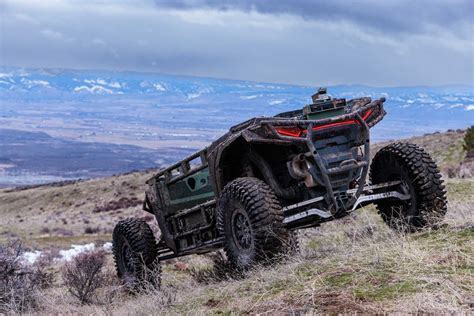
ULTRA is emblematic of this shift. It is not merely a prototype but a mature tactical logistics platform designed to execute missions autonomously, whether navigating harsh terrain, bypassing obstacles, or adapting to changing battlefield conditions without relying on satellite-based navigation or constant radio control.
During Agile Spirit 25, the vehicle undertook multiple fully autonomous resupply missions across the forested and mountainous Vaziani Training Area. Soldiers observed ULTRA deliver cargo point-to-point, traverse off-road routes, perform convoy maneuvers, and execute remote load drop-offs—all without a single human operator.
Technology Behind ULTRA: Autonomy Without Compromise
At the core of ULTRA lies Overland AI’s proprietary OverDrive autonomy software stack, integrated with a military-grade all-terrain chassis. This combination is supported by an advanced suite of navigation and perception sensors, including:
- High-resolution stereo cameras
- LiDAR for 3D mapping and terrain classification
- GPS-denied localization systems
- Inertial measurement units (IMUs)
- Thermal imaging sensors
This architecture empowers ULTRA to function in environments where electronic warfare, jamming, or low visibility would render traditional logistics platforms inoperable. Its autonomy stack enables it to identify, classify, and reroute around obstacles in real time, maintaining mission continuity even under degraded or denied conditions.
Field Performance and Soldier Evaluation
ULTRA’s real-world performance during Agile Spirit 25 was not a closed demonstration—it was a hands-on evaluation by combat-ready personnel. Troops from the 173rd Airborne Brigade assessed its capabilities in active mission profiles, emphasizing several standout features:
- Rapid route recalibration in dynamic terrain
- Reliable obstacle avoidance with no human intervention
- Significant reduction in soldier exposure to lethal threats during logistics operations
Critically, the vehicle proved its ability to autonomously execute multi-mile resupply missions under conditions simulating actual combat logistics. From navigating tight forest paths to performing complex convoy logistics maneuvers, ULTRA demonstrated repeatable success—an essential milestone toward operational deployment.
Strategic Impact: Reshaping Sustainment Doctrine
The implications of ULTRA go far beyond a single exercise. Its success feeds directly into the U.S. Army’s broader modernization blueprint driven by Army Futures Command, Ground Vehicle Systems Center (GVSC), and the Defense Innovation Unit (DIU). All three organizations are spearheading the transition toward modular, unmanned, and autonomous sustainment solutions.
ULTRA complements ongoing efforts, such as:
- Leader-Follower autonomous convoy systems
- Robotic Combat Vehicle logistics variants
- Commercial prototypes like GDLS MUTT and Polaris MRZR Alpha
These platforms, tested at sites like Fort Liberty, Yuma Proving Ground, and Fort Irwin, share a common goal: reduce human risk in logistics while enhancing tempo and reach of sustainment operations.
Payload, Endurance, and Versatility
Designed for frontline adaptability, ULTRA offers more than basic cargo hauling. Its modular payload bay allows reconfiguration for multiple mission sets:
- Medical evacuation (MEDEVAC)
- Sensor emplacement and retrieval
- Explosive ordnance delivery
With a payload capacity of 1,000 pounds (454 kg), ULTRA supports both all-electric and hybrid drive options, offering over eight hours of operational endurance based on terrain and cargo load. In future combat scenarios, this endurance could translate to autonomous equipment retrograde, frontline resupply during prolonged engagements, or silent insertions of surveillance devices.
Its digital backbone is just as robust. ULTRA includes cyber-hardened processors, tactical mesh networking, and scalable API support for integration into larger command and control systems, ensuring compatibility with future multi-domain operations (MDO) concepts.
Force Multiplier in Multidomain Operations
As U.S. military doctrine evolves toward multidomain operations, ULTRA represents a key enabler for uncrewed sustainment at scale. In conflicts where frontline logistics are constantly targeted or restricted, a fleet of autonomous cargo vehicles can ensure steady resupply, thus sustaining operational tempo and extending the endurance of disaggregated units.
Whether by pre-positioning equipment, performing autonomous retrograde, or conducting emergency ammo runs under fire, ULTRA is poised to become a logistics multiplier on tomorrow’s battlefield. The Army envisions it working seamlessly with unmanned aerial systems, robotic breaching units, and networked command centers.
Looking Ahead: Next Trials and Full Integration
With Agile Spirit 25 marking a major milestone, Overland AI and the U.S. Army are preparing for the next phase. Late 2025 and early 2026 will see additional ULTRA trials at advanced testing sites across the U.S., focusing on:
- Integration with battlefield command networks
- Swarming capabilities with other autonomous platforms
- Extended range and hybrid endurance validation
- Cybersecurity stress testing
As ULTRA edges closer to fielding, Overland AI continues development under the Tactical Behaviors Prototype agreement with DIU. The company’s long-term vision aligns with the Department of Defense’s objective to build scalable, tactically autonomous systems that operate with minimal oversight but maximum mission value.
Conclusion: From Concept to Combat Utility
The successful deployment of ULTRA during Agile Spirit 25 is more than a technological feat—it is a doctrinal shift. By automating frontline logistics, the U.S. Army aims to mitigate casualties, enhance combat effectiveness, and ensure that supplies flow where and when they are needed without risking lives unnecessarily.
With its combination of rugged mobility, sensor fusion, modular design, and mission-proven autonomy, ULTRA is no longer a theoretical concept. It is a field-tested, soldier-endorsed solution that embodies the Army’s push for innovation under fire. As future trials unfold, ULTRA could redefine the very essence of battlefield sustainment—paving the way for a generation of uncrewed support vehicles at the heart of American combat operations.