Cargo drones are no longer a futuristic concept—they are rapidly emerging as game-changing assets in the global logistics industry. As technology and regulation slowly align, heavy-lift unmanned aerial vehicles (UAVs) are poised to revolutionize how goods are transported, especially across middle-mile delivery routes. With autonomous systems maturing and major players like Dronamics, Pyka, and Skyports piloting large-scale deployments, we stand on the brink of an era where aerial cargo delivery becomes not only viable but essential.
The Rise of Middle-Mile Autonomy
In the evolving logistics ecosystem, the middle mile—the crucial connection between centralized warehouses and local distribution centers—is emerging as the most realistic and scalable application of autonomous drone technology. Nils Shaefer, an analyst at Frost and Sullivan, notes that this segment presents a turning point for UAV adoption. Companies are transitioning from prototype to production, with many expecting deliveries to commence in 2025 or earlier.
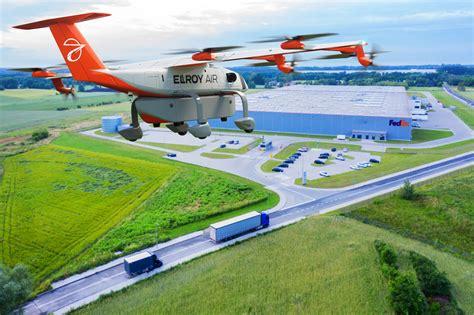
Unlike last-mile drone delivery, which is constrained by urban infrastructure and regulatory complexity, middle-mile routes offer less congested airspace and more predictable flight paths, particularly between rural zones or remote islands. Postal operators such as Greece’s Hellenic Post and UK’s Royal Mail are already testing routes that bypass congested roadways in favor of faster, cost-effective aerial corridors.
Operational Economics and Efficiency Gains
Heavy-lift cargo drones introduce compelling cost advantages by eliminating the need for human pilots, life support systems, and large runways. Konstantin Rangelov, CTO of Dronamics, points out that removing the human element slashes costs not only for labor but also for aircraft complexity.
Traditional aircraft must accommodate pressurized cabins, temperature control, and other human-centered features. UAVs are liberated from such requirements, enabling simpler designs, reduced weight, and faster production cycles. These efficiencies open the door for cargo drones to match or even undercut the cost-per-kilogram metrics of legacy aircraft like the Cessna Caravan, while achieving the same delivery capability.
Dronamics and the Black Swan Platform
Founded in 2014 by brothers Konstantin and Svilen Rangelov, Dronamics took a clean-sheet approach to building an aircraft optimized for autonomous cargo delivery. Realizing that conventional jets like the Airbus A320 were ill-suited for flexible operations, they chose a platform closer in scale to a Cessna, but with a vastly different interior layout tailored for volumetric efficiency.
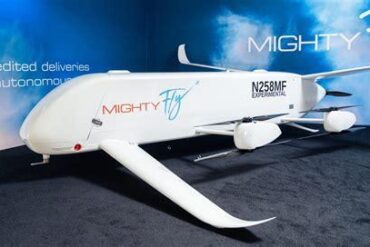
The result was the Black Swan, a fixed-wing drone with a wingspan of 16 meters and capable of carrying 350kg (770 lbs) of payload. It offers a range of 2,400km (1,550 miles), far outpacing smaller electric drones and rivaling regional cargo planes. Designed to carry as much cargo as a delivery van, the Black Swan integrates seamlessly into current logistics frameworks, without requiring airports or runways.
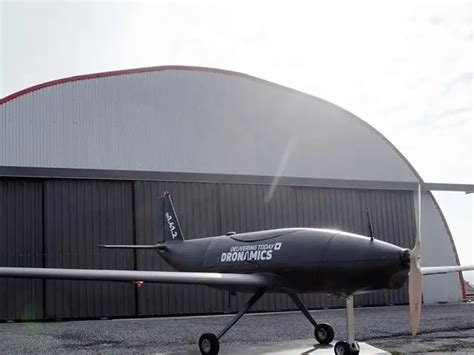
Currently, Dronamics uses Sustainable Aviation Fuel (SAF) but plans a future transition to hydrogen fuel cell propulsion, enhancing environmental performance and aligning with global decarbonization goals.
Pyka’s Pelican Cargo: A Modular Electric Alternative
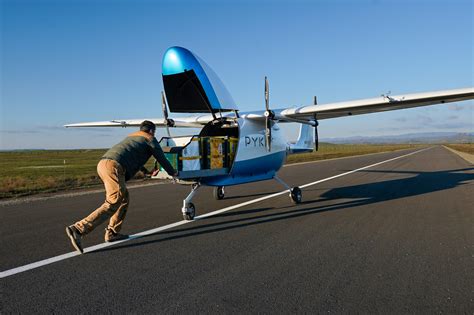
While Dronamics focuses on endurance and payload, Pyka emphasizes sustainability and flexibility. Originally developed for agriculture, Pyka’s Pelican Spray inspired the creation of the Pelican Cargo, an electric cargo drone with a payload capacity of 180kg (400 lbs) and range of 320km (200 miles).
Although smaller than the Black Swan, the Pelican is notable for its modular design, nose-loading configuration, and battery-swapping capabilities. It was created in direct response to market demand from e-commerce and logistics operators, who sought lightweight aircraft with fast deployment times and minimal environmental impact.
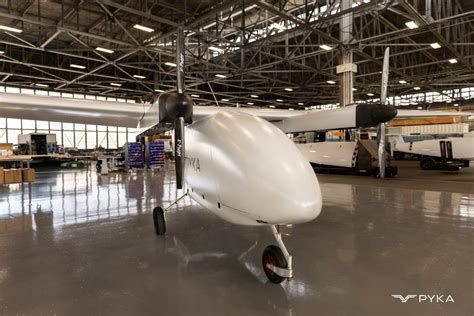
Unlike retrofitted aircraft, the Pelican was engineered from the ground up for cargo use. Its structure supports quick configuration changes, making it adaptable across a range of missions from postal delivery to offshore energy resupply.
Why Fixed-Wing UAVs Lead the Market
While VTOL drones have advantages in short-range and vertical access scenarios, most heavy-lift drone developers are currently prioritizing fixed-wing configurations. The reason is simple: range and payload. Fixed-wing aircraft are more energy-efficient, provide longer endurance, and carry heavier loads than rotor-based systems.
This distinction is particularly relevant for operators in sectors like:
-
Mining, oil, and gas (as seen with Drone Delivery Canada)
-
Offshore renewables, exemplified by Ørsted’s wind turbine resupply missions
-
Postal and parcel logistics, where long-haul capabilities and predictable routing are critical
Regulatory Bottlenecks and Progress
Despite technological readiness, the pace of regulatory change remains the primary barrier to widespread drone deployment. In the European Union, the European Union Aviation Safety Agency (EASA) has started granting Beyond Visual Line of Sight (BVLOS) permits, but actual deployment still depends on each nation’s civil aviation authority.
In the United States, the Federal Aviation Administration (FAA) is proceeding cautiously. In 2023, it approved the first BVLOS operations for just three companies, including UPS Flight Forward. This piecemeal progress highlights the slow, complex nature of integrating autonomous flight into national airspaces.
Meanwhile, the UK government is expected to enable full-scale BVLOS by 2025. For now, projects like the Royal Mail–Skyports trials operate in segregated airspace, but such zones are temporary and unsustainable for permanent services.
Design Matters: Cargo Volume vs. Payload Mass
An essential insight from Dronamics’ development journey is the importance of internal volume over just payload weight. Traditional aircraft designs like the Cessna prioritize human comfort, which limits cargo volume. By contrast, purpose-built drones optimize fuselage shape and loading access for maximum parcel density.
Similarly, Pyka’s decision to include nose-loading and bottom-mounted batteries reflects a deliberate shift toward logistics-centric architecture. These designs prioritize fast reloading, turnaround time, and compatibility with existing warehouse infrastructure.
The Market Ahead: Demand, Adoption, and Competition
According to Frost and Sullivan, a heavy-lift drone is defined as one capable of carrying at least 25kg (55 lbs), although most current platforms aim for 100kg+ capacities. Early adopters include:
-
Logistics giants: DHL, UPS, FedEx
-
Energy firms: offshore operations
-
Defense agencies: which face fewer regulatory constraints
As the cost of electric propulsion declines and hydrogen fuel cells mature, we anticipate a rapid expansion of aerial freight corridors, particularly in underserved and remote regions.
However, market education remains critical. As Volker Fabian of Pyka states, the cargo drone is not a direct replacement for any single aircraft. It requires reimagining supply chains, adjusting operational models, and training stakeholders to capitalize on UAV flexibility.
FAQs About Cargo Drones
What is the primary advantage of using cargo drones for logistics?
Cargo drones offer autonomous, cost-efficient, and environmentally friendly alternatives to traditional cargo aircraft. By removing the need for pilots and complex life support systems, they reduce operational costs while offering faster delivery across hard-to-reach areas.
How far can heavy-lift cargo drones fly?
This depends on the platform. For example, the Dronamics Black Swan can fly up to 1,550 miles (2,400 km), while Pyka’s Pelican Cargo, being fully electric, has a range of around 200 miles (320 km). Fuel type, weight, and design architecture heavily influence range.
Are cargo drones allowed to fly over cities?
Not yet in most jurisdictions. Regulatory bodies like the FAA and EASA currently limit BVLOS operations, especially over populated areas. However, regulations are evolving, and many countries plan to expand allowances for commercial drone flights by 2025.