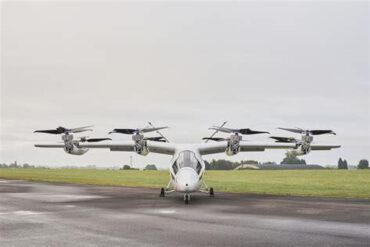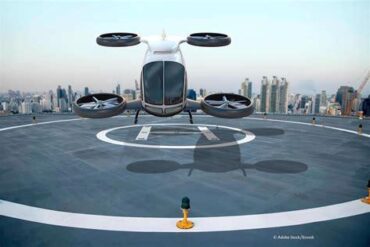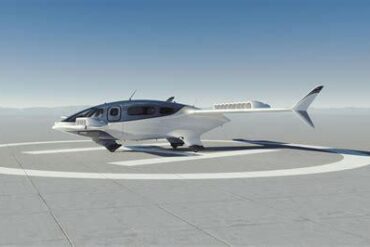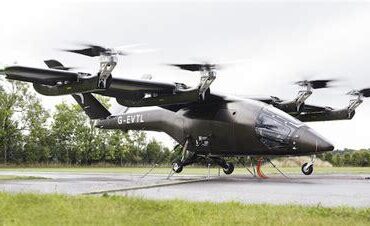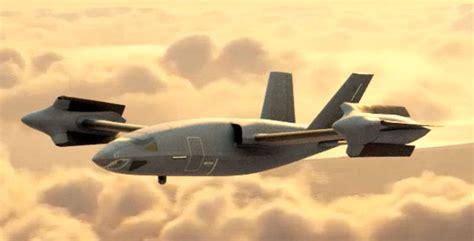
High-Speed Vertical Takeoff and Landing (HSVTOL) aircraft represent a paradigm shift in military and aerospace operations, combining the hovering capability of helicopters with the speed and range of jet-powered aircraft. Spearheaded by Bell Textron, a leader in aviation innovation, HSVTOL aircraft are purpose-built to meet the complex mission requirements of modern and future combat environments. Through next-generation digital design, scalable configurations, and unmatched operational flexibility, HSVTOL is set to transform how aerial mobility is conceptualized and deployed.
Bell’s HSVTOL technology leverages over eight decades of pioneering aeronautical engineering, drawing lineage from historic milestones such as the Bell X-1, the first aircraft to break the sound barrier, and the revolutionary XV-15, which laid the groundwork for tiltrotor aircraft. The result is a new breed of high-speed, vertical lift aircraft capable of operating independently of traditional runways, allowing rapid deployment from austere, damaged, or sea-based locations.
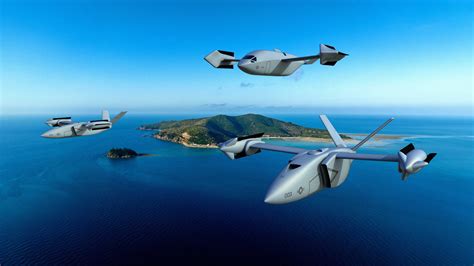
The Evolution of Vertical Lift: From Concept to Combat Readiness
Bell’s journey in HSVTOL development began in the 1960s with preliminary design concepts and progressed through a series of key technological demonstrations over subsequent decades. These advancements included convertible engine feasibility, rotor technology trials, and airframe refinements, culminating in today’s near-operational prototypes. The most recent milestone, a technology demonstrator flight test, represents a crucial step toward full fielding within the next several years.
Unlike traditional VTOL or CTOL aircraft, HSVTOL platforms provide modular takeoff and landing options:
- VTOL: Full vertical lift capability from land, sea, or urban rooftops.
- STOL: Short field operations within 200–400 feet.
- CTOL: Jet-powered takeoffs using conventional runways, reducing vertical system wear and enhancing payload capacity.
These modes enable strategic mission planning and logistical flexibility, especially in contested environments where infrastructure is minimal or compromised.
Engineering Excellence: Folding Rotor and Split Propulsion Architecture
At the core of HSVTOL’s transformative capabilities lies Bell’s folding rotor system, a masterstroke of aeronautical engineering. This rotor design enables seamless transitions between vertical lift and jet-powered cruise, reducing aerodynamic drag and enabling jet-like performance during flight.
Key hover specifications include:
- Downwash velocity: 60–90 mph
- Disk loading: 10–25 lbs/ft²
- Hover efficiency: 4–6 lbs/hp
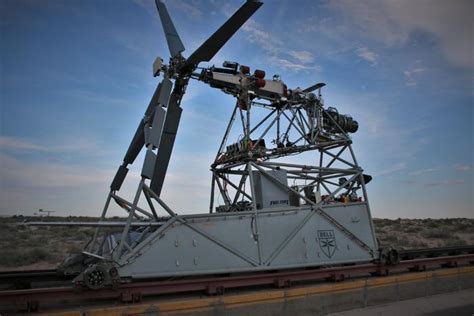
Powering this innovation is Bell’s split propulsion engine architecture, which uses off-the-shelf, power-dense engines to drive both lift and cruise. Unlike futuristic concepts that rely on unproven electric propulsion, HSVTOL employs mature propulsion systems, enabling faster deployment and reduced development risks. Future iterations may integrate convertible shaft-turbofan engines to optimize thrust-to-weight ratios and fuel efficiency.
Runway Independence: Enabling True Tactical Agility
Runway independence is no longer a luxury—it is a strategic imperative. HSVTOL aircraft can operate from damaged airstrips, rugged terrain, and sea-based platforms, allowing commanders to disperse forces and evade targeting by enemy surveillance and missile systems. This unmatched mobility ensures a higher operational tempo and the ability to strike or recover personnel from otherwise inaccessible regions.
The Pacific theater, with its vast oceanic expanse and dispersed island bases, serves as a prime example of where HSVTOL can deliver game-changing advantages. Whether enabling Logistics Under Attack, ISR/Strike missions, or SOF Mobility, HSVTOL offers rapid response and reduced infrastructure dependence, reinforcing its value in future conflict scenarios.
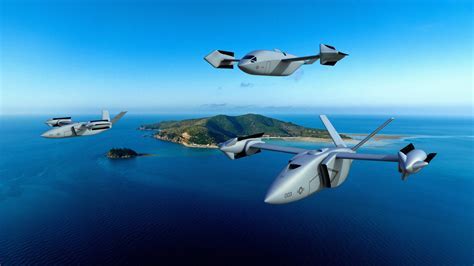
Mission Survivability Through Stealth and Advanced Systems
HSVTOL platforms integrate low-observable technologies, digitally controlled flight surfaces, and mission-adaptive software to enhance survivability in high-threat environments. The minimized acoustic and thermal signature during cruise and terminal operations ensures a stealthier profile, while integrated defensive systems provide electronic warfare support and countermeasures against both radar and infrared-guided threats.
In high-risk mission sets like aeromedical evacuation or personnel recovery behind enemy lines, this survivability ensures that the aircraft—and more importantly, its crew and cargo—complete their missions successfully and safely.
Digital Prototyping: Accelerating Time to Field
Bell’s use of model-based design and simulation tools allows rapid development and validation of complex HSVTOL configurations. A collaborative design ecosystem, involving government partners and defense stakeholders, ensures alignment with real-world mission needs from the earliest design phases.
The digital twin approach not only reduces physical prototyping costs but also speeds up testing cycles, allowing faster iteration and refinement. Combined with Bell’s in-house rapid manufacturing capabilities, the HSVTOL development timeline has been significantly compressed—bringing this transformative capability closer to operational deployment than ever before.
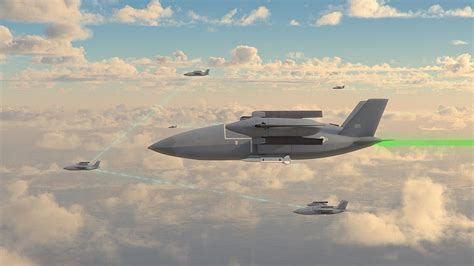
Scalability for Multi-Mission Versatility
One of HSVTOL’s most notable advantages is its scalability across a wide range of mission profiles. Bell’s concept aircraft are designed to support gross weights ranging from 4,000 lbs to over 100,000 lbs, enabling everything from unmanned ISR drones to tactical troop transports and cargo haulers. This makes HSVTOL not merely a technology demonstration but a platform family capable of addressing multiple strategic priorities.
Potential mission sets include:
- ISR/Strike Operations
- Special Forces Infiltration/Exfiltration
- Personnel Recovery
- Aeromedical Evacuation
- Disaster Response and Humanitarian Aid
This multi-mission flexibility ensures that defense planners can field a single adaptable platform across different theaters and threat scenarios, reducing fleet complexity and support logistics.
Why Not Electric? A Practical Perspective
While electrification and eVTOL platforms are being aggressively explored, current limitations in power density, battery energy storage, and electrical distribution prevent them from delivering the speed, range, and payload capacity required for high-performance HSVTOL missions.
Bell’s HSVTOL strategy avoids reliance on nascent technologies, choosing instead to prioritize performance and readiness using propulsion solutions that are already available and scalable. Nonetheless, the company remains invested in long-term electrification research, particularly for urban air mobility and short-range VTOL concepts where such systems show greater promise.
A Legacy of Innovation: Bell’s HSVTOL Lineage
Bell has played a defining role in the evolution of vertical lift. The development of HSVTOL technology is a natural extension of its historic innovation trajectory, which includes landmark aircraft such as:
- X-1: First aircraft to break the sound barrier
- XV-15: Precursor to the V-22 Osprey
- X-14, X-22, Bell 533, TR911X: Experimental VTOL and high-speed configurations
Each of these platforms contributed critical knowledge and validated concepts that now underpin HSVTOL’s success. Bell’s track record proves its capability to deliver disruptive aircraft that reshape military aviation.
Conclusion: Shaping the Future of Aerial Dominance
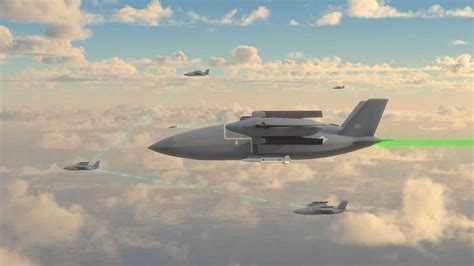
High-Speed Vertical Takeoff and Landing aircraft represent more than a technological leap—they symbolize a new strategic doctrine in aerospace and military operations. With unmatched runway independence, extreme speed and range, and true multirole versatility, HSVTOL platforms offer an unrivaled operational edge in both conventional and asymmetric warfare environments.
As global conflicts grow more complex and unpredictable, the ability to project force rapidly and flexibly from any location becomes a critical enabler of mission success. Bell’s HSVTOL aircraft, powered by proven engineering and cutting-edge design, are poised to become the cornerstone of next-generation mobility and air dominance.