Barrier Air is one of New Zealand’s most resilient and essential regional airlines, operating a compact but crucial network that connects remote communities with larger urban centers. Headquartered in Auckland, this privately operated carrier plays a strategic role in domestic connectivity, especially for Great Barrier Island. With a history stretching back to 1983 and a focus on consistent service, Barrier Air has become a symbol of perseverance in New Zealand aviation.
A Historic Flight Path: From Great Barrier Airlines to Barrier Air
Founded in 1983 by Jim Bergman, the company began life as Great Barrier Airlines, flying with a modest fleet of a Cessna 172, a Cessna 206, and a DHA-3 Drover. The maiden commercial flight took off on 2 December 1983, linking Ardmore Airport to Great Barrier Island. These early efforts laid the groundwork for a legacy that would span four decades.
Within a year, Barrier Air expanded services to Okiwi Airfield and began incorporating Britten Norman Islander aircraft into its operations. Over time, the network grew to include destinations like Whangārei, Waiheke Island, Rotorua, Taupō, and Paihia. Despite these expansions, the airline’s identity remained firmly anchored to Great Barrier Island.
Fierce Competition and Market Consolidation
A pivotal dynamic in Barrier Air’s history was the rivalry with Fly My Sky, a competing airline that also serviced Great Barrier Island. This commercial battle, which extended over two decades, became legendary in New Zealand aviation, driving prices down even amid surging aviation fuel costs. By January 2008, ticket prices remained similar to 1998 levels despite fuel price increases.
The rivalry eventually ended in 2021, when Fly My Sky entered liquidation, leaving Barrier Air as the sole commercial operator to the island. This victory not only solidified Barrier Air’s market share but also allowed it to recalibrate its routes and fleet.
Modern Fleet: Cessna Grand Caravan Dominance
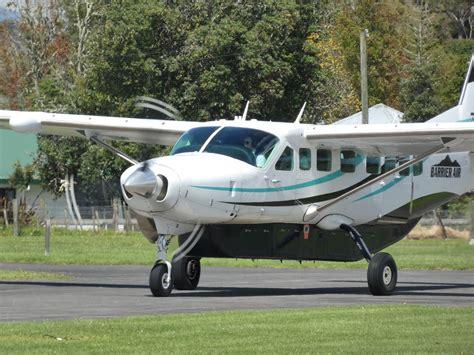
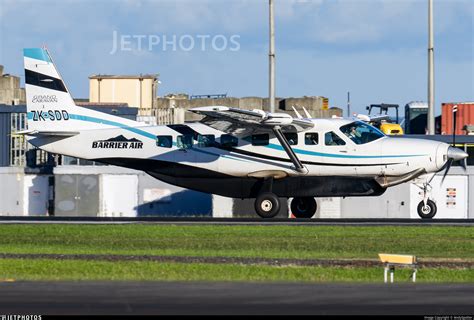
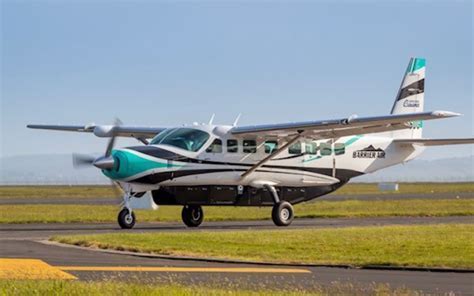
As of 2024, Barrier Air operates a uniform fleet of six Cessna 208B Grand Caravans, each capable of seating 13 passengers. This single-type strategy allows for streamlined maintenance, training, and operations — a practical choice for a regional airline serving short-haul routes.
The shift to an all-Grand Caravan fleet occurred gradually, with the retirement of older types such as the Britten Norman Islander, Trislander, and various Piper and Cessna aircraft. The Caravan’s reliability, short takeoff capability, and cargo flexibility make it ideal for the rugged airstrips Barrier Air frequently services.
Route Network: Connecting the Remote and the Regional
Barrier Air’s route network is compact yet strategically important, focusing on destinations underserved by larger carriers. As of May 2024, its primary hub is Auckland Airport, with services to:
- Great Barrier Island (Claris Airport)
- Kaitaia
- Whitianga
- Kerikeri
- Tauranga
- North Shore
These destinations are not just touristic add-ons; they serve local residents, medical travelers, and essential workers who rely on year-round air access.
Additionally, Barrier Air resumed flights to Whitianga in December 2021, and by early 2023 had also added a Tauranga–Great Barrier Island route. This steady expansion shows a measured but growth-oriented strategy, always backed by demand signals.
Strategic Moves: Market Opportunity and Route Development
Barrier Air has continuously adapted to market gaps and underserved regions. In May 2024, it began Auckland–Kerikeri service to challenge the monopoly held by larger national carriers. This move not only injects much-needed competition but aligns with the airline’s history of identifying underserved or overpriced markets.
Such nimble moves have kept Barrier Air relevant and responsive in a volatile aviation landscape. It also reflects the company’s DNA — bold, opportunistic, and customer-focused.
Headquarters and Operational Reach
The airline’s main office is located at the Auckland Domestic Terminal, with satellite offices at Claris (Great Barrier), Kaitaia, and North Shore Aerodrome. This spread allows the company to maintain a hands-on presence in its primary markets, which is critical for customer service and operational responsiveness.
Former Destinations: An Evolving Strategy
Over the years, Barrier Air has served a broader list of destinations, many of which have since been dropped due to demand changes, operational challenges, or fleet adjustments. These include:
- Ardmore Airport (its first base of operation)
- Hamilton
- Ōkiwi
- Rotorua (via Tauranga)
- Taupō
- Waiheke Island
- Whangārei
- Paihia
- Thames
Each change reflects the airline’s strategic recalibration as it evolved from a local island service into a more regionally aligned player.
Fleet Evolution: From Vintage to Modern Simplicity
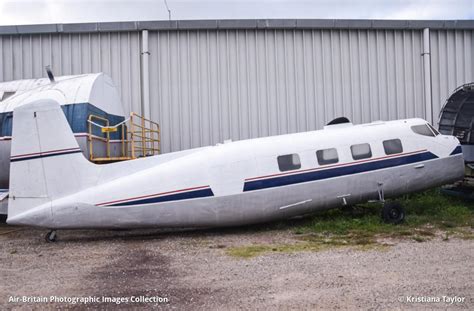
Barrier Air’s fleet history reads like a case study in regional aviation pragmatism. It has operated more than a dozen types of aircraft, from the de Havilland DHA-3 to the Embraer EMB-820C, and Piper Navajos. The complexity of a multi-type fleet was eventually traded for the efficiency and reliability of a standardized Grand Caravan fleet.

This evolution was not just about modernization — it was about aligning aircraft capabilities with the runway limitations and load requirements of remote airfields. The Grand Caravan’s rugged performance made it the obvious solution.
Operational Resilience and Customer Service
Barrier Air has built a reputation for operational resilience, maintaining consistent services even in challenging weather conditions and against commercial headwinds. By keeping its operations lean and localized, it ensures fast decision-making and a close connection with its customer base.
Its success lies in knowing its markets deeply — from the ferry-reliant residents of Great Barrier Island to retirees in Whitianga and business travelers in Tauranga. Flights are not just transit options; they are lifelines for remote communities.
Future Outlook: Sustainable Growth and Route Innovation
Looking ahead, Barrier Air is expected to maintain its incremental growth strategy, possibly exploring more inter-island and secondary city connections. With plans already hinted at for Auckland–Tauranga expansion, the carrier is watching market trends and regional demand with a hawkish eye.
In an age of airline consolidation and global standardization, Barrier Air’s nimble, regional-first model offers a refreshing counterpoint. Its adaptability, strategic thinking, and customer focus make it not only a survivor but a pioneer in New Zealand’s regional aviation landscape.