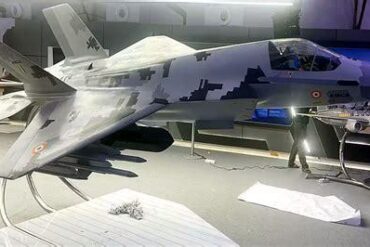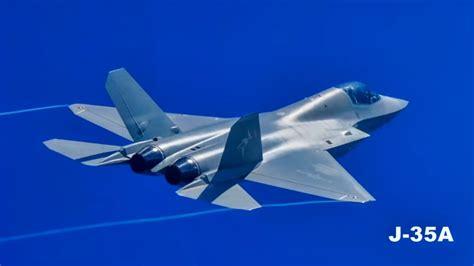
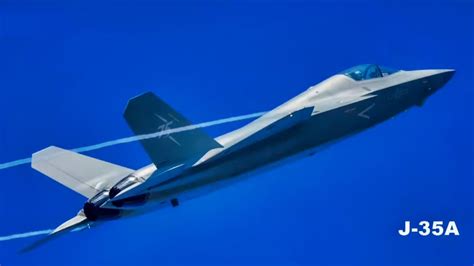
The geopolitical chessboard of South Asia is witnessing a potentially game-changing move, with credible reports suggesting that China may expedite the delivery of its J-35A stealth fighters to Pakistan. This development, purportedly solidified during Pakistani Foreign Minister Ishaq Dar’s visit to Beijing shortly after the contentious ‘Operation Sindoor’, has sent ripples across the strategic landscape, compelling India to re-evaluate its air power doctrine and accelerate its own next-generation fighter programs. While the feasibility of Beijing fast-tracking an aircraft still in its nascent production stages – with initial delivery timelines mooted for 2029 – remains a subject of intense debate, the mere suggestion has ignited concerns about a significant shift in the subcontinent’s air dominance dynamics. Is this a calculated move by the Pakistani military to bolster domestic morale following recent cross-border engagements, or a genuine strategic realignment backed by Chinese largesse? The answers remain shrouded in geopolitical ambiguity, but the implications for India are stark and immediate.
Adding to the complexity is Pakistan’s precarious economic situation, heavily reliant on IMF bailouts for basic sustenance. The question of how an economically challenged nation could afford such sophisticated and expensive military hardware is paramount. Speculation abounds: Is China gifting these advanced fighters to keep India perennially under pressure from multiple fronts? Or, as some analysts suggest, could this be a heavily discounted offering – perhaps as much as 50 percent off – a reward for Pakistan’s role in showcasing Chinese military aviation technology, such as the J-10CE fighters and PL-15 air-to-air missiles, in a favorable light during ‘Operation Sindoor’? Regardless of the financial mechanics, the potential induction of the J-35 into the Pakistan Air Force (PAF) would undeniably alter the regional military balance, prompting a heated debate within India’s strategic circles about its immediate and long-term countermeasures.
Meanwhile, India’s indigenous fifth-generation fighter, the Advanced Medium Combat Aircraft (AMCA), is projected for induction around 2035. This timeline, juxtaposed with China’s rapidly expanding fleet of J-20 stealth fighters – already numbering around 300 and growing by approximately 60 aircraft annually – underscores a widening capability gap. China, India’s primary strategic adversary, is not merely consolidating its fifth-generation strength but has also reportedly unveiled two sixth-generation fighter concepts, the Chengdu J-36 and Shenyang J-50, on December 26, 2024, signalling its ambitions for future air superiority. This relentless pace of Chinese military modernization necessitates a critical examination of India’s options, including the potential acquisition of an interim fifth-generation platform.
Deciphering the Enigma: What Defines a Fifth-Generation Fighter?
The advent of the fifth generation of fighter aircraft was heralded by the Lockheed Martin/Boeing F-22 Raptor’s entry into service in late 2005. These platforms represent a paradigm shift in aerial warfare, meticulously engineered from their inception to thrive in a network-centric combat environment. Their defining characteristic is an extremely low, all-aspect, multi-spectral signature, achieved through a sophisticated combination of advanced composite materials, radar-absorbent coatings, and innovative shaping techniques designed to minimize radar cross-section (RCS). Central to their operational prowess are multifunction Active Electronically Scanned Array (AESA) radars, which offer high bandwidth, resistance to jamming, and a low probability of intercept by enemy sensors. These are complemented by advanced Infrared Search and Track (IRST) systems and a suite of other sensors, all intricately fused to provide unparalleled Situational Awareness (SA), enabling the pilot to maintain a comprehensive 360-degree understanding of the tactical environment and continuously track multiple targets of interest. The avionics suites in these aircraft heavily rely on Very High-Speed Integrated Circuit (VHSIC) technology and high-speed data buses to process and disseminate vast amounts of information rapidly.
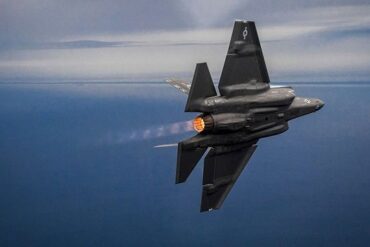
This seamless integration of stealth, advanced sensors, and powerful processing capabilities is what underpins the oft-cited “first-look, first-shot, first-kill” capability attributed to fifth-generation fighters. Beyond these core attributes, they possess high resistance to Electronic Countermeasures (ECM) and can even function as ‘mini-AWACS’ (Airborne Warning and Control System) platforms, collecting and distributing critical battlefield information. Other key features include integrated electronic warfare systems, sophisticated communications, navigation, and identification (CNI) suites, centralized ‘vehicle health monitoring’ systems for enhanced reliability and maintainability, and the extensive use of fibre-optic data transmission for high-speed, secure communication. Thrust vectoring technology is often incorporated to enhance maneuverability, particularly in close-quarters combat, and to reduce take-off and landing distances. Supercruise, the ability to sustain supersonic flight without the use of afterburners, is another hallmark, significantly extending operational range and reducing fuel consumption. To maintain their low-observable characteristics, primary armaments are carried in internal weapon bays. Modern stealth technology has evolved to a point where these signature-reduction measures can be implemented without imposing prohibitive trade-offs in aerodynamic performance. The costs, however, remain substantial: an F-22 Raptor comes with a price tag of around $227 million, while the F-35 Lightning II, despite larger production scales, averages about $95 million per unit, depending on the variant.
China’s own foray into this domain, the Chengdu J-20 ‘Mighty Dragon’, first took to the skies in January 2011, with combat units beginning induction in early 2018. Today, the People’s Liberation Army Air Force (PLAAF) operates a formidable fleet of nearly 300 J-20s. The Shenyang J-31, now officially designated the J-35 ‘Gyrfalcon’, first flew in October 2012. This twin-engine, medium-sized stealth fighter program has since received significant government funding and is being actively pursued by both the PLAAF and the PLA Naval Aviation (PLANAF) for carrier operations. Pakistan is now aggressively positioning itself to become its first international customer, a development that directly challenges India’s regional air superiority.
The Horizon Beckons: Understanding Sixth-Generation Fighter Technologies
As fifth-generation fighters become more prevalent, the world’s leading air powers are already deeply invested in conceptualizing and developing sixth-generation technologies. These future air combat systems promise another revolutionary leap in capabilities. Key advancements include highly sophisticated digital capabilities, high-capacity networking for seamless data exchange, advanced artificial intelligence (AI) for decision support and autonomous operations, comprehensive data fusion from disparate sources, integrated cyber warfare capabilities, and enhanced battlefield command, control, and communications (C3) functionalities. A significant emphasis is placed on increased speed and operational range, coupled with even more advanced stealth airframes and avionics. A critical design philosophy is modularity, allowing primary aircraft components to be swapped out rapidly to optimize for specific mission requirements and to facilitate easier integration of future upgrades. This is often supported by an open software architecture that separates flight-critical operations from other functionalities, enabling rapid software updates and capability enhancements.
The use of advanced Gallium Nitride (GaN) transistors in AESA radars is expected to provide significantly improved detection range and resolution. Sixth-generation fighters are being designed for increased battlefield survivability in highly contested Anti-Access/Area Denial (A2/AD) environments, with an enhanced capacity for ground support and attack missions adapted to future threat scenarios. While an initial focus on air superiority roles remains, the emphasis has shifted away from traditional close-in dogfighting, which is becoming increasingly rare, towards a broader spectrum of capabilities including ground support, cyber warfare, and even space warfare integration. The ability to deploy very long-range air-to-air missiles (VLRAAM) will remain a crucial element. A core design tenet is the flexibility to undertake both manned and unmanned missions, along with the capability to seamlessly integrate with and control large fleets of satellite drones and ground sensors within a high-traffic, networked environment, delivering a full ‘data-to-decision’ (D2D) capability. Most sixth-generation concepts feature single-seat cockpits, with basic flying and procedural training heavily reliant on advanced simulators. Some designs may be optionally manned, performing AI-supported missions, while manned fighters will likely control ‘Loyal Wingman’ unmanned aerial vehicles or swarms of drones for both offensive and defensive tasks. These aircraft will function as critical airborne network nodes, capable of receiving, processing, and relaying data to multiple platforms, including other aircraft, ground vehicles, and satellites, dynamically generating new target lists or updating mission parameters on the fly. Greater electrical power generation is also a key requirement, partly to enable the integration of Directed Energy Weapons (DEW), such as laser-based close-in-weapon systems (CIWS). Advanced pilot interfaces, like virtual cockpits utilizing helmet-mounted displays, will provide 360-degree vision and eliminate many traditional cockpit displays. Adaptive Versatile Engine Technology (AVET) is also being pursued to provide enhanced performance across different flight regimes. The overall sixth-generation strike capability is envisioned as a ‘system of systems,’ encompassing communications, space capabilities, and both standoff and stand-in engagement options.
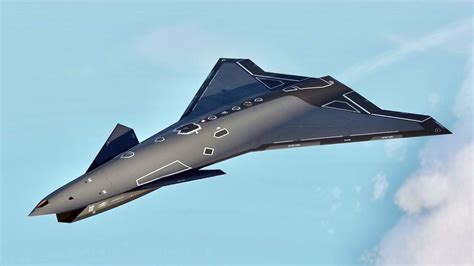
Global Powers Charting the Sixth-Generation Course
China has already made significant strides, with reports of its sixth-generation aircraft, the Chengdu J-36 (a tri-jet, tailless, double-delta winged design) and the Shenyang J-50 (featuring a cranked arrow configuration with sharply swept lambda wings), having already undertaken initial flight tests. This rapid progress underscores Beijing’s ambition to leapfrog existing technologies and establish a dominant position in future air combat.
Across the Pacific, the United States is pursuing its Next Generation Air Dominance (NGAD) program. On September 14, 2020, the USAF revealed it had secretly designed, built, and flown at least one prototype NGAD fighter. More recently, on March 21, 2025, as per reference material, then-President Trump announced that the centerpiece of this program would be the F-47, with Boeing awarded the engineering and manufacturing development contract, valued at over $20 billion. The Boeing F-47, an air superiority sixth-generation fighter, is slated to succeed the venerable F-22 Raptor. The USAF aims to field this advanced aircraft by the end of the current decade, with plans to procure “185-plus” F-47s. Key performance parameters include a combat radius exceeding 1,000 nautical miles and a top speed greater than Mach 2. A critical capability will be its ability to penetrate deeply into an enemy’s A2/AD bubble, placing a premium on range and overall endurance.
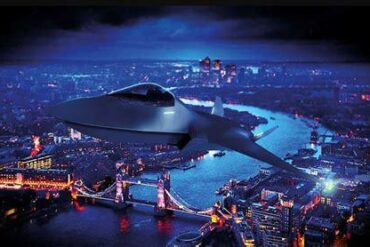
Europe is also actively engaged in developing its own sixth-generation capabilities through multinational collaborations. The Global Combat Air Programme (GCAP) is a prominent initiative led by the United Kingdom, Japan, and Italy. In December 2023, these three nations signed a treaty to jointly develop a common fighter jet, effectively merging their previously separate sixth-generation projects, such as the UK-led Tempest (developed with Italy) and Japan’s Mitsubishi F-X. The current timeline envisages the formal development phase commencing in 2025, a demonstrator aircraft flying by 2027, and production aircraft entering service in 2035. Notably, India is reportedly being wooed to join the GCAP consortium, presenting a potential avenue for collaboration.
Another significant European endeavor is the Future Combat Air System (FCAS), a French-German-Spanish initiative (with Italy also involved, though the reference highlights its GCAP participation) being developed by Dassault Aviation, Airbus, and Indra Sistemas. The FCAS will comprise a Next-Generation Weapon System (NGWS) and other air assets designed for the future operational battlespace. The core components of the NGWS will be remote carrier vehicles (swarming drones) and a New Generation Fighter (NGF), a planned sixth-generation jet intended to replace France’s Rafale and Germany and Spain’s Eurofighter Typhoons. A test flight of a demonstrator is anticipated around 2027, with the aircraft expected to enter service around 2040.
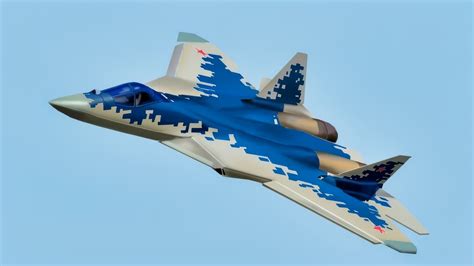
Russia’s Su-57 ‘Felon’: A Contender with a Complex Past
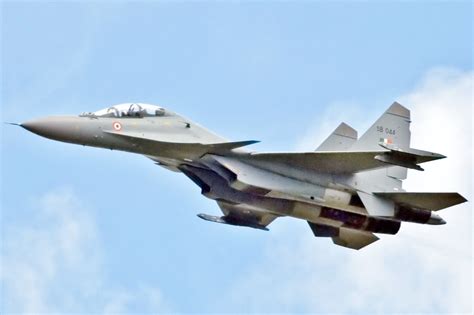
Russia’s primary fifth-generation offering is the Sukhoi Su-57 ‘Felon’. This aircraft evolved from the Indo-Russian Fifth Generation Fighter Aircraft (FGFA) program, for which a contract was signed in October 2007. The FGFA itself was an evolution of Russia’s PAK FA project. However, by 2014, the Indian Air Force (IAF) began to express significant concerns regarding the Su-57’s performance parameters, development costs, and the proposed work-share agreement. Ultimately, India found that the aircraft, in its then-current state of development, did not meet its stringent requirements and formally withdrew from the partnership in 2018. Sukhoi, however, continued to develop the Su-57, promoting it to prospective export customers. The export variant, designated Su-57E, was officially unveiled at the MAKS-2019 air show. The Su-57 has been showcased at numerous international airshows, including events in China and India. The first operational unit within the Russian Aerospace Forces was reportedly formed in 2021. It is designed as a multi-role aircraft with significant air-to-air and ground attack capabilities. The aircraft were first reported to have been used in combat during the Syrian campaign in 2018, and Russia has subsequently claimed that the Su-57 has seen significant combat employment in the ongoing conflict in Ukraine. Approximately 42 Su-57s are believed to have been produced to date, with nearly 30 more reportedly on order. Production numbers are expected to increase as the program matures further.
India’s AMCA: The Flagship of Indigenous Air Power Ambitions
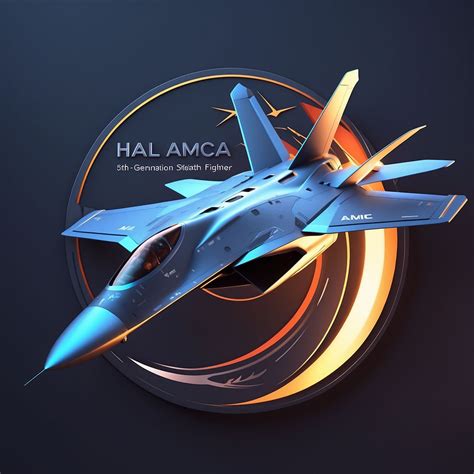
India’s answer to the evolving aerial threat landscape is the Advanced Medium Combat Aircraft (AMCA). Envisioned as a twin-engine, single-seat, stealth multirole air superiority fighter, the AMCA is also designed for ground-strike, Suppression of Enemy Air Defences (SEAD), and Electronic Warfare (EW) missions. Designed by the Aeronautical Development Agency (ADA), it is slated to be manufactured through a public-private joint venture involving ADA, Hindustan Aeronautics Limited (HAL), and a yet-to-be-selected Indian private company. The initial development cost is estimated at around ₹15,000 crore (approximately $2 billion). A major milestone was achieved in March 2024 when India’s Cabinet Committee on Security (CCS) approved the project for prototype development, with mass production anticipated to commence by 2035.
The AMCA’s development will proceed in two distinct phases: AMCA Mk-1 and AMCA Mk-2. The primary differences will lie in the level of indigenous content and the incorporation of futuristic features. The AMCA Mk-2 will place a greater emphasis on enhanced stealth characteristics, advanced EW suites, and a futuristic pilot-AI interface. It is also planned to feature Directed Energy Weapons and thrust-vectoring engines with a serrated nozzle pattern for reduced infrared signature. Crucially, the Mk-2 variant is expected to incorporate select sixth-generation technologies to ensure its relevance in the decades to come. The AMCA is ultimately intended to replace the IAF’s aging Sukhoi Su-30MKI fleet. The design of the AMCA is optimized for a low radar cross-section and supercruise capability. The aircraft successfully completed its systems-level Critical Design Review (CDR) in 2022, and metal cutting for the initial prototypes has already commenced. The Defence Research and Development Organisation (DRDO) expects to roll out the first prototype by 2027, with the maiden flight projected for 2029. The first three prototypes will be dedicated to developmental flight trials, while the subsequent two will focus on weapon integration and trials. These prototypes are expected to be rolled out sequentially over an 8-9 month period. The IAF has expressed an initial requirement for at least 125 AMCA aircraft in both Mark-1 and Mark-2 configurations.
Navigating the Present: India’s Fighter Technology Landscape and the Interim Dilemma
India has made commendable progress in developing its indigenous fighter aircraft manufacturing ecosystem. Most airframe components for aircraft like the Tejas LCA are now made in India. However, critical systems such as aero-engines are still largely imported, though efforts are underway to develop indigenous powerplants. Some advanced avionics and airborne radar systems are being co-developed or manufactured through joint ventures with friendly foreign nations. The weapon systems are increasingly indigenous, with notable successes like the BrahMos supersonic cruise missile (an Indo-Russian Joint Venture) and the Astra series of air-to-air missiles. Sixth-generation technologies are currently on the drawing board. Despite these advancements, challenges persist. The induction of the LCA Mk1A has been running behind schedule for approximately 15 months, an issue not solely attributable to aero-engine supply. This situation might compel the IAF to accept the Mk1A with certain concessions to maintain squadron strength. Indigenous aircraft are, nevertheless, intended to form the backbone of the IAF and Indian Navy’s manned tactical airpower in the coming decades. Recognizing the urgency, the Ministry of Defence (MoD) had established a high-level committee to address the IAF’s fighter shortages, examine deficiencies in weapons and other equipment, and propose solutions, including accelerating indigenous production and selectively inviting foreign collaborations. While the committee’s report has been submitted, its specific recommendations are not yet in the public domain.
This brings into sharp focus the critical question: Does India require an interim imported fifth-generation fighter? India faces a uniquely challenging security environment, with two nuclear-armed adversaries, China and Pakistan, with whom it has unresolved territorial disputes and a history of conflict. China’s J-20 fleet is not only large but expanding rapidly, with projections suggesting it could reach 1,000 aircraft by 2030 – the year the AMCA is optimistically slated for its first flight – and potentially 1,500 by 2035, when the AMCA’s series production is expected to begin. Pakistan, despite its economic woes, is actively pursuing the Chinese J-35A and reportedly has around 200 technicians and engineers collaborating with Turkish Aerospace Industries (TAI) on Turkey’s own fifth-generation aircraft program, the TF-X Kaan. This creates a paradoxical situation where a nation with a struggling economy might field a fifth-generation fighter before India, currently the world’s fourth-largest economy.
Several options for an interim solution are being debated. The United States has previously indicated a willingness to offer its F-35 Lightning II, with former President Trump making such an announcement. However, no formal dialogue appears to have commenced. Complicating this is India’s acquisition of the Russian S-400 Triumf air defence system, a move that led the US to refuse F-35 sales to its NATO ally, Turkey. The S-400’s advanced sensors are reportedly capable of gathering critical electronic signature data from the F-35, a concern for Washington. Furthermore, the US may prefer India to first commit to a 4th-generation American fighter through the ongoing Multi-Role Fighter Aircraft (MRFA) competition before considering an F-35 sale. The complex geopolitics, coupled with Indian wariness about potential US arm-twisting or strategic abandonment if interests diverge, make this a challenging proposition. Nevertheless, back-channel consultations for a limited acquisition, perhaps two squadrons of F-35s, could be explored.
The second prominent option is to re-engage with Russia for the Su-57 ‘Felon’. The aircraft is maturing, and Russia has reportedly offered to set up production facilities in India, along with a comprehensive transfer of technology. The Su-57 has seen combat action, providing valuable operational feedback. However, Russian production rates are still relatively slow, and the ongoing war in Ukraine has placed immense strain on its defence industrial base. Western sanctions also create significant hurdles for payment mechanisms, and India’s increased oil imports from Russia have already skewed the balance of payments. Moreover, with approximately 60 percent of the IAF’s current fighter fleet being of Russian origin, there might be a strategic reluctance to further increase this dependency.
The Imperative for AMCA’s Success and India’s Strategic Path Forward
As China’s air combat capabilities continue their inexorable growth, regional powers like Japan, South Korea, and India are compelled to invest more substantially in their own advanced fighter aircraft programs to maintain a credible deterrent. The technological and capability gap between China and India in military aviation is widening at an alarming rate, threatening to become unbridgeable in the near future if decisive action is not taken. A superior Chinese air force would possess a greater ability to penetrate Indian airspace with reduced chances of detection, fundamentally altering the strategic calculus.
With the F-35 remaining an uncertain prospect and Russia facing its own constraints, the Su-57 emerges as a potentially more accessible interim option, especially if coupled with robust technology transfer and co-production agreements. The GCAP, while a promising sixth-generation program, involves partners who are close US allies; they might eventually pivot to the American F-47 if it becomes available or be heavily influenced by US technology, potentially limiting India’s strategic autonomy within the consortium. If India is to safeguard the long-term viability and strategic independence of its AMCA program, an interim fighter acquisition could provide crucial breathing room and technological insights. The Su-57, despite its past complexities with the FGFA, might represent the more pragmatic choice under current circumstances.
Undoubtedly, India’s ‘Atmanirbharta’ (self-reliance) initiative will continue to drive indigenization efforts. For India to truly cement its position in the league of major air powers, the AMCA program must succeed, and succeed emphatically. This requires a dedicated, concurrent development effort alongside the LCA Mk2, managed by a separate, empowered team. A ‘whole-of-nation’ vision and approach are essential, with the swift induction of a capable private sector partner. Designating a specially selected CEO with full authority to build a team, establish clear end-states and timelines, and conduct regular, rigorous path-line reviews is crucial. Adequate and uninterrupted funding must be ensured, along with a willingness to acquire critical technologies from abroad if necessary to expedite development. A significant increase in R&D spending is also paramount.
Recent air operations, including ‘Operation Sindoor’ and the conflict in Ukraine, have highlighted that in peer-level combat scenarios, both sides may find it exceedingly difficult to achieve air superiority or freely penetrate adversary airspace. This suggests a potential strategic utility in rapidly building a large inventory of advanced 4.5-generation fighters, such as the indigenous LCA Mk2 and additional Rafales, complemented by the acquisition of long-range air-to-surface missiles like the BrahMos II and extended-range air-to-air missiles such as the Astra III or the Russian R-37M. These assets can provide a potent standoff capability and enhance defensive posture while next-generation platforms are developed and inducted.
Ultimately, India must act with a sense of urgency. The strategic environment waits for no one. Russia has not only offered to co-develop Su-57 fighters in India, potentially leveraging existing Su-30MKI manufacturing infrastructure, but has also reportedly pledged assistance for the AMCA program. These offers warrant serious and swift consideration. The decisions made today will determine India’s air power capabilities and its ability to safeguard its sovereignty and strategic interests for decades to come. The time for decisive action is now.