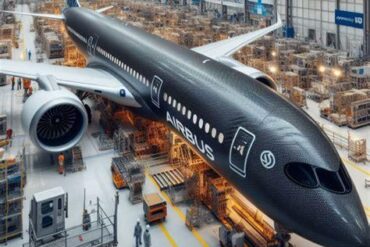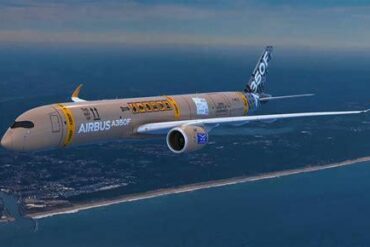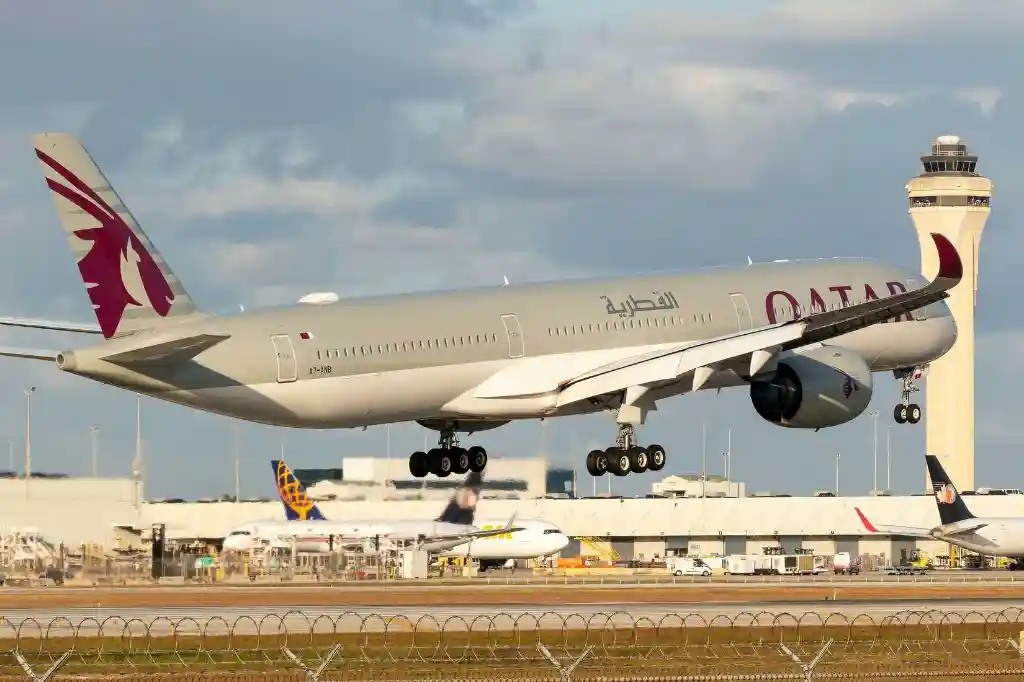
The Airbus A350 was designed around an idea that has transformed modern long-haul aviation: make the airplane lighter without sacrificing the strength needed to carry passengers across oceans for hours at a time. That philosophy is visible throughout the aircraft, but nowhere is it more important than the fuselage. Unlike older widebody aircraft that rely heavily on aluminum alloys, the A350 uses extensive carbon fiber-reinforced composite structures, giving it excellent strength, low weight, and resistance to corrosion and fatigue.
Those characteristics help explain why airlines such as Delta Air Lines, Qatar Airways, and Singapore Airlines use the A350 for some of the world’s longest routes. The aircraft can deliver substantial fuel savings compared with previous-generation widebodies while providing the structural efficiency needed for long-range operations. Yet there is an important trade-off hidden beneath that efficiency. When an A350 experiences a hard landing, damage that would be relatively obvious on an aluminum airplane can be difficult to see, diagnose, and repair on a composite airframe.
The issue is not that the A350’s carbon fiber fuselage is fragile. In fact, the opposite is true. Composite structures are exceptionally strong and can distribute loads over large areas. The problem is that the same characteristics that make them strong can also make damage less obvious. A hard impact may leave the painted exterior looking almost normal while creating defects inside the layered structure. That phenomenon, known as Barely Visible Impact Damage, fundamentally changes the way maintenance crews have to inspect the aircraft after a severe landing.
The Airbus A350 Was Designed Around Carbon Fiber Composites
The A350 represents a major departure from the construction philosophy used on aircraft such as the Airbus A330 and A340. Those earlier widebodies depend much more heavily on aluminum alloy structures, a material that has decades of established inspection and repair practices behind it. The A350 instead uses approximately 53% composite materials by weight, while advanced materials account for roughly 70% of its overall construction.
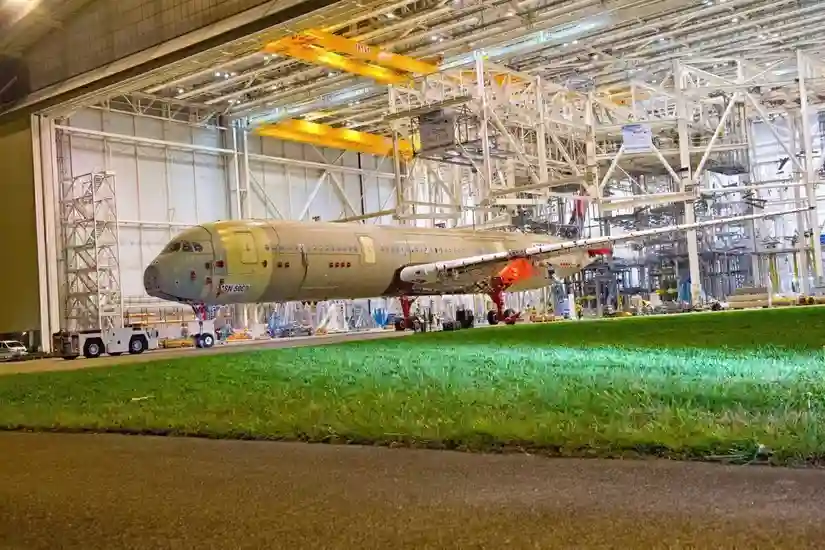
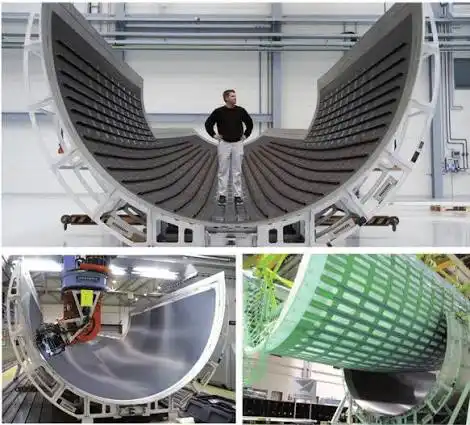
Large composite structures are found throughout the aircraft. The fuselage is one of the most important examples, but carbon fiber is also extensively used in the wings, center wing box, empennage, and tail cone. Rather than assembling an airframe from countless relatively small metallic panels, Airbus was able to manufacture much larger integrated structures.
This approach delivers several important advantages. Carbon fiber-reinforced plastic has an excellent strength-to-weight ratio, allowing engineers to achieve the required structural strength without carrying the same weight associated with a comparable metallic design. The resulting weight reduction contributes to lower fuel consumption, greater range, and additional payload capability.
Airbus has stated that the A350 can provide up to about 25% lower fuel burn and up to 1,500 nautical miles of additional range compared with the A330, depending on the comparison and configuration. The composite structure also avoids many traditional problems associated with aluminum, particularly corrosion and certain forms of fatigue cracking.
There is another advantage that is less obvious to passengers. Large composite structures can reduce the number of individual components and fasteners required during assembly. Fewer joints can mean fewer potential structural weak points and a more streamlined manufacturing process.
But there is a price for this structural efficiency. Aluminum generally provides maintenance personnel with obvious physical clues when it has been overloaded. It can bend, dent, buckle, or crack. Carbon fiber composites can behave very differently.
Why Carbon Fiber Can Hide Hard-Landing Damage
The most important concept in understanding A350 hard-landing damage is Barely Visible Impact Damage, or BVID. The name describes the problem remarkably well. A structure can experience meaningful internal damage while showing little evidence of that damage on its exterior surface.
Imagine an aluminum fuselage receiving a substantial impact. The metal may permanently deform, leaving a dent or other visible distortion. That does not automatically tell engineers everything they need to know, but it provides an immediate indication that something happened to the structure.
A carbon fiber laminate does not necessarily respond in the same way. The outer surface can remain relatively smooth while individual layers beneath it experience cracking, crushing, or separation. Resin within the composite can be damaged, and the bonds between layers can deteriorate without producing a dramatic mark on the aircraft’s skin.
That is particularly important because a composite airframe is not simply a solid block of carbon fiber. It consists of carefully engineered layers in which fibers and resin work together to provide specific structural properties. The orientation and arrangement of those fibers matter enormously.
When a hard landing produces an unusually high load, the force can travel through the structure rather than creating one obvious point of deformation. The result can be an internal damage pattern that is considerably larger or more complicated than what an engineer can see by standing beside the aircraft.
This is why a seemingly minor external mark cannot always be treated as a minor maintenance issue. Conversely, an aircraft that looks fine cannot necessarily be cleared simply because technicians cannot see a dent.
Why an A350 Hard Landing Triggers Ultrasonic Inspection
After a significant hard landing or other impact event, engineers need to determine whether the loads exceeded the conditions under which the aircraft can continue operating normally. On a composite airplane, that determination can require sophisticated non-destructive inspection methods.
Ultrasonic testing is particularly valuable because sound waves can travel through composite structures and produce information about what is happening below the surface. Technicians can analyze changes in the returned signal to identify abnormalities such as delamination, crushed material, or separation between layers.
The principle is similar to using sound to look inside a structure rather than simply looking at its exterior. A damaged region can produce a different ultrasonic response from an intact region, allowing inspectors to map areas that would otherwise be difficult or impossible to identify visually.
The challenge is the amount of work involved. Engineers may need to examine substantial sections of the aircraft rather than simply inspecting a visible dent. Depending on the circumstances, attention can extend to the lower fuselage, structural attachment areas, and other locations that could have experienced significant loads.
That process takes time. Specialized equipment and trained personnel are required, and the aircraft may remain grounded while the inspection is completed and the findings are evaluated. For an airline operating an expensive long-haul aircraft, every additional day on the ground can mean lost capacity, aircraft substitutions, schedule disruption, and additional maintenance costs.
The A350 is not defenseless against hard landings, however. Its landing gear incorporates an air-oleo shock absorber strut designed to absorb and distribute landing loads. The aircraft is also engineered with flexible composite wings that can move under load rather than behaving like completely rigid structures.
Airbus specifies structural inspection thresholds based on landing conditions, meaning not every firm touchdown automatically results in a major inspection program. The important point is that once an event exceeds the relevant limits or creates sufficient concern, engineers cannot rely solely on what the aircraft looks like from the outside.
Why Repairing Carbon Fiber Is Harder Than Repairing Aluminum
Finding hidden damage is only half the problem. Once damage has been identified, repairing it can be substantially more complicated than repairing a conventional aluminum structure.
Traditional metallic aircraft repair has benefited from decades of accumulated experience. Aluminum structures can often be cut, drilled, patched, fastened, and replaced using established techniques. Composite repair requires a different approach because the material derives its properties from carefully controlled layers and fiber orientations.
A damaged composite section may need to have compromised laminate material carefully removed. Technicians then have to rebuild the structure with replacement composite layers arranged according to the prescribed repair design. The process can involve bonding, drilling, fastening, and controlled curing, depending on the location and severity of the damage.
Environmental conditions matter too. Composite bonding and curing procedures can require carefully controlled temperature and humidity. A repair therefore cannot always be treated as a simple mechanical job that can be performed under whatever conditions happen to exist in a conventional maintenance hangar.
Fiber direction adds another complication. Carbon fiber is highly efficient precisely because engineers can place fibers where structural loads require them. Strength therefore depends partly on orientation. A repair that looks correct visually could still be structurally unacceptable if the replacement layers, bonding process, or curing conditions do not meet the required specifications.
This is one reason composite aircraft require specialized training and repair procedures. The objective is not merely to cover a damaged area. The repaired structure has to restore the engineered load paths that existed before the damage occurred.
The A350’s Three-Level Approach to Composite Repairs
Airbus developed a structured repair system for the A350 to deal with different types and levels of composite damage. The approach recognizes that not every defect requires the same response.
The least severe category covers cosmetic or non-structural damage. Scratches, paint damage, and certain surface defects may not affect the underlying strength of the aircraft. These problems can generally be addressed using relatively straightforward maintenance procedures, and temporary measures can sometimes be used while the aircraft moves to a suitable repair facility.
The next level involves structural damage that remains within defined repair limits. Depending on the affected area, technicians may use approved bonded or bolted repair methods. Temporary aluminum repairs may also be appropriate in specific circumstances before a permanent solution is installed.
The most demanding category involves major structural damage. Severe hard landings, ground equipment impacts, bird strikes, or landing gear incidents can produce damage that exceeds routine repair limits. In these situations, Airbus can provide Pre-Defined Repair Solution kits containing the necessary instructions, replacement parts, tools, and support equipment.
For particularly complicated cases, Airbus engineering personnel may become directly involved in the repair process. That illustrates an important difference between repairing a scratch on a conventional metal aircraft and restoring a heavily damaged composite structure: the latter can become an engineering project rather than a straightforward maintenance task.
The Qatar Airways A350 Dispute Showed the Complexity of Composite Damage
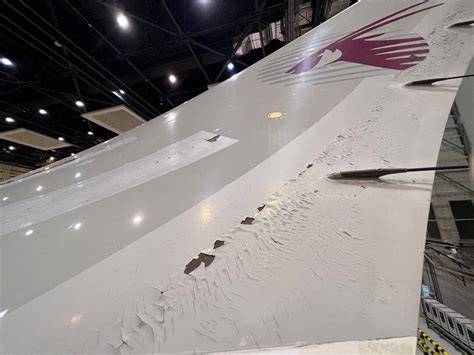
The difficulties associated with A350 composite maintenance became particularly visible during the Qatar Airways A350 grounding dispute that emerged in 2021. Qatar Airways raised concerns about deterioration affecting portions of its A350 fleet, including cracking of paint and exposure of the lightning protection mesh beneath the fuselage surface.
The dispute eventually resulted in regulatory action involving 13 Qatar Airways A350s being removed from service over concerns about deterioration beneath the paint layer. The episode was not simply about a conventional dent or hard-landing event, but it demonstrated a broader challenge associated with composite structures: determining how a visible surface condition relates to the integrity of the underlying material.
On an aluminum aircraft, maintenance teams have a long history of understanding corrosion, cracking, and other forms of surface deterioration. Composite structures introduce different failure mechanisms and require different inspection techniques. The industry has accumulated substantial experience with composites, but the technology is still much newer than the metallic construction methods used on generations of commercial aircraft.
The Qatar Airways episode therefore provided an important example of why composite-airframe maintenance cannot always be judged by appearance alone. A surface condition can require detailed engineering assessment before its significance is understood.
Why a Hard Landing Can Become a Major A350 Maintenance Event
The central issue with an A350 hard landing is not that carbon fiber cannot survive high loads. The aircraft is engineered specifically to handle enormous forces throughout its operational life. The problem is that structural damage can be hidden, and hidden damage requires additional inspection before engineers can determine whether the airplane is safe to return to service.
That changes the economics of an incident. A hard landing that produces no obvious damage may still trigger extensive ultrasonic inspections. If those inspections identify internal defects, technicians may need to remove damaged laminate, prepare the surrounding structure, install replacement material, and cure the repair under tightly controlled conditions.
The aircraft’s large integrated composite sections can make the process even more demanding. The same manufacturing philosophy that reduces weight and the number of individual components can make it harder to isolate and replace a damaged piece in the manner commonly associated with older aluminum construction.
In severe cases, the question may therefore shift from “How quickly can this dent be repaired?” to “How extensive is the hidden structural damage, and what approved engineering solution will restore the original load path?”
That is why describing the A350’s carbon fiber fuselage as “nearly impossible to repair” needs some qualification. The aircraft is absolutely repairable, and Airbus has established procedures, repair solutions, specialized equipment, and engineering support for dealing with composite damage. What makes severe damage difficult is the combination of hidden defects, extensive inspection requirements, specialized materials, controlled repair conditions, and the precision required to reproduce the structure’s original properties.
The Trade-Off Behind the A350’s Composite Fuselage
The A350 demonstrates one of the most interesting trade-offs in modern aircraft engineering. Carbon fiber composites help make the airplane lighter, more fuel-efficient, corrosion-resistant, and capable of operating long routes efficiently. Those benefits are central to why airlines have invested so heavily in the aircraft.
At the same time, composites change the maintenance equation. A metal airframe can reveal serious overload through obvious deformation, while a composite fuselage can retain a remarkably clean appearance despite damage hidden beneath the surface. That forces airlines to rely on sophisticated inspection techniques and highly controlled repair processes.
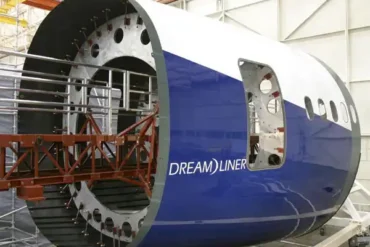
The Boeing 787 Dreamliner faces many of the same broad challenges because it also makes extensive use of composite materials. This is not evidence that composite aircraft are inherently less safe or less reliable. Rather, it reflects the reality that new materials require different methods of inspection, diagnosis, and repair.
The A350’s carbon fiber fuselage is therefore best understood as a technological trade-off rather than an engineering weakness. Its composite construction delivers major advantages every time the aircraft takes off, climbs to cruise altitude, and crosses an ocean. But when an unusually severe landing sends unexpected loads through the structure, the very material that makes the aircraft efficient can make the resulting damage much harder to see and repair.
That is the paradox of the modern composite airliner: carbon fiber can make an aircraft stronger and lighter in flight while making maintenance engineers work much harder to discover exactly what happened when something goes wrong.