The Airbus A350 is widely regarded as one of the most technologically advanced commercial airliners ever built. Designed to compete directly with the Boeing 787 Dreamliner, the aircraft introduced a new generation of lightweight construction methods centered around carbon fiber reinforced plastic. The result was a widebody jet capable of flying farther, burning significantly less fuel, and carrying more payload than many of its predecessors.
For airlines, the benefits have been enormous. Lower operating costs, improved range, reduced corrosion concerns, and enhanced passenger comfort have helped make the A350 a favorite among major carriers including Singapore Airlines, Qatar Airways, Cathay Pacific, Delta Air Lines, and Air France.
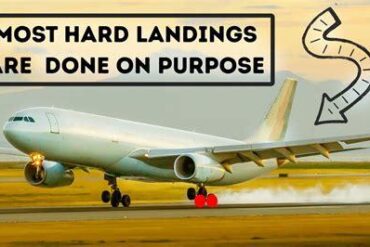
Yet the same carbon fiber fuselage that delivers these advantages also creates one of the aircraft’s biggest maintenance headaches. When an A350 experiences a severe hard landing, determining whether the structure has been damaged becomes far more difficult than it would be on a traditional aluminum aircraft. In many cases, the most serious damage cannot be seen at all.
The challenge is not simply finding damage. It is understanding where it exists, how extensive it is, and whether the aircraft can safely return to service. These complications have transformed hard-landing inspections into highly technical operations involving specialized equipment, trained composite technicians, and sometimes direct support from Airbus engineers.
The Airbus A350 Was Designed Around Carbon Fiber Technology
The A350 represents a major departure from earlier Airbus widebody designs. Aircraft such as the A330 and A340 relied heavily on aluminum alloys that had dominated commercial aviation for decades. While aluminum provided predictable performance and straightforward repairability, it also imposed limitations in terms of weight and long-term maintenance.
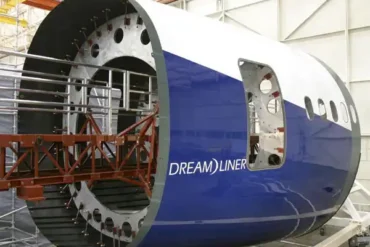
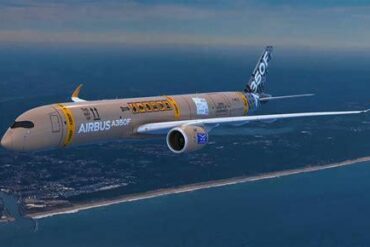
Airbus therefore embraced a different philosophy with the A350. Approximately 53% of the aircraft by weight consists of composite materials, while roughly 70% is made from advanced materials overall. Large portions of the fuselage, wings, empennage, center wing box, and tail structures are built from carbon fiber composites.
These materials offer an exceptional strength-to-weight ratio. Engineers can create structures that are lighter than aluminum while maintaining the rigidity required for long-haul flight operations. Every kilogram removed from an aircraft contributes to lower fuel consumption, improved payload capability, and increased operational range.
As a result, the A350 delivers fuel-burn reductions approaching 25% compared with previous-generation aircraft. Airlines can also operate routes thousands of kilometers longer while carrying substantial passenger and cargo loads.
Beyond efficiency gains, carbon fiber structures are highly resistant to corrosion and fatigue cracking. Traditional aluminum airframes gradually accumulate fatigue damage after years of pressurization cycles and environmental exposure. Composite materials behave differently, allowing manufacturers to reduce certain long-term maintenance requirements.
However, these advantages come with trade-offs. The biggest of them becomes apparent after significant impact events.
Why Carbon Fiber Behaves Differently During A Hard Landing
To understand the repair challenge, it is important to understand how composite materials react under stress.
When an aluminum aircraft experiences excessive loading during landing, the metal often provides visible warning signs. Dents, wrinkles, buckling, cracks, and deformations typically indicate where the structure absorbed the highest forces. Maintenance teams can visually identify suspect areas and focus their inspections accordingly.
Carbon fiber composites respond differently.
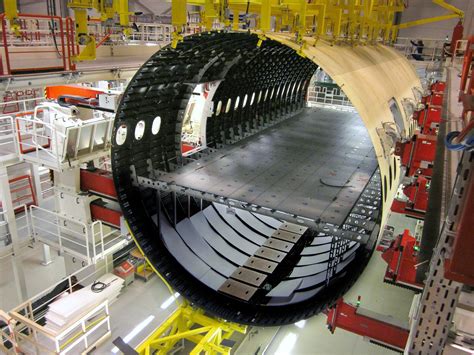
Rather than permanently deforming in the same way as metal, composite structures can distribute loads throughout multiple layers of material. These layers consist of carbon fibers embedded in resin and arranged in carefully engineered orientations. During a hard landing, the impact energy can travel through these internal layers, spreading forces across large sections of the airframe.
The exterior surface may remain remarkably intact even when internal structural damage has occurred.
This characteristic is one of the most significant maintenance concerns associated with modern composite aircraft.
Unlike aluminum, where damage often announces itself visibly, composite structures can conceal serious problems beneath an apparently flawless surface.
The result is a maintenance environment where appearances can be dangerously misleading.
The Hidden Threat Of Barely Visible Impact Damage
One of the most important concepts in composite aircraft maintenance is Barely Visible Impact Damage (BVID).
BVID refers to structural damage that occurs inside a composite structure while producing little or no obvious evidence on the outer surface. The phenomenon is especially concerning because it can affect critical load-bearing areas without attracting immediate attention.
During a severe landing, internal carbon fiber layers may separate from one another. Engineers refer to this as delamination. Resin systems can crack. Bonded interfaces can weaken. Core materials within sandwich structures can become crushed.
From the outside, however, the aircraft may look perfectly normal.
This disconnect between visible appearance and structural reality is what makes composite inspections so challenging. An aircraft can appear undamaged while harboring defects capable of reducing structural strength.
The larger and more integrated the composite structure becomes, the more complex this issue can be. Modern aircraft such as the A350 rely heavily on large composite sections that transfer loads across broad areas of the airframe. As a result, forces generated during a hard landing may affect regions far beyond the apparent point of impact.
Maintenance personnel cannot simply inspect the obvious locations and assume everything else is unaffected. The entire load path must be considered.
Why Visual Inspections Are No Longer Enough
For decades, aviation maintenance relied heavily on visual inspection techniques. Experienced technicians could identify corrosion, cracking, buckling, and deformation with remarkable accuracy.
Composite aircraft changed that paradigm.
Because hidden damage can exist beneath undisturbed surfaces, visual inspections alone are insufficient following significant impact events. An aircraft may pass a surface examination while still containing serious structural defects.
Consequently, Airbus developed detailed inspection procedures for the A350 that require advanced non-destructive testing methods whenever specific hard-landing thresholds are exceeded.
The goal is not simply to find damage. The goal is to identify damage that cannot be seen.
This requirement significantly increases both the complexity and cost of post-landing inspections.
Airlines must maintain access to specialized equipment, trained technicians, and approved repair procedures capable of evaluating the aircraft’s internal condition.
The inspection process often extends far beyond what would be required for an equivalent aluminum airframe.
How Ultrasonic Testing Reveals Invisible Structural Damage
The primary tool used to evaluate potential composite damage in the A350 is ultrasonic testing.
Ultrasonic inspection works by transmitting high-frequency sound waves through the aircraft structure. As the waves travel through the composite layers, they interact with internal features and boundaries. Sensors then analyze the reflected signals to detect abnormalities.
Changes in signal behavior can reveal:
- Delamination between composite layers
- Cracked resin systems
- Crushed core materials
- Disbonded structural elements
- Internal impact damage
- Hidden structural discontinuities
The technology effectively allows engineers to look beneath the aircraft’s skin without cutting into the structure.
While highly effective, ultrasonic inspection is neither simple nor fast.
After a severe landing, technicians may need to scan extensive areas of the lower fuselage, landing gear attachment regions, wing root structures, and other critical load-bearing sections. Determining where stresses traveled throughout the aircraft often requires detailed engineering analysis.
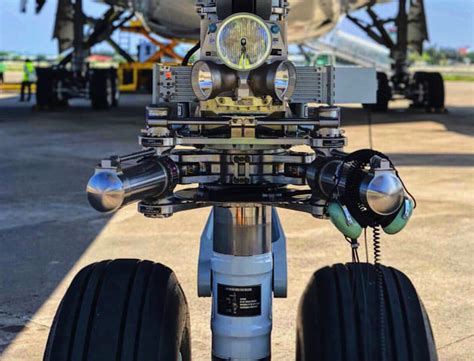
Even portable inspection systems capable of automated diagnosis cannot eliminate the time required to perform thorough examinations.
For airlines operating tightly scheduled fleets, every additional hour on the ground represents lost revenue and operational disruption.
The A350 Is Built To Absorb Landing Loads—But Only Up To A Point
It is important to recognize that the A350 was specifically engineered to handle substantial landing forces.
The aircraft’s landing gear incorporates sophisticated air-oil shock absorber systems designed to dissipate vertical impact energy. These systems compress during touchdown, converting kinetic energy into controlled mechanical motion.
The A350’s carbon fiber wings also play a critical role. Their remarkable flexibility allows them to bend significantly under load, helping distribute landing stresses throughout the airframe rather than concentrating them in localized areas.
At maximum landing weight, the aircraft is designed to tolerate descent rates of approximately 600 feet per minute without requiring structural inspection.
This capability demonstrates the robustness of the design.
Problems arise when loads exceed expected limits or when unusual impact conditions occur. Under those circumstances, the hidden-damage characteristics of composite structures become a primary concern.
Why Repairing Composite Fuselages Is Far More Difficult Than Repairing Aluminum
Inspection is only the first challenge.
If damage is discovered, the repair process introduces an entirely new level of complexity.
Traditional aluminum aircraft are built from numerous panels, frames, stringers, and structural components that can often be removed and replaced individually. Repairs frequently involve cutting out damaged material and installing replacement sections using established methods that have been refined over many decades.
Composite aircraft are fundamentally different.
The A350 utilizes large integrated structural sections designed to maximize efficiency and reduce weight. While this approach improves performance, it can complicate maintenance when damage occurs.
Repairing composites often requires technicians to remove damaged laminate layers one at a time. New layers must then be carefully rebuilt according to precise engineering specifications. Every fiber orientation must match the original design.
This process demands extraordinary precision because composite strength depends heavily on fiber direction.
A repair that appears correct visually may still be structurally inadequate if the internal fiber architecture is incorrect.
Unlike aluminum, composite materials are highly sensitive to environmental conditions during repair. Temperature, humidity, contamination levels, and curing cycles must all be carefully controlled.
As a result, repairs that might be relatively straightforward on a metal aircraft can become lengthy engineering projects on a composite airframe.
Environmental Conditions Can Determine Repair Success
One of the least appreciated aspects of composite repair involves environmental control.
Bonding new composite layers requires carefully managed conditions to ensure proper adhesion and structural performance. Excess moisture, temperature fluctuations, or contamination can compromise the repair.
Maintenance teams frequently establish controlled repair environments directly around the damaged area. Specialized heating systems, vacuum equipment, curing blankets, and monitoring instruments may be used throughout the process.
This requirement adds substantial logistical complexity, particularly when repairs must be performed away from major maintenance bases.
An aluminum repair can often proceed in a relatively ordinary hangar environment. Composite repairs frequently demand much stricter controls.
These requirements increase labor costs, extend downtime, and require technicians with specialized training and certification.
Airbus Created A Multi-Level Repair Strategy For The A350
Recognizing the challenges associated with composite structures, Airbus developed a comprehensive repair framework for the A350.
The first level addresses cosmetic or non-structural issues such as surface scratches, paint defects, and minor blemishes. These repairs generally have minimal impact on aircraft availability.
The second level covers standard structural repairs involving damage that remains within predefined engineering limits. These situations may require bonded composite repairs or temporary metallic solutions before permanent restoration.
The third level addresses major structural events, including severe hard landings, significant ground-service equipment impacts, landing gear incidents, and substantial bird-strike damage.
For these complex scenarios, Airbus developed Pre-Defined Repair Solution (PDRS) packages that include engineering guidance, tools, replacement materials, and repair procedures.
Even with these resources available, major composite repairs can require extensive engineering oversight and significant maintenance effort.
In particularly challenging cases, Airbus specialists may become directly involved in planning and supervising restoration work.
The Qatar Airways Dispute Highlighted Composite Maintenance Concerns
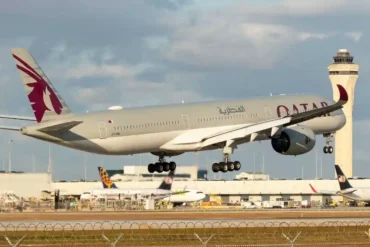
The unique challenges of composite structures attracted global attention during the widely publicized dispute between Qatar Airways and Airbus.
The controversy centered on surface deterioration observed on portions of the airline’s A350 fleet. Cracking paint and exposed lightning-protection mesh raised concerns regarding the condition of composite fuselage structures beneath the surface coatings.
The issue eventually resulted in the grounding of multiple aircraft and triggered a highly visible disagreement between the airline and manufacturer.
Although the dispute involved circumstances different from hard-landing damage, it demonstrated how composite aircraft introduce maintenance and inspection questions that differ significantly from those associated with traditional aluminum airframes.
Decades of operational experience have given airlines a deep understanding of corrosion, fatigue, and repair processes affecting metallic aircraft. Composite structures remain comparatively new, and the industry continues to refine its understanding of long-term inspection and maintenance practices.
The Qatar Airways case served as a reminder that advanced materials often bring new challenges alongside their technological advantages.
Why The Future Of Aviation Still Depends On Composites
Despite the difficulties associated with inspection and repair, there is little indication that manufacturers will return to aluminum-dominated designs for next-generation long-haul aircraft.
The efficiency benefits are simply too significant.
Carbon fiber structures enable lower fuel consumption, reduced emissions, longer range, increased payload capability, and improved resistance to corrosion. These advantages align perfectly with the economic and environmental priorities shaping modern aviation.
Aircraft such as the Airbus A350 and Boeing 787 have proven that composite airframes can deliver extraordinary operational performance.
The trade-off is that maintenance philosophies must evolve accordingly.
Hard landings that might once have resulted in visible dents and straightforward repairs now require sophisticated diagnostic technologies, extensive engineering evaluations, and highly specialized repair procedures. Hidden damage, rather than visible deformation, has become the central concern.
The Airbus A350 therefore represents both the promise and complexity of modern aerospace engineering. Its carbon fiber fuselage enables remarkable efficiency in the sky, but after a severe hard landing, that same advanced structure can transform a routine inspection into a painstaking investigation. What makes the aircraft so efficient is also what makes it so challenging to repair—an engineering paradox that defines the composite age of commercial aviation.