The Surprising Truth About Hard Landings in Aviation
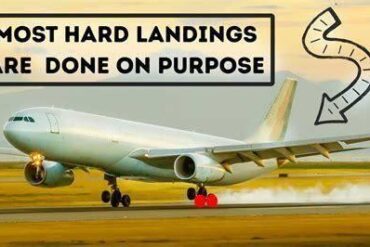
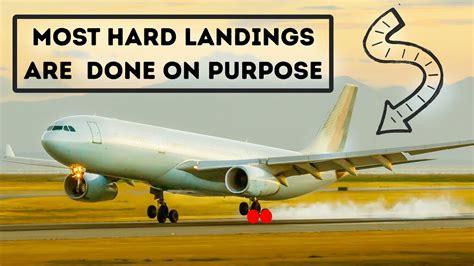
For most passengers, a perfect landing is one that goes almost unnoticed—a gentle kiss with the runway that barely registers beyond a soft bump. These so-called “butter landings” have become synonymous with pilot skill and professionalism. Yet inside the cockpit, the definition of a “good landing” is fundamentally different. In many real-world scenarios, the safest and most controlled landing is not the smoothest one—it is a firm, deliberate touchdown.
This idea can feel counterintuitive at first. After all, why would highly trained professionals intentionally make a landing feel rough? The answer lies in how aircraft performance, runway conditions, and environmental factors intersect during the most critical phase of flight. Pilots are not aiming to impress passengers with elegance; they are focused on precision, safety margins, and control.
A smooth landing that floats too far down the runway can quietly introduce risk. By contrast, a firm landing ensures the aircraft touches down exactly where it should, allowing braking systems to engage immediately and effectively. What feels like a jolt in the cabin may actually represent disciplined flying at its best.
Why “Soft” Doesn’t Always Mean “Safe”
The widespread belief that a softer landing equals a better landing stems from a limited perspective. Passengers experience only the moment of touchdown, while pilots evaluate the entire sequence—approach stability, touchdown accuracy, deceleration efficiency, and directional control.
In aviation, precision outweighs comfort. Aircraft are designed to land within a specific touchdown zone, typically around 1,000 feet beyond the runway threshold. Landing too far beyond this point reduces the available stopping distance, especially on shorter or compromised runways.
A “greased” landing often involves a longer flare, where the aircraft floats just above the runway before settling. While this feels smooth, it can result in:
- Delayed wheel contact, reducing braking effectiveness
- Late spoiler deployment, limiting aerodynamic deceleration
- Reduced safety margins, particularly on short runways
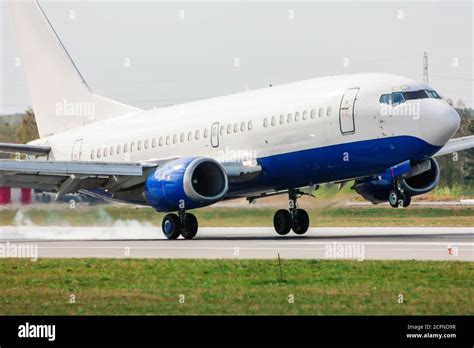
By contrast, a firm landing ensures immediate ground contact, allowing systems like spoilers, wheel brakes, and reverse thrust to activate without delay. In operational terms, that is far more valuable than a silky touchdown.
Runway Length: The Invisible Constraint That Changes Everything
Runway length plays a decisive role in how pilots execute landings. At major international airports with long, dry runways, there is more room for flexibility. But at shorter airfields, every meter counts—and that changes the strategy entirely.
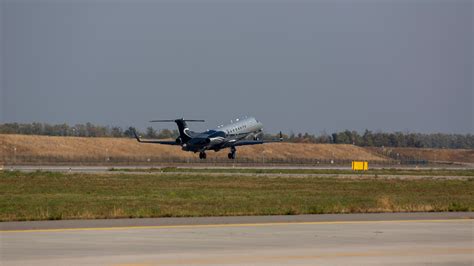
Consider airports like John Wayne Airport (SNA) in California, where the primary runway is only about 5,700 feet long. This is tight for aircraft such as the Boeing 737 or Airbus A320, which often require similar or greater distances for safe landing and rollout.
At such airports, pilots are trained to:
- Touch down firmly within the designated zone
- Avoid excessive flare or floating
- Begin deceleration immediately upon contact
A slight misjudgment in flare height can translate into hundreds of feet of additional landing distance. Aviation guidance suggests that crossing the runway threshold just 10 feet higher than intended can add roughly 200 feet to the landing roll. On a short runway, that margin disappears quickly.
The takeaway is simple: a firm landing is not aggressive—it is mathematically precise.
The Danger of Floating Too Far
Floating may feel elegant, but it is one of the most underestimated risks during landing. When an aircraft remains airborne longer than intended, it delays the moment when braking systems can fully engage.
Until the wheels are firmly on the runway:
- Brakes are not fully effective
- Spoilers may not deploy automatically
- Reverse thrust cannot reach maximum efficiency
This means the aircraft continues traveling at high speed without meaningful deceleration. On long runways, this might go unnoticed. On shorter or sloped runways, it can significantly reduce stopping margins.
Pilots are trained to avoid “chasing smoothness” at the expense of accuracy. A controlled, positive touchdown ensures the aircraft transitions from flight to ground operations exactly when and where it should.
Wet and Contaminated Runways Demand Assertive Landings
Rain dramatically changes landing dynamics. A wet runway reduces friction, increasing stopping distances and introducing the risk of hydroplaning, where the tires ride on a thin layer of water instead of gripping the surface.
In these conditions, the priority shifts immediately from comfort to traction and control.
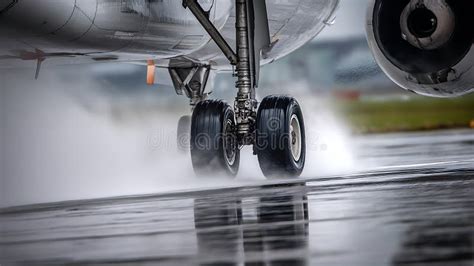
A firm landing helps by:
- Forcing the wheels into solid contact with the runway
- Enabling immediate spoiler deployment, which transfers weight onto the landing gear
- Improving braking effectiveness
- Reducing the likelihood of hydroplaning
The same principle applies even more strongly in snow or slush conditions. When contaminants cover the runway, pilots rely on standardized systems like the Runway Condition Assessment Matrix (RCAM) to evaluate braking performance. In such scenarios, a soft landing is not just suboptimal—it can be unsafe.
Airports in regions with frequent rainfall, such as Singapore Changi Airport, Vancouver International Airport, or Bergen Airport, regularly see landings that feel firmer for this exact reason. It is not poor technique; it is adaptation to physics.
Crosswinds and Gusts: Control Over Comfort
Wind introduces another layer of complexity, particularly crosswinds, where the aircraft must land while being pushed sideways by the air mass. In these situations, maintaining alignment with the runway becomes the primary objective.
During a crosswind landing, pilots often use techniques like crabbing (pointing the nose into the wind) or sideslipping (banking slightly into the wind). As the aircraft nears the runway, these corrections must be adjusted rapidly to ensure proper alignment at touchdown.
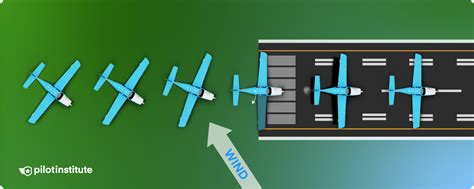
Gusty conditions can also cause sudden changes in lift or descent rate. A softer landing requires precise timing and stable air, both of which may be unavailable. A firmer touchdown provides:
- Immediate stability on the ground
- Better directional control
- Reduced exposure to unpredictable wind shifts
Airports like Wellington Airport (WLG) and Madeira Airport (FNC) are famous for challenging wind conditions. At these locations, firm landings are not the exception—they are the standard.
Steep Approaches and Specialized Procedures
Not all runways are approached the same way. Some airports require steeper-than-normal descent angles due to terrain, obstacles, or noise restrictions. A classic example is London City Airport (LCY), where the approach angle is about 5.5 degrees, compared to the standard 3 degrees.
Steeper approaches mean:
- Higher descent rates
- Reduced time to flare
- Less margin for smooth transitions
As a result, landings tend to be more assertive. Pilots are specifically trained for these conditions, and aircraft must be certified to operate there.
Similarly, airports surrounded by mountains or urban environments often impose operational constraints that favor precision over smoothness. In these cases, a firm landing is the natural outcome of a tightly controlled descent profile.
Aircraft Characteristics and Pilot Technique
Different aircraft types also influence how landings feel. Larger jets, turboprops, and older aircraft designs may respond differently during the flare and touchdown phases.
For example:
- Some aircraft require a more direct descent profile, leading to firmer landings
- Others have landing gear designed to absorb higher impact forces, making firm touchdowns routine
- Pilot background and training can subtly shape technique, especially in challenging conditions
Despite these variations, modern airliners are engineered to handle firm landings well within structural limits. What feels significant to passengers is often well within normal operational parameters.
Busy Airports and Operational Efficiency
At major hubs, efficiency matters. A prompt touchdown allows aircraft to vacate the runway quickly, reducing delays and maintaining traffic flow. While safety is always the top priority, operational considerations can reinforce the need for precise, decisive landings.
A delayed touchdown not only affects the landing aircraft but can also ripple through the entire airport system, causing congestion and delays. A firm landing, in this context, supports both safety and efficiency.
The Passenger Perspective vs. The Pilot Perspective
Passengers experience landing as a single moment—a brief sensation that defines their perception of the entire flight. Pilots, however, see landing as a multi-stage process involving:
- Stabilized approach
- Accurate threshold crossing
- Targeted touchdown
- Controlled deceleration
- Safe rollout
A smooth touchdown is just one small part of that sequence. It is desirable, but not essential. What matters is whether the aircraft lands in the right place, under control, with sufficient runway remaining.
This difference in perspective explains why a landing that feels “hard” can actually represent textbook execution.
Why the Safest Landings Often Feel the Firmest
When all factors are considered—runway length, weather, wind, aircraft performance, and operational constraints—the logic becomes clear. Pilots are not aiming for applause from the cabin; they are managing a complex set of variables to ensure a safe outcome.
A firm landing achieves several critical goals simultaneously:
- Immediate wheel contact for effective braking
- Reliable spoiler deployment
- Improved traction on wet or contaminated surfaces
- Enhanced directional control in crosswinds
- Accurate touchdown within the designated zone
In many scenarios, these benefits outweigh the comfort of a softer landing.
The next time an aircraft touches down with a noticeable thud, it is worth reconsidering what that sensation represents. Rather than a lack of finesse, it often signals precision, discipline, and sound judgment under real-world conditions.
In aviation, appearances can be deceiving. The landing that feels the least impressive may, in fact, be the one executed with the greatest skill.