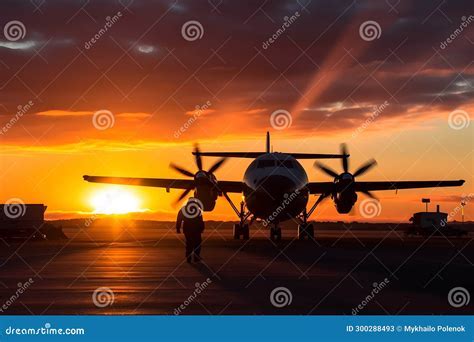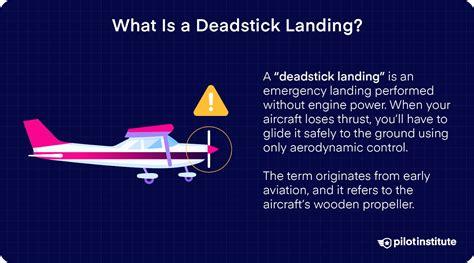
A deadstick landing is one of the most harrowing and technically demanding feats a pilot can perform, involving the complete loss of engine power mid-flight and a forced glide to the ground using nothing but gravity, skill, and aerodynamic principles. Despite the ominous nature of the term, derived from early propeller aircraft where a motionless propeller resembled a ‘dead stick,’ this maneuver is not just theoretical — it’s a well-studied, trained-for emergency procedure still practiced in modern aviation.
Understanding the Anatomy of a Deadstick Landing
At its core, a deadstick landing refers to an engine-out descent and landing where the aircraft is gliding without any thrust. This is not limited to single-engine planes — multi-engine jets, military aircraft, and even helicopters all have their versions of engine-out procedures. The key lies in maintaining control of the aircraft’s glide path and making critical decisions under intense time pressure.
The origin of the term dates back to the 1930s, an era dominated by piston-powered planes. If a propeller ceased rotating due to engine failure, it became a ‘dead stick’ — offering no propulsion and minimal aerodynamic aid. Despite this, early aviators were trained to handle such situations with calculated descents, keen situational awareness, and an eye for emergency landing zones.
What Causes Deadstick Situations in Modern Aviation?
In today’s aviation landscape, full engine failures are incredibly rare thanks to rigorous engineering, redundant systems, and ongoing maintenance protocols. However, no aircraft is completely immune. A deadstick landing can be necessitated by:
- Total engine failure in single-engine aircraft.
- Dual engine failure due to fuel starvation, bird strikes, or catastrophic system failure.
- Fuel contamination or mismanagement.
- Environmental hazards, such as volcanic ash or severe icing.
- Intentional engine shutdowns, typically in test flights or military scenarios.
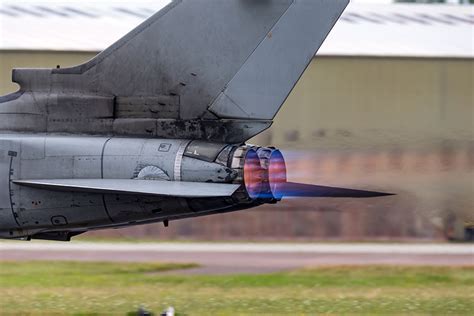
Notably, commercial twin-engine jets like the Boeing 737 or Airbus A320 are designed to fly and land safely on a single engine. However, in the extremely rare case both engines fail — like the infamous US Airways Flight 1549 — the aircraft becomes a glider, and a deadstick landing becomes the only option.
The Physics of Gliding Without Power
Without engine power, an aircraft must rely on aerodynamic efficiency and kinetic energy to remain aloft long enough to find a safe landing area. The pilot’s primary tool is understanding the aircraft’s glide ratio, which represents how far a plane can travel forward for every unit of altitude it loses.
For instance, a glide ratio of 15:1 means that for every 1,000 feet of altitude, the plane can glide 15,000 feet (about 2.8 miles) forward. This critical metric allows the pilot to assess available options: Should they attempt to return to the departure runway, divert to an alternate, or prepare for an off-airport landing?
Wind direction and speed are also factored in. A tailwind can extend glide distance but reduce control during landing, while a headwind shortens range but may offer a slower, more controlled final approach. Adjusting the pitch angle and managing airspeed are essential to preserving glide potential and preventing a dangerous stall.
The Art of Decision-Making Under Pressure
When an engine failure occurs, time becomes an unforgiving adversary. The immediate priorities are:
- Maintaining control of the aircraft.
- Establishing best glide speed — the speed at which the aircraft achieves maximum distance per altitude lost.
- Identifying suitable landing areas — airports, roads, fields, or water bodies.
- Communicating with ATC to declare an emergency and request assistance if within range.
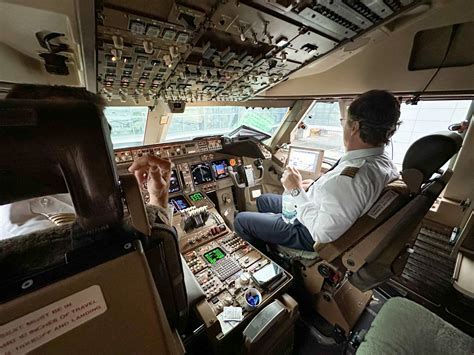
This complex set of tasks demands calm, precision, and speed. Pilots are trained through simulators and emergency drills to reduce hesitation and rapidly evaluate all variables.
Real-World Deadstick Mastery: The Miracle on the Hudson
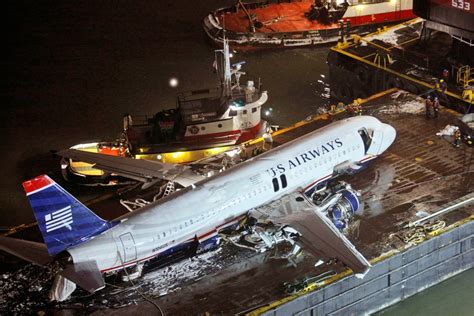
One of the most iconic examples of a deadstick landing in recent history is US Airways Flight 1549, piloted by Captain Chesley “Sully” Sullenberger. Shortly after takeoff from New York’s LaGuardia Airport on January 15, 2009, the Airbus A320 struck a flock of geese, resulting in dual engine failure at low altitude.
Sullenberger assessed that returning to LaGuardia or diverting to Teterboro was unfeasible. Using glide ratio estimates and visual scanning, he committed to landing in the Hudson River, pulling off a water deadstick landing without a single fatality.
His success hinged on:
- Quick assessment of glide range.
- Maintenance of best glide speed.
- Controlled descent with minimal deviation.
- Use of the river as a wide, flat, unobstructed surface.
This incident underscored the value of rigorous training, quick thinking, and aircraft performance knowledge.
Helicopter Deadstick Landings: Autorotation in Action
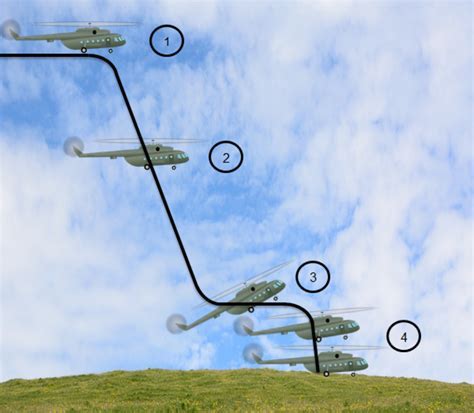
While fixed-wing deadstick landings involve gliding, helicopters follow a different principle: autorotation. In the event of engine failure, the downward airflow through the rotor blades keeps them spinning, even without power.
The pilot manages rotor speed with the collective control and manipulates descent rate using cyclic inputs. By transitioning into autorotation, the helicopter avoids catastrophic freefall and can land with relative control on flat terrain.
Autorotation demands extraordinary finesse. The pilot must time the flare maneuver — a sudden pitch-up just before touchdown — to dissipate forward speed and cushion the landing. Done correctly, it can result in a survivable, even injury-free, landing.
Training for the Worst: How Pilots Prepare for Deadstick Scenarios
Despite the rarity of engine-out emergencies, pilots are extensively trained to respond as if it’s an eventuality, not a possibility. Both airline and military pilots undergo simulator-based deadstick landing drills. These exercises replicate:
- Engine flameouts at various altitudes.
- System failures leading to power loss.
- Weather complications during emergency descents.
- Decision-making under sensory overload.
The goal is muscle memory and automatic prioritization — aviate, navigate, communicate. The confidence and capability to execute a deadstick landing stems from this foundational training.
For recreational pilots, especially those flying gliders or small single-engine planes, deadstick landings are a more frequent reality. Glider pilots fly without engines by design, mastering lift exploitation, thermals, and energy conservation. Their skill set often overlaps with the precise management needed in powered aircraft emergencies.
Why Deadstick Landings Still Matter in the Jet Age
While modern jets are marvels of reliability, deadstick landings remain relevant. Incidents like:
- Air Transat Flight 236 — an Airbus A330 that glided over 75 miles after fuel exhaustion and landed safely in the Azores.
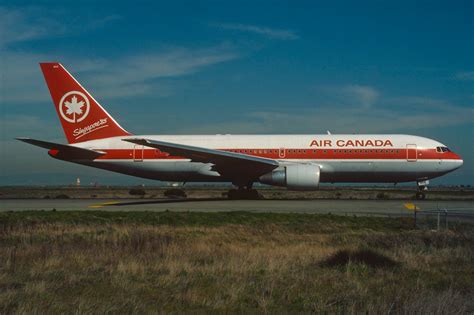
- Gimli Glider — an Air Canada 767 that lost all engines due to metric conversion errors in fuel calculations and landed on a closed airfield.
These events are reminders that a pilot’s ability to adapt in-flight emergencies can mean the difference between tragedy and triumph. The aerodynamic principles of gliding, the decision trees of emergency planning, and the execution under duress are timeless aviation skills.
Conclusion: The Human Factor in Engine-Out Flight
Technology has evolved, safety margins have widened, and engines have become more dependable — but the risk of total power loss has never been completely eliminated. What remains constant is the indispensable human factor: the pilot.
A deadstick landing is the ultimate expression of that human-machine partnership, where instinct, training, and aerodynamic mastery converge to bring a powerless aircraft safely back to Earth. Whether on a quiet airstrip, a frozen river, or a mountain valley, a well-executed deadstick landing is not just a survival story — it’s a testament to aviation excellence.