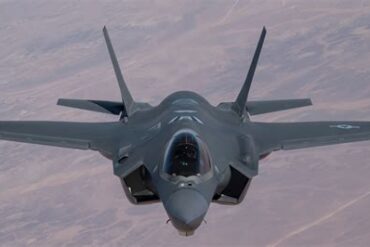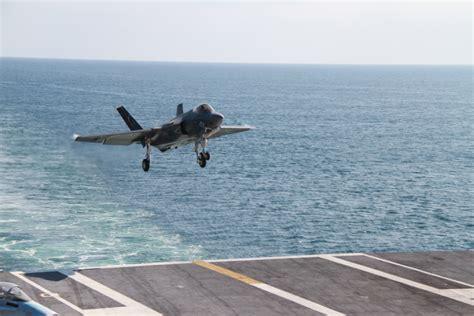
Modern military aviation represents the pinnacle of technological advancement, yet even the most sophisticated aircraft must obey the unforgiving laws of physics. The Lockheed Martin F-35C Lightning II, the carrier-based variant of the fifth-generation Joint Strike Fighter, embodies this paradox perfectly. Packed with advanced sensors, automation, stealth design, and artificial intelligence-assisted flight controls, it is arguably the most advanced fighter ever deployed at sea. Still, when the moment comes to land on an aircraft carrier, the aircraft must perform one of the most demanding maneuvers in aviation: stopping a 70,000-pound jet on a runway that is barely longer than a football field while the runway itself moves unpredictably in the ocean.
Landing on a carrier has never been easy. Even during the earliest days of naval aviation, pilots described the process as “controlled chaos.” The deck of a carrier is short, constantly shifting, and surrounded by open ocean. Pilots approach the ship at speeds exceeding 155 miles per hour, aiming to catch a thin steel cable stretched across the deck. Missing the cable can mean bolting off the deck and attempting another approach, or worse, crashing into the sea.
For the F-35C, the challenge is magnified by the aircraft’s weight, complexity, and the intense workload imposed on the pilot. While advanced computer systems assist in stabilizing the approach, the final seconds before touchdown still demand exceptional skill and rapid decision-making. The aircraft must align precisely with the deck, maintain the correct glide slope, and ensure its tailhook catches one of the arresting wires.
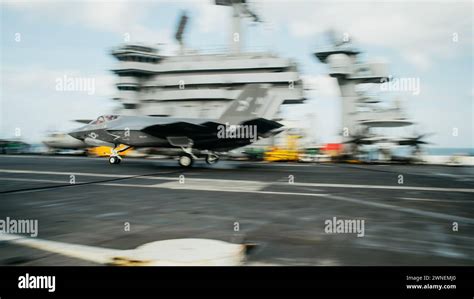
Even with cutting-edge avionics and software, the physics of carrier landings remain brutally unforgiving. When an F-35C successfully traps a wire, it goes from full landing speed to a complete stop in roughly two seconds. The sudden deceleration subjects both aircraft and pilot to extreme stress forces, making each successful landing a dramatic demonstration of engineering and human skill working together.
The Physics Behind Carrier Landings
The difficulty of landing an F-35C on an aircraft carrier begins with simple geometry. A typical runway at a major airport may stretch for 10,000 feet or more, giving aircraft plenty of space to slow down gradually. In contrast, the effective landing area on a carrier deck measures only about 320 feet from touchdown point to the arresting wires.
This means naval aircraft cannot simply roll to a stop. Instead, they rely on tailhook arresting systems, which involve a strong hook attached to the aircraft catching one of several steel cables stretched across the deck. The cables are connected to powerful hydraulic or electromagnetic systems that absorb the aircraft’s kinetic energy.
When the hook grabs a wire, the aircraft experiences an instantaneous and violent deceleration. The result feels less like a conventional landing and more like slamming into a wall while remaining inside the cockpit.
Adding to the challenge is the constant motion of the carrier itself. Ships at sea are rarely stable platforms. They pitch, roll, and yaw, sometimes dramatically in rough conditions. The stern of the ship can move vertically by up to 20 feet, meaning the target landing point rises and falls while the pilot approaches.
For the pilot of an F-35C, this creates a constantly changing landing environment. The aircraft must be precisely positioned in three dimensions while accounting for wind, deck motion, and engine thrust.
The Final 20 Seconds: Turning Into the Groove
Carrier landings are defined by a short but intense period known as “the groove.” This is the final straight-line approach to the carrier, lasting less than twenty seconds.
About 1.5 miles from the ship, the pilot completes landing checks. Wings are locked in place, flaps extend fully, and the tailhook is lowered in preparation for the arresting wires.
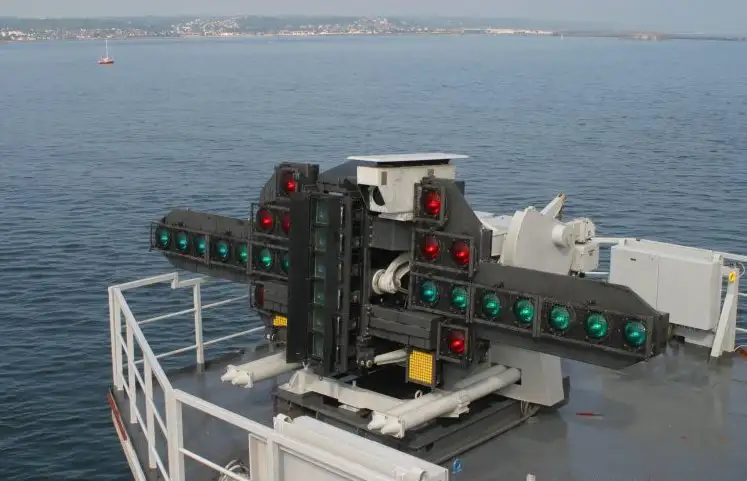
During the approach, pilots rely heavily on the Optical Landing System, often referred to as the “meatball.” This visual system uses a series of lights to indicate whether the aircraft is on the correct glide slope.
When the glowing amber ball aligns perfectly with horizontal green lights, the aircraft is positioned correctly for landing. If the ball rises or falls relative to the reference lights, the pilot must adjust immediately. These corrections must occur almost instantly, because even a minor error can lead to a dangerous situation.
At this stage, the aircraft is flying only a few seconds away from touchdown. Every input counts, and every deviation must be corrected immediately.
The High-Risk Moment of Touchdown
The moment the F-35C’s wheels touch the carrier deck, another crucial action occurs simultaneously: the pilot advances the throttle to full military power or afterburner.
At first glance, applying maximum thrust during landing seems counterintuitive. However, this step is critical because of the possibility of a “bolter.” A bolter occurs when the aircraft’s tailhook fails to catch any of the arresting wires.
If this happens, the aircraft must immediately accelerate and take off again before reaching the end of the deck. Without full engine power already engaged, the jet might not have enough thrust to avoid plunging into the sea.
When everything works correctly, the hook catches one of the cables—ideally the third wire, which pilots consider the optimal target.
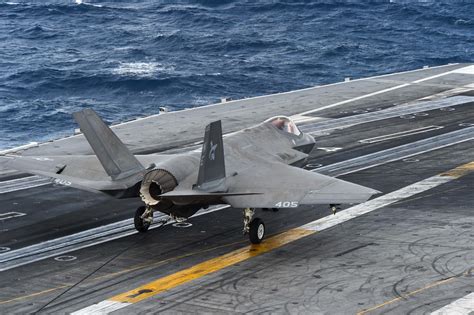
Once the hook engages the wire, the aircraft is violently pulled to a stop. The arresting system absorbs enormous energy, bringing the jet from landing speed to zero in about two seconds. The sudden deceleration places immense strain on both the aircraft structure and the pilot’s body.
Only after the aircraft has completely stopped does the pilot reduce engine power.
The F-35C’s “Magic Carpet” Landing Technology
To reduce the difficulty of carrier landings, the F-35C incorporates advanced automation systems specifically designed for naval operations.
One of the most significant innovations is Precision Landing Mode, sometimes referred to by pilots as the “magic carpet.” This system calculates the ship’s speed, movement, and position while automatically maintaining the correct glide slope.
Rather than manually controlling every aspect of the descent, the pilot focuses primarily on lineup with the deck while the aircraft manages altitude adjustments.
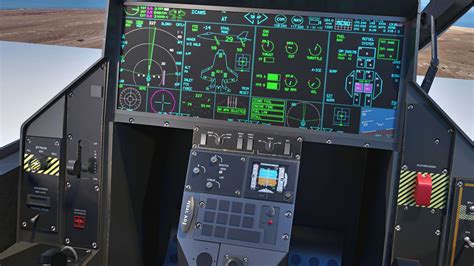
Another critical technology is Integrated Direct Lift Control, which uses large trailing-edge flaps to control vertical motion without changing the aircraft’s pitch. Traditional aircraft adjust altitude by raising or lowering the nose, but the F-35C can alter lift directly through its wing surfaces.
This allows smoother and more precise corrections during approach, particularly when the carrier deck moves unpredictably.
The aircraft also features an auto-throttle system, which automatically adjusts engine power to maintain the correct speed for landing weight. Together, these technologies dramatically improve landing stability compared to earlier carrier fighters.
Comparing the F-35C and the F/A-18 Super Hornet
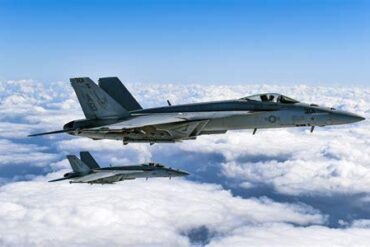
Although both aircraft operate from US Navy carriers, the F-35C Lightning II and F/A-18E/F Super Hornet approach carrier landings differently.
The Super Hornet represents a more traditional naval fighter. Powered by two GE F414 engines, it provides redundancy that naval pilots historically preferred for operations over water. Its flight characteristics are often described as tactile and responsive, giving pilots a strong sense of manual control.
The F-35C, by contrast, relies heavily on automation and digital assistance. Its single Pratt & Whitney F135 engine delivers immense thrust—more than 43,000 pounds with afterburner—providing exceptional power during carrier operations.
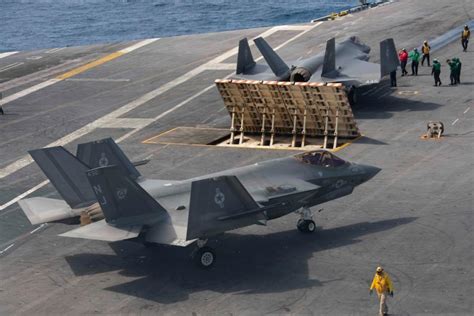
Another major difference lies in aerodynamics. The F-35C features the largest wingspan among all F-35 variants, measuring over 43 feet. These larger wings generate additional lift, allowing slower and more stable approaches during carrier landings.
Unlike the Super Hornet, which often carries weapons externally, the F-35C stores most of its armament internally. This preserves stealth capabilities and reduces aerodynamic drag, enabling better acceleration and energy recovery during flight operations.
The Human Factor: Pilots Managing a Flying Supercomputer
Despite its advanced technology, the F-35C still depends heavily on human judgment. In fact, modern pilots often describe flying the aircraft less as controlling a machine and more as managing an incredibly complex system.
During a carrier approach, the pilot monitors multiple streams of information simultaneously. The Helmet Mounted Display (HMD) projects critical flight data directly onto the visor, allowing the pilot to see speed, altitude, targeting information, and navigation cues without looking down at instruments.
However, this system introduces its own challenges.
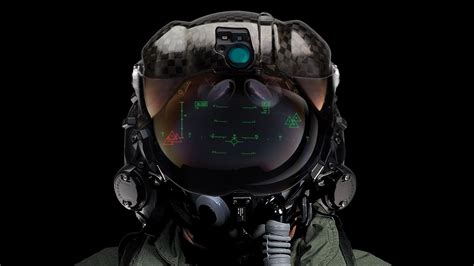
The helmet weighs approximately five pounds, which becomes a significant burden during the violent deceleration of an arrested landing. The sudden stop multiplies the effective weight of the helmet, placing intense strain on the pilot’s neck.
Another issue reported by pilots involves light leakage inside the visor, which can create a green haze during night operations. On a dark ocean with only minimal deck lighting visible, even minor visual distortion can complicate the landing process.
If the automation systems malfunction during the final seconds of approach, the pilot has extremely limited time to react. At 155 mph, the aircraft covers roughly 230 feet every second, leaving almost no margin for error.
The Ship’s Role: Advanced Arresting Systems
Landing technology is not limited to the aircraft itself. Modern aircraft carriers incorporate sophisticated arresting gear designed to safely stop high-performance jets like the F-35C.
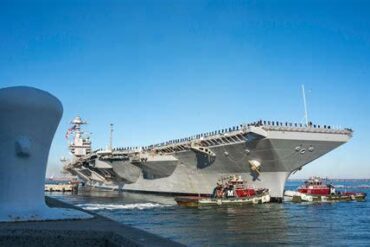
The newest Ford-class carriers use the Advanced Arresting Gear (AAG) system, which replaces older hydraulic mechanisms used on previous carriers.
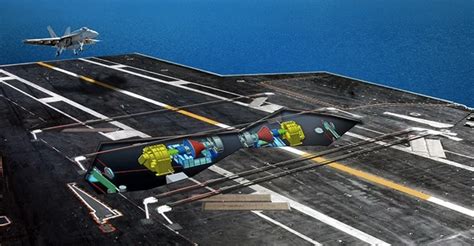
This system uses computer-controlled energy absorbers to tailor the stopping force depending on the aircraft type. Heavy fighters like the F-35C require significantly more energy absorption than lighter aircraft or unmanned drones.
By precisely adjusting resistance, the system reduces stress on both the aircraft and the pilot while improving safety during high-energy landings.
The AAG system also enables carriers to support a broader range of aircraft types, including future unmanned carrier-based drones, which will play a major role in naval aviation.
Why Carrier Landings Remain Among the Most Dangerous Tasks in Aviation
Despite decades of technological progress, carrier landings remain one of the most dangerous operations in aviation. The environment combines high speeds, limited landing space, unpredictable ship motion, and intense operational pressure.
The flight deck itself is an extremely hazardous workplace. Personnel operate within meters of roaring jet engines, spinning propellers, and heavy equipment while coordinating dozens of aircraft movements in tight spaces.
For pilots, every landing requires a delicate balance between trust in automation and personal skill. The F-35C’s advanced systems have made carrier landings safer than in previous generations, but they have not eliminated the inherent risks.
Naval aviators train for years to master tailhook operations, performing countless simulated and real carrier landings before becoming fully qualified.
The Elite Skill of Naval Aviators
Carrier aviation has always represented the highest level of military flying. The “Wings of Gold” worn by US Navy pilots symbolize not only expertise in combat aviation but also mastery of one of the most demanding environments in the world.
Flying the F-35C Lightning II from an aircraft carrier combines cutting-edge technology with timeless aviation skill. Pilots must understand the complex software systems controlling the aircraft while retaining the instinct and discipline required to land on a moving ship in the open ocean.
Even in the era of stealth fighters and artificial intelligence-assisted avionics, the final seconds before touchdown still demand the same qualities that naval aviators have relied on for generations: precision, courage, and absolute focus.
Every successful carrier landing represents a remarkable achievement. A 70,000-pound stealth fighter descends onto a moving deck, catches a thin steel cable, and stops almost instantly—all while the ocean swells beneath it.
That is why landing an F-35C on an aircraft carrier remains not only one of the most technically challenging tasks in aviation but also one of its most dramatic displays of human and technological capability.