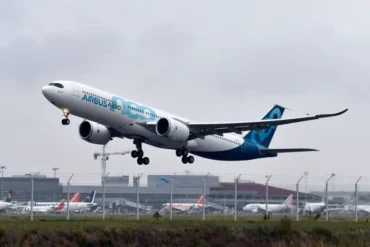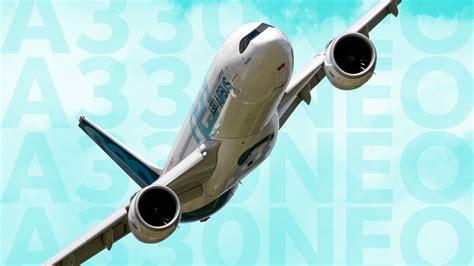
The modern widebody aircraft market has become a battlefield of efficiency, range, and operational economics. Manufacturers constantly pursue technological breakthroughs—lighter composite structures, ultra-long-range capabilities, and advanced propulsion systems—to capture airline interest. Yet within this environment, the Airbus A330neo has carved out a remarkably distinctive role. Rather than chasing records or revolutionary structural changes, Airbus chose a different path: refine a proven platform and transform it into an aircraft capable of thriving across nearly every major airline mission profile.
This philosophy explains why Airbus confidently calls the A330neo “The Versatile Champion.” The phrase reflects far more than marketing flair. It represents a deliberate engineering and operational strategy centered on flexibility, predictable economics, and long-term fleet utility. Airlines today face fluctuating passenger demand, shifting route networks, and uncertain economic cycles. Aircraft that can adapt quickly—without costly operational compromises—hold enormous strategic value.
The A330neo embodies precisely that capability. With modern engines, aerodynamic upgrades, and advanced onboard systems integrated into the familiar A330 platform, the aircraft delivers efficiency and reliability while maintaining extraordinary mission flexibility. From regional high-frequency flights to intercontinental routes stretching across oceans, the A330neo operates effectively across an unusually broad spectrum of airline operations.
Understanding Airbus’ “Versatile Champion” Philosophy
When Airbus describes the A330neo as the Versatile Champion, the company is emphasizing multi-mission capability within a single widebody platform. Many modern aircraft are optimized for highly specific roles—some designed primarily for ultra-long-haul missions, others for regional efficiency. The A330neo intentionally avoids such specialization.
Instead, Airbus engineered the aircraft to perform consistently across short, medium, and long-haul sectors. This allows airlines to deploy the same aircraft across different routes depending on market demand. Seasonal tourism surges, shifting cargo demand, and evolving passenger trends can all reshape airline networks. A flexible aircraft dramatically simplifies the response to these changes.
Performance numbers demonstrate the aircraft’s operational breadth. The Airbus A330-900, the larger variant, offers a typical range of about 7,350 nautical miles (13,250 km). Meanwhile, the A330-800, the smaller but longer-range version, extends beyond 8,000 nautical miles (15,000 km). These figures place the aircraft comfortably within long-haul territory while still allowing efficient operation on far shorter routes.
Both variants share an impressive maximum takeoff weight approaching 251,000 kilograms (553,000 pounds), giving airlines the payload flexibility required for both passenger and cargo operations. Advanced composite winglets and a refined wing design further improve aerodynamic efficiency, enhancing performance across varying mission lengths.
Crucially, Airbus paired these aerodynamic upgrades with the Rolls-Royce Trent 7000 engines, a new-generation powerplant optimized for fuel efficiency, reduced noise, and improved environmental performance. The result is an aircraft capable of maintaining high efficiency regardless of whether it is flying a two-hour regional route or an intercontinental sector lasting more than 12 hours.
A Platform Designed for Operational Elasticity
Airlines live and die by utilization. Aircraft sitting idle on the ground generate no revenue, yet they still incur ownership and maintenance costs. The A330neo was engineered to maximize daily flying hours by supporting multiple mission types within the same schedule.
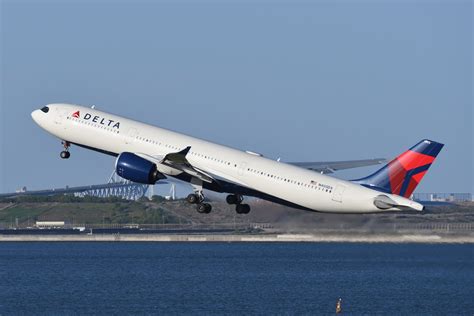
Unlike aircraft optimized exclusively for ultra-long-range travel, the A330neo avoids carrying unnecessary structural weight or excess fuel capacity designed only for extreme missions. This careful balance means the aircraft remains efficient on shorter routes where fuel consumption during climb and descent forms a larger share of total burn.
In practice, this means an airline can schedule an A330neo for several medium-haul daytime flights and then redeploy the same aircraft on an overnight intercontinental route. Instead of maintaining separate fleets for different missions, operators can rotate aircraft dynamically across route types.
This operational elasticity has profound financial implications. Higher utilization spreads fixed costs—such as aircraft ownership, crew training, and maintenance infrastructure—across more flights and more passengers. The result is improved profitability even in competitive markets where ticket prices remain under constant pressure.
The A330neo therefore becomes more than just a long-haul aircraft. It transforms into a multi-role widebody asset capable of adapting to evolving network strategies, something airlines increasingly value in an unpredictable aviation environment.
Balancing Structural Efficiency for Medium-Haul Missions
A fascinating aspect of the A330neo’s design lies in its structural philosophy. Many next-generation aircraft rely heavily on carbon-fiber composite structures to reduce weight. While these materials deliver extraordinary strength-to-weight ratios, they often accompany design features optimized for extremely long flights.
The A330neo takes a more balanced approach by retaining an advanced aluminium-lithium structure. This design avoids certain weight penalties associated with ultra-long-range optimization while still maintaining durability and efficiency across a broad range of flight profiles.
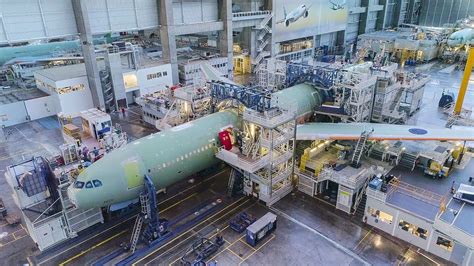
On medium-haul routes—typically between 3,000 and 5,000 nautical miles—fuel burn characteristics differ significantly from ultra-long-haul flights. Climb, descent, and reserve fuel requirements represent a much larger proportion of total fuel consumption. Aircraft optimized solely for long endurance often carry additional fuel reserves that remain unused on these shorter routes.
Because the A330neo does not rely on excessive fuel capacity for extreme missions, it frequently operates with a more efficient payload-to-fuel ratio in real-world medium-haul operations. This efficiency can narrow the fuel burn gap between the A330neo and newer composite widebodies when measured across typical airline routes rather than theoretical maximum-range scenarios.
Combined with the aircraft’s relatively high seating capacity, this structural balance delivers competitive cost per seat, a metric that matters far more to airline profitability than fuel burn alone.
Rolls-Royce Trent 7000: Powering the Versatile Widebody
The engine powering the A330neo represents one of the most important technological leaps from earlier A330 models. Airbus selected the Rolls-Royce Trent 7000 as the aircraft’s exclusive powerplant, ensuring tight integration between engine performance and airframe efficiency.
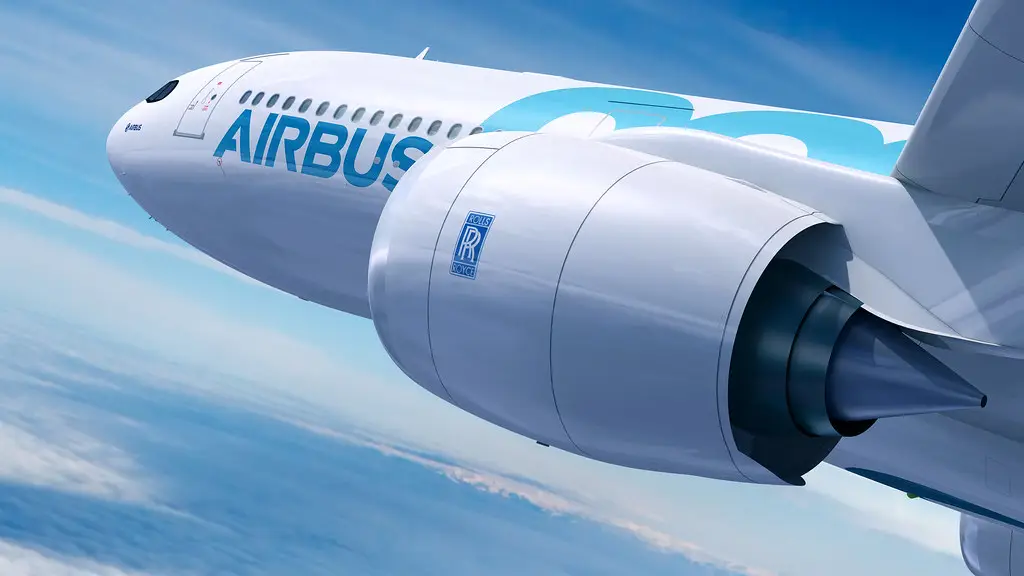
The Trent 7000 incorporates numerous technologies derived from the Rolls-Royce Trent XWB engine used on the Airbus A350, including advanced materials, improved cooling techniques, and a highly efficient compressor system. These improvements allow the engine to achieve an overall pressure ratio exceeding 50:1 and a bypass ratio of approximately 10:1.
Such figures translate into significant real-world benefits. Compared with the previous-generation Trent 700 engine used on the earlier A330ceo family, the Trent 7000 delivers approximately 11–12 percent lower fuel consumption. It also dramatically reduces nitrogen oxide emissions and lowers the aircraft’s noise footprint.
Environmental performance has become increasingly important as airports impose stricter noise and emissions regulations. The A330neo meets these requirements with a noise signature up to ten effective perceived noise decibels below regulatory limits, making it suitable for operations at noise-sensitive airports around the world.
Yet the engine’s most subtle advantage lies in its efficiency across different phases of flight. Rather than focusing solely on cruise efficiency, the Trent 7000 maintains strong fuel performance during climb, descent, and variable altitude operations. These segments represent a large portion of total fuel consumption on shorter flights, reinforcing the A330neo’s ability to perform well across diverse route structures.
Aerodynamic Refinements That Enhance Efficiency
Engines alone do not determine aircraft efficiency. Aerodynamics plays an equally critical role in shaping fuel burn and operational performance. Airbus introduced several key aerodynamic improvements when designing the A330neo.
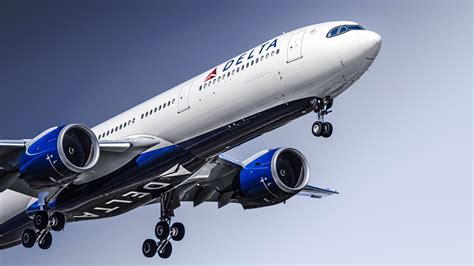
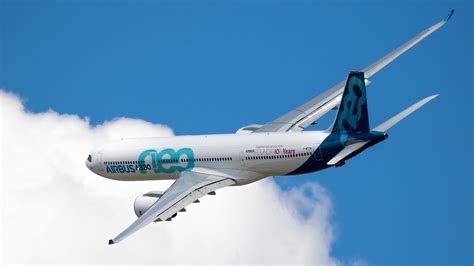
The aircraft features a redesigned wing with increased aspect ratio, meaning the wingspan is longer relative to its width. This design reduces induced drag—the aerodynamic resistance generated when lift is produced. Lower drag improves fuel efficiency during both climb and cruise.
Airbus also introduced new composite winglets inspired by aerodynamic research from the Airbus A350 program. These larger, curved wingtip devices reduce vortex drag generated at the wingtip, allowing the aircraft to maintain lift more efficiently.
Together, these aerodynamic changes contribute approximately four percent improvement in fuel efficiency on their own. While that figure may sound modest, small aerodynamic gains compound significantly across thousands of flights over an aircraft’s operational life.
More importantly, these improvements ensure the aircraft maintains strong aerodynamic performance across different altitudes, weights, and flight profiles. Whether carrying a full passenger load on a transcontinental flight or operating a lighter regional service, the aircraft remains efficient.
Cabin Flexibility and Revenue Potential
Beyond aerodynamics and propulsion, the A330neo’s greatest advantage may lie inside the cabin. Airbus introduced the Airspace cabin architecture, a design philosophy emphasizing passenger comfort, spaciousness, and airline customization.
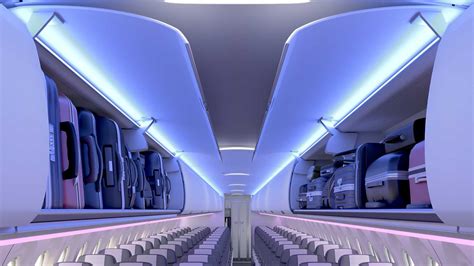
Airlines can configure the aircraft in numerous layouts depending on their business models. Traditional long-haul carriers often install three-class cabins featuring lie-flat business seats, premium economy sections, and spacious economy seating. These layouts emphasize comfort and passenger experience on long international flights.
At the opposite end of the spectrum, low-cost carriers have demonstrated the aircraft’s remarkable density potential. A famous example is Cebu Pacific, which operates the A330-900 with 459 seats in an all-economy configuration. Slimline seats and optimized cabin layouts allow the aircraft to carry an enormous number of passengers on high-demand leisure routes.
This flexibility gives airlines the ability to adapt the same aircraft type for radically different commercial strategies. Premium international services, charter operations, pilgrimage flights, and leisure travel markets can all be served using the same basic platform.
Cargo capacity further enhances revenue potential. The A330neo’s lower deck cargo hold allows airlines to transport substantial freight alongside passenger baggage. Even when passenger demand fluctuates, belly cargo operations can sustain route profitability, especially on long-haul routes where freight demand remains strong.
Fleet Strategy and Market Position
In the complex chess game of airline fleet planning, the A330neo occupies a strategic middle ground. It sits comfortably between large narrowbody aircraft such as the Airbus A321XLR and larger next-generation widebodies like the Boeing 787 or Airbus A350.
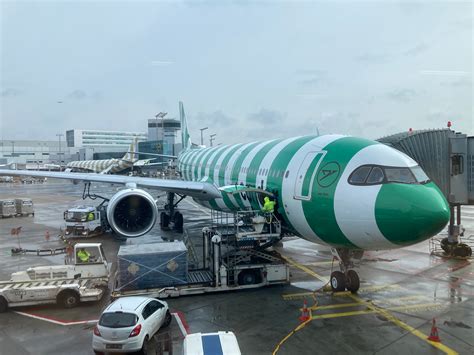
For airlines seeking to replace aging widebodies without investing in ultra-expensive next-generation aircraft, the A330neo presents a compelling option. Its acquisition cost typically remains lower than newer composite widebodies while still delivering modern performance and passenger amenities.
Another critical advantage is cockpit commonality with earlier Airbus A330 models. Pilots transitioning from the previous generation require only a short differences course rather than a completely new type rating. Maintenance crews benefit from similar system architectures and shared ground support equipment.
For airlines already operating Airbus fleets, this commonality reduces training costs, simplifies spare parts logistics, and enables smoother integration into existing operations. In a business where margins can be razor thin, these operational efficiencies become extremely valuable.
Why the A330neo Continues to Thrive
The A330neo may not hold records for the longest range or the lightest structure in its class, yet those metrics tell only part of the story. Aircraft rarely succeed purely because of technical extremes. They succeed because they align with how airlines actually operate.
Airbus understood this reality. By combining a proven airframe with targeted upgrades—modern engines, refined aerodynamics, advanced avionics, and flexible cabin architecture—the company created a widebody aircraft capable of thriving across diverse mission profiles.
Airlines can deploy the A330neo on major international trunk routes, secondary long-haul markets, regional widebody services, or high-density leisure operations. Few aircraft offer such breadth without significant compromises in efficiency or economics.
This balance of reliability, adaptability, and operational flexibility explains why Airbus confidently labels the aircraft “The Versatile Champion.” In an aviation industry defined by constant change, versatility may ultimately prove to be the most valuable performance metric of all.