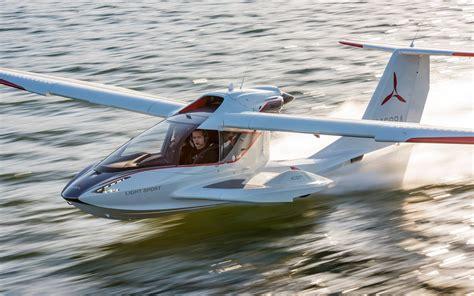
Amphibious aircraft, or amphibians, represent a remarkable blend of aviation and maritime technology. These aircraft have the unique ability to take off and land on both solid ground and water, making them indispensable for a variety of roles in remote areas, as well as for military and rescue operations. While most amphibious aircraft are fixed-wing, there are also a few rotary-wing variants. This article explores the design, advantages, hazards, historical evolution, and modern usage of amphibious aircraft, showcasing their versatility and importance in aviation history.
Design of Amphibious Aircraft
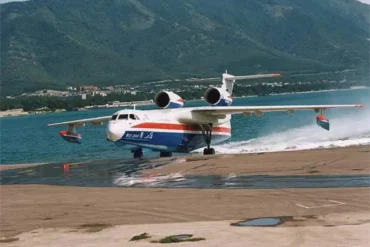
Amphibious aircraft are primarily categorized into two types: flying boats and floatplanes. Both variants are equipped with retractable wheels or floats, allowing them to transition smoothly from land to water. Unlike standard seaplanes that can only operate on water, amphibians can operate on both land and water with a remarkable degree of versatility. Flying boats typically have a hull that is shaped like a boat, enabling them to land on water, while floatplanes feature floats or pontoons that provide buoyancy.
A key feature of amphibious aircraft is their retractable landing gear. This innovation allows the aircraft to function effectively on both land and water, though at the expense of added weight and complexity. The retractable wheels are housed within the floats, which are designed to support the aircraft’s weight when it’s on water. These wheels can be deployed for land-based takeoff and landing, offering unparalleled flexibility in diverse environments. The use of reinforced keels, which double as skis, allows some amphibians to land on snow or ice with the wheels retracted, expanding their operational range.
However, the increased complexity of retractable landing gear comes with trade-offs. The added weight can result in diminished fuel efficiency and a reduced range compared to aircraft designed solely for land or water operations. Furthermore, ensuring the landing gear is correctly positioned is crucial, as incorrect deployment can lead to significant damage.
Hazards of Amphibious Aircraft
Operating amphibious aircraft is not without risks. One of the primary hazards stems from ensuring the correct configuration of the aircraft’s landing gear before touchdown. Landing with the wheels in the wrong position can result in catastrophic failure. For instance, landing wheels-up on solid ground could damage the aircraft’s keel, while landing wheels-down on water could cause the plane to flip, leading to severe damage. To avoid such accidents, pilots of amphibious aircraft must follow strict checklists and conduct thorough pre-landing checks.
The weight and drag associated with the retractable landing gear can also impact the aircraft’s overall performance. Even with these challenges, the versatility of amphibious aircraft remains a significant advantage in operations where both land and water-based access is required.
Historical Evolution of Amphibious Aircraft
Amphibious aircraft have a rich history, dating back to the early 20th century. In the United Kingdom, amphibians were used extensively for military and exploration purposes. Notable early examples include the Vickers Viking and the Supermarine Seagull, which were employed for tasks such as search and rescue and anti-submarine patrols. During the interwar period, amphibians became increasingly sophisticated, with aircraft like the Consolidated Catalina emerging as crucial assets for military operations.
In the United States, Sikorsky produced a series of amphibians during the 1920s and 1930s, such as the S-38 and S-43, which played a key role in overseas air routes and exploration. These aircraft helped to open up previously inaccessible regions, establishing the versatility of amphibious aircraft for both civilian and military applications.
The Grumman Goose and Widgeon, developed in the late 1930s, were significant contributions to the amphibious aircraft family. These aircraft were used for both civilian and military purposes, and their success during World War II highlighted the strategic value of amphibians. The Catalina was another major amphibious aircraft from this era, initially a flying boat that was later adapted into an amphibian to extend its range and versatility.
Despite their initial success, the development of helicopters in the post-war era began to overshadow amphibious aircraft in some roles, particularly for air-sea rescue and military patrols. However, amphibians continued to evolve and find new applications in remote areas, where their ability to land on both land and water made them invaluable.
Modern Usage and Applications
Today, amphibious aircraft are still in use for a variety of applications, especially in remote areas such as Alaska, northern Canada, and the Pacific Islands. They provide crucial links for communities that are inaccessible by traditional land-based transportation. The Canadian Vickers Vedette, for example, was used for forestry patrols in remote regions, drastically reducing the time and effort required to navigate difficult terrain.
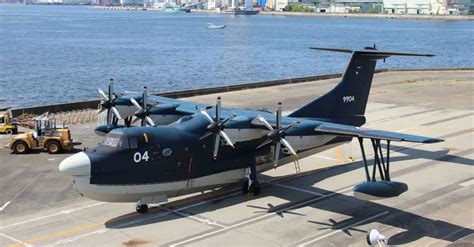
In addition to their role in remote transportation, amphibious aircraft are also critical for search and rescue operations, particularly in coastal areas. Aircraft such as the Grumman Albatross and ShinMeiwa US-2 are capable of long-range air-sea rescue missions, often in conditions where helicopters may struggle to operate. The ShinMeiwa US-2, developed by Japan, is a prime example of modern amphibious technology, designed for both military and civilian air-sea rescue roles.
The versatility of amphibious aircraft makes them competitive alternatives to helicopters in certain contexts. While they cannot hover or land vertically like helicopters, they are often faster, have a longer range, and are significantly more cost-effective. This makes them ideal for long-range operations, such as air-sea rescue and light transport in areas where helicopter operations would be impractical or too costly.
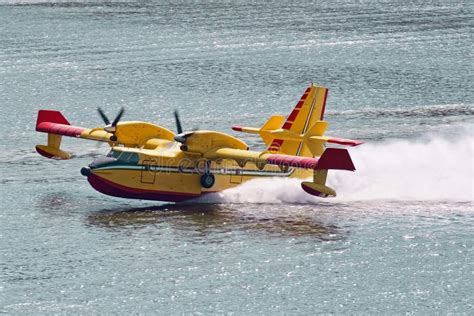
Despite the increasing availability of airstrips and the rise of other aircraft technologies, the demand for amphibious aircraft remains steady. Modern aircraft, such as the ICON A5, the Bombardier 415, and the amphibious-float-equipped Cessna Caravan, continue to serve crucial roles in various sectors, from firefighting to bush aviation. These aircraft maintain the legacy of amphibious design, offering versatility and efficiency in an increasingly complex world.
Conclusion
Amphibious aircraft are a testament to the ingenuity of aviation and maritime technology. With their ability to operate on both land and water, these aircraft offer unmatched versatility, especially in remote or difficult-to-reach regions. From their early use in military and exploration roles to their modern applications in rescue, transportation, and firefighting, amphibious aircraft have proven their value time and time again. As technology continues to evolve, amphibious aircraft will likely remain a critical asset in both civilian and military aviation.