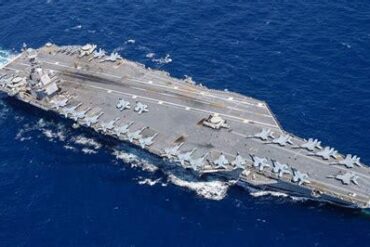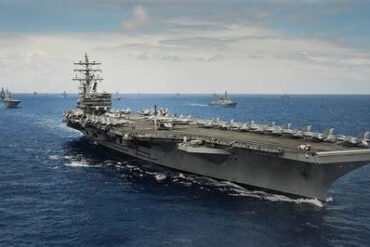
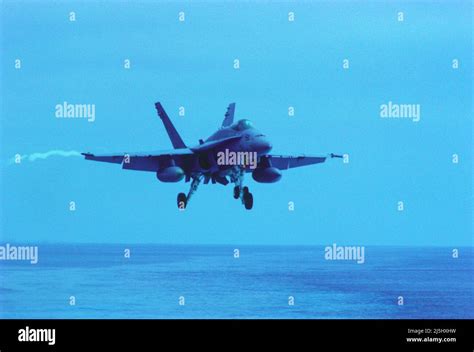
For seasoned U.S. Navy aviators, landing on an aircraft carrier is one of the most unforgiving and technically demanding feats in aviation. Even modern jets like the F/A-18 Hornet, widely regarded as one of the most stable and pilot-friendly carrier aircraft, demand extraordinary skill and precision. When approaching a moving deck that is only a few hundred feet long, a pilot must manage speed, angle of attack, and descent rate with microsecond precision. From a height of roughly 450 feet, the pilot typically executes up to 300 tiny control inputs within 18 seconds before touchdown. A single misjudgment can turn a mission-ending success into a catastrophic disaster.
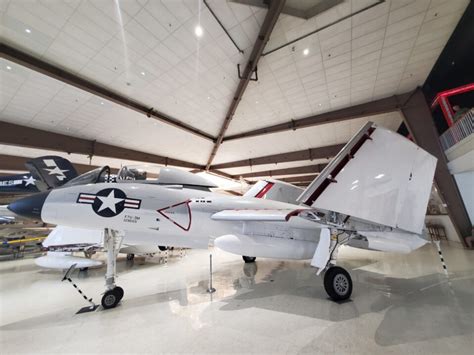
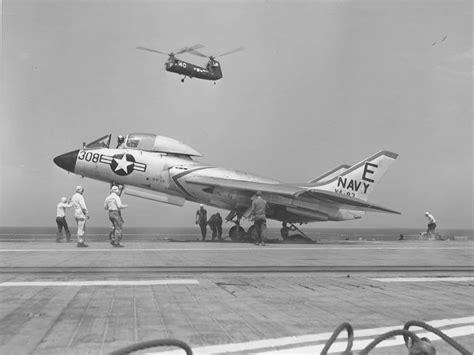
For aircraft such as the Hornet, the process is arduous but achievable. Yet, in the annals of U.S. naval aviation, one jet stood out as the ultimate nightmare for carrier pilots — the Vought F7U Cutlass. Dubbed by some as “damn near impossible to land on a carrier,” this postwar jet earned a fearsome reputation among those who flew it. The Cutlass wasn’t merely a difficult aircraft to handle — it was, in many ways, a dangerously flawed experiment that tested the limits of early jet-era design.
The Origins of a Futuristic Failure
The Vought F7U Cutlass was conceived in the late 1940s, at a time when the U.S. Navy was racing to embrace the jet age. The aircraft’s radical design was unlike anything that had graced an aircraft carrier before — a tailless configuration with swept wings and twin jet engines embedded in its fuselage. It looked futuristic, even menacing, and promised unprecedented performance for naval aviation. However, the leap in design outpaced the available technology. The Cutlass entered service at a time when jet propulsion, hydraulic systems, and carrier operations were still evolving, and the combination proved volatile.
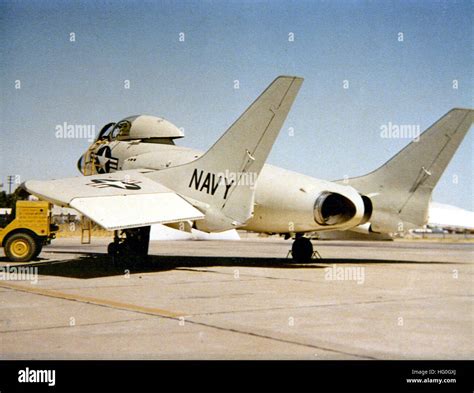
The aircraft’s flight characteristics quickly revealed a host of problems. Its twin Westinghouse J46 engines were notoriously unreliable and prone to flameouts. The F7U’s unique layout demanded high angles of attack during landing, forcing pilots to approach with the aircraft’s nose sharply elevated. This not only obstructed forward visibility but also made precise control during final approach nearly impossible. To make matters worse, the jet’s hydraulic flight controls often malfunctioned, making it difficult to stabilize the aircraft during critical landing phases.
Former Navy pilot David Tussey summed up the consensus among aviators succinctly, calling the Cutlass “damn near impossible to land on a carrier.” The aircraft earned the grim nickname “The Ensign Killer”, as a disproportionate number of fatal accidents involved young, less experienced pilots. Between 1952 and 1956, more than 78 crashes were recorded, over a quarter of them fatal — staggering statistics even by the standards of early jet experimentation.
A Design Decades Ahead — But Doomed by Its Time
To understand why the F7U Cutlass failed so catastrophically, it’s crucial to examine its design philosophy. Inspired by captured German research on swept-wing and tailless aircraft, Vought engineers envisioned the Cutlass as the Navy’s first true carrier-based jet fighter optimized for high-speed interception. The jet’s radical shape — lacking a horizontal tailplane and incorporating swept wings — promised reduced drag and improved performance at transonic speeds.
Yet the Navy’s carrier decks of the 1950s were never designed for such an aircraft. The Cutlass needed longer runways, quicker engine throttle response, and more predictable handling characteristics than the ships could offer. The result was a lethal mismatch between the aircraft’s capabilities and its environment. Landing it required not only skill but a degree of luck. Pilots described the landing experience as balancing on the edge of aerodynamic instability, with every correction risking overcompensation and loss of control.
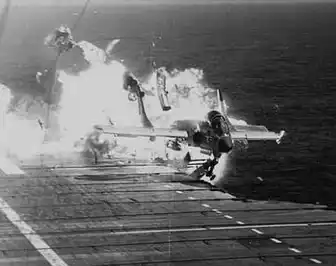
While the jet’s futuristic design gave it visual appeal, it also created mechanical and structural weaknesses. The nose gear was notoriously fragile, and the airframe suffered from frequent hydraulic leaks. The Cutlass’s underpowered engines made wave-off maneuvers—abortive landing attempts—especially hazardous. Once committed to a landing, pilots often lacked the thrust to climb out safely.
Despite these issues, the Navy pressed on with the Cutlass, partly out of necessity. The Korean War demanded faster, more powerful carrier-based aircraft, and the Navy had few alternatives ready for combat deployment. However, by 1957, the aircraft’s reputation was irreparably damaged. The Cutlass was officially retired after just five years in service, a brief and turbulent career that left deep scars in naval aviation history.
The Legacy of the Cutlass: Lessons in Jet-Era Evolution
The F7U Cutlass remains one of the most notorious examples of how innovation can outrun practicality. Yet its failures were not entirely in vain. The aircraft’s design paved the way for a better understanding of aerodynamic stability, carrier-based jet control systems, and the importance of engine reliability. Every mistake made with the Cutlass influenced the next generation of naval aircraft — from the F-8 Crusader to the F-4 Phantom II.
The Cutlass’s most infamous legacy lies in its accident statistics and the cultural memory of those who flew it. Naval aviators referred to it with grim humor — “Gutless Cutlass” and “Ensign Eliminator” were just two of its many nicknames. Despite its technological promise, the F7U became a cautionary tale for aircraft designers and pilots alike: that innovation without balance leads to disaster.
Vought’s Unlucky Trio: The F7U, F-8, and A-7
The Vought Aircraft Company, while responsible for several groundbreaking designs, developed a troubling reputation among naval aviators for producing jets that were difficult to land. The F7U Cutlass was merely the worst of a trio of challenging aircraft that bore the Vought name.
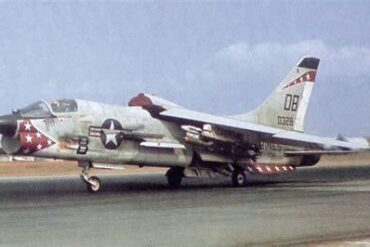
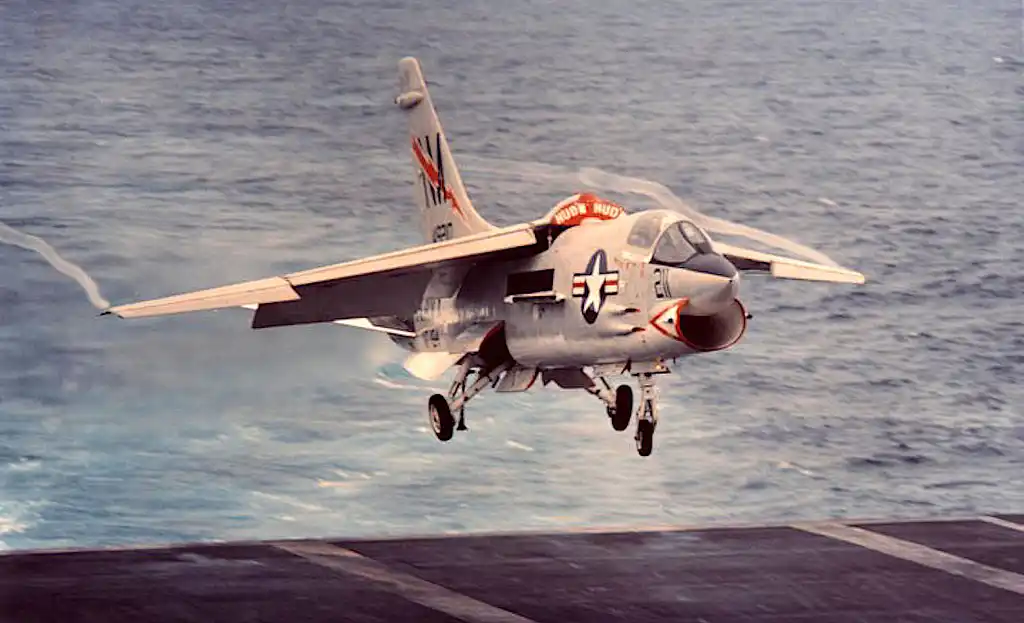
Following the Cutlass came the F-8 Crusader, a supersonic fighter that inherited some of its predecessor’s landing complications. Like the Cutlass, the Crusader required a high angle of attack during carrier landings, which restricted forward visibility. However, Vought engineers introduced an ingenious solution — a variable-incidence wing that could pivot around its rear spar. By raising the wing up to seven degrees, pilots could maintain a nose-up attitude for lift while still seeing the carrier deck during approach. Despite its quirks, the F-8 was beloved by its pilots and earned the nickname “The Last of the Gunfighters.”
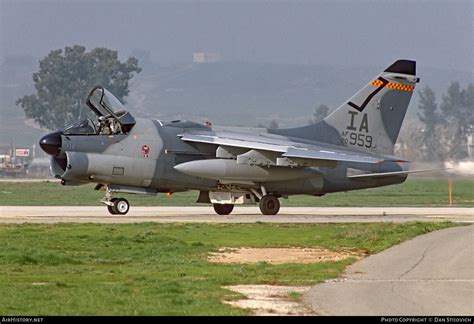
The final member of Vought’s difficult trio was the A-7 Corsair II, developed in the 1960s as a light attack aircraft. The Corsair was an evolution of the Crusader’s design but lacked the adjustable wing mechanism. This omission made its landing behavior more demanding. The jet’s engines had a slow throttle response, forcing pilots to anticipate power adjustments seconds ahead of time — a critical disadvantage during carrier landings. The A-7 also required a high approach speed, leaving pilots with almost no margin for error. Deviations during final approach could quickly spiral into uncontrolled descent or bounce, making the aircraft notoriously unforgiving for beginners.
Carrier Landings: The Ultimate Test of Pilot Skill
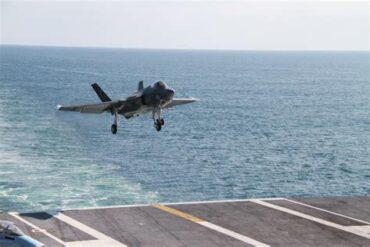
Carrier landings are often described as the pinnacle of aviation discipline. Pilots must approach a moving, pitching deck at night or in rough seas, all while maintaining precise glidepath control. Modern aircraft benefit from advanced fly-by-wire systems, digital landing aids, and automated stabilization, but during the early jet age, pilots relied solely on instinct, muscle memory, and years of experience.
For pilots of the Vought F7U Cutlass, those 18 seconds from approach to touchdown were pure tension. The combination of unreliable engines, poor forward visibility, and twitchy flight controls left almost no room for error. It wasn’t simply difficult — it was terrifying. The aircraft demanded absolute focus, perfect timing, and nerves of steel.
A Cautionary Tale Etched in Navy History
By the time the Cutlass was retired in 1957, it had already claimed numerous lives and shaken the confidence of even the Navy’s best aviators. Yet its brief, turbulent career shaped decades of naval aviation development. Engineers learned from its flaws, pilots respected its danger, and the Navy’s carrier operations evolved because of it. The lessons drawn from the Cutlass’s failures directly influenced the design philosophy of later aircraft, ensuring that no future carrier jet would be so unpredictably perilous to land.
The F7U Cutlass remains a stark reminder that in the pursuit of progress, even the bravest innovations can become cautionary tales. It was an aircraft ahead of its time — and fatally so. Today, its sharp silhouette still stands as a monument to both human ingenuity and the merciless challenges of naval aviation.